ATHA Energy Transitions From Financing to Execution With C$63M Deployment


The Largest Exploration Program in Angilak's History Targets Up to 98.2M lbs U₃O₈ as Drilling Mobilizes in March 2026.
- On February 5, 2026, ATHA Energy Corp. closed two financings totaling approximately C$63 million, materially reducing near-term balance sheet risk and shifting the investment focus toward execution and capital deployment.
- The company has targeted full mobilization to the Angilak project in March 2026, with drilling expected to begin in late April to early May, marking the start of what management describes as the largest exploration campaign ever undertaken at the project.
- The 2026 program includes the addition of a third diamond drill rig to optimize the Arctic operating window and accelerate data generation during Nunavut’s limited seasonal access period.
- At the Lac 50 deposit, the 2024 Exploration Target (conceptual in nature and not a mineral resource under NI 43-101) ranges from 60.8 to 98.2 million pounds U₃O₈ at average grades of 0.37% to 0.48% U₃O₈, significantly above reported national average grades in Namibia and Australia of approximately 0.05% and 0.06% U₃O₈, respectively.
- Leadership continuity supports execution: CEO Troy Boisjoli previously contributed to advancing NexGen Energy’s Rook I project, and Base Diamond Drilling Ltd., ATHA’s drilling contractor since 2024, brings prior experience from that program, reducing operational ramp-up risk during the compressed northern field season.
What the C$63M Will Actually Fund
ATHA Energy’s C$63 million financing, closed on February 5, 2026, removes near-term funding risk. The focus now shifts from access to capital toward how efficiently that capital is deployed, which will now be a primary driver of valuation.
The deployment timeline is management-guided and publicly disclosed: full mobilization is targeted for March 2026, with exploration activities beginning in late April to early May. These milestones represent what management has described as the largest exploration campaign in Angilak's project history. The 2026 field season is ATHA's first opportunity to demonstrate that the C$63 million translates into resource-scale results.
Chief Executive Officer Troy Boisjoli, was direct on the strategic intent:
"For 2026, our intention is to move these projects forward in earnest... The large percentage of the focus from a strategic perspective now is about moving projects forward."
Multi-Rig Diamond Drilling at Lac 50 & Surrounding Corridors
The publicly disclosed use of proceeds targets the 2026 Angilak Exploration Program, with capital allocated to expanding the Lac 50 deposit footprint, testing extensions within the Mineralized Rib Corridor and the KU–Nine Iron Corridor, and conducting basin-wide geophysics.
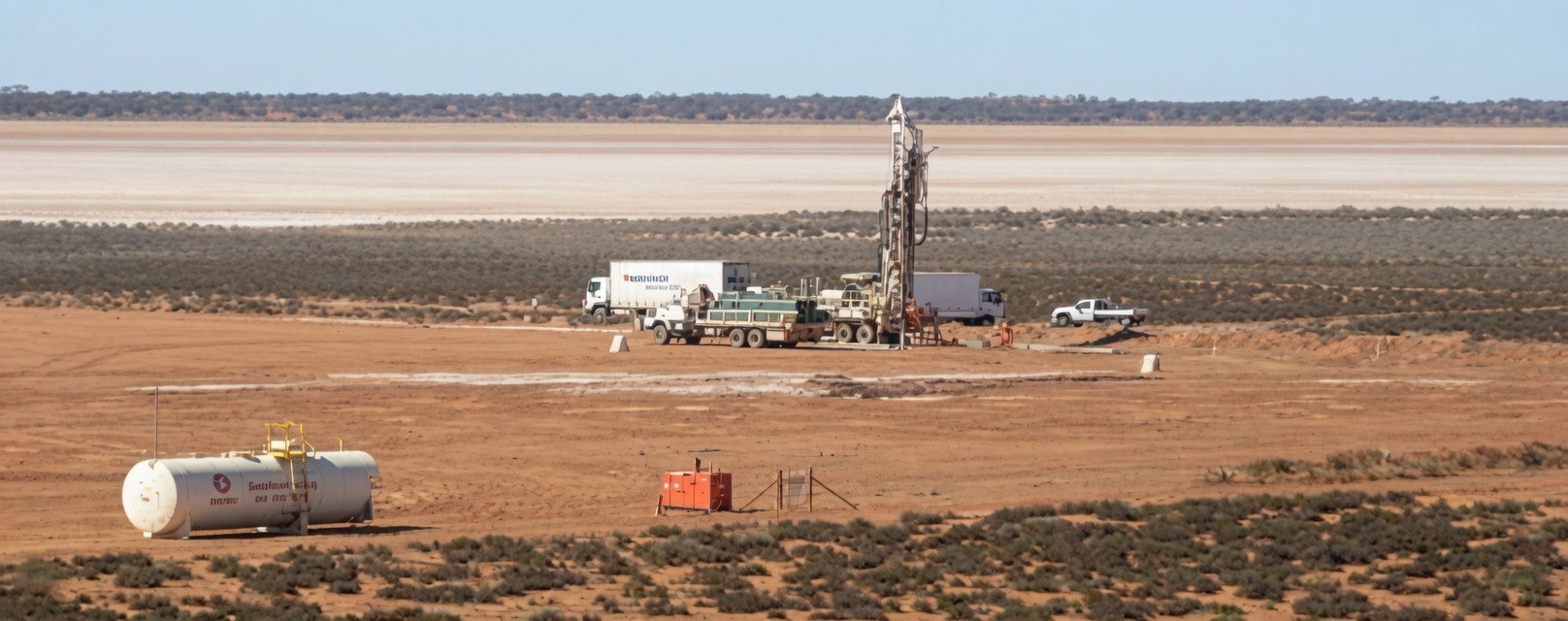
A third diamond drill rig is being prepared for mobilization by Base Diamond Drilling Ltd., ATHA's drilling service provider since 2024. The decision to add rig capacity carries operational logic beyond headline optics. The Arctic drilling season at Angilak is finite - ground conditions and seasonal access impose hard limits on active drilling months. Additional rig capacity compresses the time required to achieve target meterage and increases the volume of geological data generated per field season.
For investors, drilling density directly influences the pace of resource conversion from the inferred to indicated category, the timeline to a potential maiden preliminary economic assessment, and the regularity of newsflow. Troy Boisjoli framed the progression plainly:
"Moving into delineation, infill, project advancement is a natural progression based off of where we're at."
Basin-Wide Geophysics & Target Pipeline Creation
Capital is also being allocated to aerial geophysics and surficial mapping across the Angikuni Basin. This creates a deliberate dual-track structure: the drill program advances resource definition at Lac 50 and adjacent corridors, while basin-wide data collection simultaneously generates the next pipeline of drill-ready targets.
This approach reduces the binary nature of single-deposit exploration. If the 2026 season identifies geophysical anomalies warranting follow-up programs in subsequent years, the company maintains forward momentum beyond the immediate Lac 50 outcome - and supports a district-scale narrative that tends to attract strategic interest from larger operators evaluating consolidation opportunities.
A 60.8 to 98.2 Million Pound U₃O₈ Exploration Target
The Lac 50 corridor hosts the 2024 Exploration Target of 60.8 to 98.2 million pounds U₃O₈ at average grades of 0.37% to 0.48% U₃O₈. This target is conceptual in nature; there has been insufficient exploration to define a mineral resource, and it is uncertain whether further exploration will result in the target being delineated as a mineral resource. Every reference to this range in the article carries that qualification.
Grade context matters for economic framing. World Nuclear Association data places national average grades for uranium production in Namibia at approximately 0.05% and Australia at approximately 0.06% U₃O₈. Angilak's modeled grade range is materially higher. Grade differentials influence development economics: higher grades imply fewer tonnes mined per pound of uranium recovered, smaller processing footprints, and the potential for lower all-in sustaining costs at equivalent uranium price assumptions.
Troy Boisjoli drew a direct basin-level comparison:
"Thick grade of mineralization over 26 meters of continuous mineralization combined with 13 meters of continuous mineralization with about 1.9 meters of high grade within it… We're seeing grades and thicknesses analogous to the Athabasca Basin style mineralization, which was our thesis the whole time."
Corridor-Scale Expansion vs. Single Deposit Risk
The 12-kilometer Mineralized Rib Corridor and the broader 31-kilometer RIB–Nine Iron Trend indicate that Angilak is evolving from a deposit-focused exploration story toward a camp-scale development asset. For enterprise value per pound comparisons, district-scale systems typically support higher multiples than equivalent single deposits because they carry greater resource growth optionality and attract broader strategic interest.
ATHA's technical targeting approach has produced a consistent track record within the RIB area. Troy Boisjoli described the methodology:
"RIB in particular now has conductive corridors that are mineralized over 12 kilometers, multiple drill holes in each area, and we have not missed yet… We deployed a structurally controlled inversion process which allowed us to target very accurately along this conductive corridor... As a function of that, we've had a 100% success rate."
Execution Risk in Nunavut: Operational Track Record as a Valuation Factor
Nunavut presents material execution challenges that distinguish it from more accessible uranium jurisdictions. Limited infrastructure, seasonal access restrictions, elevated transportation costs, and the requirements of an established federal-territorial regulatory review process all increase the operational complexity of running a multi-rig program at Angilak. Execution failures in remote Arctic conditions - whether from contractor delays, equipment mobilization issues, or permitting gaps - can erode capital and seasonal progress simultaneously.
The company's forward-looking disclosures cite standard operational risks including worker safety, weather and natural occurrences, availability of personnel and equipment, and the need to obtain requisite regulatory and permitting approvals.
NexGen Operational Precedent
Troy Boisjoli's prior experience includes contributing to NexGen Energy's Rook I Arrow deposit through multiple stages of advancement. Base Diamond Drilling Ltd., the 2026 drilling contractor, has operational history with that same scaling effort. This continuity reduces contractor learning curve risk and increases the probability of schedule adherence during a compressed seasonal window.
Troy Boisjoli framed the geological parallel directly:
"I was fortunate enough to work on a world-class uranium project for a number of years with NexGen Energy, working on the Arrow deposit from maiden resource right through to more advanced stages... Very similar grades, very similar thicknesses that we're seeing in the discovery hole at RIB North."
Asset Positioning in a Volatile Market
Global uranium supply remains geographically concentrated. Kazakhstan accounted for approximately 43% of global uranium production in 2023. Political disruptions in Niger since mid-2023 have introduced uncertainty into that country's uranium export capacity, adding further supply-side complexity to an already constrained market.
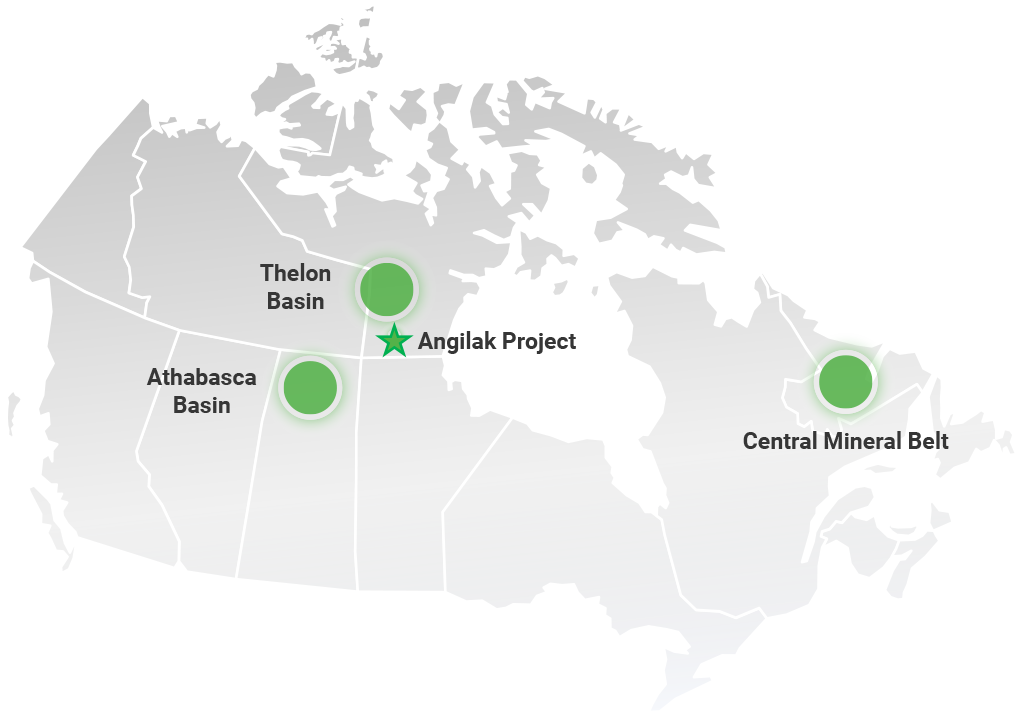
ATHA's portfolio is entirely Canadian, spanning Saskatchewan, Nunavut, and the Central Mineral Belt of Labrador and Newfoundland. Canadian uranium projects have historically attracted jurisdictional premiums among Western utilities, reflecting an established regulatory process, policy consistency, and alignment with secure supply procurement priorities.
Land Dominance & Scarcity Value
ATHA holds more than 7 million acres of uranium exploration land: approximately 3.8 million acres in the Athabasca Basin, 3.1 million acres in Nunavut, and 268,000 acres in the Central Mineral Belt. In tightening uranium markets, large contiguous land packages carry scarcity value that fragmented claim positions cannot replicate.
Troy Boisjoli characterized the scale opportunity in Angikuni Basin terms:
"We're in sole control of an entire uraniferous basin here… I view it as analogous to exploring in the northeast Athabasca Basin circa 1965 – pre-major discoveries. We have the opportunity and the ability to be executing on a project that has tremendous scale potential. "
Balance Sheet Leverage: 10% Carried Interests
ATHA holds 10% carried interest exposure in key Athabasca Basin exploration projects operated by NexGen Energy Ltd. and IsoEnergy Ltd. These positions function as non-dilutive optionality: ATHA participates in partner exploration upside without deploying additional capital. If either partner advances discoveries on the relevant lands, ATHA's exposure is structurally asymmetric. Carried interests of this nature are frequently underrepresented in market valuations of exploration-stage companies but can influence strategic valuation as partner projects advance.
Risks & Counterpoints
No exploration program is without material risk. The 2024 Exploration Target at Lac 50 is conceptual and does not constitute a mineral resource under NI 43-101. Until a compliant resource estimate is completed, the 60.8 to 98.2 million pound range reflects geological modeling assumptions, not confirmed tonnage. Arctic operating costs can escalate if mobilization is delayed, equipment underperforms, or weather compresses the effective drilling window. Permitting timelines within Nunavut's federal-territorial regulatory process may extend beyond current management assumptions. Uranium price volatility, while external to ATHA's operational decisions, materially influences market sentiment toward explorer valuations.
Investors should maintain a clear distinction between exploration success risk, the probability that drilling confirms and expands the deposit, development risk, which encompasses the regulatory and capital pathway from resource to production, and commodity price risk, which is independent of ATHA's execution.
The Investment Thesis for ATHA Energy
- The close of the C$63 million financing eliminates idle capital risk and compresses the period between financing and newsflow, with mobilization targeted for March and drilling for late April or early May.
- The 2024 Exploration Target of 60.8 to 98.2 million pounds U₃O₈, conceptual in nature, establishes a defined scale reference against which 2026 drilling results can be assessed in real time, with average grades of 0.37% to 0.48% U₃O₈ positioning Angilak materially above the national average grades of comparable producing jurisdictions.
- The multi-corridor system spanning 12 and 31 kilometers of documented mineralization reduces single-deposit exposure and supports a district-scale thesis with multiple drilling vectors, while prior operational experience scaling a multi-rig Arctic uranium program through Base Diamond Drilling Ltd. reduces logistical execution risk in a jurisdiction where that risk is elevated.
- Exclusive Canadian exposure across Saskatchewan, Nunavut, and Labrador and Newfoundland aligns the portfolio with the jurisdictional preferences increasingly embedded in Western utility procurement strategies.
- Retained 10% carried interests in NexGen and IsoEnergy exploration lands provide non-dilutive exposure to third-party discoveries with structurally asymmetric upside.
Mobilization is targeted for March. Drilling is targeted to follow in late April or early May. What commences then is what management has described as the largest exploration program in the project's history, targeting a conceptual range of up to 98.2 million pounds U₃O₈ at grades that compare favorably to established producing jurisdictions globally. The 2026 field season will determine whether capital deployment translates into resource scale, and whether ATHA's valuation begins to reflect execution progress rather than unrealized potential.
TL;DR
ATHA Energy closed C$63 million in financing on February 5, 2026, eliminating near-term balance sheet risk and directly funding what management calls the largest exploration program in Angilak project history. With full mobilization targeted for March 2026 and drilling to commence in late April or early May, the company is deploying three diamond drill rigs at the high-grade Lac 50 deposit, where a conceptual 2024 Exploration Target ranges from 60.8 to 98.2 million pounds U₃O₈ at grades materially above producing jurisdictions like Namibia and Australia. Exclusive Canadian land exposure, experienced operational leadership, and retained carried interests in NexGen and IsoEnergy exploration lands round out the investment case.
FAQs (AI-Generated)
The capital is being deployed into the 2026 Angilak Exploration Program, funding multi-rig diamond drilling at the Lac 50 deposit and adjacent corridors, basin-wide aerial geophysics, surficial mapping, and full project mobilization beginning in March 2026.
The 2024 Exploration Target at Lac 50 ranges from 60.8 to 98.2 million pounds U₃O₈ at grades of 0.37% to 0.48%. It is conceptual in nature and does not constitute a mineral resource under NI 43-101, meaning further exploration is required to confirm whether it can be formally delineated as a compliant resource.
Higher-grade uranium deposits require fewer tonnes of material to be mined per pound of uranium recovered, reducing processing footprint and the potential for lower all-in sustaining costs. At 0.37% to 0.48% U₃O₈, Lac 50's modeled grades are significantly above Namibia's national average of approximately 0.05% and Australia's approximately 0.06%.
Key risks include the finite Arctic drilling season in Nunavut, elevated mobilization and transportation costs, potential permitting delays within the federal-territorial regulatory process, contractor availability, and broader uranium price volatility — all of which are independent of, but material to, the company's execution and valuation trajectory.
ATHA holds 10% carried interests in uranium exploration lands operated by NexGen Energy and IsoEnergy in the Athabasca Basin. These positions allow ATHA to participate in potential discovery upside on partner-operated lands without deploying additional capital, creating structurally asymmetric exposure that is often underrepresented in exploration-stage company valuations.
Analyst's Notes





Subscribe to Our Channel




Stay Informed