




China's Export Flip Caps LME Zinc Squeeze as Western Smelters Shrink


Negative treatment charges shift zinc economics upstream, favoring mine supply as refining capacity contracts and concentrate remains scarce.
- China exported 40,668 metric tons of refined zinc in August 2026, the second-highest monthly total in almost 20 years.
- London Metal Exchange (LME) registered zinc inventory rose from 88,000 metric tons in mid-August to 126,975 metric tons, while the cash premium over three-month metal narrowed from $215 to about $60 per metric ton.
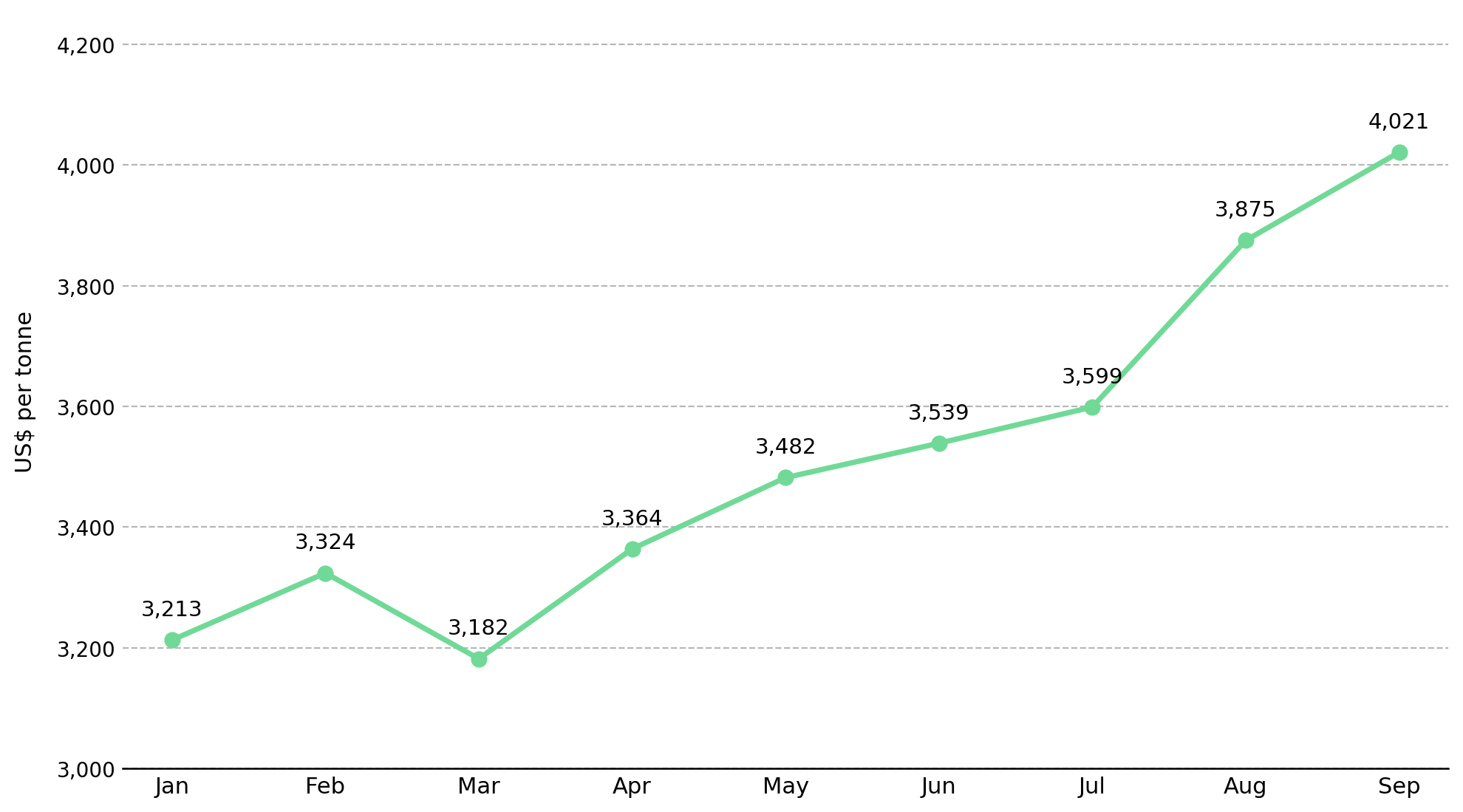
- Three-month LME zinc fell from a four-year high of $4,065 per metric ton in early September to $3,715, while exports above 40,000 metric tons per month keep prices between $3,600 and $3,800 into the fourth quarter.
- Chinese customs data arrives about seven weeks after the trade month, so positions are held before the export rate influencing zinc prices is published.
- LME inventory falling below 88,000 metric tons on the exchange’s daily stock report would restore backwardation and reopen the path to $4,065.
China’s Export Surge Lifts LME Zinc Stocks to 126,975 Metric Tons
China shipped 40,668 metric tons of refined zinc abroad in August 2026, the second-highest monthly total in almost 20 years. LME registered inventory rose from 88,000 metric tons in mid-August to 126,975 metric tons, the highest since June 2025, while three-month LME zinc fell from a four-year high of $4,065 per metric ton to $3,715.
China recorded net exports of 4,388 metric tons in the first eight months of 2026, putting it on course for its first net annual export year since 2022. London supply remains tight, with cash zinc trading about $60 per metric ton above three-month delivery, down from $215 in late August.
London Backwardation Redirects 80% of China’s Exports to Asia
London backwardation pushed LME zinc prices far enough above Chinese domestic prices to cover freight, redirecting Chinese metal to nearby deliverable warehouses. Hong Kong LME warehouses took 35,000 metric tons from mid-August, while Singapore took 21,250 metric tons and Kaohsiung 16,725 metric tons. Those locations absorbed 80% of China’s August outbound shipments, while deliveries into Hong Kong continued almost daily.
The export window remains open because weak Chinese construction activity has reduced galvanized steel demand, while Shanghai zinc inventory stands at 143,527 metric tons, above London. Outside China, refined zinc output fell 3.4% year over year in the first half of 2026, while markets outside China remain short of metal and smelting capacity.
Concentrate Shortage Cuts Non-China Refined Output 3.4%
European smelting capacity cannot return on a trading timescale, allowing London tightness to outlast China’s export surge. Nyrstar’s Budel smelter in the Netherlands is under review because local power prices put it at a cost disadvantage to neighboring countries. Guido Janssen, Chief Executive Officer of Nyrstar, said the smelter loses money each year and conditions for next year look particularly difficult.
Negative Treatment Charges Shift Margins Toward Mine Supply
Spot treatment charges for concentrate imported into China were near -$110 per dry metric ton, compared with the $85 annual benchmark settled by Teck Resources and Korea Zinc. At negative spot treatment charges, smelters pay for concentrate instead of earning a processing fee, preventing higher zinc prices from reaching smelting margins.
Feed security and power costs separate viable Western smelters from those facing closure. Janssen said local power prices put Budel at a disadvantage to neighboring countries and that the operator is seeking Dutch state support after receiving Australian government assistance.
The Budel outcome depends on a government decision with no published timetable, leaving Western smelting exposure dependent on whether support arrives before a closure decision.
Why Concentrate Scarcity Favors Zinc Mines
China caps refined zinc prices through surplus metal, weak galvanizing demand, and export access to LME Asian warehouses, while the West remains short of metal and is losing smelting capacity.
Zinc margins have shifted upstream as refiners now pay for concentrate while mines capture the value of scarce supply. Valuations that still treat Western smelting as a margin contributor rely on assumptions no longer supported by the 2026 concentrate market.
Capped zinc prices do not end the long-term mine-supply case because Western smelter closures remove refining capacity that takes years and public funding to rebuild, leaving the next concentrate cycle with fewer buyers outside China.
Analyst's Notes





Subscribe to Our Channel




Stay Informed


