Abitibi Metals Hits 3.72% Copper Equivalent on B26's Well-Drilled East: 7 Things You Need to Know


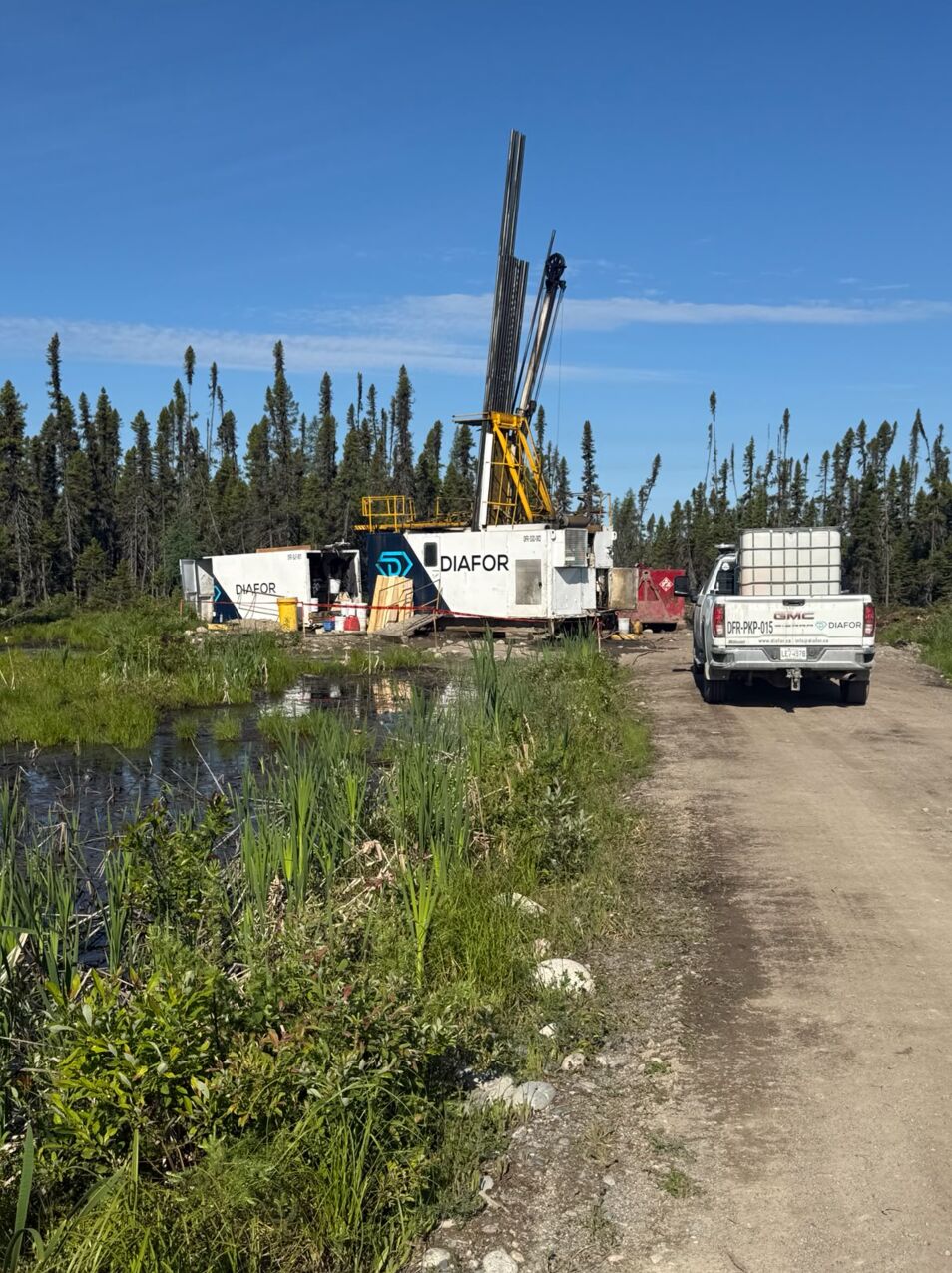
Abitibi Metals hit 1.25% copper equivalent over 60.2 m on B26's well-drilled eastern flank. What does that mean for the next resource estimate?
Project Overview
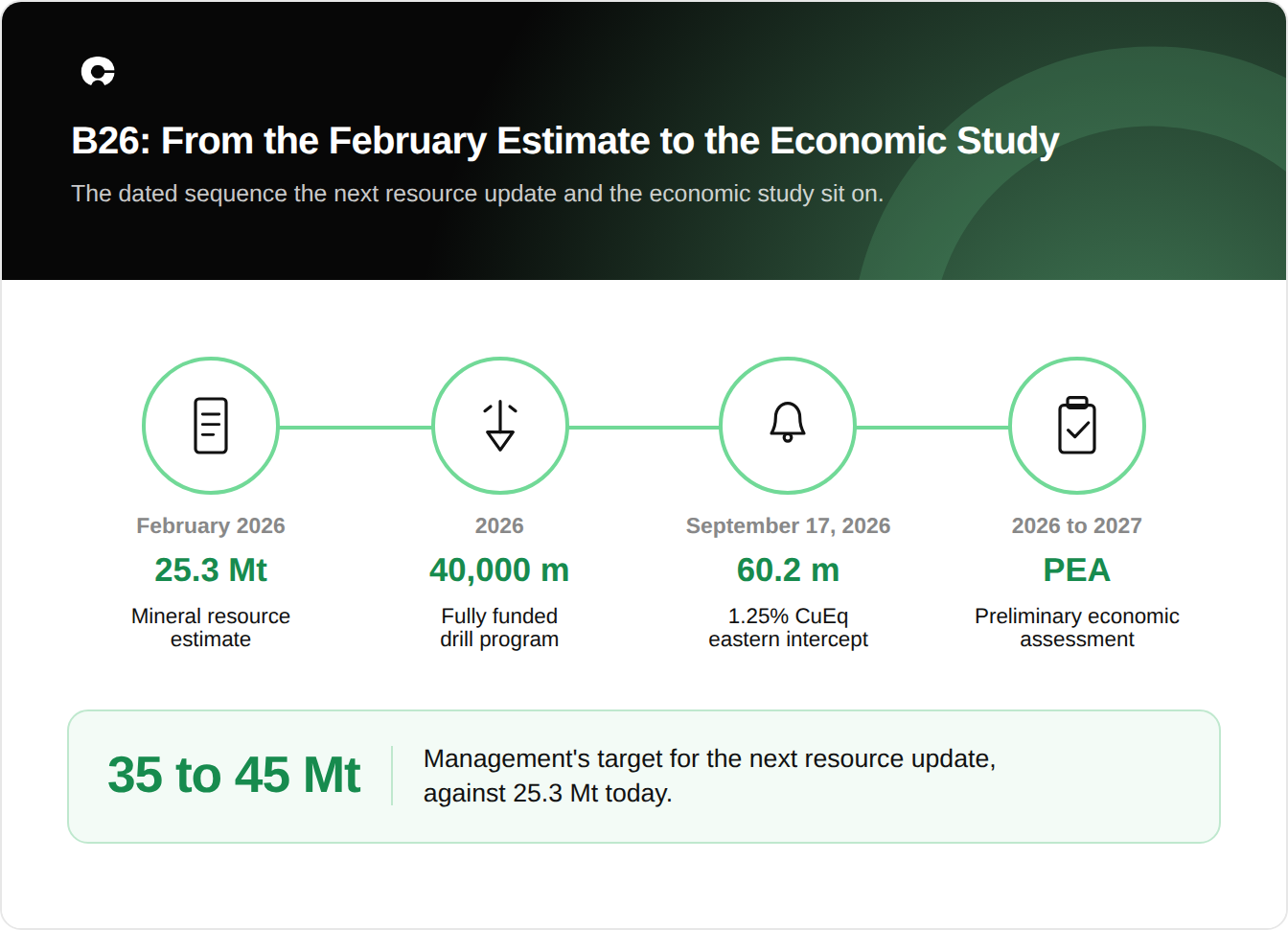
Abitibi Metals (CSE: AMQ | OTCQB: AMQFF | FSE: FW0) is advancing the B26 polymetallic deposit in northwestern Quebec, 7 kilometers (km) southeast of the formerly producing Selbaie Mine. The February 2026 mineral resource estimate put B26 at 25.3 million metric tons, split between 12.96 million metric tons indicated at 2.08% copper equivalent and 12.34 million metric tons inferred at 2.20% copper equivalent. Management puts roughly 85% of that in a copper-gold stringer zone, with the balance in a parallel zinc-silver horizon, over a strike length of 1.6 km reaching about 1,100 meters (m) vertical. A fully funded 40,000-meter drill program is running through 2026, and a preliminary economic assessment falls within the company's 2026 to 2027 timeline. Results released on September 17, 2026, bear on what both of those produce.

1. A 60.2-Meter Interval From the Eastern Side of the Deposit
Drilling on B26's eastern flank returned 1.25% copper equivalent over 60.2 m, at grades materially higher than anticipated for that part of the deposit.
The interval runs from 548.8 m to 609.0 m depth and carries an estimated true width of 52.1 m. Inside it, 18.8 m graded 2.45% copper equivalent over an estimated true width of 16.3 m, and 9.2 m graded 3.72% copper equivalent, comprising 3.42% copper, 0.26 grams per metric ton (g/t) gold, and 9.86 g/t silver, over an estimated true width of 8.0 m. A second eastern hole returned 1.1% copper equivalent over 3.5 m, and that hole extends the known system further east. The qualifiers change how a width-led result reads: intervals were composited from a 0.1% copper equivalent cut-off grade, with 0.6% applied to the higher-grade subintervals, and the local interpretation puts true width at 60% to 94% of core length.
Chief Executive Officer of Abitibi Metals, Jonathon Deluce, set out in July why the eastern flank was the part of B26 least likely to produce a surprise:
"And really, the eastern side of the deposit is well drilled. We see the grade distribution and continuity of the higher 2% plus material as a result."
A flank described in those terms two months earlier is the last place a grade beat should have come from.
2. Width Rather Than Peak Grade Sets This Result Apart
On grade alone, the new interval sits below 5 earlier intercepts in the same depth band, and on width, it is longer than all of them.
B26's high-grade intercepts between 400 m and 800 m depth grade 7.83% copper equivalent over 5.9 m, 7.72% over 7.8 m, 6.32% over 4.5 m, 5.32% over 8.0 m, and 4.15% over 7.0 m, calculated on a 2025 copper-equivalent basis. Every one of them predates the 2026 program, which makes them the benchmark against which the September hole was drilled. Set beside them, 3.72% over 9.2 m is a lower peak grade over a longer run, and the 60.2 m envelope around it has no counterpart among them.
Width and grade do different work in an underground plan. Management has tied wide, continuous mineralization in competent rock to larger mining shapes, higher daily tonnage, and lower unit cost, none of which a narrow high-grade lens delivers. The September interval is the first highlighted eastern result of the year to put that argument on the same footing as the west.
3. Every 2026 Result Highlighted So Far Came From the Western Half
The company told investors in July that its February estimate placed the Western Down-Plunge Zone (WDP) below the grade the drill was returning, and the September result puts that same question to the opposite flank.
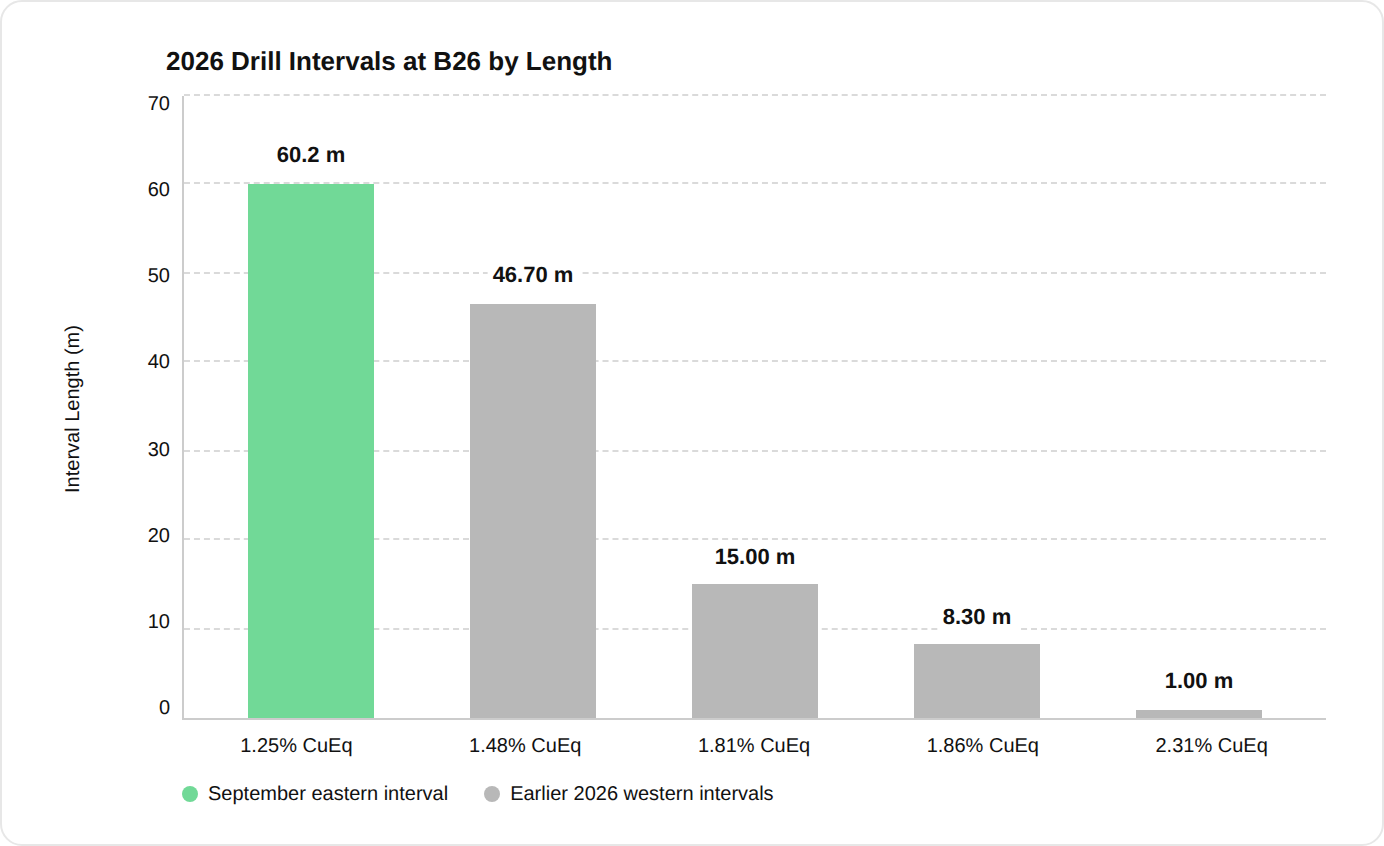
The 4 intervals reported earlier in the year all lie west of center: 1.48% copper equivalent over 46.70 m, including 4.04% over 14.00 m; 1.81% over 15.00 m, including 2.71% over 7.00 m; 1.86% over 8.30 m, including 5.63% over 2.30 m; and 2.31% over 1.00 m. Drill coverage across the eastern half of the deposit is visibly heavier than across the western half, so a grade beat there means something different.
Deluce quantified the gap in July, on a block the model had valued at less than half the grade the drill returned:
"A good example of targeting an area of the block model that was a 1 and 1/2% upgrading it to 4% over 14 m within 1 and 1/2% over 47. So, a great example of being able to upgrade the block model where it's currently understated from our February update."
The September result applies the same test to ground that the company had already treated as understood.
4. The Western Down-Plunge Zone Grew in the Same Announcement
The September results extended the WDP while the eastern beat landed, so both halves of B26 added material in one announcement.
2 holes into the WDP returned 1.45% copper equivalent over 14.1 m from 985.3 m depth, including 2.21% over 5.9 m, and 0.66% over 40 m from 966 m depth, including 1.65% over 7.6 m. Estimated true widths are 10.0 m and 30.6 m. A third hole tested an under-drilled area of about 210 m by 215 m at the upper limit of the zone and intersected mineralization that links higher-grade areas already within the resource. A deeper step-out confirmed down-dip continuity at a depth of about 1,417 m.
Continuity along the eastern extension of the WDP could increase overall tonnage in future estimates. The results also raise resource confidence within the zone itself, which bears on resource conversion more than footprint does for a company heading into an economic study.
5. The Silver & Zinc Intervals Belong to Different Zones
Wedge drilling returned silver and zinc grades that map to B26's zinc and silver-zinc horizons, not to the copper feeder that hosts the headline interval.
One wedge hole cut 41.1 g/t silver and 1.0% zinc over 20.6 m, including 69.9 g/t silver and 1.7% zinc over 11.1 m, and 111.75 g/t silver and 3.0% zinc over 4.5 m. A 0.5 m interval in the same hole graded 19.2% zinc with 19.4 g/t silver. A second wedge returned narrow copper-gold veins: 9.54% copper equivalent over 0.5 m, with 8.08 g/t gold, and 4.32% copper equivalent over 1.8 m.
Those grades belong to zones that the resource already counts separately. The zinc horizon holds 3.27 million metric tons indicated at 4.02% zinc and 92.5 g/t silver, and a smaller silver-zinc zone holds 0.40 million metric tons indicated at 2.55% zinc and 101.5 g/t silver. The zinc horizon grades 2.10% copper equivalent against a 2.08% indicated average for the deposit, while the silver-zinc zone comes in lower at 1.54%, so tonnage added there shifts the metal mix more than the headline grade.
6. An Alteration Signature Without Economic Grade
A hole on the upper western extension returned 0.32% copper equivalent over 7.0 m and still produced a defined drill target, because of its alteration, not its grade.
The interval is at a depth of 1,234 m and is well below economic grade on its own. It shows the alteration signature B26's mineralized corridor produces, and that signature confirms the fertile system continues into the western part of the deposit. The higher-grade portion of the corridor is interpreted to lie further west, at greater depth, or both.
2 other holes tested a lower-grade, under-drilled target west of the deposit and returned 0.50% copper equivalent over 3.3 m and 1.05% over 2.0 m, the second of which included 2.96% zinc. Neither adds tonnage today. Together the 3 holes narrow the western target for future drilling.
7. What the Next Resource Estimate Has to Absorb
B26's tonnage moves on assumptions as well as on meters drilled, and the September intervals arrive before either has been settled.
Dropping the cut-off grade by 20% below the base case lifts the combined indicated and inferred figure to 30.3 million metric tons from 25.3 million, with the underground cut-off at an in-situ value of US$100 per metric ton after processing recovery, equivalent to 1.03% copper. Raising it 20% leaves 10.80 million metric tons indicated at 2.27% copper equivalent and 10.09 million inferred at 2.44%. Metal prices move the reported grade the same way: copper-equivalent figures in the September results assume US$4.50 per pound for copper and US$3,000 per ounce for gold, with a second column run at US$5.60 per pound for copper and US$4,650 per ounce for gold. On that spot basis, the 9.2 m interval grades 3.9% copper equivalent against 3.72% at base case, and both columns apply recovery factors from a 2017 metallurgical test.
The tonnage Deluce attached to the next update sets what these intervals have to reach:
"We're already getting close to our targeted 35 to 45 million tons that we have for our next resource update."
Against 25.3 million metric tons today, the eastern and western results are both being drilled toward that target.
Key Takeaways for Investors
- Width changed, not peak grade. At 3.72% copper equivalent over 9.2 meters the peak grade falls below 5 earlier intercepts in the same depth band, while the 60.2-meter envelope around it has no match among them.
- Both flanks are now producing results. The same announcement extended the western down-plunge zone at 2 depths below 960 meters, so resource growth is no longer a one-sided story.
- The silver and zinc intervals shift the mix, not the headline grade. Wedge drilling returned 41.1 grams per metric ton silver and 1.0% zinc over 20.6 meters in horizons the resource already counts apart from the copper feeder.
- Assumptions still move tonnage as much as drilling does. A 20% lower cut-off grade takes the combined indicated and inferred figure to 30.3 million metric tons from 25.3 million, before a single September meter is added.
Bottom Line
B26's 2026 program has been a western story since February, and the September results end that. The eastern half of the deposit, drilled densely enough that the company treated its grade distribution as settled, returned 1.25% copper equivalent over 60.2 m with a 3.72% core inside it. The WDP grew in the same announcement, at 2 separate depths below 960 m. The next resource estimate has to absorb 2 flanks adding material at once, and management is drilling toward 35 to 45 million metric tons, up from 25.3 million today. For an investor, the practical change is that the upside case no longer rests on one side of the deposit behaving better than the model says.
Analyst's Notes





Subscribe to Our Channel






Stay Informed