




Abitibi Metals Cut the B26 Royalty to 1% Before Its First Economic Study


Abitibi Metals closed its B26 option years ahead of schedule, halving the royalty to 1% and deferring the remaining payments to feasibility and construction.
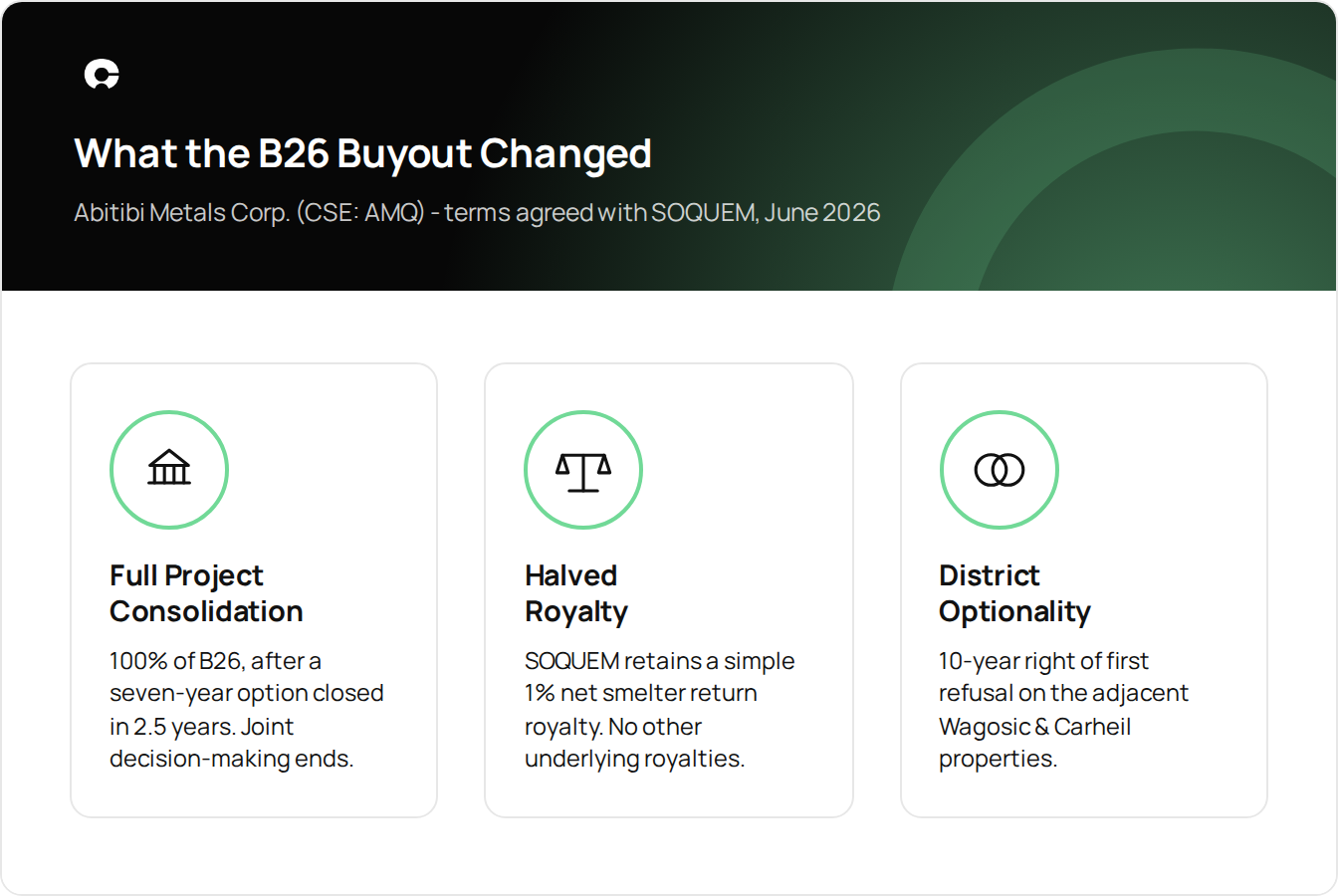
- Abitibi Metals owns 100% of the B26 copper-gold deposit in Quebec after completing a seven-year option agreement in two and a half years.
- SOQUEM maintains a simple 1% net smelter return (NSR) royalty, halved as consideration, with no other underlying royalties on the project.
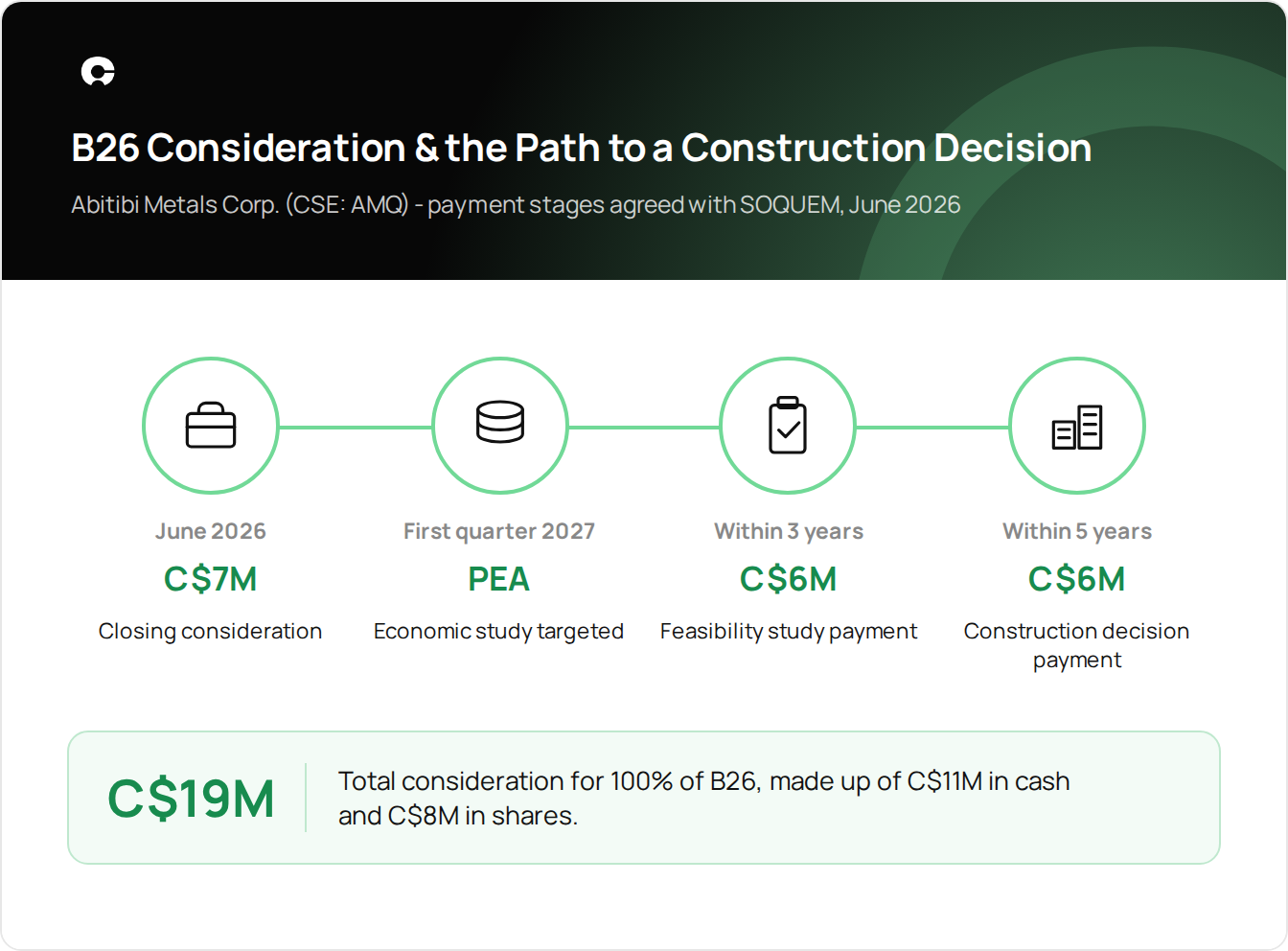
- Closing consideration totaled C$7 million, comprising C$5 million in cash and C$2 million in shares.
- Two further payments of C$6 million each fall due at a feasibility study (FS) and at a construction decision.
- A preliminary economic assessment (PEA) that management is targeting for the first quarter of 2027 will be the first study of B26 under the new terms.
Abitibi Metals (CSE: AMQ | OTCQB: AMQFF | FSE: FW0) took full ownership of the B26 copper-gold deposit in Quebec in June 2026, on terms that halved the royalty over the project, deferred the remaining payments to a feasibility study (FS) and a construction decision, and ended the joint venture that had governed it. Those terms will frame the company's first economic study. The resource they now apply to was estimated while a partner still held 20% of the deposit.
Completing the B26 Option Ahead of Schedule
Ownership of B26 was assembled in tranches, and the pace of that assembly shaped the terms of the final one. Management says the company optioned the deposit from SOQUEM, a 100% subsidiary of Investissement Québec, in November 2023, and the agreement allowed seven years to earn it in full. Consolidation ended the joint decision-making that came with the partnership and left Abitibi with simplified governance, financing, and development control over a deposit that remains open laterally and at depth.
Chief Executive Officer of Abitibi Metals, Jonathon Deluce, measures the buyout against the schedule it replaced:
"This was a seven-year option agreement that we've now been able to finish in two and a half years."
Closing early also brought the royalty and the payment schedule into their final form, because both were negotiated as part of the same consideration.
The Royalty & the Payments That Remain
The consideration was structured in three stages, and only the first has been settled. The closing consideration totaled C$7 million, comprising C$5 million in cash and C$2 million in shares, payable within 90 days. A feasibility-stage payment of C$6 million, split evenly between cash and shares, falls due in less than 3 years, and a construction-decision payment of the same size, split the same way, falls due in less than 5 years. Across the three stages, the transaction totals C$19 million, C$11 million of it in cash. Management says the closing cash was offset against amounts SOQUEM owed Abitibi under the joint venture agreement, part of which had been received by early July and part of which was still outstanding.
Deluce separates what actually left the treasury at closing from the headline consideration and names where the rest of the bill falls:
"The net cash payment to them will be $3.2 million, and we issue $2 million worth of shares. The next two performance payments are on feasibility study and construction decision."
The royalty is the other term that the buyout changed, and it runs with the project for as long as B26 continues to produce. SOQUEM maintains a simple 1% net smelter return (NSR) royalty, which management describes as a product of the buyout and not the level that applied before.
Deluce puts a number on what the consideration bought beyond the last 20%:
"As part of this consideration, we've been able to cut the royalty in half to only a 1% NSR with no other underlying royalties at B26."
That leaves one royalty over B26, at half the rate in place before the buyout.
Decision Rights & the Ground Next Door
Ending the joint venture changed the decision rights, not only the ownership split. Consolidation gives Abitibi full exposure to future resource growth and economics, so financing, a mine plan, or a development timetable no longer requires a partner's agreement to move forward.
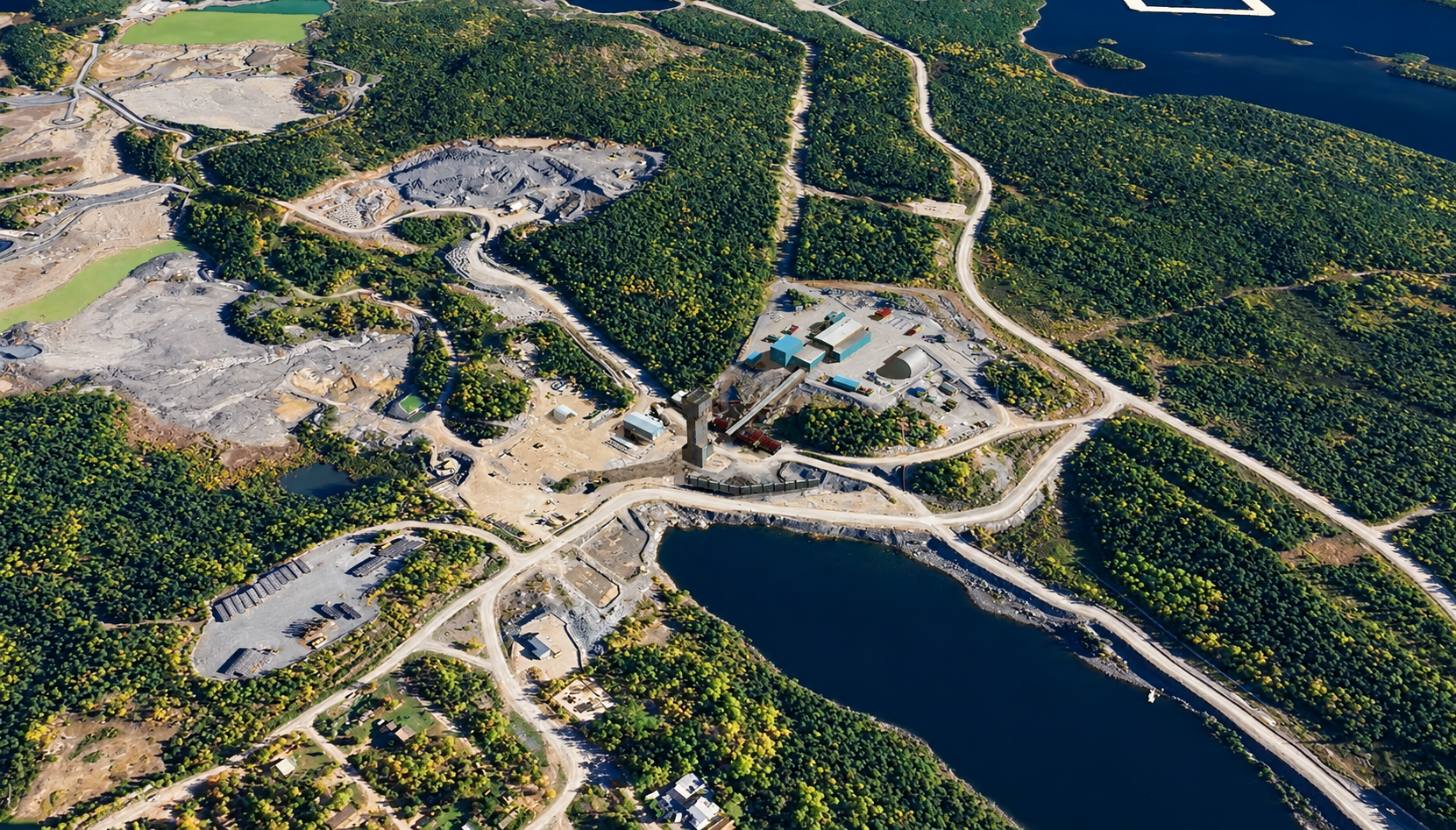
The transaction also reached past B26's own boundaries. It came with a 10-year right of first refusal over the adjacent Wagosic and Carheil properties, and a joint technical committee was established for collaboration between the two parties. Management has described those projects as camp-development assets that could pair with B26 and feed a central processing facility, and B26 itself lies 7 kilometers southeast of the formerly producing Selbaie Mine, which operated for 20 years.
The company presents the transaction as positioning it as the logical consolidator of the Selbaie camp, a stated corporate goal rather than an agreed transaction.
The Structure Behind the First Economic Study
The metric tons the study will model were counted before any of this. The deposit holds an indicated resource of 12.96 million metric tons at 2.08% copper equivalent and an inferred resource of 12.34 million metric tons at 2.20% copper equivalent. The ownership terms are therefore newer than the resource they will be applied to.
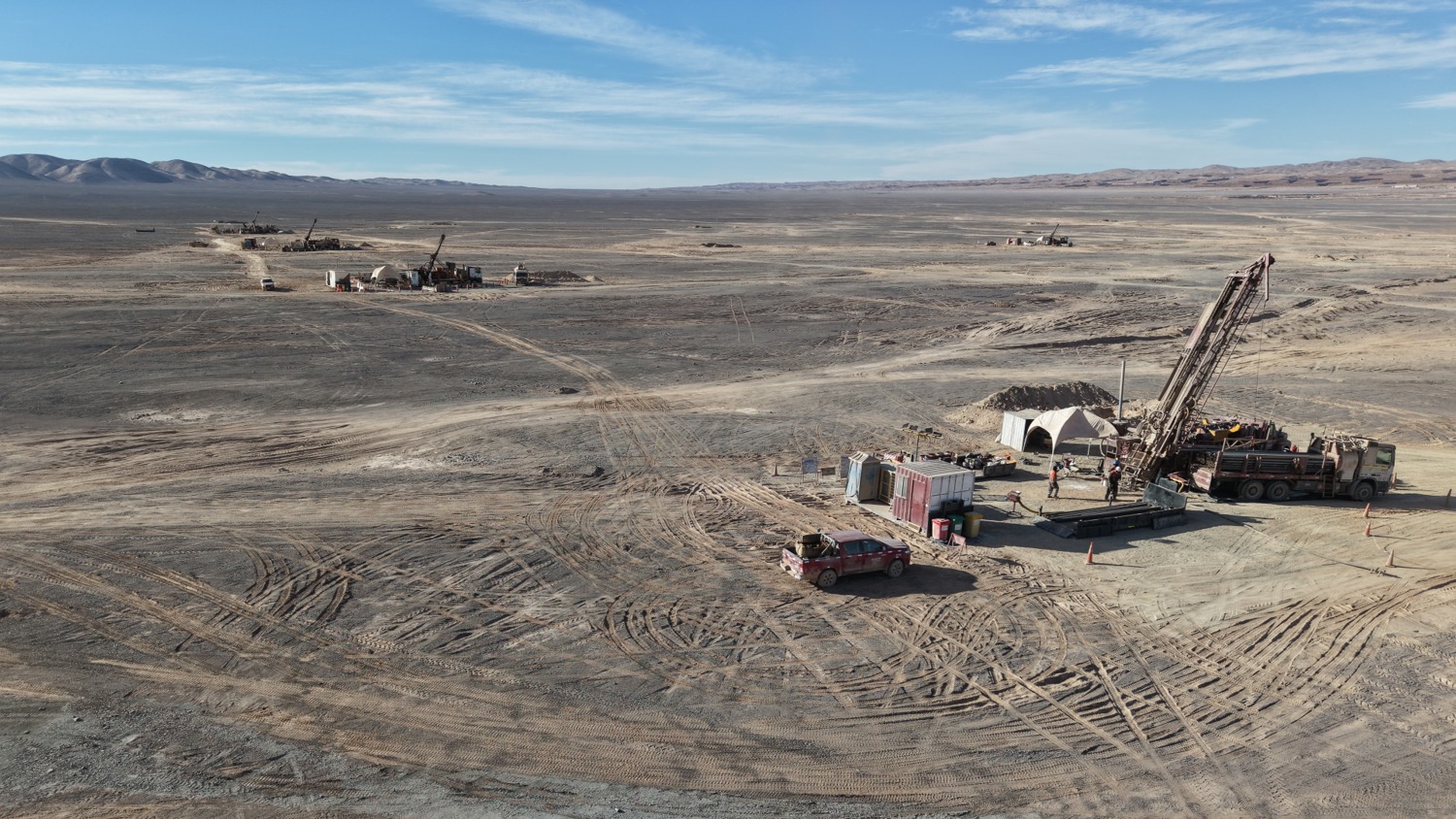
Several programs now feed into that study. A metallurgical program run by SLR Consulting, which tests how much copper can be recovered from the rock, returned initial recoveries of 98.2%, with final results to be incorporated into the upcoming preliminary economic assessment (PEA). Geotechnical work and environmental baseline studies are underway alongside it, and 3 drill rigs are active on a program targeting 40,000 meters. Management says the company is funded on its plans through the end of the first quarter of 2028.
Management is targeting the PEA for the first quarter of 2027.
What Comes Next at B26
The two outstanding payments wait on an FS and a construction decision, and until then the structure preserves the near-term capital flexibility the company set out to protect. Ahead of them, the full results of the metallurgical program will follow its completion. The ownership terms themselves are already settled: one royalty and one owner, both in place before the first study begins.
FAQs (AI-Generated)
Analyst's Notes





Subscribe to Our Channel







Stay Informed






















