




Sanctions Relief Returns Belarusian Potash to US Ports as Prices Fall


Contracted Belarusian volumes and higher Russian transit costs limit near-term supply pressure, keeping delivered cost central to potash returns.
- A 30,000-tonne cargo of Belarusian muriate of potash (MOP) is scheduled to discharge at New Orleans on October 14, the first US-bound Belarusian potash in four years.
- The US Treasury delisted Belaruskali and the Belarusian Potash Company on March 26, 2026, reopening a channel that averaged 635,000 tonnes a year into the US from 2017 to 2021.
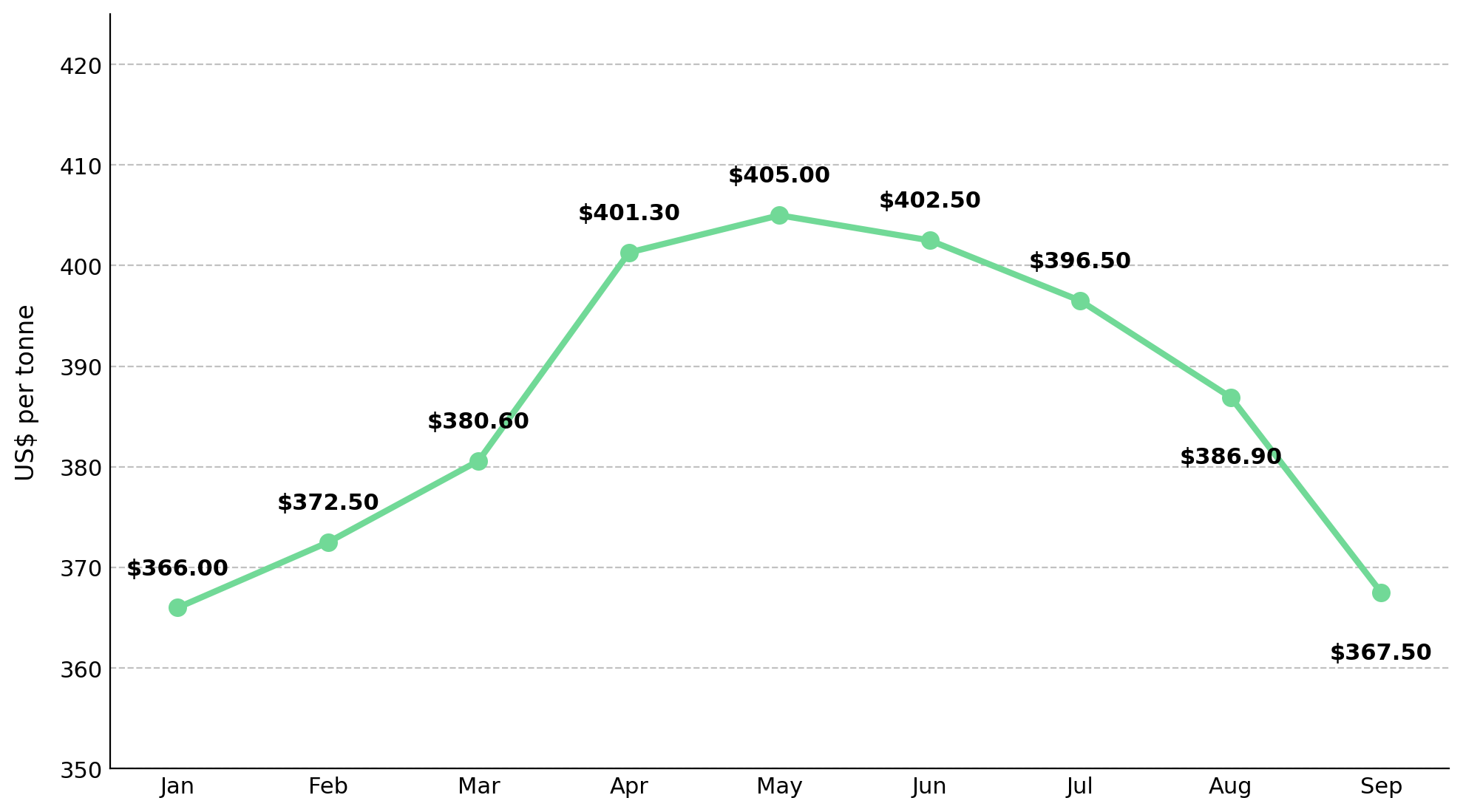
- The World Bank MOP benchmark fell from $405.00 per tonne in May 2026 to $367.50 in September, within $2.50 of its $365 forecast for 2027.
- Belarus mined 6 million tonnes of potassium oxide in 2025 against 49 million worldwide, but President Alexander Lukashenko said on September 21 that those volumes are contracted.
- A World Bank MOP price above $400 per tonne on November 3, 2026, would indicate demand absorbed returning Belarusian supply rather than displaced Canadian tonnes.
Sanctions Relief Restores Belarusian Supply to US Market
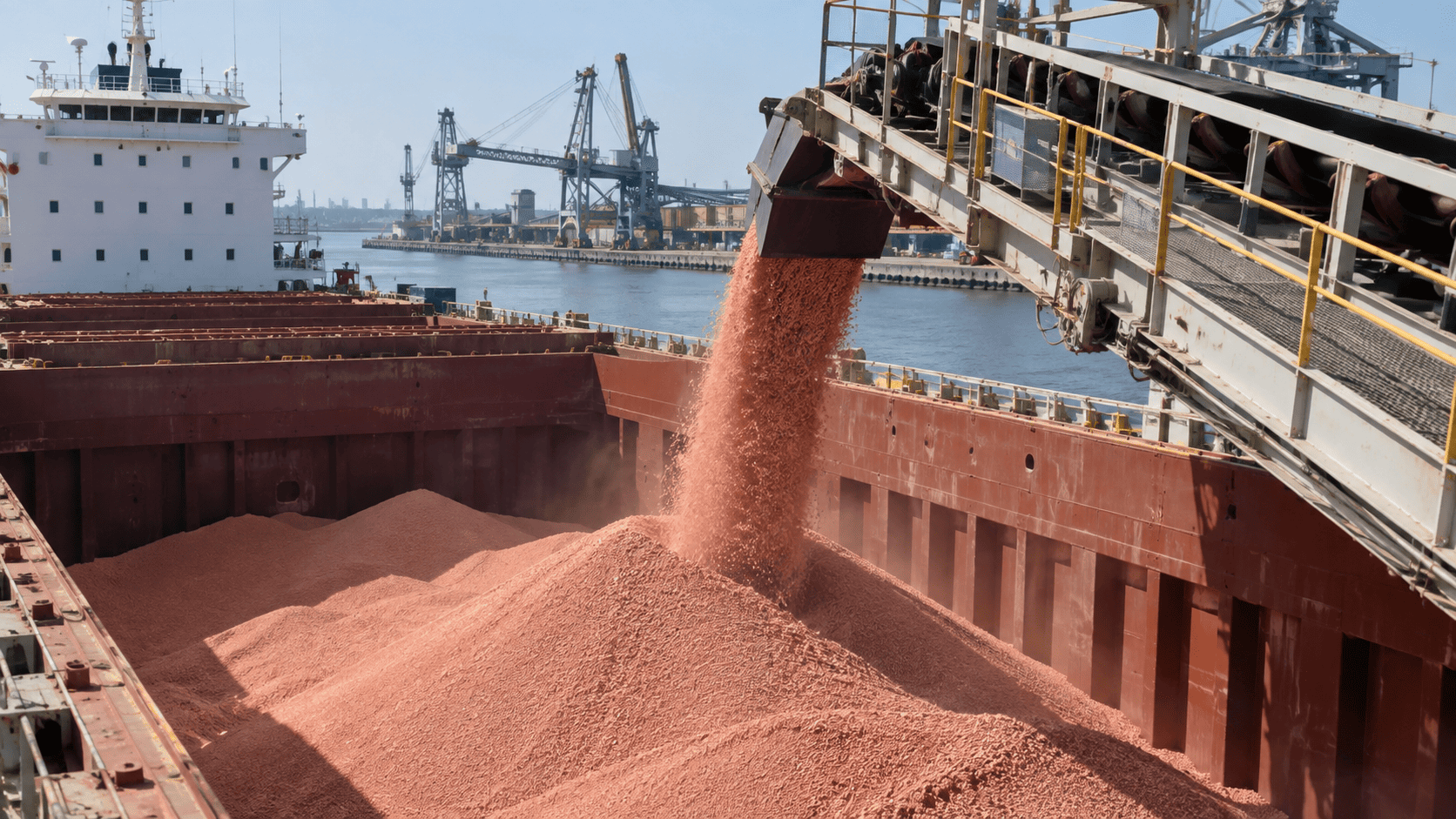
A 30,000-tonne cargo of Belarusian MOP is scheduled to discharge in New Orleans on October 14, marking the first US-bound Belarusian potash shipment in four years. The Belarusian Potash Company loaded the cargo at Russia’s port of Bronka. The World Bank MOP benchmark fell for a third consecutive month to $367.50 per tonne in September from $405.00 in May, increasing price pressure as Belarusian supply returns.
The 30,000-tonne cargo equals about 0.5% of 2025 US potash imports, limiting its immediate market impact. US potash imports reached 5.6 million tonnes of potassium oxide equivalent in 2025, with net import reliance at 92%. The larger shift is the reopening of a supply channel that carried 635,000 tonnes a year before the 2021 designations.
Lost Klaipeda Access Raises Potash Delivery Costs Through Russia
Before the 2021 designations, Lithuania’s Klaipeda terminal handled 9 million to 11 million tonnes of Belarusian potash a year. With Klaipeda closed to Belarusian cargo, shipments now move by rail through Russia to Baltic ports such as Bronka, adding transport and handling costs. Arif Gasilov, partner at Gasilov Group, said Belarus moved 11.6 million tonnes through Russian ports in 2025. Higher rail, port, insurance and handling costs reduce the competitiveness of Belarusian potash in the US, limiting the pricing threat to Canadian supply.
The Office of Foreign Assets Control issued General License 13 covering Belaruskali and the Belarusian Potash Company in December 2025 and delisted both in March 2026 after Belarus released about 250 political prisoners, reopening US trade with the companies. The EU has not matched the US relief, leaving Belarusian potash subject to EU restrictions and limiting its access to European buyers.
Committed Volumes Limit Near-Term Price Pressure
Existing sales contracts currently limit additional Belarusian potash supply to Western markets, with President Alexander Lukashenko saying Belarus has no uncommitted volumes available. Josh Linville, Vice President of Fertilizer at StoneX, noted that US buyers have had no difficulty sourcing potash, while phosphate and nitrogen remain the tighter nutrients.
Returning Supply Pressures Margins More Than Sales Volumes
For Saskatchewan-focused potash producers, returning Belarusian supply threatens realized prices more than sales volumes. Nutrien’s February 18, 2026 guidance estimates that each $25 per tonne change in potash net selling prices corresponds to $280 million of adjusted EBITDA and $0.45 of adjusted earnings per share. With tonnes already placed, additional New Orleans supply would pressure realized prices rather than displace sales volumes.
Producers with export logistics can redirect tonnes offshore, reducing exposure to weaker regional pricing. That flexibility can protect sales volumes when domestic supply increases. A pre-production developer without offtake remains exposed to benchmark prices when production begins.
No program volume or delivered price has been published, leaving the scale of Belarusian supply and its price impact uncertain, while the US Treasury retains the ability to restore sanctions. For Saskatchewan-focused producers, the key risk remains margin pressure from lower realized potash prices rather than the volume of a single cargo. For pre-production projects underwritten above $400 per tonne, a $365 benchmark can weaken projected returns and financing economics.
What Cost Position Supports Potash Returns
US sanctions restricted Belarusian potash supply, while their removal is reopening that trade channel. The World Bank MOP benchmark began falling three months before the Belarusian cargo was due, indicating the price decline preceded its return.
Since 2022, Saskatchewan-focused producers have benefited more from stronger netbacks than higher volumes, making realized pricing a key valuation driver. US Geological Survey (USGS) projects global potash capacity at 77.4 million tonnes of potassium oxide equivalent by 2029 versus 45.3 million tonnes of consumption, making delivered cost increasingly important to project economics.
Long-term value depends on delivered cost. Lower prices can delay higher-cost projects, favoring producers that remain competitive at lower potash prices. Saskatchewan producers can rail potash directly into the US Midwest, while Belarusian supply requires additional rail, port, insurance and handling costs through Russia.
Analyst's Notes





Subscribe to Our Channel





Stay Informed


