




Critical Mineral Projects Advance Without Closing Supply Gaps, Extending Multi-Year Commodity Deficits


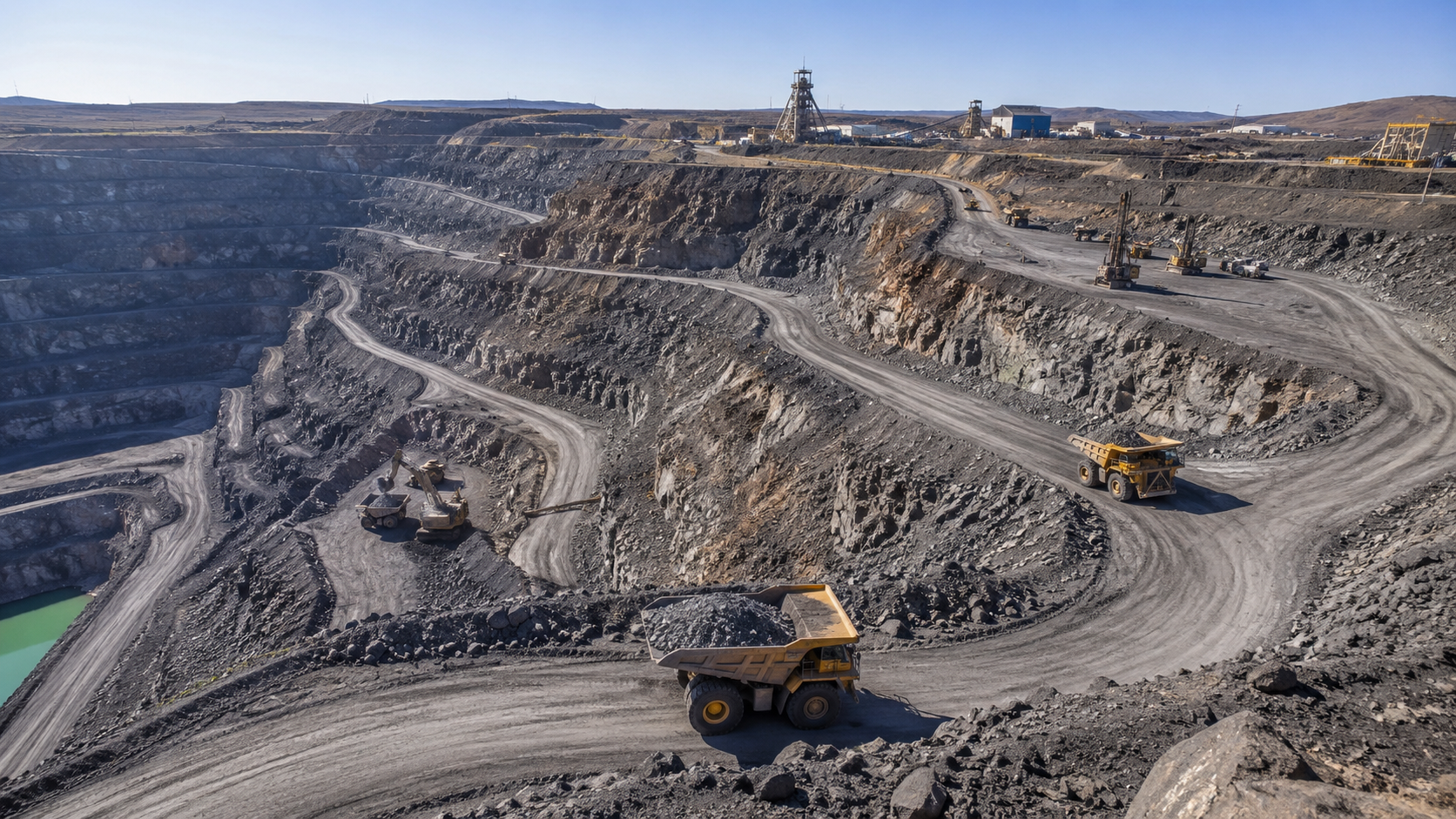
Critical mineral supply deficits are expected to persist as project advancement and government investment fail to accelerate new supply despite rising demand.
- Global platinum mine output is projected to decline from approximately 6.2 million ounces in 2019 to 4.7 million ounces by 2034, while nearly 90% of platinum group metal (PGM) reserves remain concentrated in South Africa, limiting the industry's ability to replace lost production and supporting a fourth consecutive market deficit in 2026.
- Only two major greenfield PGM mines worldwide are targeting near-term production, leaving few development-stage assets capable of adding new supply as the deficit widens and increasing the likelihood that capital will concentrate on projects that continue advancing.
- A global mining major's exit from a titanium and graphite development project, despite no stated change in the project's economics, shifts more financing and commercialization responsibility to independent developers and their government or development-finance partners, highlighting how majors are becoming more selective about early-stage project exposure.
- Even government-backed expansions at operating rare earth producers are targeting commissioning no earlier than the fourth quarter of 2027, showing that funded and permitted projects still require years to add new supply.
- Neodymium-praseodymium (NdPr) pricing already trades above the floor price set in a recent US Department of Defense supply agreement, suggesting the market expects supply deficits to persist beyond a single quarter.
South African Mine Decline Tightens Platinum Supply, Extending Multi-Year Market Deficits
Platinum demand is projected to exceed mine and recycled supply for a fourth consecutive year in 2026, according to Johnson Matthey. Global mined platinum output is projected to decline from roughly 6.2 million ounces in 2019 to 4.7 million ounces by 2034, consistent with Sibanye-Stillwater's base-case outlook for the sector, reducing the industry's ability to replace lost production.
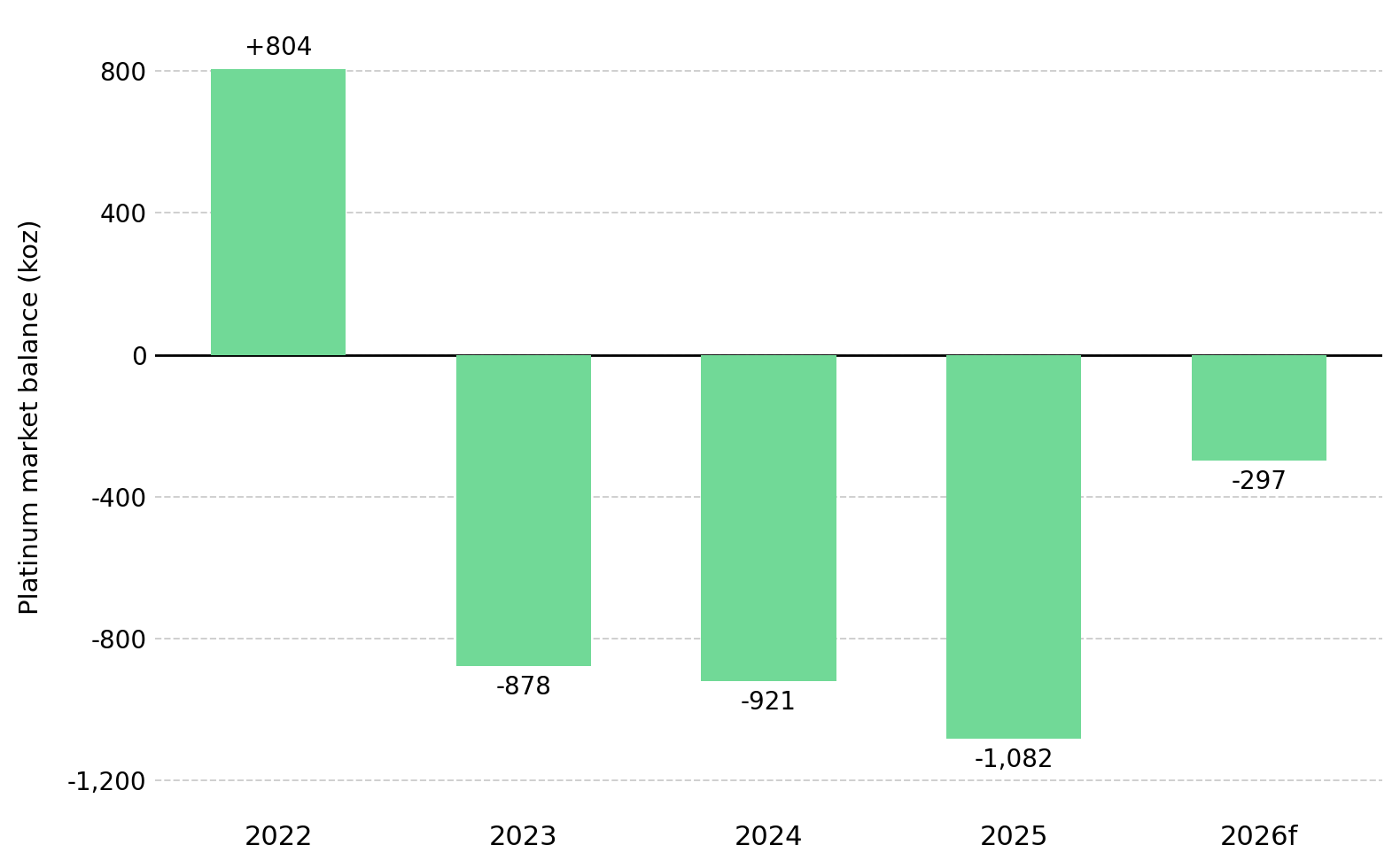
Nearly 90% of the world's PGM reserves are in South Africa, where several major operations have closed or been suspended since 2016 while investment in replacement mine capacity has remained limited, reducing the industry's ability to offset declining production. The World Platinum Investment Council (WPIC) estimates the market is running an annual deficit of 500,000 to 700,000 ounces, while above-ground stockpiles have fallen to less than five months of consumption. Declining mine supply and shrinking above-ground inventories limit the market's ability to absorb further disruptions, increasing the likelihood that the platinum deficit will persist for multiple years.
The key question is whether new mine and processing capacity can reach the market quickly enough to close the deficit. The same supply constraint applies across PGM, rare earths, titanium, and graphite feedstocks where long development timelines continue to limit the pace of new supply.
Limited PGM Projects Increase the Importance of Diversified Future Supply
Among the selected PGM projects across Montana, Brazil, South Africa, and Ontario, only one has reached the feasibility study stage and one has advanced to the more detailed definitive feasibility study (DFS), while the remainder remain at earlier stages of resource definition and technical evaluation. With so few PGM projects progressing through technical studies, each milestone provides additional evidence of where future supply could emerge outside South Africa and Russia.
ValOre Metals' Pedra Branca project in Ceará State, Brazil, hosts an Inferred Resource of 2.2 million ounces of combined platinum, palladium and gold equivalent (2PGE+Au) at an average grade of 1.08 g/t across 63.3 million tonnes, according to an Independent Technical Report effective March 8, 2022. A Preliminary Economic Assessment (PEA) is targeted for Q4 2026, and no economic study, capital cost estimate, or production schedule has yet been published. With a market capitalization of approximately CAD$26 million as of July 1, 2026, the company provides exposure to a strategically located PGM resource outside the dominant producing regions rather than near-term production. Thiago Diniz, Vice President of Exploration at ValOre Metals, outlines the need for diversified platinum supply:
"Palladium and platinum are produced only in certain regions of the globe. Advancing a project outside of that small space is an opportunity for those seeking geopolitical diversification. The company is advancing one of the very few palladium-platinum assets outside Russia and South Africa. We are working on a metallurgical program to deliver a preliminary economic assessment by the end of the year."
With South African output declining and relatively few PGM projects advancing through technical studies, operational milestones provide increasingly important evidence of where future supply may emerge. Resource updates, metallurgical testwork, and economic studies, including PEAs and feasibility studies, therefore become key indicators of project advancement toward potential future production.
Major Mining Companies Tighten Early-Stage Investment, Increasing Reliance on Project Funding & Offtake Agreements
Rio Tinto's decision not to exercise its option to become operator of the Kasiya rutile-graphite project reflects a broader trend of major mining companies becoming more selective about early-stage project investment. On July 8, 2026, Rio Tinto announced that the decision was driven by a change in its titanium business strategy rather than the project's economics. The decision illustrates how independent developers are increasingly expected to secure financing, commercial partnerships, and project execution as major miners prioritize capital allocation.
Sovereign Metals regained full commercial control of the Kasiya rutile-graphite project after Rio Tinto decided not to exercise its option to become project operator. The decision returned exclusive marketing rights over 40% of planned annual production and pre-emptive rights over third-party offers, allowing the company to advance binding rutile and graphite offtake agreements with Mitsui and Traxys while continuing to work with the International Finance Corporation on project financing. The April 2026 DFS confirmed Stage 1 processing capacity of 12 million tonnes per year, supporting annual production of 222,000 tonnes of rutile and 275,000 tonnes of graphite. Ben Stoikovich, Chairman of Sovereign Metals, frames graphite's cost advantage in global markets:
"In 2023, natural graphite demand was 1.6 million tonnes, but global known resources exceeded 800 million tonnes, enough for roughly 500 years of supply. China produces around 75% of global natural graphite at an average production cost of US$257 per tonne. Kasiya sits at the very bottom of the real cost curve, and we'll always be able to sell graphite into the market at healthy margins."
Government-Backed Rare Earth Expansion Reinforces the Value of Existing Supply
Even with government financing support and an already licensed operating facility, expanding rare earth separation capacity requires multi-year development and commissioning timelines, limiting how quickly new supply can reach the market.
Energy Fuels has begun expanding its White Mesa Mill in Utah, which already produces up to 1,000 tonnes per annum of separated NdPr oxide at commercial scale, to add heavy rare earth oxide capacity including terbium, dysprosium, samarium, europium, and gadolinium. The approximately $104 million expansion is supported by a previously announced conditional US government loan commitment, with the remaining funding coming from the company's approximately $0.96 billion of working capital as of March 31, 2026. The terbium and dysprosium circuits are targeting commissioning in the fourth quarter of 2027, with the samarium, europium, and gadolinium circuits targeting completion by the end of 2028, while full integration into a mine-to-magnet platform depends on completing the company's pending acquisitions of Australian Strategic Materials and Vacuumschmelze. Mark Chalmers, CEO of Energy Fuels, describes the timeline for integrated rare earth production:
"To compete with China, you have to have all those steps. You can't be missing a step in the middle of it. We've been very focused on the integration through alloys, and those pieces don't just happen overnight. You have to acquire those skills because it will take years. To get the full rare earth business completely off the ground, you're looking at 2028, 2029, 2030 to ramp that up."
Rare Earth & Platinum Prices Point to Supply Deficits Beyond a Single Quarter
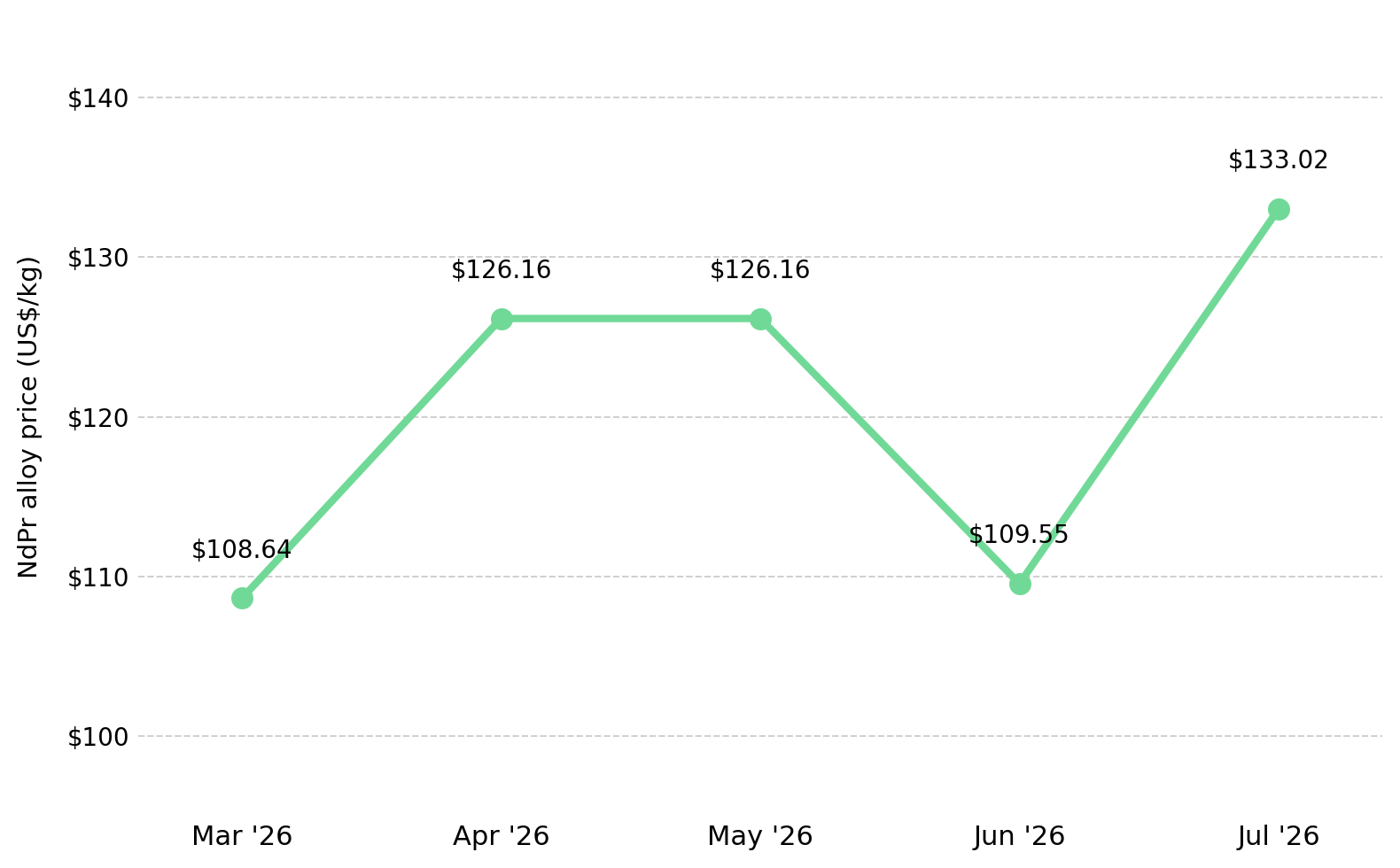
The NdPr alloy benchmark reached approximately $133/kg on the July 1, 2026 print, up more than 21% month over month and above the $110/kg floor price in the US Department of Defense's supply agreement with MP Materials. The premium above the government-supported floor suggests the market expects supply constraints to persist beyond the near term.
J.P. Morgan's early-July note raised its platinum price forecast to an average of $1,800/oz by the end of 2026 and $1,950/oz by the end of 2027, citing supply restrictions concentrated in South Africa. Although a stronger US dollar following the Fed's July 29, 2026 rate decision could weigh on near-term price performance, currency movements do not change the longer-term supply outlook underpinning platinum's projected market deficits.
The Investment Thesis for Critical Minerals
- Producers already operating permitted facilities, including those supported by government financing, still face multi-year timelines to bring incremental heavy rare earth and PGM capacity online, allowing existing production to retain its scarcity value while new supply remains years from market.
- Developers advancing projects through feasibility or definitive feasibility study stages are better positioned to contribute future supply than earlier-stage peers, particularly where prior investment by a major has advanced technical studies and a subsequent exit returns commercial control to the developer.
- Because relatively few PGM and titanium projects are advancing beyond the resource stage, milestones such as resource updates, metallurgical testwork, and preliminary economic assessments provide increasingly important evidence of which projects are progressing toward potential future production.
- Price gains across both rare earths and PGM indicate the market expects supply deficits to persist beyond the near term, consistent with the limited pipeline of new mine and processing capacity.
- Multi-year project development timelines remain the primary constraint on new critical mineral supply, even where financing, permitting, and government support are already in place. Existing producers and later-stage development projects are therefore better positioned to benefit while new supply advances toward commercial production.
The projected deficits across PGM, rare earths, titanium, and graphite feedstocks reflect supply constraints that cannot be resolved quickly. Declining mine output, a limited pipeline of advanced projects, and multi-year development timelines, even for government-backed expansions at operating facilities, indicate that new supply is likely to enter the market over years rather than quarters. In that environment, operational milestones such as feasibility studies, permitting decisions, construction updates, commissioning timelines, and binding offtake agreements become more meaningful indicators of future supply than short-term price movements or single-quarter production data.
TL;DR
Declining platinum mine output, a limited pipeline of advanced projects, and multi-year development timelines continue to constrain new supply across PGM, rare earths, rutile, and graphite despite ongoing project advancement and government-backed investment. The article examines how ValOre Metals, Sovereign Metals, and Energy Fuels illustrate broader industry trends, showing that technical milestones, financing, offtake agreements, and commissioning progress have become increasingly important indicators of where future supply will emerge and why commodity deficits are likely to persist beyond the near term.
FAQs (AI-Generated)
Analyst's Notes





Subscribe to Our Channel













Stay Informed



