




Brazil's R$7 Billion Bill Links PGM Exploration to Financing Access



Brazil's R$7 billion minerals bill could expand financing for platinum group metal exploration and domestic processing as platinum inventories remain tight.
- Brazil's Senate approved the National Policy on Critical and Strategic Minerals (PNMCE) on September 2, 2026, moving the bill to presidential sanction before its proposed R$7 billion incentive package, including R$2 billion for the Mineral Activity Guarantee Fund (FGAM), can take effect.
- The bill makes mineral prospecting and research eligible for incentivized debentures and limits research authorizations in critical and strategic mineral areas to 10 non-extendable years, directing policy value toward explorers that convert drilling into final research reports.
- Platinum group metal (PGM) ores appear on Brazil's strategic minerals list under Ministry of Mines and Energy (MME) Resolution No. 2 of June 18, 2021, but access to the new incentives requires project registration and qualification by a national council.
- The World Platinum Investment Council (WPIC) forecasts end-2026 above-ground platinum stocks of 2,010 thousand ounces (koz), equal to 3.4 months of demand, and states that governments are working to re-establish domestic supply chains as thin inventories become increasingly risky.
- Explorers with active drilling programs, district-scale land positions and near-term economic studies in Brazil are positioned to engage with the framework once it is implemented.
Brazil's Senate Advances R$7 Billion for Mineral Production & Processing
Brazil's Senate approved Bill No. 2,780/2024 on September 2, 2026, advancing legislation that would create the PNMCE and provide up to R$7 billion in government incentives for critical and strategic mineral projects if sanctioned. Because senators changed only the wording, not the substance, the bill will not return to the Chamber of Deputies and now proceeds to presidential sanction.
The bill would direct R$2 billion from the federal government to the FGAM for activities linked to producing critical and strategic minerals. It would also provide R$5 billion in tax credits over five years for beneficiation and transformation within Brazil, making domestic processing a condition for receiving those credits.
The bill defines critical minerals as those whose availability is threatened by supply chain constraints and whose scarcity could affect national priorities such as the energy transition, food security, and sovereignty. It defines strategic minerals as those for which Brazil holds significant reserves that support its trade balance or the development of technologies that reduce greenhouse gas emissions. A federal council will assign each classification, and its decisions will determine which projects can access the incentives.
Low Platinum Inventories Drive Domestic PGM Supply Chain Investment
The WPIC Platinum Quarterly for the second quarter of 2026 forecasts a 265 koz platinum surplus for 2026. The revision reverses the May forecast of a 297 koz deficit after a 601 koz reduction in projected investment demand. The report attributes the 548 koz first-half surplus to outflows from exchange-traded funds (ETFs) and exchange inventories, while forecasting a 283 koz deficit in the second half. It forecasts above-ground stocks of 2,010 koz at the end of 2026, equal to 3.4 months of global demand, leaving limited inventory to absorb a supply disruption or stronger-than-forecast demand.
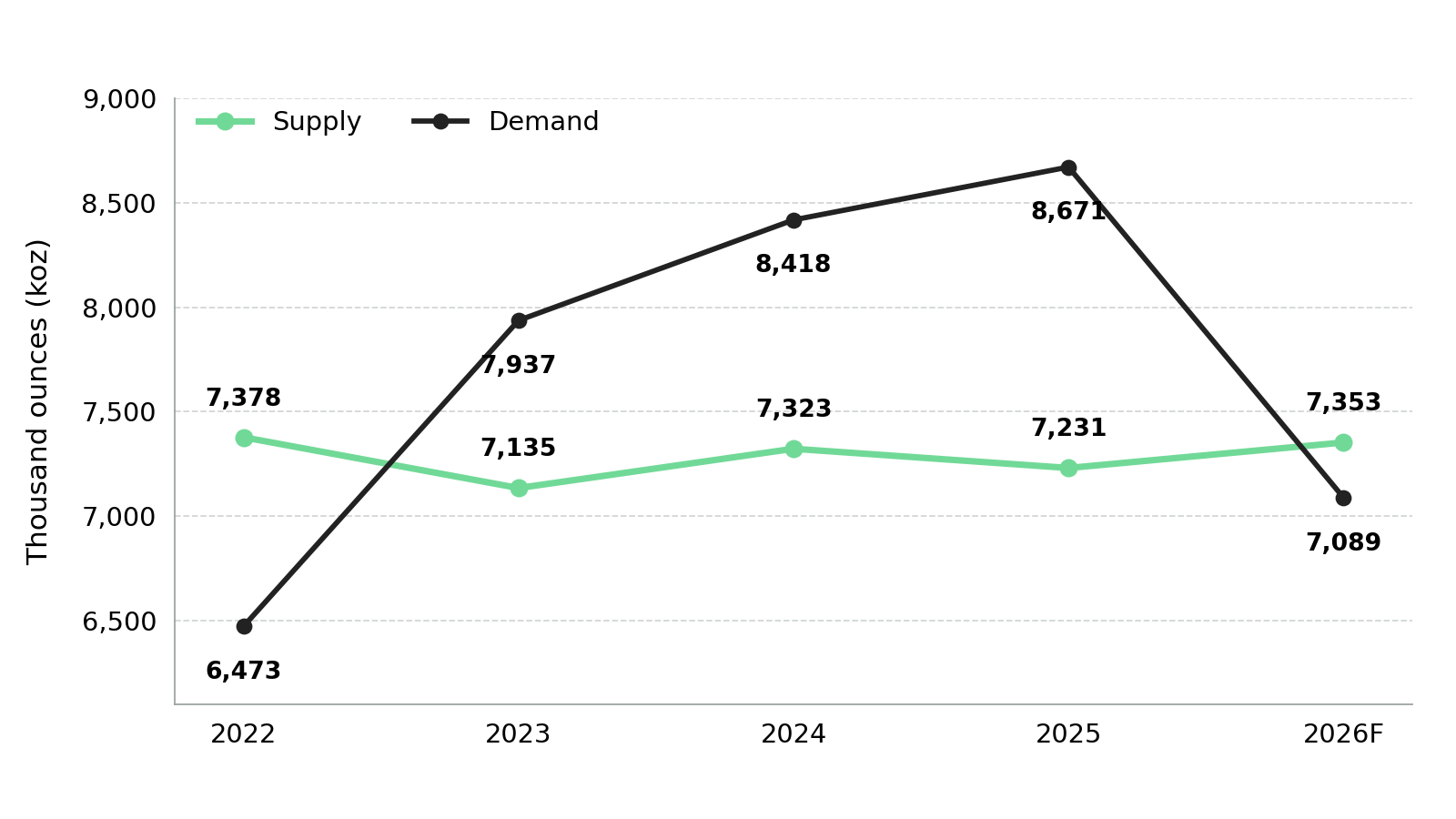
WPIC links low platinum inventories to government efforts to rebuild domestic supply chains and stockpile strategic metals, reducing dependence on a small number of producing regions. Concentrated production and the importance of PGMs in industrial applications have placed them on multiple national critical minerals lists because thin inventories leave little capacity to absorb a supply disruption.
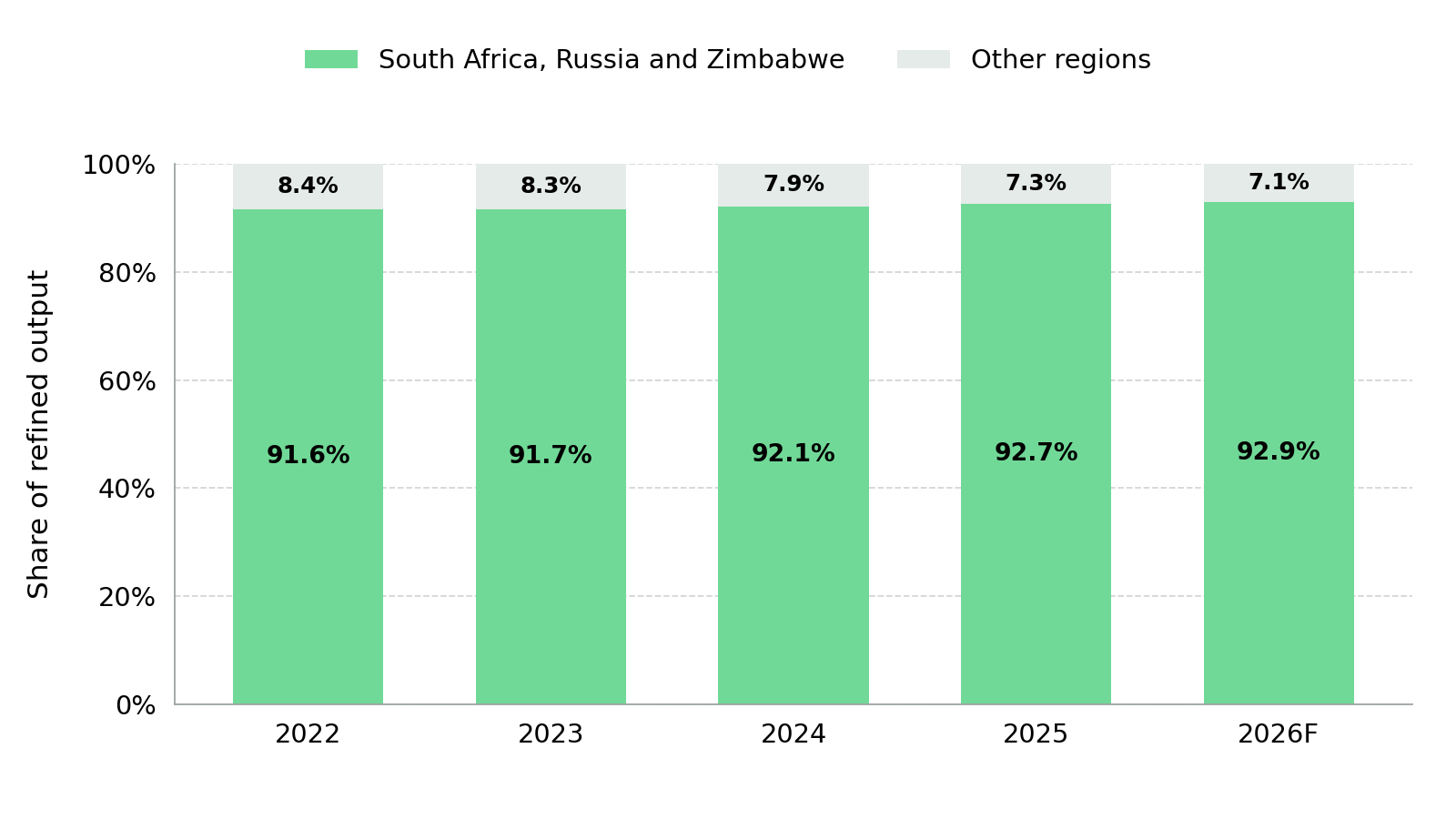
The report forecasts 2026 platinum mine supply of 5,551 koz, 10 koz below the 5,561 koz produced in 2025, indicating no supply growth from the existing mine base. South Africa accounts for 4,005 koz of refined production, compared with 646 koz from Russia and 508 koz from Zimbabwe. Outside those three countries and North America, refined production totals 192 koz. Brazil's bill would direct financing toward domestic production and processing of minerals classified as critical or strategic, supporting supply development outside the largest producing regions.
Brazil's 2021 PGM Listing Supports Funding Access Pending Council Approval
Agência Brasil reports that MME Resolution No. 2 of June 18, 2021, lists PGM ores among Brazil's strategic minerals used in high-technology products and processes, alongside cobalt, copper, graphite, lithium, nickel, niobium, and rare earths. Because the resolution predates the PNMCE, PGM ores are already designated as strategic under Brazil's existing mineral policy.
The National Council for the Industrialization of Critical and Strategic Minerals (CIMCE) will determine which minerals are classified as critical or strategic, so the 2021 listing alone would not guarantee access to the incentives. The Senate text also limits every incentive to projects entered in a national register and qualified by the CIMCE, making registration and qualification required steps for PGM projects.
10-Year Research Term & Debenture Access Favor Active PGM Projects
The bill would make mineral prospecting and research eligible for incentivized debentures, allowing private companies to raise fixed-income financing for projects at those stages. Rapporteur Senator Eduardo Braga said the change would give priority mineral projects the same financing treatment as energy, transport, and sanitation projects, broadening the mining sector's access to capital markets. Only projects entered in the national register and qualified by the CIMCE would be eligible for the debentures or other incentives.
Research authorizations in areas with critical or strategic mineral potential would carry a non-extendable 10-year term, giving active explorers time to complete drilling and submit final research reports. Paired with incentivized debenture eligibility for prospecting and research, these provisions would favor projects already moving from drilling toward economic studies.
ValOre Metals is advancing its Pedra Branca property through a 2026 program focused on resource growth and processing studies ahead of economic assessment. Five zones totaling more than 6,000 meters of 2023 drilling remain outside the 2022 resource estimate, while Salvador adds another discovery for evaluation. The company is targeting a resource update in the third quarter of 2026 and a preliminary economic assessment (PEA) in the fourth quarter, followed by licensing and an environmental impact assessment (EIA) in the first quarter of 2027, moving Pedra Branca from exploration toward development.
Nick Smart, Chief Executive Officer of ValOre Metals, explains why Brazil can advance PGE supply diversification:
“You've got good projects within a jurisdiction like Brazil, which is a good place to develop projects like this, there would be an added impetus to bring those projects forward. We're starting to see that as well.”
Regulatory Timing Determines PGM Access to Brazil's Mineral Financing
WPIC forecasts platinum stock cover of 3.4 months and mine supply of 5,551 koz in 2026, while regions outside the dominant producers and North America account for only 192 koz of refined output. For qualifying PGM projects in Brazil, debenture eligibility for prospecting and research would provide a financing route, while the 10-year research term would favor projects that turn exploration work into final research reports.
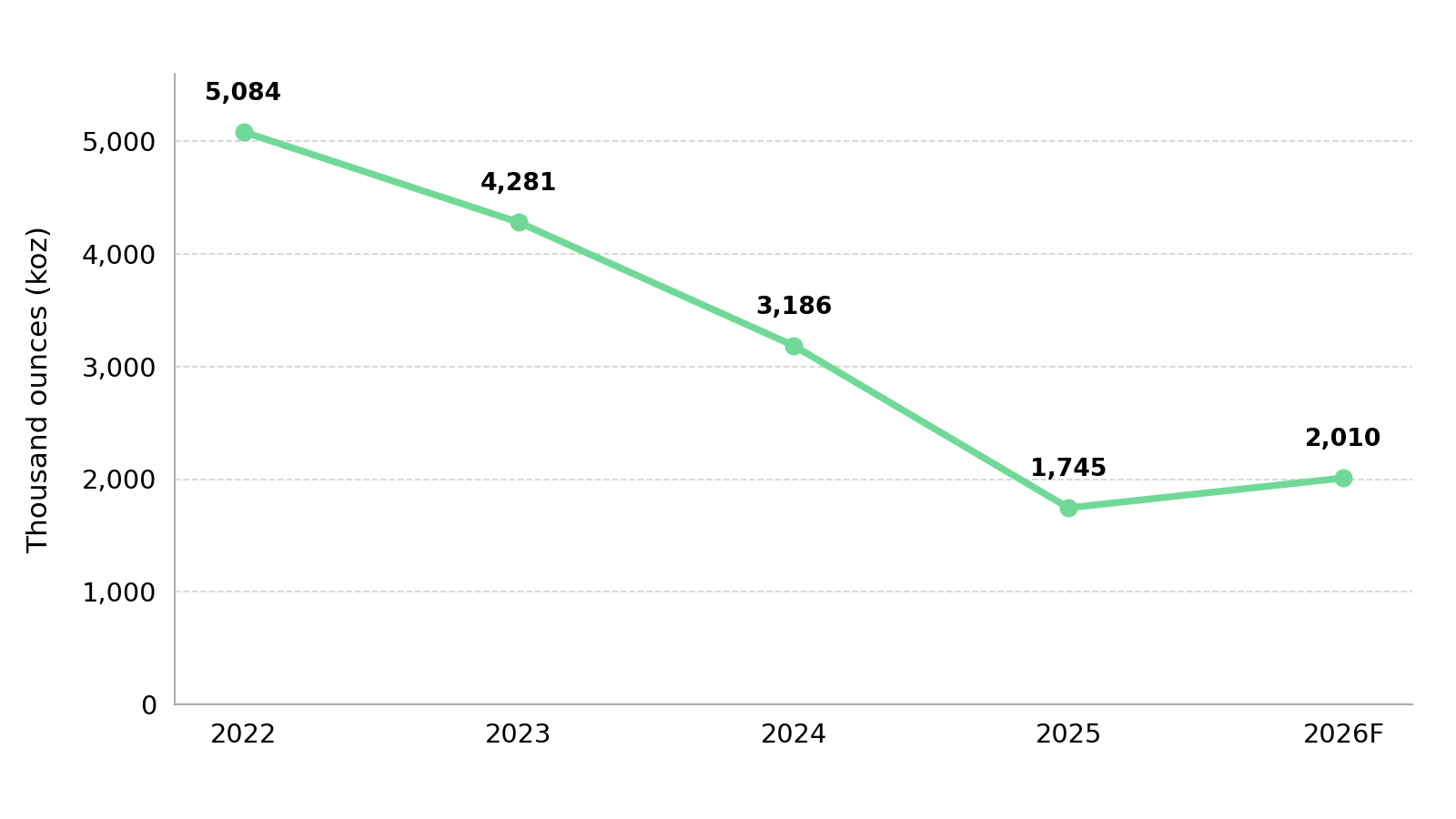
Presidential sanction would enact the bill, after which CIMCE would need to classify PGMs and qualify projects entered in the national register before they could access FGAM guarantees or debenture financing. WPIC's first 2027 outlook, due in November, will indicate whether the projected second-half deficit continues into next year.
The Investment Thesis for Platinum Group Metals
- Brazil's National Policy on Critical and Strategic Minerals provides up to R$7 billion in incentives, including a R$2 billion mineral activity guarantee fund, creating a dedicated national financing framework for critical and strategic mineral projects.
- Producers and developers building domestic processing capacity are best placed to use the R$5 billion in beneficiation and transformation tax credits, while explorers gain a financing route through the inclusion of prospecting and research in incentivized debenture eligibility.
- A non-extendable 10-year limit on research authorizations favors explorers that convert drilling into final research reports, while ground that is not advanced can return to national mining agency auctions.
- PGM ores already sit on Brazil's 2021 strategic minerals list, but access to incentives depends on project registration and qualification by a national council that will determine mineral classifications.
- WPIC forecast 3.4 months of above-ground platinum stock cover at the end of 2026, together with its view that governments are rebuilding domestic supply chains, increasing the policy relevance of PGM exploration outside established producing regions.
- Exploration-stage projects remain exposed to financing, dilution and regulatory timing risk, making capital discipline, permitting visibility and consistent drilling results more important to valuation than legislative approval alone.
Brazil’s Senate-approved critical minerals bill would extend incentivized debenture financing to prospecting and research, bringing policy support to the exploration stage if sanctioned. Tight platinum inventories and concentrated production are encouraging governments to strengthen domestic supply chains, increasing the strategic relevance of Brazilian PGM projects. The framework would favor active projects that advance exploration results and determine whether domestic processing is economically viable. Access would depend on presidential sanction and project qualification under the new framework.
TL;DR
Brazil's Senate approved a critical minerals bill that would provide up to R$7 billion in incentives if sanctioned, including guarantees for mineral production and tax credits for domestic processing. The legislation would also make prospecting and research eligible for incentivized debentures, giving qualified exploration projects another capital market financing route. Platinum group metal (PGM) ores already appear on Brazil's strategic minerals list, but access would require council classification and project qualification through a national register. The policy arrives as platinum inventories cover 3.4 months of demand and mine supply remains concentrated in a few regions. The framework therefore favors active Brazilian PGM projects already moving from drilling toward economic studies and licensing.
FAQs (AI-Generated)
Analyst's Notes





Subscribe to Our Channel




.png)






Stay Informed


