




Saudi Pipeline Shutdown Favors Non-Gulf Crude as Brent Hits $107


Restricted Gulf routes favor non-Gulf crude and tanker exposure, while a Saudi pipeline restart could quickly reverse oil’s supply premium.
- Saudi Arabia shut the East-West crude pipeline on September 11 after drones launched from Iraq struck it, removing export capacity as Brent rose 2.82% to $107.56 per barrel on September 14.
- The pipeline can carry 7 million barrels per day around the Strait of Hormuz, so its closure forces Saudi exports back through a route where US Central Command said on September 12 that vessels require permission to pass.
- A restart within 30 days could move Brent toward Hong Leong Investment Bank’s September 13 end-2026 forecast of $95 to $100, while an outage beyond 60 days could keep it above $107.56.
- Riyadh has disclosed neither the damage extent nor a restart date, preventing reliable outage estimates and supporting Brent’s supply premium.
- Saudi Energy Ministry confirmation that East-West throughput has returned to 7 million barrels per day would restore export capacity and remove Brent’s outage premium.
Drone Strikes Close the Saudi Bypass & Lift Brent Above $107
Saudi Arabia shut the East-West crude pipeline after drones launched from Iraq struck the line in the Riyadh and Medina regions, removing a key bypass around the Strait of Hormuz. When markets reopened, Brent rose 2.82% to $107.56 per barrel, while West Texas Intermediate (WTI) gained 2.89% to $102.94. The rebound recovered most of Brent’s decline from Thursday’s near-$108 peak to Friday’s $104.61 settlement, showing how quickly lost export capacity can restore a supply premium.
The East-West pipeline can carry up to 7 million barrels per day from Gulf Coast fields to Red Sea terminals, allowing Saudi crude to bypass the Strait of Hormuz. Riyadh has disclosed neither the damage extent nor a restart date, increasing Saudi export dependence on Hormuz and supporting Brent’s supply premium.
Blockade & Proxy Reach Hold 7 Million Barrels Off the Market
The pipeline closure compounds the Hormuz blockade by removing an alternative route for crude that cannot transit the strait. US Central Command reported redirecting 100 commercial vessels during the blockade and destroying 10 Iranian tankers in one week, confirming restricted shipping access and continued oil supply risk.
Drones launched from Iraqi territory showed that Saudi inland infrastructure is within proxy attack range, raising the risk of further damage and a longer outage. Diplomatic delays add to that risk: Omani Foreign Minister Badr Albusaidi postponed the Salalah meeting to seek consensus, while Ebrahim Azizi, head of the Iranian parliament’s national security committee, said talks would remain futile until Iran’s terms were met. The reported Houthi capture of Perim Island also threatens Bab el-Mandeb, exposing the pipeline’s Red Sea outlet to a second chokepoint.
Undisclosed Repair Timeline Pushes Middle East Flows Into 2027
The restart depends on an undisclosed repair schedule, leaving the outage duration and Brent’s supply premium uncertain. Amin Nasser, President and Chief Executive Officer of Saudi Aramco, said during the company’s August earnings call that the East-West pipeline had stabilized oil markets more than US-led strategic reserve releases, highlighting its role in replacing blocked export capacity.
Distillate Stocks 13% Below Average Shift Margin to US Refiners
US retail diesel reached $5.967 per gallon, up $2.201 from a year earlier, while distillate inventories stood 13% below the five-year average. Low inventories and 97.8% refinery utilization limit near-term supply growth, giving US refiners pricing power as airlines and freight operators absorb higher fuel costs.
A refiner’s exposure depends on whether it can replace Gulf crude with domestic barrels. US Central Command said every vessel crossing the blockade required permission, leaving Gulf-dependent refiners with greater disruption risk than those using domestic crude.
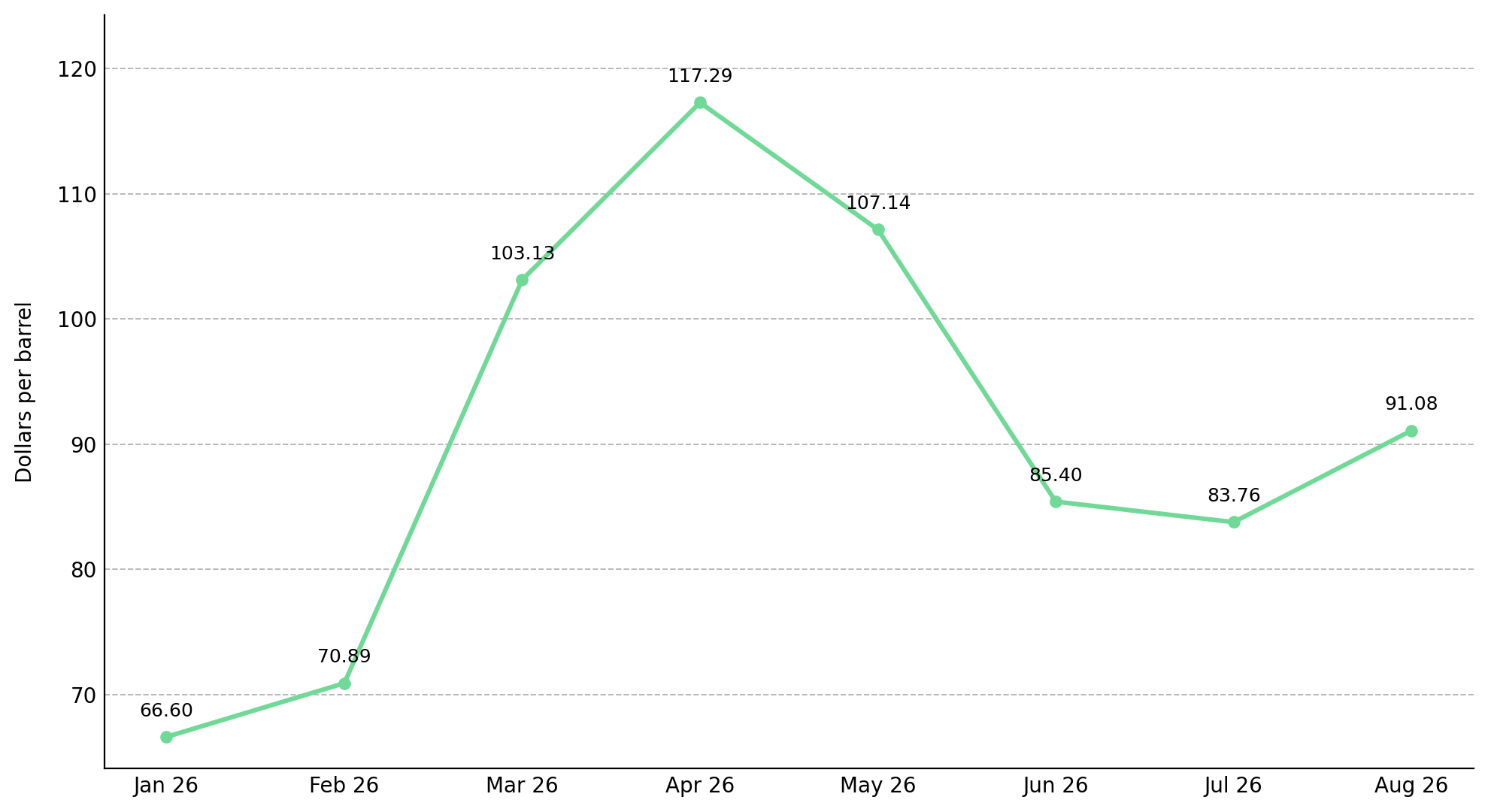
Riyadh has not disclosed a restart date, preventing reliable outage estimates. President Donald Trump said the war would likely end after November’s midterm elections, but he identified no event that would restore oil flows. Brent’s 29% fall from $117.29 in April to $83.76 in July shows how quickly a supply premium can reverse, and a restart announcement could cause leveraged long positions to lose heavily in one session. Position sizing limits that downside if the premium disappears before a position can be adjusted.
What Ends Brent’s Pipeline Premium
During a blockade, oil prices depend more on export capacity than production capacity. Record US output of 13.947 million barrels per day did not prevent Brent from rising above $107 after the pipeline closed because available crude cannot reach buyers through blocked routes. The closure increases the value of alternative export infrastructure by concentrating flows through the remaining chokepoints.
Saudi Energy Ministry confirmation that East-West throughput has returned to its 7 million-barrel-per-day capacity would reverse the case by restoring an alternative export route. Until then, ceasefire headlines may lower crude temporarily but cannot restore capacity, leaving those price declines vulnerable to reversal.
Owners of non-Gulf crude and tanker operators serving longer routes can capture higher prices and war-risk rates as buyers seek secure supply. Long-horizon funds can price route security into valuations rather than avoid the sector because reduced capital for Gulf-dependent projects could limit oil supply in the 2030s.
Analyst's Notes





Subscribe to Our Channel





Stay Informed


