




Undervalued? Rainbow Rare Earths' Duo Projects Without the Capex Risk of Conventional Mining


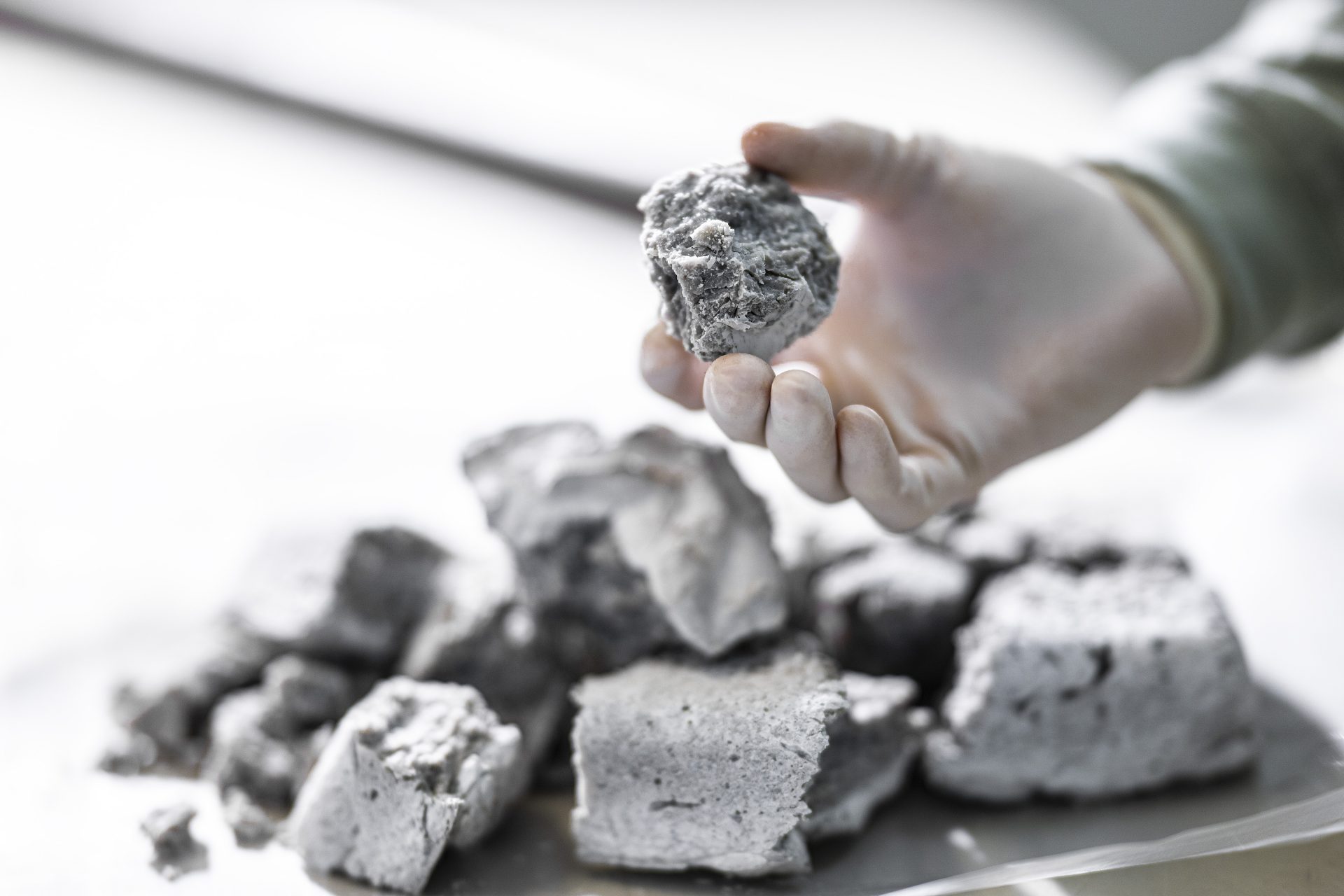
Rainbow Rare Earths (LSE:RBW) argues its phosphogypsum rare earths model, 70-75% margins and $300m EBITDA outlook justify a re-rating above its $250m market cap.
- Rainbow Rare Earths' phosphogypsum-based extraction model delivers EBITDA margins of 70-75% and post-tax IRRs of 40-45% across its two projects without conventional mining costs.
- Combined attributable EBITDA of $300 million by 2030 compares with Rainbow's $250 million market capitalisation - roughly 75% of Serra Verde's forecast EBITDA at a fraction of Serra Verde's $2.8 billion acquisition value.
- Uberaba's March 2026 Economic Assessment showed a post-tax NPV10 of $916 million, a 45% IRR and average EBITDA of $217 million per year over 30 years.
- The U.S. DFC has committed $50 million of equity to Phalaborwa via TechMet, while Mosaic (NYSE:MOS) holds 51% of the Uberaba joint venture.
- First production is targeted for H1 2029 at Phalaborwa and late 2030 at Uberaba, with binding offtake term sheets expected before the end of 2026.
George Bennett, CEO of Rainbow Rare Earths (LSE:RBW), discussed how the company is developing two rare earth projects: Phalaborwa in South Africa, and Uberaba in Brazil that recover rare earths from phosphogypsum, the waste residue left over from phosphoric acid production, rather than from conventional hard-rock mining. Bennett contends that the combination of low capital intensity, high margins and de-risked partnerships means Rainbow's roughly $250 million market capitalisation understates what the two projects could generate.
A Different Kind of Rare Earths Company
Rainbow's projects avoid the costliest and riskiest stages of conventional rare earth development. Where a typical hard-rock project must mine, crush, mill and float ore before chemically cracking a concentrate into carbonate form, Rainbow's phosphogypsum feedstock already sits above ground, a by-product of phosphate rock that has been processed into phosphoric acid for the fertiliser industry. Rainbow reclaims the rare earths from that waste stack using front-end loaders, a slurry and screening step, acid leaching and continuous ion exchange, producing a high-grade feed for a conventional solvent extraction circuit - the same separation technology used industry-wide.
The structural difference shows up directly in project economics. As Bennett puts up:
"We have a post-tax IRR on both projects of 40-45%. A lot of projects think they've got an IRR of 20% - they're doing well. We've got an EBITDA margin of between 70 and 75% on these projects, and we've got a very low capital intensity."
Bennett also points to his team's background: Rainbow's technical staff previously worked with him at DRA (formerly M&M Engineering), where they built more than 80 chemical and metallurgical process plants across commodities including gold, copper, uranium and nickel which is experience he credits for Rainbow's ability to commercialise a phosphogypsum extraction process that, he says, had been discussed in academic literature for decades without being proven economically.
Two Projects, One Playbook

Phalaborwa (South Africa) is Rainbow's most advanced project, currently 75% through definitive feasibility study engineering. Using spot pricing from December 2024, the project's economic study showed revenue of $250 million, EBITDA of $180 million and a post-tax IRR of 38%. At current spot pricing, Bennett says the project would generate $210-220 million of EBITDA annually. Capital cost is estimated at $325-350 million, and Rainbow currently owns 85% of the project, with an option to acquire the remaining 15%.
Uberaba (Brazil) is Rainbow's second project, developed in a joint venture with The Mosaic Company (NYSE:MOS), the fertiliser producer that owns 51% to Rainbow's 49%. A Pre-Feasibility Study formally commenced in September 2026, following a March 2026 Economic Assessment that showed a post-tax NPV10 of $916 million, a post-tax IRR of 45%, average EBITDA of $217 million per year over a 30-year life-of-mine, and a payback period of 1.7 years, based on spot pricing reported by Argus Media in March 2026. The project's phosphogypsum grade of 5,100 ppm TREO is modestly higher than Phalaborwa's 4,400 ppm, and Uberaba benefits from an operating phosphoric acid plant with a 30-year feedstock life, compared with the finite 16-year feed at Phalaborwa's now-shuttered acid plant.
De-Risking Through Partners
Rainbow's projects are backed by parties beyond the company itself. TechMet, a critical minerals fund that owns 12% of Rainbow, brought in the U.S. International Development Finance Corporation (DFC), which committed $50 million of project equity into Phalaborwa roughly three and a half years ago, with equity that converts at Final Investment Decision (FID), expected around the end of the third quarter of 2027. On Uberaba, Mosaic is a Fortune 500, NYSE-listed partner with a market capitalisation of $12 billion; Bennett notes that when the Rainbow-Mosaic deal was announced in March 2026, Mosaic's market cap rose by over $1 billion against a $30 million increase for Rainbow - a gap he attributes to the difference between U.S. and London listing dynamics, and part of the reason Rainbow is now evaluating a U.S. listing with BMO Capital Markets advising.
Why the Market May Be Mispricing Rainbow
Bennett's central valuation argument rests on a comparison with Serra Verde, a Brazilian clay-hosted rare earths project that was acquired in a deal valuing it at $2.8 billion, against forecast EBITDA of $400 million. Rainbow's attributable share of EBITDA across both of its projects - $100 million from its 49% of Uberaba and $200 million from Phalaborwa - totals $300 million by 2030, roughly 75% of Serra Verde's forecast EBITDA, yet Rainbow trades at a market capitalisation of $250 million.
"If you take that EBITDA number - $100 million equates to Rainbow, and you take $200 million from Phalaborwa - that's $300 million of EBITDA that we'll generate through both projects by 2030, and we're trading at $250 million of market cap."
Bennett also cites third-party benchmarking on cost position: Benchmark Mineral Intelligence rates Rainbow among the lowest-cost rare earth producers in the West, while Argus Media independently ranks it among the highest-margin rare earth businesses globally.
Interview with George Bennett, CEO of Rainbow Rare Earths
Funding the Build-Out
Combined capital costs across both projects run into the hundreds of millions, but Bennett argues the funding path is manageable. Phalaborwa's capex of $325-350 million is expected to carry roughly two-thirds debt ($210 million), leaving an equity requirement of $110-120 million, of which $50 million is already committed via the DFC, leaving a residual equity gap of $70 million to be raised and targeted a year from now.
On Uberaba, Rainbow's 49% share of project capex would similarly carry roughly two-thirds debt, leaving an equity requirement of $50 million that Bennett suggests could potentially be funded from Phalaborwa's free cash flow once that project reaches production.
Catalysts and Milestones
Rainbow expects to sign initial offtake term sheets before the end of 2026, alongside the selection of a technology partner for the final solvent extraction circuit. Final feasibility study numbers for Phalaborwa are due for release early in 2027, with permitting and project financing to follow through 2027, early works targeted for the fourth quarter of 2027, full construction in 2028, and initial production in the first half of 2029. Uberaba's Pre-Feasibility Study is targeted for completion in H2 2027, with a Definitive Feasibility Study in 2028, construction from 2029, and initial production targeted for late 2030.
The Investment Thesis for Rainbow Rare Earths
- Rainbow's phosphogypsum-based model avoids conventional mining, crushing and milling costs, translating into EBITDA margins of 70-75% and post-tax IRRs of40-45% across its two projects.
- Combined attributable EBITDA of $300 million by 2030 compares with a market capitalisation of $250 million, a gap Bennett argues is unjustified relative to recent sector transaction comparables such as Serra Verde.
- Third-party validation from TechMet, the U.S. DFC ($50 million committed equity) and Mosaic (a Fortune 500 partner) reduces counterparty and technical risk on both projects.
- Near-term catalysts - binding offtake term sheets, a solvent extraction technology partner selection, and Phalaborwa's final feasibility numbers - are expected before the end of 2026.
- Funding gaps are relatively modest ($70 million at Phalaborwa, $50 million at Uberaba) against already-committed debt and equity capacity.
- Considerations for investors: both projects remain pre-FID and pre-construction, with first production not expected until H1 2029 (Phalaborwa) and late 2030 (Uberaba); capex and offtake terms are not yet finalised, and reported Uberaba capex figures varied within the same interview, underscoring that final feasibility numbers should be treated as the reference point once published.
Macro Thematic Analysis
Rare earths occupy an outsized position in the global economy relative to their market size. Bennett frames the wider opportunity in stark terms: the sector itself is worth only tens of billions of dollars, yet it underpins trillions of dollars of downstream industry, from fibre-optic communications to electric vehicles, wind turbines and defence systems.
"Even though the rare earths market is relatively small in terms of commodities at $100-200 billion of value at maximum, it actually impacts $6.3 trillion of industry."
This imbalance has driven a wave of Western government intervention. Benchmark pricing floors of $110 per kilogram for neodymium-praseodymium (NdPr), set through deals involving the U.S. and Australian governments with MP Materials, Serra Verde and Lynas, have lifted realised NdPr pricing well above prior levels - including inside China, where domestic pricing has risen from circa $60-65 per kilogram to circa $120-140 per kilogram since the benchmarks were established. With China controlling the large majority of global rare earth processing capacity, Western supply chain independence remains a structural, multi-year theme that projects like Phalaborwa and Uberaba are positioned to benefit from as NdPr, together with the heavier disprosium and terbium, comprise the bulk of magnet rare earth value.
TL;DR
Rainbow Rare Earths (LSE:RBW) extracts rare earths from phosphogypsum waste rather than through conventional mining, giving its Phalaborwa (South Africa) and Uberaba (Brazil, with Mosaic) projects EBITDA margins of 70-75% and post-tax IRRs of 40-45% on relatively low capital costs. CEO George Bennett argues combined attributable EBITDA of circa $300 million by 2030 against a circa $250 million market cap - roughly 75% of forecast Serra Verde EBITDA at a fraction of that company's $2.8 billion acquisition value - shows the market has yet to price in Rainbow's progress. Backing from TechMet, the U.S. DFC and Mosaic supports the case, though both projects remain pre-FID with first production not expected before 2029.
FAQs (AI Generated)
Analyst's Notes





Subscribe to Our Channel





Stay Informed



