K2 Gold Receives Full Permit for Exploration Drilling to Unlock Multi-Target Mojave Gold Project


K2 Gold receives Mojave Record of Decision after 3.5 years, unlocking drilling on a high-grade California gold project with undrilled targets and $25M in the treasury.
- K2 Gold has received a Record of Decision on its Mojave Project in Inyo County, California, concluding a three-and-a-half-year Environmental Impact Statement process and clearing the path for a fully permitted multi-pad drilling programme to commence.
- The Mojave Project's east side gold trend hosts multiple parallel stacked oxide structures, underpinned by a highlight drill intercept of 86.9 metres at 4 g/t gold from the Dragonfly target, with early metallurgical shake tests returning recoveries of 96–98% on all-oxide material starting at surface.
- A new high-grade discovery area located 1.5 kilometres north of Dragonfly, on the same structural trend and never previously drilled, has returned rock samples of up to 375 g/t gold, representing a significant unattributed upside target ahead of the upcoming drill programme.
- The Mojave Project also hosts a separate 5 km copper trend on the west side and a polymetallic Morning Star target with surface samples grading over 2,200 g/t silver, 13 g/t gold, and 3% copper - both accessible under existing permits with no further BLM approval required for drilling.
- K2 Gold closed a C$25.25 million financing in January 2026, including its first institutional participation, has eliminated all warrant overhang, and has allocated up to C$12 million for exploration in 2026, with the company funded beyond the current year.
K2 Gold (TSXV:KTO) has spent three and a half years navigating one of the most demanding permitting processes available to an exploration-stage company. With a Record of Decision for drilling now in hand, the company is preparing to drill a project that has returned some striking early results - and a significant amount of ground that has never been tested.
Permitting Process Changing the Narrative
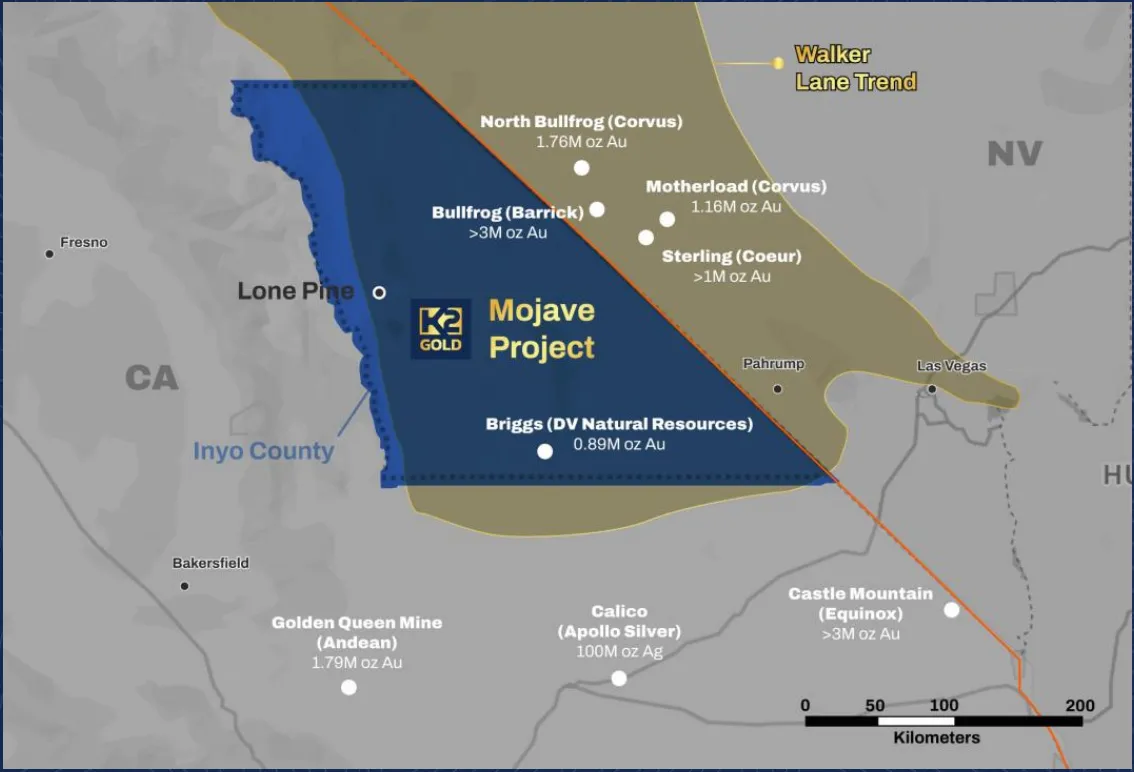
K2 Gold's Mojave Project sits in Inyo County, California with an exploration history at Mojave dates to 2020, when its first drill programme returned results including a highlight intercept of 86.9 metres at 4 g/t gold from the Dragonfly target, with mineralisation beginning at surface in all-oxide material.
Shortly after that programme concluded, K2 Gold was notified by the Bureau of Land Management (BLM) that its permitting process would be escalated from an Environmental Assessment to a full Environmental Impact Statement, a level of scrutiny typically associated with mine development rather than exploration drilling. The company spent the subsequent three and a half years working through that process alongside BLM and a team of consultants.
Anthony Margarit, President and CEO, described the experience as ultimately constructive, noting that much of the work involved community education and addressing historical perceptions of the mining industry particularly around water use, which remains a sensitive issue in California's desert counties.
"I think overall there's an issue with overcoming the mining industry's past. There's no doubt that our industry has been responsible for a number of sins in the past. Unfortunately, people hear 'mining' and a lot of people feel like they see these giant open pits and acid rock drainage issues, and people leap from exploration stage to 'this is going to be a mine.'"
The company invested considerable time in direct community engagement, explaining the staged nature of exploration and working to demonstrate that its current activities: drilling, sampling, and ground mappingrepresent relatively low-impact work. Water management, given California's ongoing resource pressures, was a central topic.
What the Geology Shows
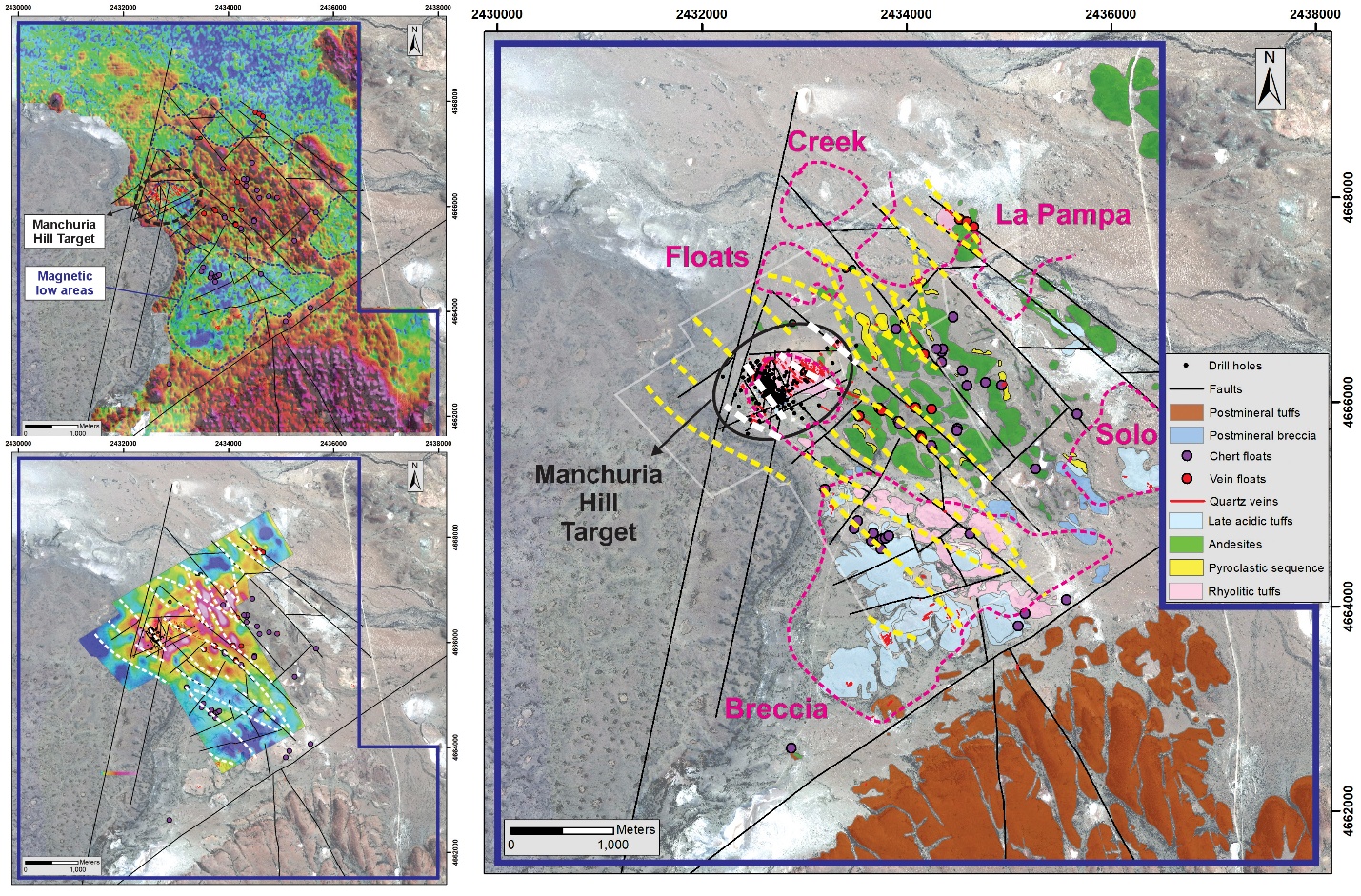
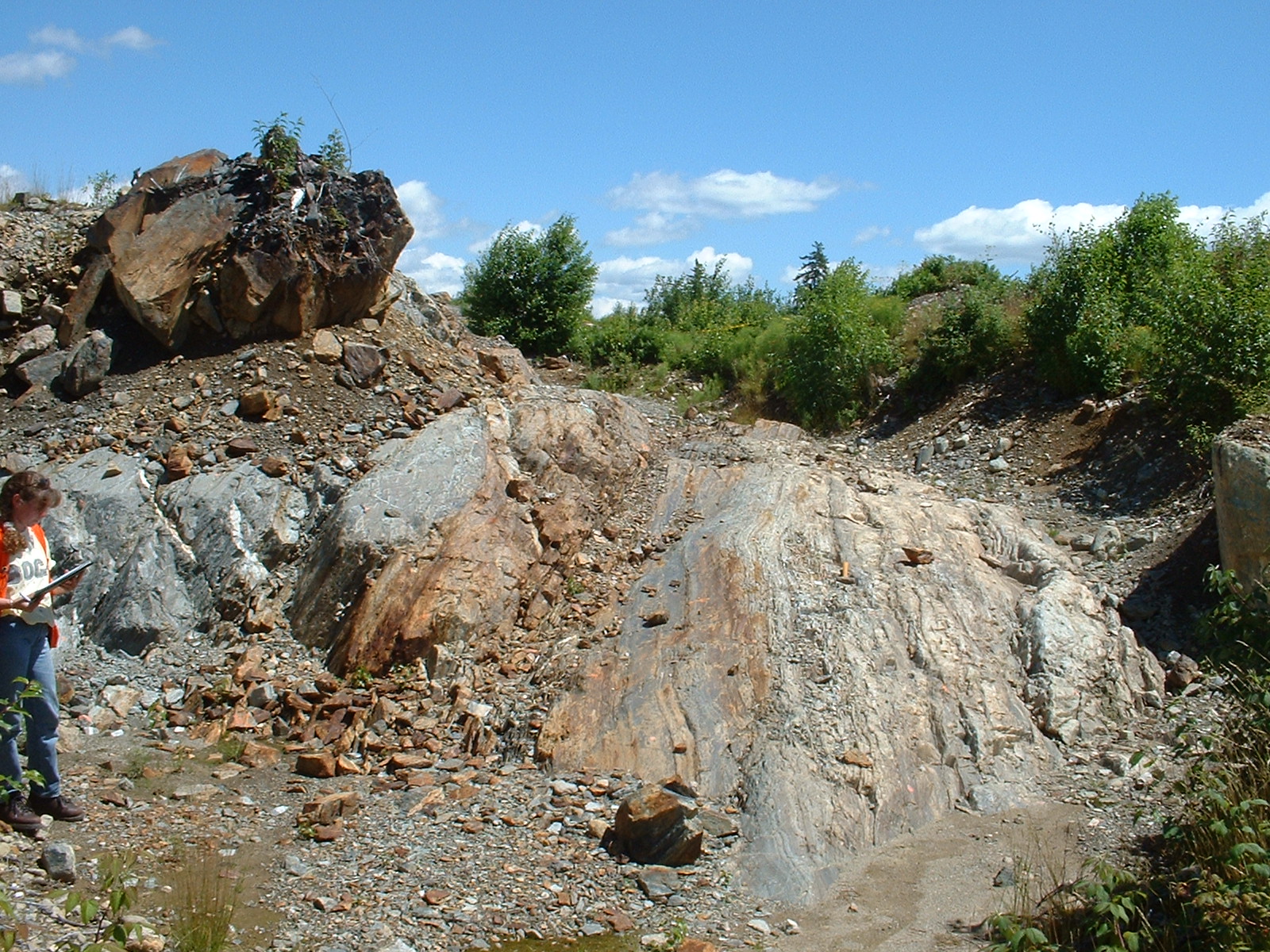
The Mojave Project encompasses two primary structural trends of current focus. On the east side, K2 Gold is targeting a 5 km gold trend running from the Newmont to the Dragonfly target areas. The mineralisation in this corridor consists of multiple parallel stacked structures, each 30 to 70 metres wide, spaced 10 to 20 metres apart, and dipping steeply to the west at approximately 70 degrees. All material drilled to date is oxide, mineralisation begins at surface, and the deepest holes planned in the next programme average 220 to 250 metres without intersecting the sulphide interface in any previous drilling.
Early metallurgical test work has returned recoveries of 96–98% suggesting favourable processing characteristics for the oxide material. These figures are preliminary and require further systematic work to be meaningful for project economics, but they are directionally positive for a project at this stage.
Interview with Anthony Margarit, President & CEO of K2 Gold
High-Grade Discovery and Undrilled Targets
Among the most significant development at Mojave is a discovery area located 1.5 kilometres north of the Dragonfly target, on strike and within the same structural system. Rock samples from this area have returned grades of 375 g/t gold, with additional samples of 142.5 g/t and numerous results above 30 g/t in 2020.
Two further targets, Stega and Flores zone, have also not been drilled. Channel samples at Stega are running 4-8 g/t gold over multi-metre intervals. The Flores target, situated east of the Newmont area, was the subject of a 43-metre channel sample grading 4 g/t gold.
On the west side of the project, a separate 5 km copper trend is supported by over 200 historic workings, many of which are 100 years old and were targeting surface copper oxide material. The Morning Star target area has returned surface samples exceeding 1,400 g/t silver, 2 g/t gold, and 3% copper. Both the copper trend and Morning Star area carry patented claims and are accessible for drilling under existing permits without further permitting requirements.
Margarit noted that the company's VTEM airborne geophysical survey, when imaged in three dimensions, reveals the top of a porphyritic intrusion interpreted as the heat engine driving the system, with feeder structures visible connecting to the copper trend on the west side.
Drill Programme and Capital Position
K2 Gold has 18 drill pads fully permitted on the east side gold trend, each designed to accommodate four drill holes, with the pads positioned to be 43-101 compliant for eventual resource estimation. A further 18 pads are accessible in the same zone. The company's immediate focus, however, is on testing multiple targets across the property rather than moving directly toward a resource, given the volume of high-priority undrilled ground. Margarit was direct about the rationale:
"This calendar year, we're not going to go down the rabbit hole of trying to generate a resource. We have too many other targets that need to be tested and really start to demonstrate the scale and potential here."
On the capital side, K2 Gold's position is materially improved. More than 40 million warrants were exercised in 2025 bringing in approximately $12 million. A January 2026 financing was closed at C$25.25 million, including the company's first institutional investment. K2 Gold has allocated up to C$12 million for exploration in 2026 and describes itself as financed beyond the current year.
Si2 and Wells: Supporting Assets
K2 Gold holds two additional Nevada projects. The Si2 project in the Walker Lane trend is being advanced as a preserved epithermal gold system analogous to AngloGold Ashanti's Arthur project. After a series of drill programmes designed to locate the boiling zone, the productive target in these systems, the company drilled seven holes (six completed) using an IP-identified chargeability anomaly at depth as its primary target. Assay results from this programme were anticipated in late April and early May 2026. No drilling is planned at the Wells project in 2026, though surface sampling and geophysical work are being considered to expand the target inventory.
The Investment Thesis for K2 Gold
- Permitting de-risked: Receipt of the Record of Decision removes the single largest overhang that has constrained the Mojave story for three and a half years. The company can now drill without further BLM approval requirements for the permitted pads.
- High-grade surface results support drilling upside: The 375 g/t gold surface discovery 1.5 km north of Dragonfly represents a completely undrilled priority target with no resource value currently attributed to it. Combined with Stega, Flores, and the existing Dragonfly results, the drilling queue is well-defined and high quality.
- Oxide mineralisation at surface with strong early metallurgy: All-oxide material starting at surface with 96–98% shake test recoveries and no sulphide interface encountered points toward potentially low-cost, simple processing as early indicators for project economics at the conceptual stage.
- Polymetallic upside not yet reflected: The 5 km copper trend and Morning Star target, with patented claims and no permitting required for drilling, represent a significant body of underexplored ground within the existing project boundary that could add material value to the story as drilling progresses.
- Strong balance sheet: C$25.25 million raised in January 2026, no warrant overhang, $10–12 million exploration budget, and stated financing beyond 2026 reduces near-term dilution risk and supports an active news flow cycle.
- Institutional validation: The January 2026 financing marked K2 Gold's first institutional participation, a signalling event that may attract additional institutional coverage as drill results are released.
- Near-term catalysts: Drill programme at Mojave commencing shortly, Si2 assay results expected imminently, and an active surface programme across the property provide multiple potential re-rating events over the next six to twelve months.
Domestic Gold Exploration in a Permitting-Constrained Environment
The Mojave Project's three-and-a-half-year Environmental Impact Statement process is not an anomaly, it reflects a broader structural reality facing mineral exploration in the western United States. California, Nevada and other western jurisdictions, have seen increasing regulatory complexity around surface disturbance activities, driven by water resource concerns, endangered species obligations, cultural heritage requirements, and evolving BLM policy priorities.
Companies that have successfully completed rigorous permitting processes in politically and environmentally sensitive jurisdictions emerge with a demonstrable competitive advantage. The barrier to entry is higher, which means the exploration ground they control is less easily replicated by competitors. A Record of Decision at the EIS level in California for an exploration project is a genuine operational achievement, and one that provides a degree of social licence and regulatory clarity that projects in earlier stages of permitting cannot offer.
The broader macro context adds further relevance. Gold has been trading at or near all-time highs in 2026, driven by central bank buying, persistent inflation concerns, geopolitical risk premia, and a growing recognition among institutional allocators of gold's role in portfolio construction. At the same time, there is increasing political emphasis on domestic mineral supply chains and the importance of reducing dependence on offshore production.
Margarit summarised this dynamic directly:
"I really am hoping that with all the focus on exploration and mining and development and domestic production and supply, we're going to set an example with the Mojave project on how exploration can be done properly at industry best standards and above."
For K2 Gold, the alignment between its asset location for domestic US production, its permitting achievement, and the current policy and commodity environment represents a favourable macro backdrop for advancing Mojave into a more fully understood exploration asset during 2026.
TL;DR
K2 Gold has spent three and a half years completing a full Environmental Impact Statement for its Mojave Project in California, a process normally reserved for mine-stage projects. The company has 18 permitted drill pads ready on a known high-grade gold trend, several completely undrilled targets with surface results up to 375 g/t gold, a separate 5 km copper trend and polymetallic target requiring no further permitting, and C$25.25 million in the treasury with no warrant overhang. Institutional investors participated in the January 2026 financing for the first time. Drilling is imminent. Assay results from the Si2 Nevada epithermal programme are due shortly. For investors, the permitting overhang that has defined this story for years is gone, and 2026 is the year K2 Gold begins to demonstrate what the Mojave Project actually contains.
Frequently Asked Questions (FAQs) AI-Generated
The Bureau of Land Management escalated K2 Gold's permitting from a standard Environmental Assessment to a full Environmental Impact Statement shortly after the company's 2020 drill programme. This level of review is typically reserved for mine development. The primary concerns centred on water use and the local environment in Inyo County, California. K2 Gold worked through the process over three and a half years, engaging directly with communities and regulators to address concerns. The Record of Decision confirming completion was received in 2026.
The discovery area 1.5 kilometres north of the Dragonfly target returned rock samples of up to 375 g/t gold along with additional samples of 142.5 g/t and numerous results above 30 g/t. The zone sits on the same structural system as the Dragonfly target, has never been drilled, and carries no attributed resource value. It represents one of the highest-priority targets in K2 Gold's upcoming drill programme and a potential material upside driver if drilling confirms grade continuity at depth.
K2 Gold closed a C$25.25 million financing in January 2026, including its first institutional participation. All warrants have been exercised or expired, leaving no warrant overhang on the share structure. The company has allocated up to C$12 million for exploration in 2026 and has stated it is funded beyond the current year. Management has indicated it does not intend to issue warrants in future financings. Near-term dilution risk appears low relative to the company's current cash position and planned programme.
SI2 is a preserved epithermal gold system in Nevada's Walker Lane trend, which the company views as analogous to AngloGold Ashanti's Arthur project. K2 Gold spent several years locating the boiling zone the productive target in epithermal systems and recently completed a seven-hole RC drilling programme targeting an IP-identified chargeability anomaly at depth. Assay results are expected in late April and early May 2026. A meaningful result from Si2 would provide a second near-term re-rating catalyst alongside the Mojave drill programme.
Management has made a deliberate decision to prioritise target testing over resource definition in 2026, given the volume of high-priority undrilled ground across the property. The 18 permitted drill pads on the east side gold trend are positioned to be 43-101 resource compliant when the time comes, but drilling Stega, Flores, the northern high-grade discovery, and the copper trend first is intended to establish the full scale of the system before committing to a resource boundary. The company views demonstrating the breadth of the project as the more value-accretive near-term strategy.
Analyst's Notes





Subscribe to Our Channel





Stay Informed