




Tudor Gold's 2026 Treaty Creek Drill Program: 6 Things You Need to Know



Tudor Gold's 2026 Treaty Creek drill program targets CBS and Perfectstorm zones across 10,000 metres, alongside a PEA on the 24.9-million-ounce Goldstorm Deposit.
Project Overview
Tudor Gold Corp. (TSXV: TUD) is advancing its Treaty Creek Project in British Columbia's Golden Triangle, with a Preliminary Economic Assessment (PEA) on placing the Goldstorm Deposit in production as an underground mine now underway. A 10,000-metre plus, 2-phase exploration program at the CBS and Perfectstorm zones mobilises mid-May 2026 alongside concurrent work on metallurgy, permitting, ownership consolidation, and a Mineral Resource Estimate (MRE) for an additional deposit.
1. The Drill Program Runs on Tudor's Timeline - the Other 2026 Objectives Do Not
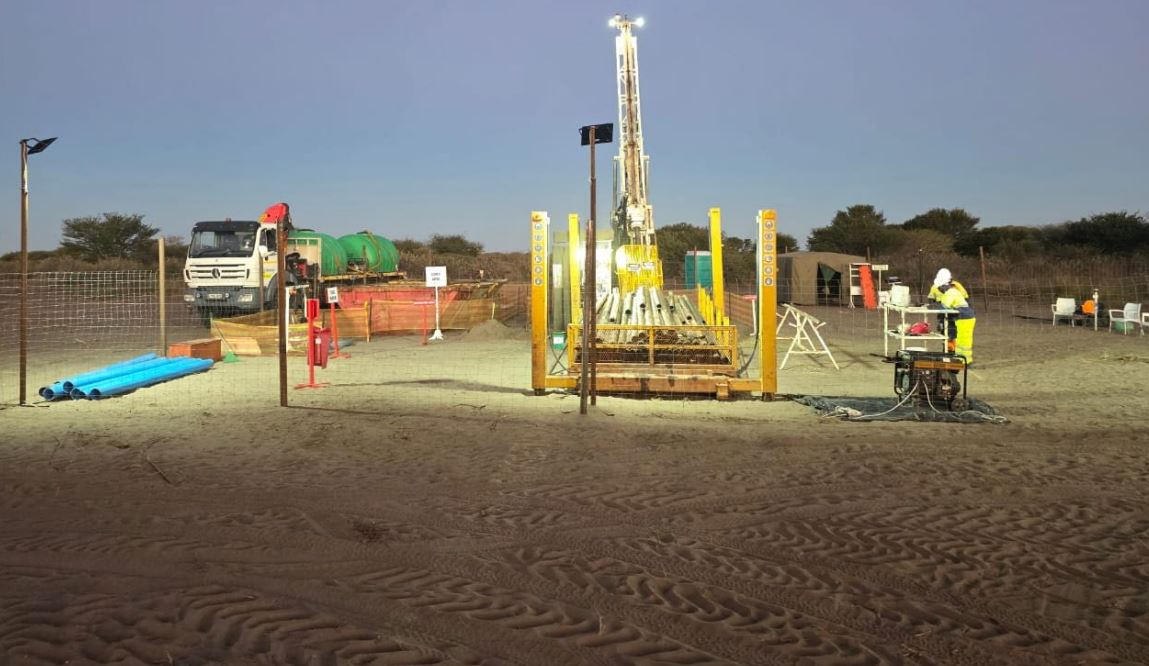
The PEA, underground ramp permit, metallurgical program, ownership consolidation, and MRE for an additional deposit each involve regulatory or third-party processes that Tudor does not fully control, whereas the drill program is fully within Tudor’s control. 2 rigs mobilise mid-May and operate through late September to early October, on a field schedule Tudor sets independently.
Phase 1 allocates an initial 2,000 metres to the CBS Zone, and Phase 2 allocates an initial 8,000 metres to the Perfectstorm Zone, with additional drilling in both phases dependent on results. Both zones have been previously drilled, with geological models in place.
2. The CBS Zone Has Grade to Prove Across Multiple Holes
The CBS Zone has 3,380 metres drilled to date. A notable prior intercept returned 155 metres at 0.78 grams per tonne gold and 2.34 grams per tonne silver, including 53 metres at 1.24 grams per tonne gold and 4.35 grams per tonne silver. The 0.78 grams per tonne bulk grade falls below the Goldstorm Deposit's base-case indicated grade of 0.85 grams per tonne gold, and well below the 1.78 grams per tonne gold that defines the higher-grade domain at the US$125 per tonne net smelter return (NSR) cutoff.
The CBS Zone's lower elevation extends the usable drilling season at both ends. What the 2026 program needs to establish is not just grade, it is whether that grade is consistent, whether intercepts form mineable geometries across multiple holes, and whether the metallurgical characteristics align with the deposit being evaluated in the PEA.
3. Perfectstorm Is a Resource-Definition Program With a Specific Target
With 7,752 metres drilled and geophysics completed in 2022 defining the targets, the 8,000-metre Phase 2 allocation is not grassroots exploration - it is a structured follow-up on a zone Tudor has characterised as having potential to exceed the Goldstorm Deposit in both tonnes and grade. A higher-grade 2023 intercept returned 102.15 metres at 1.23 grams per tonne gold and 3.43 grams per tonne silver, including 42.5 metres at 1.80 grams per tonne gold and 5.76 grams per tonne silver.
That intercept's 42.5-metre high-grade sub-interval at 1.80 grams per tonne gold is above the Goldstorm Deposit's base-case indicated grade of 0.85 grams per tonne gold. Whether it represents a spatially consistent zone - or an isolated result - is what the 2026 program is designed to test. Grade, continuity across the drilled section, and recovery characteristics all need to align before the Perfectstorm Zone can support the separate 2026 objective of developing an MRE for an additional deposit.
4. The MTT Dispute Gives the Perfectstorm Program a Second Function
The Mitchell Treaty Twin Tunnels (MTT), as currently routed by KSM Mining ULC, would pierce the Perfectstorm Zone. British Columbia's Major Mines Office (MMO) paused deliberation on the permit amendment in the absence of greater legal certainty over the overlap with Tudor's mineral titles. The decision maker indicated that certainty could be provided by a negotiated agreement or a court ruling. Tudor has 2 active court proceedings in the Supreme Court of British Columbia and has stated its preference for a negotiated resolution.
A Perfectstorm Zone advancing toward a quantified MRE carries more demonstrable economic significance in any negotiated settlement than an underdrilled anomaly. The 2026 program, therefore, serves two functions simultaneously: advancing the resource inventory and strengthening Tudor's negotiating narrative around a zone the MTT would directly compromise.
5. The NSR Sensitivity Tables Provide the Grade Context, Not the Full Picture
The Goldstorm Deposit's base-case Indicated Mineral Resources are 24.9 million ounces of gold across 912.3 million tonnes at 0.85 grams per tonne gold. The NSR sensitivity tables show how that inventory concentrates at higher cutoffs: 5.8 million ounces at 1.78 grams per tonne gold at the US$125 per tonne cutoff, and 3.4 million ounces at 2.33 grams per tonne gold at US$175 per tonne. Tudor's 2026 plans include refining the MRE to provide better visibility of the higher-grade.
Tudor's 2026 plans include refining the MRE to provide better visibility of the higher-grade. The sensitivity tables characterise how the Goldstorm resource concentrates at higher cutoffs - context relevant to the Goldstorm PEA. CBS and Perfectstorm results will be assessed against the separate 2026 objective of developing an MRE for an additional deposit, where grade, continuity across holes, structural geometry, and metallurgical recovery are all required to align.
6. The PEA Base Case Is Set, the Drill Program Determines What Sits Above It
The PEA proceeds on the Goldstorm Deposit regardless of what CBS and Perfectstorm return. Its resource base - 24.9 million ounces of gold indicated, with 148.7 million ounces of silver and 3.048 billion pounds of copper - is already established. What the exploration program determines is whether Treaty Creek's total inventory grows beyond that base, and whether the MRE for an additional deposit becomes achievable in 2026 or deferred.
Tudor Gold has a market capitalisation of approximately C$548.74 million as of March 2026. The PEA will provide the first formal economic framework for the Goldstorm underground scenario. The drill results from CBS and Perfectstorm, read against that framework, will define how much resource optionality sits above the base case - and on what timeline.
Key Takeaways for Investors
- Goldstorm resource scale: The Goldstorm Deposit hosts Indicated Mineral Resources of 24.9 million ounces of gold, 148.7 million ounces of silver, and 3.048 billion pounds of copper, with a PEA on developing an underground mine now underway.
- 2026 drill program: A 10,000-metre-plus, 2-phase exploration program targeting the CBS and Perfectstorm zones mobilises mid-May 2026, with 2 drill rigs operating through late September to early October. Additional drilling in both phases is contingent on results.
- NSR sensitivity context: At the US$125 per tonne NSR cutoff, the Goldstorm Indicated resource contracts to 5.8 million ounces of gold at 1.78 grams per tonne, and further to 3.4 million ounces at 2.33 grams per tonne gold at the US$175 per tonne cutoff.
- MTT dispute: The MTT would pierce the Perfectstorm Zone; the MMO paused deliberation on the permit amendment in April 2026, pending greater legal certainty, with Tudor indicating a preference for a negotiated resolution.
- Concurrent 2026 objectives: Tudor's work plan also includes completing the metallurgical program, securing the underground exploration ramp permit, consolidating the Treaty Creek ownership structure, advancing an MRE for an additional deposit, and completing the PEA, against a market capitalisation of approximately C$548.74 million.
The Bottom Line
Tudor Gold enters the 2026 field season with a PEA underway on the Goldstorm Deposit and a 10,000-metre-plus drill program targeting the CBS and Perfectstorm zones from mid-May. The Perfectstorm Zone carries the heavier allocation and the higher strategic weight - it is both the primary candidate for an additional MRE and the zone the proposed MTT would pierce. Grade alone will not determine whether CBS and Perfectstorm results advance that MRE objective. Continuity across holes, structural geometry, and metallurgical recovery are co-equal constraints. Together, those results and the forthcoming PEA will define how Treaty Creek's resource base - and Tudor's negotiating position - develops through the second half of 2026.
Analyst's Notes





Subscribe to Our Channel






Stay Informed






















