
Emperor Metals’ Near-Surface Gold Hits Sharpen its Case Ahead of Resource Update


Emperor Metals’ near-surface gold hits, including 24.8 m at 7.0 g/t, support 3-6 g/t starter pits at Duquesne West ahead of a planned 2027 PEA.
- Emperor Metals’ November 2026 drilling returned 24.8 m grading 7.0 g/t gold from about 85 m vertical depth, inside the conceptual Phase 1 pit at Duquesne West.
- Management is targeting starter-pit grades of 3 to 6 g/t gold and roughly 2 g/t gold across the ultimate pit, against a pit-constrained resource grade of 1.11 g/t.
- Six mills within a 30 to 40 minute drive support a satellite-feed plan, and management estimates it saves $500 million to $1 billion in capital costs.
- Lac Pelletier holds a 1,000 tpd mining permit valid to 2030, and Emperor is targeting the liability transfer from Eldorado Gold in late November or early December 2026.
- An updated Duquesne West resource is targeted for the first half of 2027, and a PEA could begin around June or July 2027.
Gold explorers in Quebec’s Abitibi region face a familiar trade-off between the scale of a bulk-tonnage open pit and the grade of a narrower underground mine. Emperor Metals Inc. (CSE:AUOZ) is targeting both at its Duquesne West Gold Project, and its 2026 drilling has added a third element to that plan: shallow, higher-grade starter pits that could be mined first.
The project hosts an inferred mineral resource of 26.9 million tonnes grading 1.69 grams per tonne (g/t) gold for 1.46 million ounces (Moz), modelled at a gold price of $2,300 per ounce. Emperor is also acquiring a second asset under a purchase agreement, Lac Pelletier, roughly 30 kilometers (km) to the south, which holds a mining permit for 1,000 tonnes per day (tpd) and 3.3 km of existing underground development. With gold trading well above the resource price assumption, the company is building toward a preliminary economic assessment (PEA) at Duquesne West and a near-term production decision at Lac Pelletier.
Near-Surface Drilling Strengthens the Phase 1 Pit Case
Emperor’s latest results returned 24.8 meters (m) grading 7.0 g/t gold from approximately 85 m vertical depth and 8.4 m grading 8.7 g/t gold from approximately 41 m. Other holes in the same release returned 18.9 m at 4.0 g/t gold from about 100 m and 8.6 m at 6.1 g/t gold from about 46 m. Results have now been reported for 55 of the 66 holes completed in the 2026 programme, which totals 20,479 m of new drilling.
President and Chief Executive Officer of Emperor Metals, John Florek, explained why the company is separating out these shallow zones as distinct starter pits within the larger open-pit concept:
“These Phase 1 pit shells, which are basically starter pits, have inherently lower stripping ratios, and that gives you a quicker payback period for a project like ours.”
Florek described the ultimate pit concept as about 1.8 km long, 800 m wide and 400 m deep, with potential to extend to 3 km in length. The broader open-pit concept spans about 2.8 km by 0.9 km. Within the ultimate pit envelope, the starter pits are roughly 500 m long, about 200 m wide and 50 to 100 m deep. He said the company is targeting starter-pit grades of 3 to 6 g/t gold and an ultimate pit grade of roughly 2 g/t gold, compared with the pit-constrained resource grade of 1.11 g/t gold. The November release also states that high grades just below the shallow intercepts could justify extending the conceptual Phase 1 pit to greater depth in an updated economic evaluation.
Structural Controls & AI-Assisted Targeting
Florek attributes the grade improvement to a better understanding of what controls mineralization. He said 2026 drilling is returning three times the thickness or three times the grade of historical holes within the existing deposit footprint, where intersecting plunge lines mark the fractures that channelled gold-bearing fluids. Emperor built the first 3D models of the deposit using artificial intelligence (AI) and machine learning, and Florek said previous operators did not recognize the visible gold now appearing in core.
Florek first developed the approach as chief geologist at Detour Gold, where models delivered 20% more gold through the mill. He said Kirkland Lake Gold later acquired Detour, and Agnico Eagle subsequently acquired Kirkland Lake. Emperor received an innovation award for its use of AI in 2024, according to Florek.
At Duquesne West, Florek said 30-40% of resource intercepts lie within 30 m of each other, but the independent qualified person classified the entire resource as inferred because core from many older holes, some dating back decades, can no longer be located. Twinning selected holes could support reclassifying an estimated 30% of the resource to indicated, Florek said, and he anticipates a positive reconciliation against the maiden estimate as starter-pit drilling tightens.
Interview with John Florek, President & CEO of Emperor Metals
Metallurgy, Overburden & Infrastructure
Early metallurgical testing showed cyanide leach recoveries of 90% to 94% for replacement-style mineralization. Florek said sulfide content is very low, with about 1% pyrite associated with 2 g/t gold, and that much of the material could be classified as non-acid generating. He added that the deposit contains no meaningful arsenic or copper, which reduces cyanide consumption.
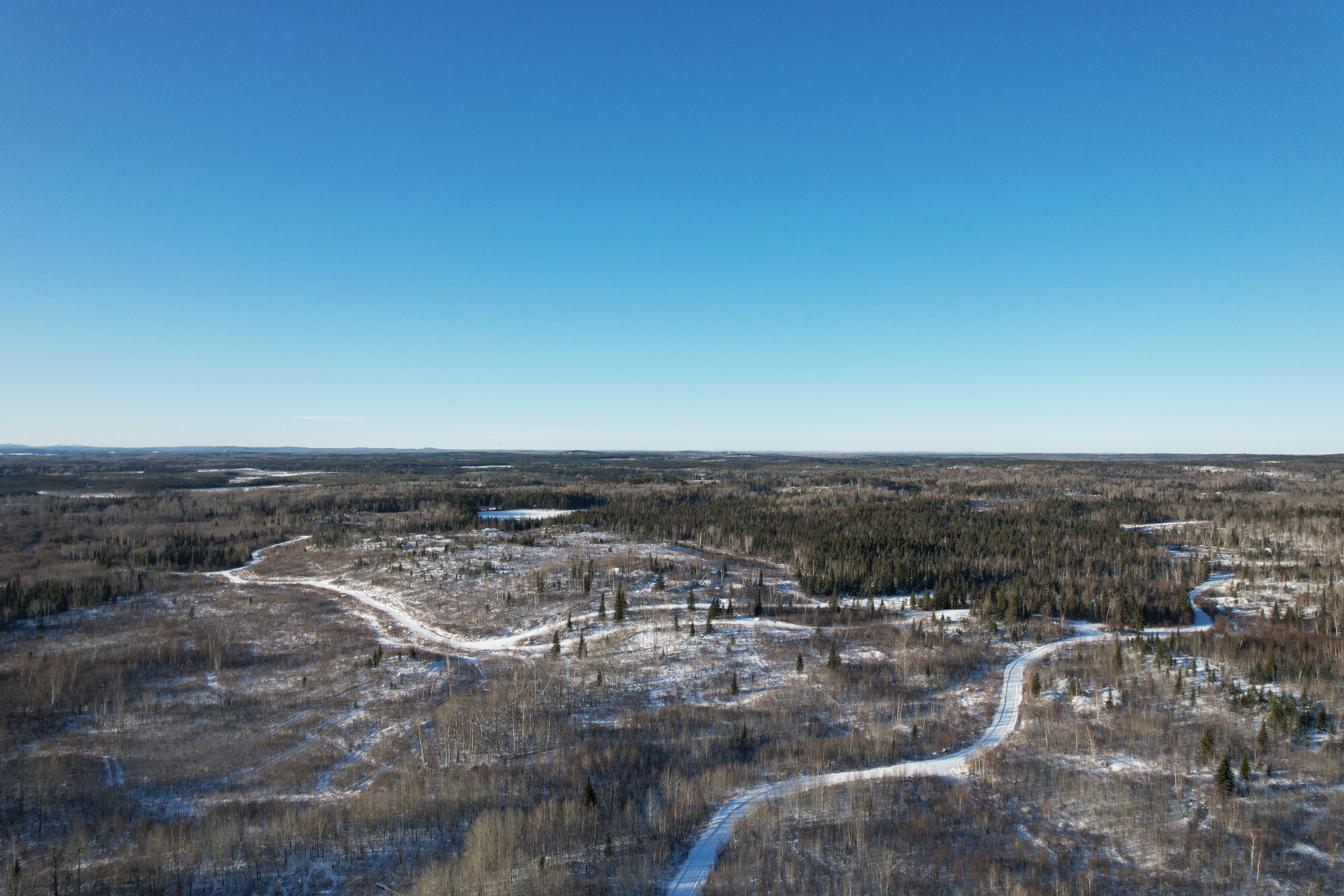
Overburden as Florek estimates is typically about 1 m thick, compared with 20 m to 100 m at some other projects. A highway runs along the north end of the property outside the conceptual pit footprint. Florek said six mills lie within a 30 to 40 minute drive.
That mill density shapes the development plan. Florek said Emperor chose the district so the project could work at $1,800 gold as a satellite deposit feeding existing infrastructure, avoiding the need for its own mill and tailings facility. He estimated the saving at $500 million to $1 billion in capital costs.
A Near-Term Production Option
Lac Pelletier was ready for production in 2010, according to Florek, and holds a mining permit for 1,000 tpd that is valid until 2030. Florek said that throughput could support about 40,000 ounces per year. The site hosts a historical resource of 227,000 ounces at 3.9 g/t gold, which Emperor is not treating as current, and roughly C$70 million in prior expenditures.
The main gating item is the transfer of surface-rights liabilities from Eldorado Gold. Emperor submitted an updated closure plan to the Quebec government around May or June 2026, and Florek said a strike by government engineers delayed the review. The company has answered the government’s follow-up questions and is targeting the transfer in late November or early December 2026. Emperor already holds the subsurface rights. The next steps are a dewatering permit, rehabilitation of the underground workings and a restart.
An updated NI 43-101 technical report for Lac Pelletier is under final review. Florek said a PEA could start around March or April 2027, following strategic drilling.
Path to a Duquesne West PEA
Florek said Emperor will add 33,000 to 35,000 m of new data to the resource model, with a goal of 50,000 to 100,000 m in total before the next NI 43-101 update. The company targets the updated resource for the first half of 2027. Florek said the PEA could begin around June or July 2027, subject to market conditions, and would take 6 to 8 months to complete. The company has resumed a fully funded programme of 3,000 to 5,000 m of additional drilling.
Florek said comparable projects drilled 600,000 to 700,000 m before publishing resources of 1.5 to 2 Moz, and Emperor has reached 1.46 Moz with about 15% of that drilling. The company is targeting 3 to 5 Moz from surface to 1,000 m depth, with underground grades of 4 to 6 g/t gold below the pit. Florek pointed to neighbouring operations mining 2 to 3 km deep, where he said grades double below 1,000 m, as the basis for further upside at depth.
The Investment Thesis for Emperor Metals
- Emperor Metals holds an inferred resource of 1.46 million ounces of gold at 1.69 grams per tonne at Duquesne West, modelled at a gold price of $2,300 per ounce.
- Recent drilling returned 24.8 meters grading 7.0 grams per tonne gold from about 85 meters vertical depth, supporting the company’s plan for shallow starter pits with lower stripping ratios.
- Management is targeting starter-pit grades of 3 to 6 grams per tonne and an ultimate pit grade of roughly 2 grams per tonne, against a pit-constrained resource grade of 1.11 grams per tonne.
- Six mills within a 30 to 40 minute drive could allow Duquesne West to operate as satellite feed, which management estimates would save $500 million to $1 billion in capital costs.
- Lac Pelletier holds a 1,000 tonne-per-day mining permit valid to 2030, and the company is targeting the liability transfer from Eldorado Gold in late November or early December 2026.
- Watch for the remaining assays, the updated resource targeted for the first half of 2027, and a preliminary economic assessment that could begin in mid-2027.
Emperor’s case rests on whether the 2026 grades hold through infill drilling and translate into a starter-pit resource that a preliminary economic assessment can test.
Macro Thematic Analysis
The Abitibi has produced about 200 Moz of gold to date, and deposits along the Porcupine-Destor fault zone, which crosses Duquesne West, have produced more than 110 Moz. The region’s mining history has left dense mill infrastructure, and the company notes that some local mills are under capacity or idle, with potential for toll-milling agreements.
For a junior explorer, nearby mills change the funding question, because avoiding a standalone mill and tailings facility removes the largest item of initial capital. Florek explained how that shaped Emperor’s choice of district:
“We were looking for a district like this where we could actually be economic at $1,800 gold because we wouldn’t have to build a tailings dam or mill.”
The gold price has moved well above that threshold. Florek said gold rose from about $1,800 per ounce when Emperor acquired Duquesne West to about $5,000, before easing to about $4,000. The maiden resource was modelled at $2,300 per ounce, which leaves room for a future pit optimization at a higher price assumption to test a larger envelope.
Starter pits fit this model. Higher-grade, lower-strip feed in the first years of a toll-milling arrangement could shorten payback, while the ultimate pit and underground zones provide a longer production profile. Lac Pelletier adds a second, permitted source of underground ore in the same district, which could give Emperor a production option before Duquesne West reaches a development decision.
TL;DR:
Emperor Metals’ 2026 drilling at Duquesne West in Quebec returned near-surface intercepts including 24.8 m at 7.0 g/t gold. That supports a plan for shallow starter pits targeting 3 to 6 g/t gold inside a larger open pit, above a 1.46 million-ounce inferred resource modelled at $2,300 gold. Management plans to truck ore to one of six nearby mills and estimates this would save $500 million to $1 billion in capital costs. The second asset, Lac Pelletier, holds a 1,000 tonnes-per-day permit valid to 2030, and the company is targeting the liability transfer from Eldorado Gold by early December 2026. An updated resource is targeted for the first half of 2027, and a PEA could start in mid-2027.
FAQs (AI-Generated)
Analyst's Notes





Subscribe to Our Channel




Stay Informed