
Nvidia Turmoil Renews Gold Diversification Interest Beyond AI Stocks



Nvidia's turmoil underscores AI concentration in stocks and bonds, while ETF inflows and central bank buying support gold demand as mines target higher output.
- Nvidia's announcement of Jensen Huang's resignation as Chief Executive Officer preceded a 2.49% Nasdaq Composite decline on November 16, reinforcing the case for gold diversification beyond concentrated AI equities.
- The International Monetary Fund (IMF) found that major cloud operators' share of global investment-grade corporate bond issuance rose from less than 1% in 2024 to 10% by July 2026, increasing AI exposure in credit markets.
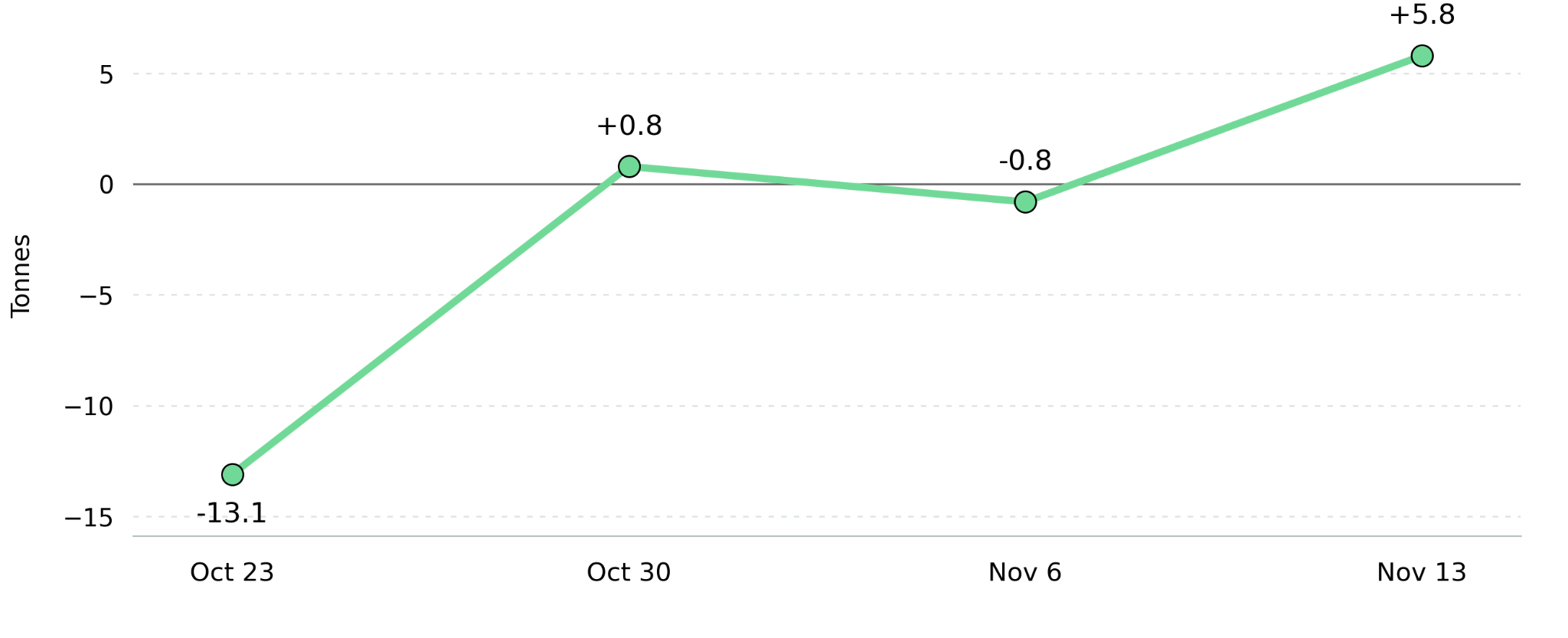
- Global physically backed gold funds attracted US$2.7 billion in October 2026, lifting holdings by 19 tonnes in their fourth consecutive month of inflows.
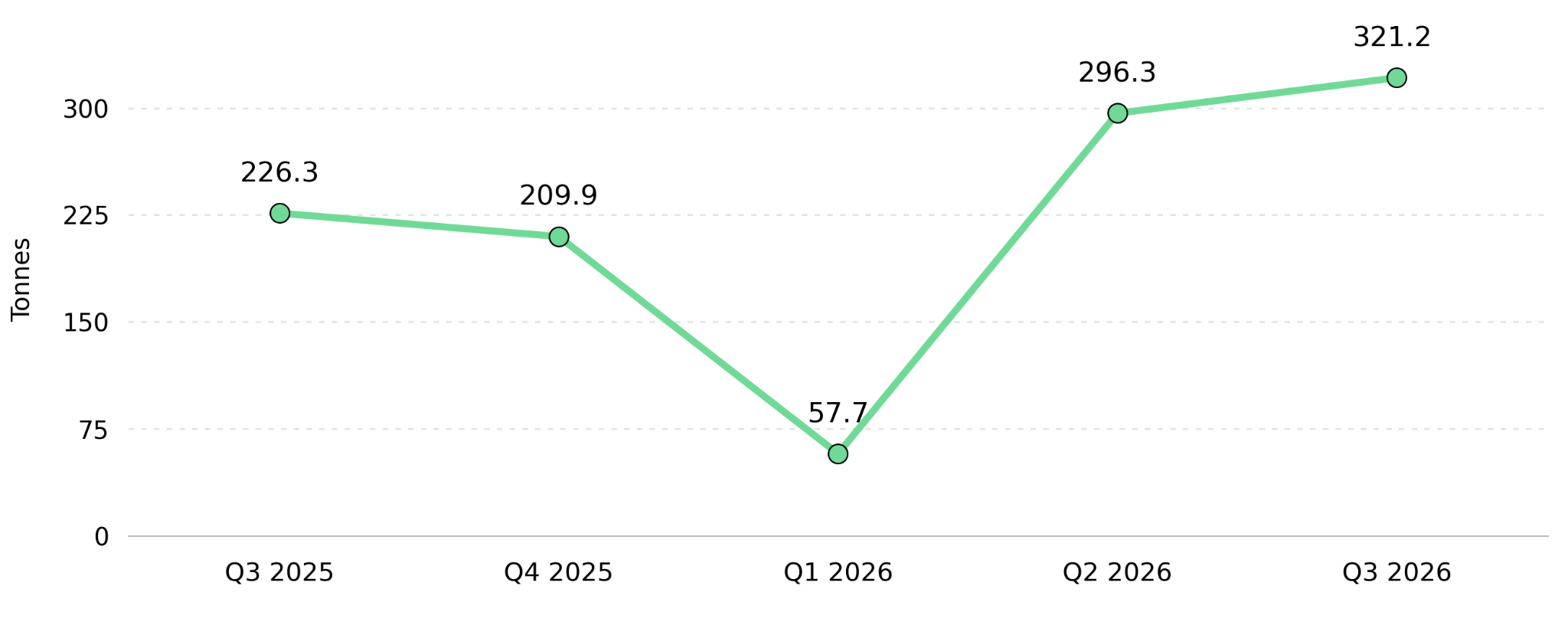
- Central banks and other official institutions bought a net 321 tonnes of gold in the third quarter of 2026, up 42% year over year, primarily for reserve diversification and risk management.
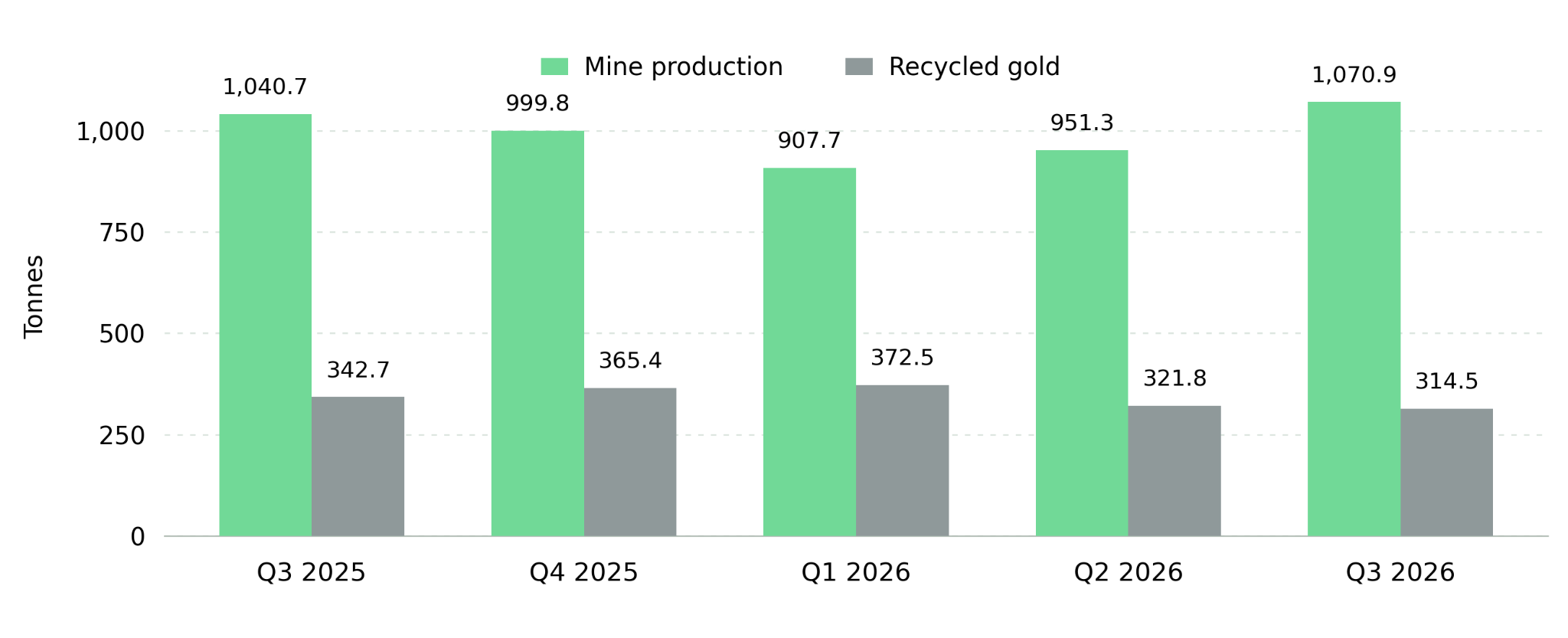
- Global gold mine production reached a third-quarter record of 1,071 tonnes in 2026, while recycling fell 8% year over year, leaving mined gold as the primary source of supply growth.
AI Leadership Turmoil Renews Gold's Diversification Appeal
Nvidia announced on November 12, 2026, that Jensen Huang had resigned as President and Chief Executive Officer, adding leadership uncertainty to a major AI company. On November 16, the Nasdaq Composite fell 2.49%, the S&P 500 declined 1.92%, and the Philadelphia Semiconductor Index lost 5.3%. The broad selloff highlighted the risks of concentrated technology exposure, strengthening the rationale for gold diversification through demand sources beyond AI company earnings.
The World Gold Council (WGC) identified Nvidia's leadership turmoil and the resulting volatility in global AI stocks as the preceding week's dominant development in its November 16 Weekly Markets Monitor. Physically backed gold funds added 211 tonnes to their holdings in the third quarter of 2026, showing that gold buying was already underway before Nvidia's leadership change in November.
AI Credit Concentration Extends Gold Diversification Beyond Stocks
The IMF reported in its October 2026 Global Financial Stability Report that major cloud operators' share of global investment-grade corporate bond issuance rose from less than 1% in 2024 to 10% in 2026. Over the same period, the share of single stocks in leveraged exchange-traded funds (ETFs) increased from 16% to 28%, reflecting greater leveraged exposure to AI shares. These increases mean a decline in AI stock valuations could affect both corporate credit markets and leveraged equity positions.
S&P Dow Jones Indices found that six-month rolling stock-bond correlations remained positive for much of 2026, reducing the protection bonds typically provide when stocks decline. Its November 16 analysis compared a traditional portfolio of 60% stocks and 40% bonds with a hypothetical portfolio holding 60% stocks and dividing the remaining 40% among gold, inflation-protected Treasury securities, US dollar futures, and Treasury bills. Over the preceding 10 years, both portfolios recorded 11% annualized volatility, but the diversified portfolio delivered higher returns.
Global Gold Buying Broadens Demand Beyond AI Earnings
The WGC's November 5 report showed that physically backed gold ETFs attracted US$2.7 billion in October 2026, adding 19 tonnes to a record 4,275 tonnes of holdings in their fourth consecutive month of inflows. From January through October 2026, gold ETFs attracted US$41 billion and increased their holdings by 246 tonnes, demonstrating sustained demand for physical gold.
European gold ETFs attracted US$1.8 billion in October 2026, extending their inflow streak to 18 consecutive weeks amid fiscal and political uncertainty. Asian gold ETFs added US$1.3 billion, supported by local stock-market declines and falling government bond yields. These different sources of demand make gold fund inflows less dependent on the performance of a single equity market.
Reserve Diversification Drives Central Bank Gold Purchases
Central banks and other official institutions purchased a net 321 tonnes of gold in the third quarter of 2026, up 42% year over year and the highest quarterly total since late 2024. Purchases reached 675 tonnes through September, a 6% annual increase, driven by reserve diversification and risk management. This institutional buying supports demand for gold independently of AI companies' earnings and investment cycles, reinforcing the market for newly mined supply.
Mineros S.A. produced 62,253 ounces of gold in the third quarter of 2026, up 13% year over year, and raised its full-year production guidance to 235,000-245,000 ounces. Its all-in sustaining cost (AISC) of US$2,238 per ounce came in below guidance, while quarterly net free cash flow reached US$101.1 million. The company also maintained physical gold holdings in its treasury as part of its capital management strategy.
Rising Private Demand Expands Market for Recovered Ounces
Over-the-counter (OTC) and other gold demand rose to 143 tonnes in the third quarter of 2026 from 101 tonnes a year earlier. This increase adds another source of market demand, reinforcing the role of operating mines in delivering additional recovered gold ounces.
Serabi Gold reported US$63.2 million in cash and no debt as of September 30, 2026. Its November presentation outlined plans to increase processing capacity at Palito to 900 tonnes per day and send sorted ore from Coringa to the same facility. This shared infrastructure supports additional gold production without requiring a separate processing plant at Coringa.
Record Mine Output Backs Self-Funded Processing Expansion
Global gold mine production increased 3% year over year to a third-quarter record of 1,071 tonnes. This growth highlights the contribution of operating mines to additional gold supply, with higher ore throughput, improved feed grades and stronger recovery rates providing routes to increased saleable production.
TRX Gold reported preliminary fiscal 2026 production of 29,650 gold ounces at Buckreef, up 57% year over year and reaching the top of its guidance range. The company finalized a contract for a new 3,500-tonne-per-day processing circuit to operate alongside its existing 2,000-tonne-per-day plant, with management expecting the expansion to support average annual gold production above 62,000 ounces.
Stephen Mullowney, Director and Chief Executive Officer of TRX Gold, explains how expanded processing capacity increases gold output:
“We'll operate this fiscal year under 2,000 tons per day, and then next fiscal year will be a hybrid between 2,000 tons per day and a lot higher with the new plant coming online, which is roughly, with the existing plant, 5,500 tons per day. This is all self-funded and on budget. We'll see an increase in ounces as a result of that new plant coming online.”
AI Financing Concentration Favors Operating Gold Cash Flow
The IMF identified 14 publicly disclosed AI financing transactions since 2023, involving approximately US$300 billion in equity investments and US$650 billion in debt tied to US$1.4 trillion in future revenue commitments. In contrast, operating gold mines can generate cash from current metal sales, providing funds for continued mine investment as portfolio diversification broadens demand for gold.
Integra Resources reported third-quarter gold production of 17,652 ounces at Florida Canyon and US$11.1 million in free cash flow, with US$119.5 million in cash and cash equivalents as of September 30, 2026. This operating cash generation provides financial flexibility to maintain production at Florida Canyon while advancing DeLamar through environmental review, supporting both current operations and future gold production potential.
Lower Gold Recycling Raises Reliance on Mine Supply
Gold recycling fell 8% year over year to 314 tonnes in the third quarter of 2026, its lowest level since late 2023, while total gold supply declined 1%. With less recycled metal entering the market, producers reaching commercial production and increasing gold recovery at existing mills provide identifiable sources of additional mined supply.
New Found Gold achieved commercial production at Hammerdown on August 19, 2026, producing 4,863 ounces of gold and generating C$41.6 million in third-quarter sales revenue. The company held C$167.1 million in cash and cash equivalents as of September 30 and submitted Queensway's Environmental Preview Report on November 3, advancing a fully funded first phase toward planned gold-bearing material deliveries in the fourth quarter of 2027.
Keith Boyle, Director and Chief Executive Officer of New Found Gold, explains how processing upgrades increase recovered gold output:
“We're building our crusher and our sorter, which will help increase the grade next year. We have the mill conversion at Pine Cove. We're converting the flotation leach Merrill-Crowe circuit to a gravity leach, so we'll get a better recovery of our gold, which will improve the denominator.”
Global Gold Demand Establishes Market for Planned Mine Output
Global gold demand totaled 1,369 tonnes in the third quarter of 2026. Integrated mine plans connect probable reserves, existing mill capacity, and capital requirements to projected recovered ounces, providing a measurable outlook for future gold supply growth.
West Red Lake Gold Mines published an integrated prefeasibility study combining its operating Madsen Mine with planned gold production from Rowan, using the existing Madsen mill. The study projects average annual production of 108,000 ounces from 2029 to 2034 and an after-tax net present value at a 5% discount rate (NPV5%) of C$764 million. The shared processing infrastructure provides a route to higher gold output without requiring a separate mill at Rowan.
Gold Market Growth Draws New Interest to Producing Mines
Global gold demand was valued at US$188 billion in the third quarter of 2026, up 22% year over year. This market scale highlights the commercial significance of moving from initial gold pours to sustained production and recurring sales.
Cabral Gold completed its first gold pour of 1,130 ounces at Cuiú Cuiú in September 2026, marking the start of gold recovery from its fully funded initial operation. Commissioning is underway, with commercial production targeted for December 2026 and annual output of approximately 25,000 ounces during the initial phase. This transition would establish recurring gold production and generate cash flow intended to support future expansion.
Alan Carter, President and Chief Executive Officer of Cabral Gold, describes growing investor interest across the gold sector:
“There's a lot of people I think that are interested in getting into the gold space. I would guess 60 to 70% of my meetings are people that I've never met before.”
AI Concentration Strengthens Gold's Long-Term Diversification Case
Nvidia's leadership disruption contributed to losses across major stock benchmarks, showing how a setback at one AI leader can affect portfolios concentrated in technology shares. The IMF's findings show that AI-related borrowing also extends exposure into corporate bonds, while S&P Dow Jones Indices' historical comparison found that a portfolio including gold and other assets generated higher returns than a traditional stock-and-bond mix at the same volatility. Gold ETF inflows across Europe and Asia, alongside central bank purchases, show that physical gold buying comes from different regions and institutions.
Operating gold companies offer a distinct form of exposure to that demand through ounces sold, operating cash flow, and capital reinvested in additional production. Production records and commercial starts show gold currently reaching the market, while plant expansions and cash reserves support the ability to increase future supply. Cash generated from current gold sales can finance processing expansions, creating a route to additional supply for a market supported by gold fund inflows and central bank purchases.
The Investment Thesis for Gold
- Concentrated AI exposure across stocks and corporate bonds increases portfolio sensitivity to technology-sector setbacks, strengthening the rationale for gold diversification.
- A historical multi-asset portfolio including gold delivered higher returns than a traditional stock-and-bond allocation at the same 11% annualized volatility.
- Central banks, investment funds, and private buyers across multiple regions provide separate sources of physical gold demand, reducing reliance on any single buyer group.
- Gold sales, production costs, and free cash flow determine how much capital producers can reinvest in maintaining or expanding output.
- Existing mills and processing infrastructure can accommodate additional ore, providing a route to higher gold production without building separate facilities at each deposit.
- Permitting progress, gold recovery performance, and successful commissioning provide measurable milestones toward turning planned production into commercial gold sales.
Nvidia's disruption underscores the risks of concentrated AI exposure across equity and credit markets. Gold's demand from central banks, investment funds, and buyers across multiple regions provides a diversification case that extends beyond technology earnings and short-term market volatility. The long-term opportunity lies in combining that independent demand with gold companies demonstrating commercial production, cash generation, and the financial capacity to expand future supply.
TL;DR
Nvidia's leadership turmoil exposed the risks of concentrated AI exposure, which now extends beyond technology shares into corporate bonds and leveraged funds. Historical portfolio research shows that a mix including gold and other assets delivered higher returns than a traditional stock-and-bond allocation at comparable volatility. Gold's physical demand is supported by central banks, exchange-traded funds, and private buyers across regions, with much of that buying predating Nvidia's disruption. Meanwhile, recycling fell as mine output reached a quarterly record. Production growth, cash generation, processing upgrades, and commercial mine starts provide measurable ways for gold companies to turn that demand into additional supply.
FAQs (AI-Generated)
Analyst's Notes





Subscribe to Our Channel












Stay Informed