enCore Energy Advances US Uranium Production With Two Operating Plants & a Three-Project Development Pipeline


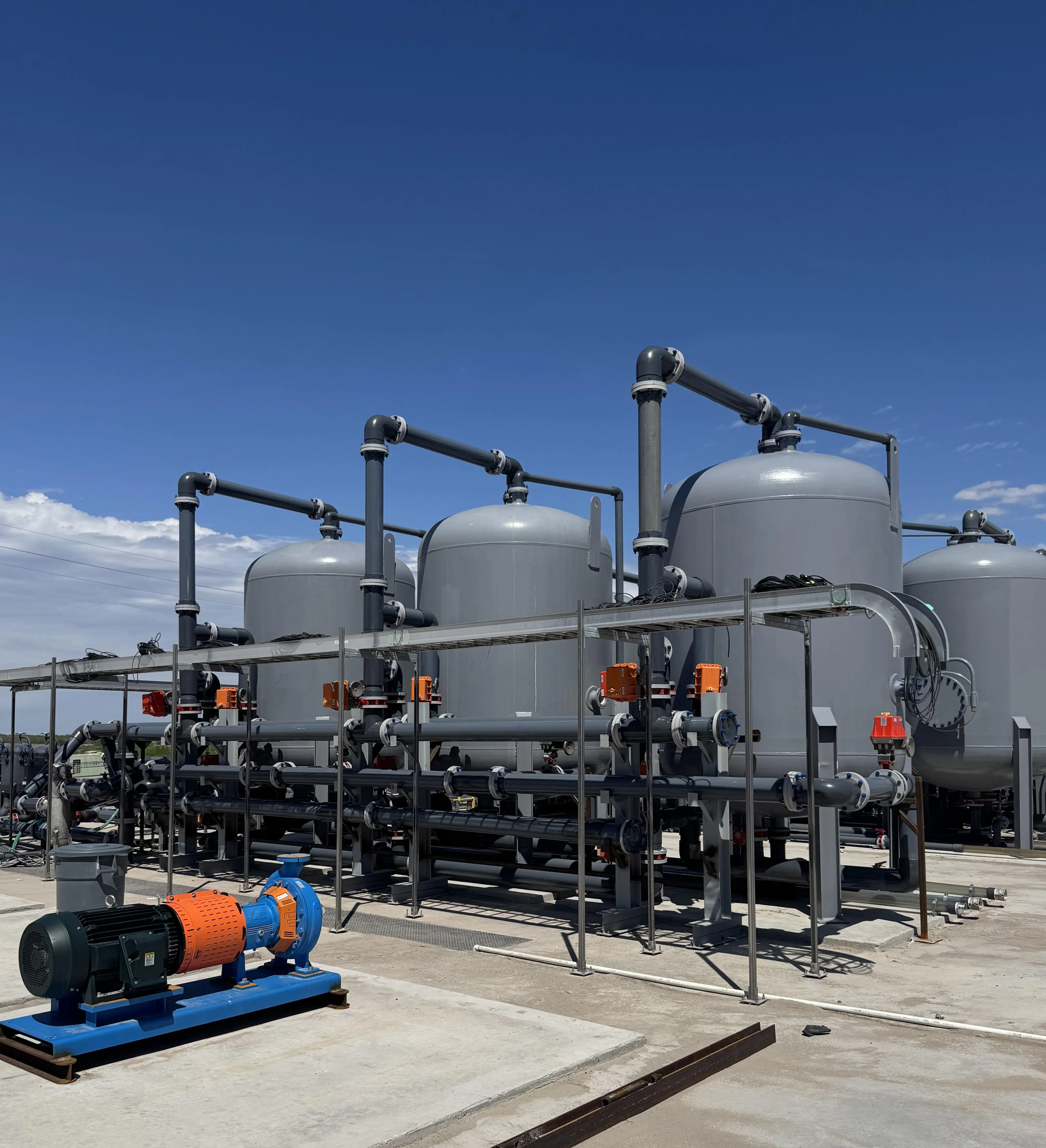
enCore Energy (NASDAQ: EU | TSX.V: EU) is a US uranium producer operating two in-situ recovery plants in South Texas with a three-project development pipeline.
- enCore Energy operates two licensed in-situ recovery uranium processing plants in South Texas - the Alta Mesa central processing plant and the Rosita central processing plant - with a third satellite operation at Upper Spring Creek awaiting final permitting as of April 2026, making it one of a small number of actively producing domestic uranium companies in the US.
- The Alta Mesa plant operates under a 70/30 joint venture with Boss Energy Limited, with enCore as managing partner, and is currently configured at 1 million pounds of uranium oxide per year against a total design capacity of 2 million pounds annually including satellite ion exchange plants; 270 new production wells were brought online during 2025, averaging 22 per month.
- The Dewey Burdock project in South Dakota carries a pre-tax internal rate of return of 39% and a pre-tax net present value at an 8% discount rate of US$180.1 million at a long-term uranium price of US$86.34 per pound, based on the January 2025 preliminary economic assessment effective October 8, 2024, with state permitting targeted for completion by end of 2027.
- The Gas Hills project in Wyoming carries a pre-tax internal rate of return of 54.8%, initial capital costs of US$55.2 million, and targets annual production of 880,000 pounds over an 11-year mine life, based on the February 2025 preliminary economic assessment effective December 31, 2024.
- enCore's current contracts cover less than 38% of planned extraction through 2033, retaining the majority of planned production for spot market exposure at a time when uranium spot prices reached US$101.26 per pound in January 2026 - the highest level since February 2024's peak of US$107 per pound - according to Crux Investor's uranium market analysis published February 24, 2026.
Why enCore Energy Matters Now
The US currently imports approximately 44% of its uranium from Russia, Kazakhstan, and Uzbekistan, according to analysts citing US Energy Information Administration data - a supply concentration that researchers identify as a national security vulnerability. Against that backdrop, enCore Energy Corp. (NASDAQ: EU | TSX.V: EU) is one of a small number of companies actively extracting domestic uranium today, operating two licensed in-situ recovery central processing plants in South Texas while advancing a three-project development pipeline with published economic studies.
In-situ recovery accounted for over 50% of global uranium production in 2024, according to analysts tracking global uranium production data published in January 2026. The method carries materially lower capital costs than conventional open-pit or underground uranium mining - analysts cite ISR average capital expenditure at less than 15% of conventional mines, based on analyst reveiew, October 2016 - which gives ISR operators a structural cost advantage at current uranium prices.
As of March 24, 2026, enCore had 194,216,153 shares issued and outstanding at a share price of US$1.85, giving the company a market capitalisation of approximately US$359.3 million. The company carries a convertible note of US$115 million at 5.5%, maturing in August 2030.
Two Plants Running, A Third Coming Online
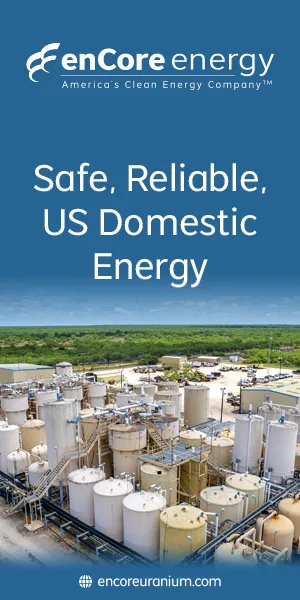
enCore's operational foundation rests on two central processing plants in a South Texas uranium district that has historically produced approximately 80 million pounds of uranium through sandstone-hosted ISR operations, according to analysts citing domestic uranium production records. The Alta Mesa central processing plant, located on approximately 200,000 acres of private land in Brooks County, commenced production in the second quarter of 2024 under a 70/30 joint venture with Boss Energy Limited, with enCore as managing partner. The plant is currently configured at 1 million pounds of U₃O₈ per year capacity, against a total design capacity of 2 million pounds annually including satellite ion exchange plants. During 2025, 270 new production wells were brought online, averaging 22 per month - a rate that translates to 1 new well every 1.35 days.
Wellfield 3 Extension is in advanced installation, targeting production later in 2026 subject to final permit receipt, while initial work on Wellfield 8 - including monitoring wells and permitting - commenced in 2025. A recently acquired adjacent property, Alta Mesa East, covers more than 5,900 acres immediately east of the existing wellfields and central processing plant. Productive roll fronts from Alta Mesa Wellfields 1, 3, 4, 5B, and the currently operating Wellfield 7 are projected to continue across Alta Mesa East, with drilling to establish resources and support permitting targeted to continue through 2026 and into 2027.
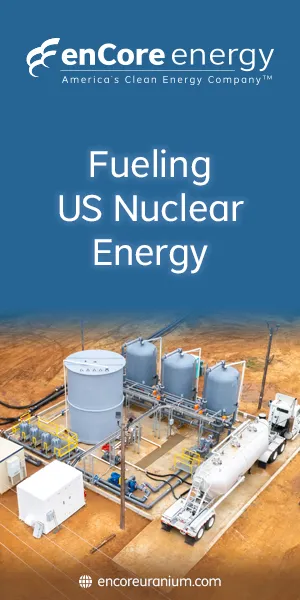
The Rosita central processing plant, located approximately 60 miles west of Corpus Christi, carries an 800,000-pound U₃O₈ annual capacity and is licensed to receive uranium-loaded resins from satellite remote ion exchange plants across the Rosita Uranium Project area. The Rosita Project Radioactive Materials License has been amended to include the Upper Spring Creek project, with the first two trains of the remote ion exchange plant completed and capable of operations. Installation of the two remaining trains is underway, which will double flow capacity from 1,600 gallons per minute to 3,200 gallons per minute, with the first wellfield nearly complete and final permitting pending before production can commence.
A Development Pipeline With Published Economics
Beyond its operating assets, enCore holds two development-stage projects with published preliminary economic assessments that quantify the return profile at defined uranium price assumptions.
The Dewey Burdock ISR uranium project in the Edgemont uranium district of southwest South Dakota was approved for US government fast-track permitting in August 2025 under the FAST-41 framework, which sets clear federal permitting timelines and coordinated agency reviews. The project holds a Nuclear Regulatory Commission license currently in timely renewal, with Environmental Protection Agency and aquifer exemption approvals in place. Based on the January 2025 preliminary economic assessment effective October 8, 2024, Dewey Burdock targets annual production of 750,000 pounds over a 28-year mine life, with life-of-mine production of 14.1 million pounds, initial capital costs of US$264.2 million at US$18.72 per pound, and cash operating costs of US$23.81 per pound. At a long-term uranium price of US$86.34 per pound, the project returns a pre-tax internal rate of return of 39% and a pre-tax net present value at an 8% discount rate of US$180.1 million. State permitting is targeted for completion by end of 2027, with plant engineering targeted to begin in 2026.
The Gas Hills project in Fremont and Natrona Counties, Wyoming, is 100% owned by enCore with a proposed project pipeline commencing in 2028. Wyoming is an Agreement State with established ISR permitting timelines, according to enCore. Based on the February 2025 preliminary economic assessment effective December 31, 2024, Gas Hills targets annual production of 880,000 pounds over an 11-year mine life, with life-of-mine production of 6.1 million pounds and initial capital costs of US$55.2 million at US$9.05 per pound - less than one-fifth of the capital required at Dewey Burdock for comparable annual production. At a long-term uranium price of US$87 per pound, the project returns a pre-tax internal rate of return of 54.8% and a pre-tax net present value at an 8% discount rate of US$166.9 million.
Resource Base & How enCore Is Playing the Uranium Price
Across its portfolio, enCore reports total Measured and Indicated resources of 30.94 million pounds of U₃O₈ and Inferred resources of 20.54 million pounds under S-K 1300 standards, as reported in technical reports effective December 31, 2024. The Alta Mesa project holds 2.59 million pounds Measured and Indicated at an average grade of 0.145% U₃O₈, alongside 5.2 million pounds Inferred. Dewey Burdock contributes 17.1 million pounds Measured and Indicated at an average grade of 0.12%, with an additional 712,624 pounds Inferred. Researchers estimate the potential to discover an additional 220 million pounds of uranium in South Texas alone, based on an assessment of undiscovered sandstone-hosted uranium resources in the Texas Coastal Plain published in November 2015.
enCore's sales strategy employs collared contracts with inflation-adjusted price floors and ceilings, which secure a base revenue level while retaining upside exposure to spot price movements. Current contracts cover less than 38% of planned extraction through 2033, with enCore targeting less than 50% contracted at current prices. That structure positions more than 50% of planned production for spot market exposure at a time when uranium spot prices reached US$101.26 per pound in January 2026 - the highest level since February 2024's peak of US$107 per pound - according to analysts tracking uranium spot market pricing.
Key Takeaway for Investors
enCore Energy is one of a small number of actively producing domestic uranium companies in the US, operating two licensed in-situ recovery central processing plants in South Texas with a combined operational capacity of up to 2.8 million pounds of U₃O₈ annually, while holding three development-stage projects with published economic studies targeting an additional 21.7 million pounds of life-of-mine production across South Dakota and Wyoming. The company's collared contract structure retains more than 50% of planned extraction through 2033 for spot market exposure, with uranium spot prices reaching US$101.26 per pound in January 2026 - the highest level since February 2024's peak of US$107 per pound - according to analysts tracking uranium spot market pricing. At a market capitalisation of approximately US$359.3 million as of March 24, 2026, enCore offers direct exposure to domestic US uranium production at a time when the US imports approximately 44% of its uranium from Russia, Kazakhstan, and Uzbekistan, according to analysts citing US Energy Information Administration data.
FAQs (AI-Generated)
enCore Energy extracts uranium oxide (U₃O₈) from two licensed in-situ recovery central processing plants in South Texas - the Alta Mesa and Rosita plants - with a combined operational capacity of up to 2.8 million pounds annually.
In-situ recovery is a uranium extraction method that injects oxygenated water underground to dissolve uranium in place and pump it to surface for processing, carrying average capital expenditure of less than 15% of conventional mines, according to analysts citing Trade Tech Nuclear Review, October 2016.
Beyond its two operating plants, enCore holds the Dewey Burdock project in South Dakota - returning a pre-tax internal rate of return of 39% at US$86.34 per pound uranium - and the Gas Hills project in Wyoming - returning a pre-tax internal rate of return of 54.8% at US$87 per pound uranium - both with published preliminary economic assessments.
enCore uses collared contracts with inflation-adjusted price floors and ceilings, with current contracts covering less than 38% of planned extraction through 2033, retaining more than 50% of planned production for spot market exposure.
The US imports approximately 44% of its uranium from Russia, Kazakhstan, and Uzbekistan, according to analysts citing US Energy Information Administration data, making domestic producers like enCore strategically positioned within a supply chain that researchers identify as a national security vulnerability.
Analyst's Notes





Subscribe to Our Channel







Stay Informed