enCore Energy Strengthens Board & De-Risks US Uranium Growth Strategy


enCore Energy appoints ISR veteran Wayne Heili to board, reinforcing execution capability as the largest US uranium producer scales multi-plant operations.
- US uranium supply security has shifted from a long-term policy goal to an immediate investment constraint, elevating the importance of domestically permitted, execution-ready producers.
- enCore Energy's December 1, 2025 governance update reflects a strategic pivot from development optionality toward operational delivery, reinforcing board-level accountability through the appointment of veteran ISR executive Wayne Heili.
- The appointment of an experienced uranium executive with full-cycle mine-to-production credentials materially reduces execution risk at a critical stage of enCore's production ramp-up.
- Continued involvement of ISR technical leadership via a formal Technical Advisory Committee preserves process knowledge while modernizing governance.
- Governance quality increasingly functions as a leading indicator of production reliability, permitting credibility, and capital discipline in the uranium sector.
Why Governance & Execution Now Matter More in the Uranium Market
The uranium investment landscape has undergone a structural transformation since 2023. What was once a thesis built primarily on long-cycle price recovery has evolved into a more immediate evaluation of operational capability, permitting velocity, and management credibility. For institutional allocators reassessing exposure to nuclear fuel equities, the distinction between resource holders and actual producers has never been more consequential.
Uranium's Shift From Commodity Optionality to Strategic Infrastructure
Uranium markets are no longer driven solely by long-cycle price expectations. Western nuclear policy, fuel security mandates, and utility contracting behavior have compressed timelines between capital allocation and delivery. The Inflation Reduction Act, combined with bipartisan support for nuclear energy as a decarbonization pathway, has reframed domestic uranium production as critical infrastructure rather than commodity speculation.
Investors increasingly differentiate between resource holders and operators, developers and producers, permitted assets and build-ready systems. This segmentation reflects a market that now prices execution risk explicitly. Companies with licensed infrastructure, operating personnel, and demonstrated production records command valuation premiums that resource-stage peers cannot access regardless of geological merit.
Governance as an Investable Signal
Board composition and technical oversight now directly affect permitting velocity, ramp-up reliability, and cost discipline as measured by all-in sustaining cost (AISC) trajectory. Institutional capital increasingly screens for prior production track records, ISR-specific operational depth, and regulatory familiarity in US jurisdictions.
This operational identity matters for investors evaluating governance signals. A board with direct ISR experience can evaluate technical decisions, assess wellfield performance, and provide oversight that generalist directors cannot replicate.
Board Reinforcement as a Signal of Execution Readiness
enCore Energy's governance evolution reflects a company progressing through the uranium value chain from asset consolidation to production ramp-up toward multi-plant optimization. The December 1, 2025 announcement should be interpreted not as a routine administrative update but as a deliberate alignment of leadership structure with operational phase.
Transitioning From Asset Assembly to Operational Delivery
The transition from development-stage company to commercial producer represents one of the most challenging inflection points in mining. Capital markets have witnessed numerous uranium developers struggle to execute this transition, often due to management teams optimized for exploration and asset acquisition rather than production operations.
The appointment of Wayne Heili to enCore's Board of Directors strengthens governance at a critical juncture. Heili brings executive experience from leadership roles at Ur-Energy Inc. and Peninsula Energy Limited, providing the board with direct ISR operational perspective during the company's production expansion phase.
William Sheriff, Executive Chairman of enCore Energy, emphasizes the importance of execution discipline:
"It's just a matter of urgency, it's the matter of the day, and it's every day for us."
Why Full-Cycle ISR Experience Matters
ISR uranium extraction differs fundamentally from conventional mining operations. The process involves injecting oxygenated water into permeable ore-bearing sandstone formations, dissolving uranium, and recovering it through ion-exchange processing. This methodology requires specialized expertise in hydrogeology management, wellfield design, ion-exchange efficiency, and restoration liabilities.
Board-level ISR expertise directly informs production scheduling, cost control through AISC stability, and environmental compliance. Directors with operational ISR backgrounds can evaluate wellfield performance data, assess reagent consumption trends, and anticipate restoration cost trajectories in ways that enhance oversight quality.
Continuity Without Complacency: Preserving Technical DNA While Modernizing Governance
ISR operations depend heavily on process memory and regulatory nuance accumulated over decades of permitting and production experience. The uranium sector's extended downturn depleted industry talent, making knowledge retention a material risk factor for operating companies.
Managing Knowledge Retention Risk in ISR Operations
Loss of institutional knowledge can introduce permitting delays, wellfield inefficiencies, and restoration cost overruns. Regulatory relationships built over years of operational history cannot be easily transferred or replicated.
William Sheriff emphasizes this constraint:
"There aren't too many producers, in fact, there's a real shortage of them… The one thing you can't fix is the shortage of talent."
This talent scarcity creates both risk and competitive advantage. Companies that have assembled experienced ISR teams possess assets that cannot be replicated through capital expenditure alone.
Advisory Structures as Risk Mitigation Tools
The December governance update includes a thoughtful approach to knowledge retention. Dr. Dennis Stover will retire from the Board effective December 31, 2025, but will continue to serve as Chair of the newly constituted Technical Advisory Committee. This structure preserves ISR process knowledge, supports independent board oversight, and reduces single-point dependency risk.
William Sheriff articulates this philosophy regarding talent:
"At enCore, our biggest assets are people, our bench strength. We're the team that can go and open up another duplicate operation and staff it with talented people that have had experience in the industry."
US ISR Uranium: Scarcity Value Meets Policy Alignment
The United States remains structurally dependent on imported uranium. This import dependence has attracted bipartisan policy attention, creating a favorable environment for permitted domestic producers.
Domestic Supply as a Strategic Premium
ISR producers with licensed infrastructure now represent strategic scarcity, contracting leverage, and policy-aligned exposure. Utilities seeking to diversify supply away from Russian and Kazakh sources face limited domestic alternatives. This supply constraint supports premium pricing for US-origin material and strengthens the contracting position of operational producers.
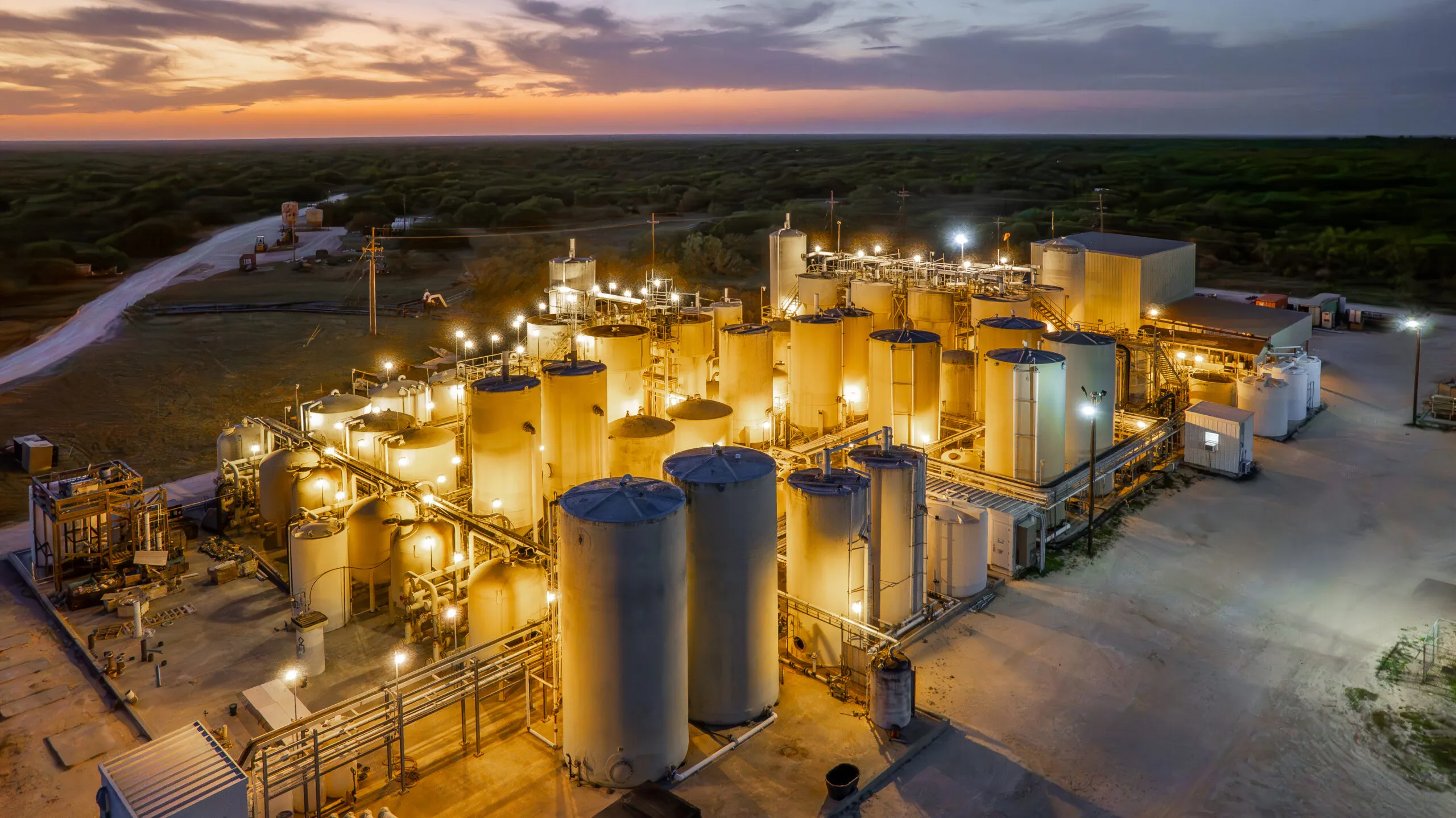
enCore holds a distinctive market position as the only United States uranium company with multiple Central Processing Plants in operation, with uranium recovery currently underway at two plants in South Texas. The company operates the Rosita and Alta Mesa processing facilities, with a third licensed facility at Kingsville Dome available for future integration.
William Sheriff notes the regulatory progress on expansion projects:
"Our South Dakota project got Fast-41. It gives you a much more certain and much more acceptable timeline to get through all of your filings… You cut your timelines dramatically and increase your certainty."
The Dewey Burdock Project received Fast-41 designation on August 28, 2025, with coordinated permitting, engineering, and design plans now advancing.
Central Processing Plants as Competitive Moats
Central processing plant ownership compresses timelines between discovery and production. Multi-feed CPP strategies improve capital efficiency, reduce marginal AISC, and enable satellite project monetization.
Recent permitting progress reinforces this advantage. The Rosita Project Radioactive Materials License has been amended to include the Upper Spring Creek Project, allowing wellfield installation and construction of the USC IX Plant to commence, with remaining permits in process with the Texas Commission on Environmental Quality.
Environmental & Permitting Advantages of ISR
ISR methodology offers structural advantages over conventional uranium mining. Lower surface disturbance reduces environmental opposition and simplifies permitting. Capital expenditure requirements are substantially lower than conventional mine development, improving project economics and reducing financing risk. Faster permitting cycles in mature ISR jurisdictions like Texas provide timeline visibility that conventional projects cannot match.
William Sheriff confirms the jurisdictional advantage:
"We have a track record, and that gives them some certainty of counterparty reliability.”
From Governance to Cash Flow: Linking Board Decisions to Economics
The connection between governance quality and financial performance operates through multiple channels in ISR uranium production. Board oversight influences operational decisions that directly affect cost structures, production reliability, and ultimately equity valuation.
Production Reliability as the Core Valuation Driver
Uranium equity valuation increasingly reflects execution credibility, contract fulfillment confidence, and ramp-up certainty. The market has become skeptical of production guidance from companies without demonstrated operational track records, applying significant discounts to announced timelines.
enCore's operational expansion continues with 24 drill rigs operating across South Texas operations as of mid-2025, with plans to increase to 30 rigs. The company has demonstrated material improvements in drilling efficiency, directly supporting production growth.
ISR Economics in an Elevated Price Environment
Key metrics investors monitor include AISC versus long-term contract pricing, internal rate of return sensitivity to production delays, and enterprise value per pound versus permitted capacity. ISR operations benefit from relatively stable operating costs, with primary variables being drilling intensity, reagent consumption, and electricity pricing.
The company's balance sheet provides operational flexibility, including a $115 million convertible note at a 5.5% coupon maturing in August 2030.
William Sheriff explains the financing rationale:
"The cost of capital is something we've never seen before in terms of a 5.5% coupon on a non-secured note… It gives us unparalleled flexibility, doesn't tie our hands as to what we can do in terms of pursuing other business relationships."
Risk Framework: What Could Still Go Wrong
Investment analysis requires acknowledging risks that governance improvements cannot eliminate. Even well-managed companies face operational, market, and policy uncertainties that can impact shareholder returns.
Operational Risks
Wellfield performance variability remains inherent to ISR operations. Geological heterogeneity can produce unexpected variations in recovery rates and fluid chemistry. Restoration liabilities represent long-dated obligations that can exceed initial estimates. Workforce scaling challenges persist given the industry-wide talent shortage.
Market & Policy Risks
Contracting pace versus spot exposure creates revenue uncertainty. Regulatory shifts at state versus federal levels can affect permitting timelines and operating requirements. Capital market access volatility can constrain growth financing.
Why Governance Reduces (But Does Not Eliminate) Risk
Experienced boards improve response speed, not immunity. Investors should distinguish risk management from risk removal. Governance quality enables faster identification of problems and more effective corrective action, but cannot prevent all adverse outcomes.
The Investment Thesis for enCore Energy
Uranium equities have re-emerged as a distinct allocation category within natural resource portfolios. The investment thesis reflects both structural supply-demand dynamics and company-specific execution factors.
- Energy security tailwinds have moved nuclear fuel independence from policy rhetoric to procurement reality, supporting demand visibility for domestic producers.
- Companies demonstrating proven ISR execution command valuation premiums over resource-only peers due to reduced delivery uncertainty.
- ISR projects offer structurally lower AISC and faster capital payback profiles compared to conventional mining approaches.
- Board-level production experience increasingly correlates with delivery credibility and operational discipline.
- Producers retaining selective spot exposure while contracting prudently maintain commodity price upside without sacrificing cash flow stability.
- Jurisdictional advantages in established ISR regions provide permitting visibility and regulatory relationships that reduce timeline risk.
- Central processing plant ownership creates competitive moats through reduced capital intensity for satellite project integration.
Governance as the Quiet Catalyst in Uranium Equities
Uranium markets reward production only when pounds are deliverable. As the sector matures beyond its speculative phase, governance quality has emerged as a leading indicator rather than a footnote in investment analysis.
The December 1, 2025 board reinforcement, adding Wayne Heili's ISR executive experience while retaining Dr. Stover's technical expertise through an advisory structure, signals more than organizational continuity. It reflects readiness for operational scale at the largest ISR uranium producer in the United States.
In a sector where delays prove costly and credibility compounds over time, execution capability remains one of the most underappreciated valuation drivers. For investors evaluating uranium exposure, the distinction between announced resources and delivered pounds increasingly depends on the quality of oversight guiding operational decisions.
TL;DR
enCore Energy's December 2025 board appointment of Wayne Heili—a veteran ISR uranium executive—signals the company's transition from development-stage consolidation to operational delivery. The governance update addresses a critical industry constraint: scarce ISR production expertise. enCore operates as the only US uranium company with multiple Central Processing Plants running, with recovery underway at two South Texas facilities. Dr. Dennis Stover's move to chair a Technical Advisory Committee preserves institutional knowledge while modernizing board oversight. With 24 drill rigs operating, Fast-41 permitting for Dewey Burdock, and $115 million in flexible financing, the company positions itself as execution-ready amid structural uranium supply deficits and rising domestic fuel security priorities.
FAQs (AI-Generated)
The appointment of Wayne Heili adds direct ISR operational experience at the board level during a critical production ramp-up phase. His background from Ur-Energy and Peninsula Energy provides oversight capability that generalist directors cannot replicate, reducing execution risk as the company scales operations.
In-situ recovery requires specialized knowledge in hydrogeology, wellfield design, ion-exchange processing, and restoration liabilities. Industry-wide talent shortages make experienced ISR personnel a competitive advantage that cannot be replicated through capital expenditure alone.
enCore is the only US uranium company operating multiple Central Processing Plants, with uranium recovery underway at Rosita and Alta Mesa facilities in South Texas. A third licensed facility at Kingsville Dome remains available for future integration.
Fast-41 designation, received August 28, 2025, provides coordinated federal permitting with compressed timelines and increased regulatory certainty—advantages that significantly de-risk project development schedules.
The company holds a $115 million convertible note at a 5.5% coupon maturing August 2030, providing non-secured capital that preserves operational flexibility without constraining future business development opportunities.
Analyst's Notes





Subscribe to Our Channel




.jpg)

Stay Informed