Laramide Exits Kazakhstan as Uranium Nationalisation Sparks Strategic Refocus to U.S. Assets


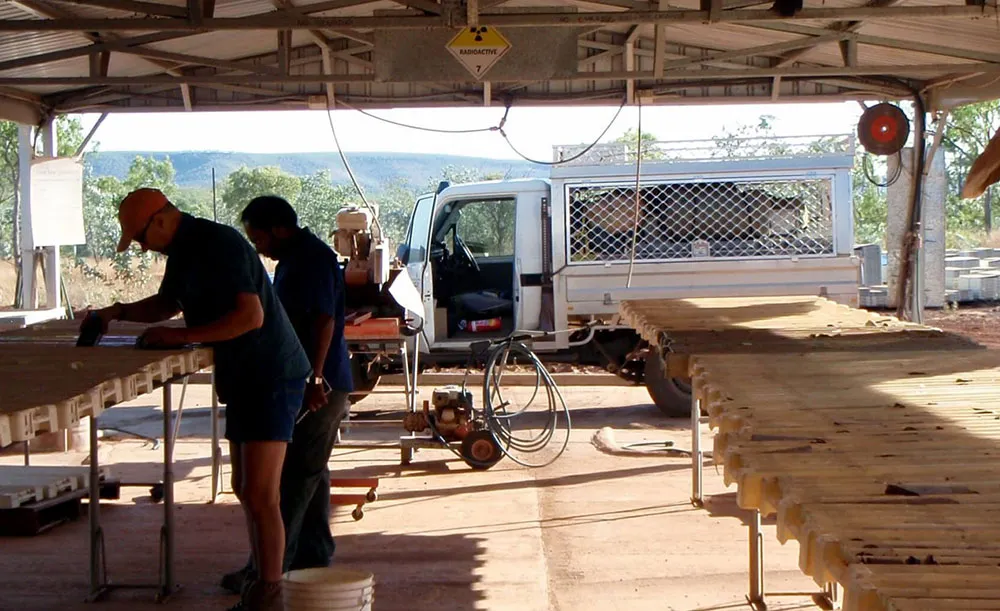
Laramide pivots from Kazakhstan to US uranium development, advancing low-cost Churchrock ISR project toward 2027 production amid global supply deficit and surging nuclear demand.
- Laramide Resources exits Kazakhstan exploration after government effectively nationalised uranium exploration through new legislation requiring 75-90% state ownership of any future joint ventures, making commercial development unviable
- Company refocuses on US assets, particularly Churchrock ISR project in New Mexico, which is on track for Q2 2027 permitting with production capacity of 1-3 million pounds annually at approximately $30/pound operating cost
- Marc Henderson highlights growing supply-demand imbalance with global uranium demand projected to reach 400 million pounds by 2040 while Kazakhstan's production shows declining reserve profile
- Australia's 65-million-pound Westmoreland project remains politically constrained but represents significant optionality; Boss Resources acquired ~20% stake signaling strategic value
- Henderson emphasises need for horizontal M&A to create diversified 8-10 million pound annual producers, as utilities require supply diversification and the market lacks mid-tier producers between major players and junior developers
Laramide Resources CEO Marc Henderson recently provided comprehensive insights into the company's strategic pivot following unexpected developments in Kazakhstan, while reinforcing confidence in the company's core US and Australian uranium assets. The discussion comes at a critical juncture for global uranium markets, as supply constraints collide with surging demand from nuclear power expansion and data center development.
The most significant development addressed was Kazakhstan's legislative changes that effectively nationalised uranium exploration. After securing a substantial land package and completing initial targeting work, Laramide was positioned to begin drilling when the government introduced new rules requiring foreign partners to accept 75-90% state ownership in any future production joint ventures. Henderson stated:
"We were right at the cusp of drilling with a big program for our initial program. The government [started] changing the rules essentially to what we think is de facto nationalisation of uranium in the country."
Understanding Kazakhstan's Strategic Repositioning
The legislative changes specifically target uranium while leaving other mineral exploration frameworks intact. Kazakhstan implemented western-style mining codes in 2018 to attract foreign investment for copper and other commodities, but carved out uranium as a strategic national asset. Kazatomprom, the state-owned producer, generates approximately 60-70 million pounds annually - representing roughly one-fifth of global primary production.
Henderson noted that existing production joint ventures with major international partners typically featured 40-60% foreign ownership.
"Our expectation if we found something that was a Laramide size opportunity, let's say like a Churchrock that we have in New Mexico...we'd be pretty happy if we found 50 million relatively easy low-cost production pounds, we would expect to have a JV that'd be no worse than maybe 50/50."
The new framework eliminates this commercial viability. While disappointing for Laramide, Henderson acknowledged the decision reflects Kazakhstan's sovereign right to manage strategic resources, though he questioned the economic wisdom of deterring risk capital from exploration activities.
Churchrock Progress in New Mexico
With Kazakhstan no longer part of the portfolio, Laramide's Churchrock in-situ recovery (ISR) project in New Mexico assumes greater strategic importance. The project benefits from inclusion in the federal government's FAST-41 permitting process, providing defined timelines and coordinated agency review. Henderson confirmed the company expects permitting completion in Q2 2027, enabling construction to commence. Churchrock's economic profile positions it favourably on the global cost curve.
"We put economic numbers out around it. It's going to be in the low part of the cost curve. I think it was $30 a pound, and uranium's $85 now really. So there's a big margin there."
The project will commence production at 1 million pounds annually with expansion capacity to 3 million pounds. Laramide's ownership of the processing facility provides competitive advantages relative to other ISR developers who must rely on third-party toll milling or construct new plants.
New Mexico's Emerging Role
Henderson highlighted New Mexico's potential to reclaim its historical position as America's primary uranium jurisdiction. The state produced approximately 250 million pounds from hard-rock mining operations, with similar quantities of known resources remaining. However, legacy environmental issues from earlier mining eras created political obstacles that are gradually being addressed through modern ISR techniques and renewed federal support.
"The US government is pretty determined to get their production base online. I think New Mexico has not been in the game to the degree that it will probably be going forward as a jurisdiction. It's historically the most important American production jurisdiction."
The company also advances its La Jara Mesa hard-rock project through permitting under FAST-41 designation. Henderson suggested the US may require a new centralised milling facility to process hard-rock resources efficiently, potentially through industry collaboration among multiple resource holders.
Interview with Marc Henderson, President & CEO of Laramide Resources Ltd.
Australian Assets Under Political Constraints
Laramide's Westmoreland project in Australia contains 65 million pounds of uranium with potential annual production of 5 million pounds. The asset represents "massive optionality" according to Henderson, yet remains constrained by ongoing political debates about uranium mining despite Australia's commitment to nuclear submarine programs.
"We've had what we call a political risk discount in Australia, which seems weird in a country like that, that's a resource country and is supposedly going to be buying nuclear submarines from the Americans... that they are still naval gazing about whether they want to be producing uranium everywhere or not."
Boss Resources' acquisition of a ~20% stake in Laramide signals external validation of Westmoreland's value as a potential second or third asset for diversified producers. The open-pit operation offers low technical risk compared to ISR projects, which Henderson noted exhibit greater variability in execution outcomes despite similar resource metrics.
Market Dynamics Beyond Current Pricing
Henderson addressed the apparent disconnect between uranium fundamentals and current pricing around $85 per pound. He drew parallels to silver markets, which required four years of physical deficits before prices responded materially. The uranium market faces similar dynamics as utilities transition from assuming unlimited Kazakhstan supply to recognising structural constraints.
"I think what's probably going to happen is because we've seen this in nuclear before, when you get into this sort of inflection point where the demand side starts to worry about actually where is our supply coming from for their reactor fleet in year 7, 8, 10, which they haven't been doing."
Historical precedents from the 1970s and mid-2000s suggest utilities and technology companies may pursue vertical integration strategies as supply anxiety intensifies.
Strategic Outlook for Multi-Asset Development
Laramide maintains its core strategy of building a diversified, multi-asset uranium company positioned as a supplier of choice for Western utilities. Henderson acknowledged the company's valuation relative to its resource base hasn't matched competitors, constraining capital allocation options. However, the low-cost Churchrock development and potential Australian resolution could catalyse rerating.
"What the market needs is an 8-to-10 million pound a year company that makes money, and we want to be part of that. What that involves and how much we get paid for our piece of that puzzle is unknown, but I don't think it's today's price. I think it's a lot higher."
The company raised capital in mid-2025 to maintain financial flexibility while advancing permitting and exploring strategic options. Henderson suggested horizontal M&A among uranium developers represents the most likely consolidation pathway, though he noted changing ETF inclusion criteria have raised hurdles for roll-up strategies.
The Investment Thesis for Laramide Resources
- Near-term US Production: Churchrock ISR project advancing toward Q2 2027 permitting with 1-3 million pounds annual capacity at ~$30/pound operating costs, providing significant margins at current uranium prices
- Jurisdictional Positioning: Strategic presence in New Mexico as the state emerges as America's primary uranium jurisdiction with strong federal government support for domestic production development
- Australian Optionality: 65-million-pound Westmoreland project represents high-margin, low-technical-risk open-pit opportunity that could unlock substantial value if political constraints resolve
- Cost Curve Advantage: Churchrock positioned in lower quartile of global production costs, with owned processing infrastructure providing competitive moat versus peers requiring third-party toll milling
- Strategic Validation: Boss Resources' ~20% equity stake signals external recognition of portfolio value and potential role in industry consolidation toward diversified mid-tier producers
- Supply-Demand Fundamentals: Market entering first year of primary deficit with structural demand growth to 400 million pounds by 2040 while major producers face reserve depletion challenges
- De-risked Permitting: FAST-41 designation for Churchrock and La Jara Mesa provides defined regulatory pathways with coordinated federal agency support, reducing development timeline uncertainty
- Multi-Asset Strategy: Diversified portfolio aligns with utility procurement preferences for suppliers with multiple production centers, positioning company for premium valuations as markets recognise scarcity of development-stage producers
Macro Thematic Analysis
The global uranium market faces an unprecedented supply-demand imbalation as nuclear power transitions from legacy baseload to strategic energy security asset. Kazakhstan's effective nationalisation of uranium exploration eliminates the world's most prospective greenfield opportunity just as the industry enters its first primary deficit year.
With demand projected to reach 400 million pounds by 2040 - more than double current consumption - and major producers showing declining reserve profiles, the market lacks clear pathways to meet requirements. This structural shortage will likely trigger utility vertical integration strategies reminiscent of 1970s supply panics, when power plant sales outpaced fuel procurement capabilities. As Henderson observed:
"We don't need more demand announcements. We need supply and we need people focused on companies and governments to make this all happen."
TL;DR
Laramide Resources pivots from Kazakhstan following government nationalisation, refocusing on near-term Churchrock ISR development in New Mexico (Q2 2027 permitting, $30/lb costs) and 65-million-pound Australian asset with significant optionality. Company positioned to capitalise on structural uranium deficit as demand doubles to 400 million pounds by 2040 while Kazakhstan and other major producers face reserve depletion, creating pathway toward premium valuations for diversified mid-tier producers.
FAQs (AI Generated)
Permitting is expected to complete in Q2 2027 under the FAST-41 process, enabling construction commencement. Initial production of 1 million pounds annually can expand to 3 million pounds with owned processing infrastructure.
Churchrock's estimated $30 per pound operating cost positions it in the lower quartile globally, providing substantial margins at current $85 uranium prices and resilience through potential market volatility.
Management focuses on de-risked Churchrock development to demonstrate execution capability while exploring horizontal MnA opportunities to create diversified 8-10 million pound annual production profile utilities prefer.
ISR (in-situ recovery) avoids legacy environmental concerns from historical hard-rock mining, uses solution mining with lower surface disturbance, and faces streamlined permitting relative to conventional mining requiring new centralised milling infrastructure.
Kazatomprom produces 60-70 million pounds annually - roughly one-fifth of global primary supply. Its declining reserve profile creates supply uncertainty as markets enter a structural deficit.
Analyst's Notes





Subscribe to Our Channel






Stay Informed