Energy Fuels Confirms $1.8B NPV at Toliara & Reframes Its Role in Western Critical Minerals Supply Chains



Energy Fuels confirms $1.8B NPV at Toliara with 24.9% IRR. White Mesa Mill positions company to supply 30% of U.S. light and 85% of heavy rare earth demand.
- Energy Fuels' updated Feasibility Study, released January 8, 2026, confirms $1.8 billion post-tax net present value and 24.9 percent internal rate of return at Toliara, underpinned by 904 million tonnes of Proven and Probable Mineral Reserves supporting a 38-year mine life.
- Vertical integration through the White Mesa Mill, currently the only fully licensed U.S. facility able to process monazite for rare earth oxide production, creates a structurally differentiated margin profile and positions the company to potentially supply 30 percent of U.S. light rare earth demand and 85 percent of heavy rare earth demand at full capacity.
- Staged capital deployment of $121 million pre-FID, $769 million for Stage 1, and $142 million for Stage 2 expansion provides execution flexibility, while the October 2025 raising of $700 million in Convertible Senior Notes substantially strengthens the balance sheet for project advancement.
- Near-term catalysts include a downstream feasibility study expected within weeks, ongoing negotiations with Madagascar to add monazite to the existing mining permit, and commercial production of dysprosium and terbium oxides planned for the fourth quarter of 2026.
- Jurisdictional risk from Madagascar-based mining operations is partially mitigated by anchoring high-value rare earth separation in the United States, aligning with Western supply chain policy priorities and creating strategic counterparty value for defence and clean energy end users.
Why the Toliara Feasibility Study Matters Now
The timing of Energy Fuels' updated feasibility study reflects a broader inflection point in critical minerals capital allocation. What was once a policy narrative concentrated in government white papers has begun translating into real investment decisions. Institutional capital is increasingly distinguishing between companies with theoretical resource exposure and those demonstrating integrated, executable supply chains. The Toliara study, which consolidates and supersedes the 2021 Definitive Feasibility Study and 2024 monazite-focused Pre-Feasibility Study, offers investors a framework to evaluate Energy Fuels as a modelled industrial system with defined economics.
Critical Minerals Shifting From Policy Narrative to Capital Allocation
U.S. and allied governments are actively prioritising secure, non-Chinese rare earth supply through procurement incentives, permitting reform, and strategic stockpiling initiatives. For investors, this policy momentum has shifted evaluation criteria for critical minerals assets. Projects must demonstrate not only geological merit but also processing capability, jurisdictional resilience, and strategic relevance to Western supply chains. Capital is flowing toward developments combining scale, longevity, and downstream control.
Energy Fuels' Strategic Pivot at an Opportune Moment
The updated feasibility study reframes Energy Fuels from a uranium-centric producer into a multi-decade critical materials operator. Toliara is presented as a fully modelled system with clear economics, staged capital deployment, and integration into existing U.S. processing infrastructure.
Mark Chalmers, Chief Executive Officer of Energy Fuels, underscores the company's differentiation:
"Energy Fuels is a company that is unique from all others that you'd look at because we are focused on building a critical mineral hub that is built around our uranium business but also includes the rare earth suite."
Asset Scale & Geological Endowment at Toliara
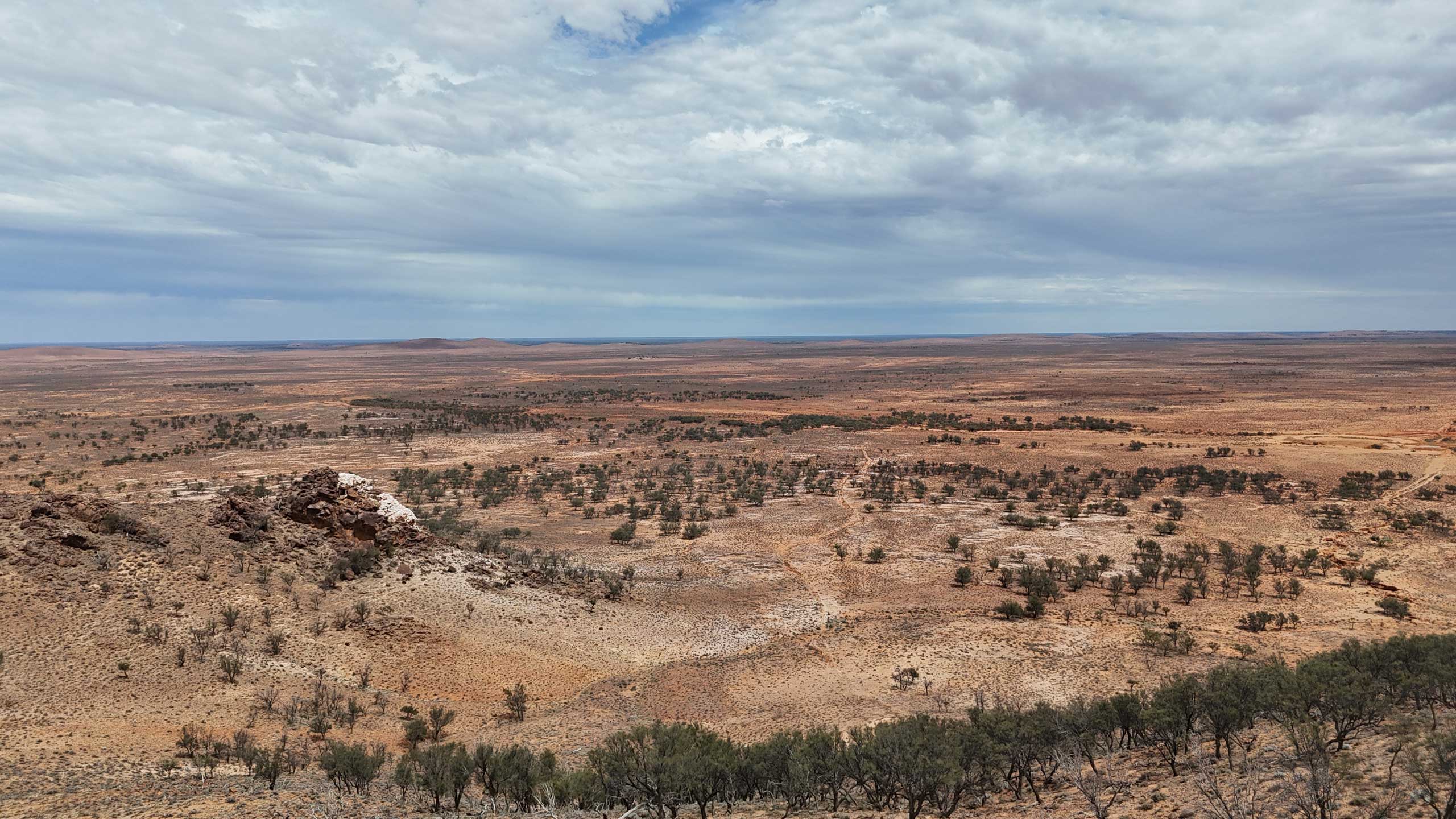
The Toliara project in Madagascar represents one of the largest undeveloped heavy mineral sands deposits globally, combining tonnage, grade, and mineral diversity in a configuration that supports multi-decade production.
Heavy Mineral Sands Scale Underpinning Long-Duration Cash Flow
The feasibility study outlines 904 million tonnes of Proven and Probable Mineral Reserves at 6.1 percent heavy mineral content, prepared in compliance with U.S. S-K 1300 and Canadian NI 43-101 standards. This reserve base underpins an initial 38-year mine life, with potential extension supported by 1.2 billion tonnes of Inferred Mineral Resources and exploration targets in the Lower Sandy Unit. The combination of tonnage and grade provides structural insulation against commodity price cycles.
Mineral Assemblage Driving Strategic Optionality
Revenue at Toliara is dominated by ilmenite, zircon, and rutile, cash-generative industrial minerals with established end markets. The feasibility study utilises price forecasts from TZ Minerals International for mineral sands and Adamas Intelligence for rare earths, assuming ilmenite at $199 per tonne, rutile at $1,250, zircon at $1,200, and monazite at $6,600. The monazite content enables rare earth exposure without the cost structures typically associated with dedicated rare earth mining operations.
Chief Executive Officer Mark Chalmers describes the deposit's strategic significance:
"It got really high grades of the DY and the TB, extraordinarily high… Toliara is an extraordinary project. "
Economics & Risk Profile Considerations
The feasibility study economics position Toliara among the more attractive development-stage assets in the critical minerals space, though investors should evaluate these metrics alongside jurisdictional complexity and remaining permitting requirements.
Feasibility Metrics & Development Economics
The study reports a post-tax, pre-debt net present value of $1.8 billion at a 10 percent discount rate, with an internal rate of return of 24.9 percent. Average EBITDA margins are modelled at approximately 72 percent, generating free cash flow of roughly $264 million per annum at steady-state production. These metrics reflect a project capable of generating substantial returns across a range of commodity price assumptions.
Margin Resilience Through Byproduct Economics
The recovery of monazite as a secondary output materially lowers the unit cost of rare earth production relative to dedicated rare earth mining operations. This configuration differentiates Energy Fuels from pure-play rare earth developers exposed to single-commodity pricing dynamics. During periods of rare earth price weakness, the underlying heavy mineral sands economics provide cash flow continuity.
Capital Intensity Managed Through Staging
The feasibility study delineates capital requirements across development phases: $121 million pre-final investment decision, $769 million for Stage 1 development to 13 million tonnes per annum capacity, and $142 million for Stage 2 expansion to 25 million tonnes per annum. This staged approach allows management to calibrate capital deployment against permitting milestones and commodity price environments.
Mark Chalmers highlights the company's financial positioning:
"We've got this strong balance sheet. We really are in an absolutely strong position from a balance sheet and revenue generation looking forward for the next several years."
Vertical Integration Through the White Mesa Mill
The White Mesa facility in Utah represents Energy Fuels' primary source of structural differentiation. As the only fully licensed and operating conventional uranium processing facility in the United States currently able to process monazite for rare earth oxide production, White Mesa converts upstream competitive advantages into margin capture unavailable to developers lacking downstream integration.
White Mesa as a Processing Constraint in U.S. Supply Chains
White Mesa's permitting and operational status creates a processing bottleneck that Energy Fuels can leverage across multiple feedstock sources. The facility converts low-cost monazite concentrates into separated rare earth oxides, capturing value at the processing stage. Phase 2 expansion permitting is currently underway, targeting capacity comparable to major global rare earth processors.
Importing Concentrates & Exporting Strategic Value
Energy Fuels' strategy mirrors the proven rare earth playbook historically executed by Chinese processors: importing feedstock from global sources and monetising processing capability domestically. The critical distinction is execution within U.S. jurisdictional and regulatory frameworks.
Mark Chalmers emphasises the facility's strategic role:
"If the United States wants to reshore the ability to be independent of China, particularly on rare earth, or reduce dependency on Russia, we have a facility in the United States that's constructed, permitted, operating to do that. We're trying to differentiate between others in that we can deal with the radioactivity, recover uranium, and process monazite in the United States when nobody else can."
Supply Chain Relevance & Strategic Positioning
At full production capacity, Energy Fuels projects capability to supply approximately 30 percent of U.S. light rare earth demand and 85 percent of heavy rare earth demand, based on comparisons to Benchmark Mineral Intelligence's 2032 supply forecast. This scale positions the company as a strategic supplier with relevance to defence, automotive, and clean energy supply chains.
Uranium Operations as Cash Flow Foundation
Energy Fuels' uranium operations provide the financial foundation supporting critical minerals development. The company identifies as the leading U.S. producer of uranium, with the Pinyon Plain Mine cited as potentially the highest-grade uranium mine in U.S. history at costs of approximately $23 to $30 per pound.
Mark Chalmers articulates the strategic logic:
"The uranium side of the business, of our mines not others, is our cash machine. That's what's going to generate material cash... The uranium business fits together. It funds us as a company."
The company's financial position was significantly strengthened by an October 2025 offering of $700 million in Convertible Senior Notes, featuring a 0.75 percent coupon rate and 32.5 percent conversion premium. As of September 30, 2025, the company reported $298.5 million in working capital, subsequently bolstered by approximately $625 million in net proceeds from the debt offering.
Jurisdictional Considerations & Risk Mitigation
Investors evaluating Toliara must weigh the project's exceptional scale and economics against sovereign complexity inherent in Madagascar-based development.
Madagascar: Scale Versus Sovereign Complexity
Energy Fuels currently holds a mining permit for ilmenite, rutile, and zircon. However, monazite production is not yet included in the existing permit, with its addition representing a key focus of current negotiations with the Government of Madagascar. Fiscal and legal stability terms are being formalised based on a December 2024 Memorandum of Understanding. Resolution of these outstanding items represents a gating requirement for final investment decision, which the company expects in 2026.
Processing Risk Anchored in the United States
The concentration of value-added processing at White Mesa reduces geopolitical exposure relative to development models requiring offshore rare earth separation. U.S. regulatory and infrastructure certainty provides a counterbalance to upstream jurisdictional risk.
Downstream Feasibility Study & Margin Transparency
A downstream feasibility study quantifying incremental EBITDA contribution from rare earth separation at White Mesa is expected within the coming weeks. This analysis represents a key valuation input for potential market re-rating.
Heavy Rare Earth Production Pathway
Commercial production of dysprosium and terbium oxides is planned for the fourth quarter of 2026, marking Energy Fuels' transition from developer to strategic supplier of heavy rare earths critical to permanent magnet applications.
Mark Chalmers speaks to execution capability:
"Some people say that we do more in one year than most people do in 10. I think we do more in one year than most people do in 15 or 20. We're proud of that. We are doers."
The Investment Thesis for Energy Fuels
- Toliara provides multi-decade production visibility with a 38-year mine life based on 904 million tonnes of compliant reserves.
- Byproduct rare earth recovery and downstream integration through White Mesa drive structurally superior margin economics versus standalone developers.
- White Mesa's unique permitting and operational status anchors Energy Fuels inside Western supply chain priorities and creates processing scarcity value.
- Near-term catalysts including the downstream feasibility study, monazite permit inclusion, and late 2026 heavy rare earth production milestones define a clear value-creation pathway.
- The October 2025 capital raise of $700 million provides substantial financial flexibility for project advancement without near-term dilution.
- Uranium operations provide cash flow foundation funding critical minerals development while maintaining sector leadership.
- Offshore mining risk at Toliara is partially offset by domestic processing and diversified revenue streams.
The updated feasibility study at Toliara represents more than a project milestone; it reframes Energy Fuels' positioning within the global critical minerals ecosystem. By combining world-class scale, robust economics, and rare downstream integration through White Mesa, the company has constructed an investment case extending beyond exploration exposure or single-commodity dependence. For institutional investors navigating capital allocation in an increasingly policy-driven resource market, Energy Fuels presents a thesis grounded in execution capability, integrated supply chain positioning, and strategic relevance to Western critical minerals security.
TL;DR
Energy Fuels' updated Toliara Feasibility Study confirms $1.8 billion post-tax NPV and 24.9% IRR, backed by 904 million tonnes of reserves supporting a 38-year mine life. The company's White Mesa Mill—the only fully licensed U.S. facility capable of processing monazite for rare earth oxides—creates structural margin advantages and positions Energy Fuels to potentially supply 30% of U.S. light rare earth demand and 85% of heavy rare earth demand. Staged capital deployment totalling approximately $1 billion provides execution flexibility. Near-term catalysts include a downstream feasibility study expected within weeks, Madagascar monazite permit negotiations, and planned Q4 2026 commercial production of dysprosium and terbium oxides. The October 2025 $700 million convertible note offering strengthens the balance sheet for project advancement.
FAQs (AI-Generated)
The updated Feasibility Study reports a post-tax net present value of $1.8 billion at a 10% discount rate, with an internal rate of return of 24.9% and average EBITDA margins of approximately 72%.
The project has a 38-year mine life based on 904 million tonnes of Proven and Probable Mineral Reserves, with potential extension supported by 1.2 billion tonnes of Inferred Mineral Resources.
White Mesa is currently the only fully licensed and operating conventional uranium processing facility in the United States capable of processing monazite for rare earth oxide production, creating a domestic processing bottleneck Energy Fuels can leverage.
At full production capacity, the company projects capability to supply approximately 30% of U.S. light rare earth demand and 85% of heavy rare earth demand.
Near-term catalysts include a downstream feasibility study expected within weeks, ongoing negotiations to add monazite to the Madagascar mining permit, and planned commercial production of dysprosium and terbium oxides in Q4 2026.
Analyst's Notes





Subscribe to Our Channel





Stay Informed