How enCore Energy's 2025 Milestones Shaped Its Investment Profile


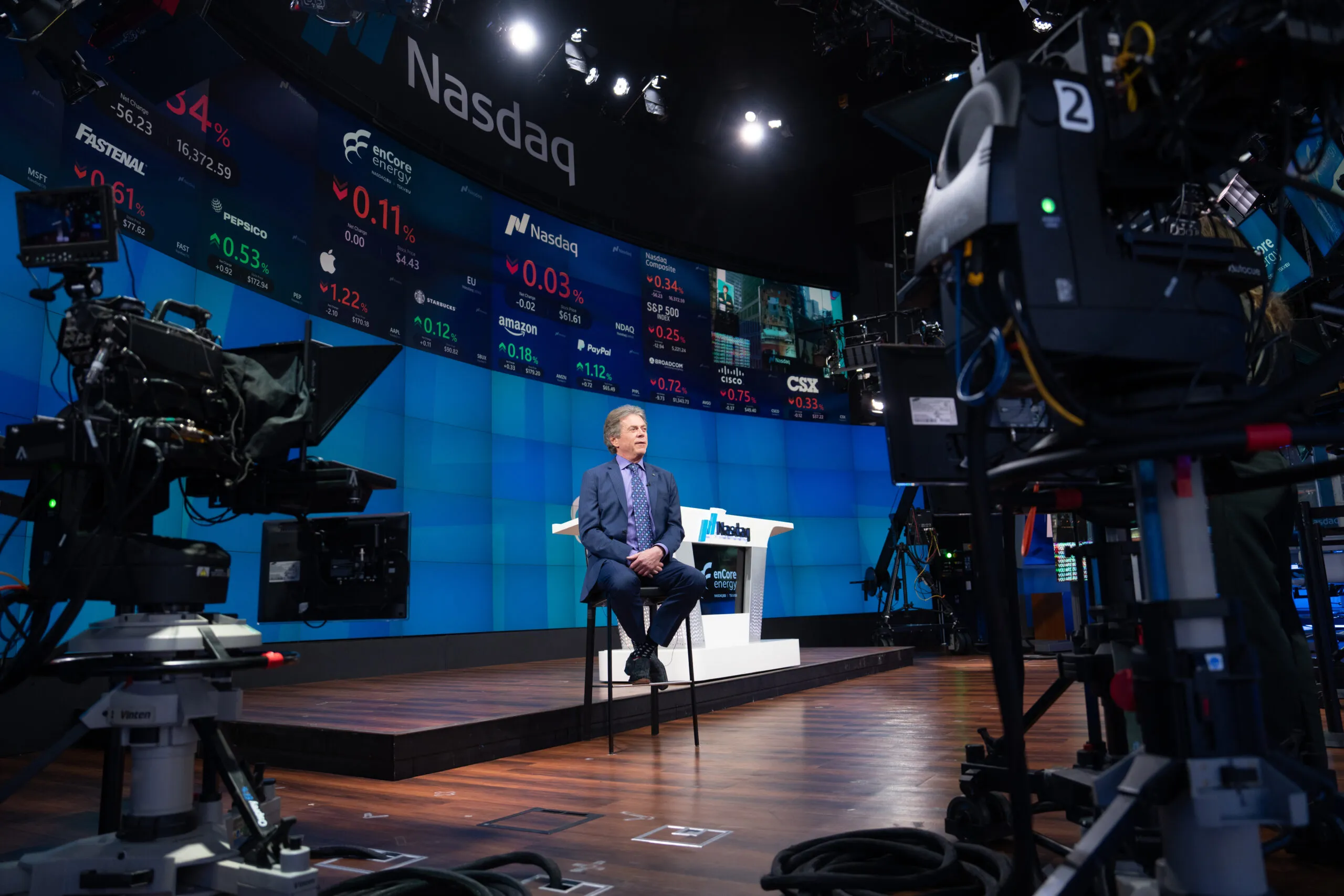
enCore Energy's 2025 milestones, record Alta Mesa production, Dewey Burdock Fast-41 designation, and US issuer transition, reshaped its uranium investment profile.
- 2025 marked enCore's transition from restart phase to sustained in-situ recovery production at Alta Mesa, with record capture rates achieved in March.
- The company fulfilled contracted uranium deliveries without relying on spot market purchases, preserving margins during price volatility.
- Dewey Burdock's inclusion in the Fast-41 federal permitting program materially improved development timeline visibility.
- Updated S-K 1300 economics confirmed low operating costs of $23.81 per pound and a 33% after-tax internal rate of return, supporting resilience across uranium price scenarios.
- Transition to US domestic issuer status, effective January 1, 2025, strengthened institutional alignment and reporting transparency.
2025 in Context: Moving Beyond Restart Risk
Uranium equity valuations reflect not only commodity price exposure but also the credibility of operational execution. In 2024, enCore Energy's investment profile was shaped by the risks inherent to plant recommissioning at Alta Mesa, a process that introduces throughput uncertainty, cost variability, and contractor dependency. By the close of 2025, those risks had been materially reduced.
Why 2025 Was a Risk-Reduction Year
For uranium equities, investor repricing follows a predictable logic. Execution discounts compress when a company demonstrates sustained throughput, honors delivery commitments, establishes permitting visibility, and maintains cost discipline. Each of these dimensions was addressed in 2025.
In 2024, enCore was appropriately characterized as a company in restart mode, operationally active but not yet credentialed as a reliable producer. By the end of 2025, that characterization no longer applied. Alta Mesa had produced measurable results under real operating conditions. Dewey Burdock had achieved federal permitting prioritization. Financial reserves remained intact without dilutive equity issuances. Collectively, these outcomes shifted enCore's position within the US uranium supply chain from discretionary participant to active, contracted supplier.
For investors applying development-stage discounts to enCore's valuation, 2025 provided the data necessary to begin compressing those assumptions.
Alta Mesa in 2025: From Commissioning to Operation
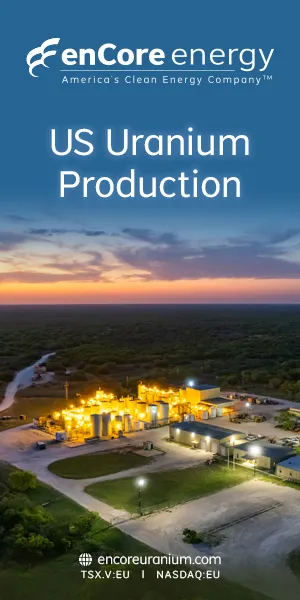
Alta Mesa, located in South Texas, is one of two licensed central processing plants operated by enCore. The facility sits within a district with a documented history of approximately 80 million pounds of uranium oxide extracted through sandstone-hosted in-situ recovery operations. The 2025 operating year tested whether that foundation could support sustained modern extraction under the company's current management and wellfield development strategy.
The most significant operational data point of the year was recorded in March 2025. During the final 26 days of the month, enCore captured 50,000 pounds of uranium oxide at Alta Mesa, with an average daily capture rate in excess of 1,900 pounds, the highest rate since the plant returned to operations in June 2024, as confirmed in the company's April 7, 2025 press release. The distinction worth noting is that this was not modeled output; it was measured performance under active operating conditions.
Executive Chairman William Sheriff contextualized enCore’s production acceleration:
"What we've done in the four months since then is implement the plan and overachieve what we'd expected to do. Our production rate on a daily basis has gone up, depending on what time frame you're measuring it against, from up 200% to up 300%."
The March performance was made possible in part by improvements in wellfield development efficiency. William Sheriff described one key operational metric:
"We went from a roughly a little over seven days average of getting a production or injector well into just about 1.3 now, and that metric is rather profound, but it really explains that in order to up your production you've got to get more wells in the ground."
For analysts modeling enCore's production trajectory, the compression of well installation timelines represents a structural improvement with direct implications for annualized throughput estimates.
Contract Delivery as Evidence of Operational Stability
Beyond capture rate milestones, contract fulfillment served as the operational credibility test of 2025. The company accelerated its August 2025 contract delivery requirements to May 2025, attributing the change to improved uranium capture at Alta Mesa. As of the April 7, 2025 press release date, enCore had delivered 290,000 pounds year-to-date under utility contracts, with an additional 365,000 pounds expected to be delivered through the remainder of 2025. No open-market uranium purchases were required at current extraction rates to meet these commitments.
The investor implications of early delivery are worth unpacking. When a uranium producer meets contract schedules without purchasing spot material, three risk factors diminish simultaneously: counterparty risk perception decreases, margin compression risk from spot price exposure narrows, and the company's operational credibility with utilities strengthens.
Wellfield Expansion & Infrastructure Utilization
As of the April 7, 2025 press release, enCore had 21 drill rigs in operation at Alta Mesa, with public guidance targeting at least 30 rigs operating across its South Texas projects. Initial preparatory work also commenced at the permitted Wellfield 6, designated PAA-6, extending the production area and increasing the facility's longer-term throughput potential. The significance of this expansion is that it positions 2025 not only as a record-setting production year but as a capacity-building year - one that increases the probability of sustained or improved performance in subsequent periods.
Dewey Burdock in 2025: Permitting Visibility & Economic Confirmation
In January 2025, enCore published a technical report for its Dewey Burdock project in South Dakota, prepared in accordance with US Securities and Exchange Commission S-K 1300 reporting standards and based on a long-term uranium price assumption of $86.34 per pound. The report confirmed the following base-case economics: an after-tax net present value at an 8% discount rate of $133.6 million, an after-tax internal rate of return of 33%, an operating cost of $23.81 per pound, total life-of-project capital costs of $264.2 million with initial capital costs of $105.0 million, and a measured and indicated resource of 17.1 million pounds.
For context, net present value represents the discounted sum of projected future cash flows adjusted for the time value of money, while internal rate of return reflects the annualized return implied by those cash flows at zero net present value. An operating cost of $23.81 per pound positions Dewey Burdock well below current long-term contract pricing benchmarks, providing meaningful downside protection across a range of uranium price scenarios. The project's economics were confirmed under standardized US disclosure requirements, improving comparability with domestic peers.
Fast-41 Designation as a Structural De-Risking Event
In September 2025, Dewey Burdock became the first critical mineral project in South Dakota to receive designation under the federal Fast-41 permitting program, as confirmed in the company's September 2, 2025 press release. Fast-41, coordinated through the Federal Permitting Improvement Steering Council, integrates qualifying projects into a centralized federal permitting dashboard, imposes coordination timelines on participating agencies, and increases process transparency for developers and investors.
William Sheriff described the designation's practical effect on development visibility:
"It gives you more certain and more acceptable timeline to get through all of your filing... It puts a burden on the company to meet their timelines because it's completely transparent - it's available on the government websites."
The investor consequence of this designation is specific: reduced permitting opacity, greater timeline predictability, and federal-level alignment that lowers the jurisdictional risk premium typically applied to projects awaiting multi-agency approvals. The company's January 2025 technical report states that permitting and licensing completion is forecasted for Q3 2026, with construction of the Dewey Burdock central processing plant and wellfield anticipated to commence early in 2027, subject to that permitting outcome. Dewey Burdock transitioned during 2025 from a development asset with indeterminate timelines to a federally prioritized project with defined milestones.
Financial Position & Discipline in 2025
As confirmed in the April 7, 2025 press release, enCore held approximately $40 million in unencumbered cash, inventory, and marketable securities. This reserve level supported ongoing operations without requiring equity issuances that would dilute existing shareholders. The in-situ recovery model carries meaningfully lower capital intensity relative to conventional mining - the company's December 2025 corporate presentation, citing the US Nuclear Regulatory Commission and Trade Tech's Nuclear Review, states that average capital expenditure for in-situ recovery operations is less than 15% of comparable conventional mines - a structural advantage that extends the utility of available treasury across the development pipeline.
Sales Strategy Validation
enCore's contracting posture, with plans to contract less than 50% of planned annual extraction rates at current prices, reflects a deliberate strategy of preserving spot price exposure while securing sufficient base revenue to cover operating costs. This approach was validated by 2025 performance: base cost coverage was achieved, delivery obligations were met ahead of schedule, and the company retained meaningful leverage to uranium price appreciation without incurring the risks associated with fully uncontracted production.
ISR Model in the US Context
enCore operates two licensed central processing plants in Texas - Rosita and Alta Mesa - and describes itself as the only United States uranium company with multiple central processing plants in operation. The Agreement State regulatory framework applicable in Texas, supported by a well-established energy-sector permitting environment, reduces regulatory uncertainty relative to jurisdictions without this framework. William Sheriff noted the competitive significance of this configuration:
"We're the only company out there that has two plants that are operational."
Beyond Texas, enCore's asset portfolio includes Dewey Burdock in South Dakota and Gas Hills in Wyoming, which completed a Preliminary Economic Assessment effective December 31, 2024, and is identified as a future project in the company's development pipeline. These assets are structured to integrate into enCore's existing processing network as satellite operations, with marginal production growth carrying lower incremental capital requirements relative to greenfield development.
Transition to US Domestic Issuer Status
Effective January 1, 2025, enCore completed its transition to US domestic issuer status, adopting S-K 1300 reporting standards as confirmed in the January 16, 2025 press release. The transition improved resource disclosure comparability with domestic peers and established a more standardized framework for technical and financial analysis relevant to US-based institutional allocators.
Leadership Structure
On April 7, 2025, enCore appointed Robert Willette as Acting Chief Executive Officer and Director, a designation subsequently formalized to Chief Executive Officer by the time of the company's December 2025 corporate presentation. Daniel Calderon, appointed Director of Texas Operations in April 2025 and later designated Vice President Operations - South, assumed responsibility for oversight of the Alta Mesa and Rosita processing facilities. William Sheriff emphasized the strategic importance of technical depth in the organization:
"Our biggest assets are people, our bench strength. We're probably the only team out there that can go and open up another duplicate operation and staff it with talented people that have had experience in the industry."
Risk Factors Highlighted by 2025 Performance
In-situ recovery mining extracts uranium by circulating solution through underground wellfields. The chemistry of those wellfields changes over time, which affects how much uranium is captured in any given period. The record capture rate reported in March 2025 reflects one measurement point within a range of outcomes. Production modeling based on a single peak figure will differ from modeling based on averages across multiple periods. Relying solely on peak capture data when projecting future output may arrive at production estimates that do not reflect the historical range of wellfield performance.
Permitting Remains Timeline-Dependent
Fast-41 designation is a federal process that coordinates agency review timelines and increases transparency around permitting schedules. It does not remove the possibility of legal challenges, and it does not legally bind agencies to completion deadlines. The Q3 2026 target for Dewey Burdock permitting is guidance provided by the company, and the actual outcome depends on how the regulatory process unfolds.
Uranium Price Sensitivity
Dewey Burdock's project economics are calculated against a long-term uranium price assumption of $86.34 per pound. The after-tax net present value and internal rate of return profiles remain sensitive to sustained movements in long-term contract pricing.
The Investment Thesis for enCore Energy
- The US uranium supply deficit creates durable demand for domestic producers capable of reliable contracted delivery, reducing utility dependence on imports from geopolitically sensitive jurisdictions.
- enCore's two licensed central processing plants in Texas represent a processing infrastructure configuration that the company states no other US in-situ recovery operator currently replicates, providing a meaningful scarcity premium.
- An operating cost of $23.81 per pound at Dewey Burdock, confirmed under S-K 1300 standards against a $86.34 per pound price assumption, provides substantial margin protection across a range of uranium price scenarios.
- Fast-41 designation at Dewey Burdock establishes a defined federal permitting pathway with a Q3 2026 target completion, reducing the timeline uncertainty that has historically discounted South Dakota uranium development assets.
- enCore's balanced contracting posture preserves exposure to long-term uranium repricing while maintaining operational cost coverage, offering investors asymmetric upside potential relative to fully hedged producers.
- The in-situ recovery model, with Gas Hills at preliminary economic assessment stage and Dewey Burdock advancing through federal permitting, reduces marginal capital requirements for satellite asset development and improves the economics of production growth relative to greenfield alternatives.
These outcomes narrowed the execution discount that has separated enCore's market valuation from its asset-level economics. The company entered 2026 with an operating record at Alta Mesa, a federally prioritized development asset in South Dakota targeting Q3 2026 permitting completion, and a treasury position supporting ongoing operations without near-term dilution pressure. Milestones in 2025 converted the restart-phase into a track record of production and institutional-grade permitting progress within the domestic uranium supply chain.
TL;DR
enCore Energy used 2025 to convert restart-phase risk into a documented operating track record. Alta Mesa set a record capture rate of 50,000 pounds in March, wellfield expansion accelerated, and contracted deliveries were fulfilled ahead of schedule without spot market purchases. Dewey Burdock received Fast-41 federal permitting prioritization - the first critical mineral project in South Dakota to do so - with Q3 2026 permitting completion targeted and confirmed low-cost economics of $23.81 per pound under S-K 1300 standards. A $40 million treasury, no dilutive equity issuances, and a transition to US domestic issuer status rounded out a year that materially compressed the execution discount on enCore's valuation.
FAQs (AI-Generated)
ISR extracts uranium by circulating a solution through underground sandstone-hosted deposits rather than physically excavating rock. This approach requires significantly lower capital expenditure — enCore cites figures below 15% of comparable conventional mines — which extends treasury resources and improves the economics of expanding production through satellite wellfields.
Fast-41, coordinated through the Federal Permitting Improvement Steering Council, integrates qualifying projects into a centralized federal permitting dashboard and imposes coordination timelines on participating agencies. For Dewey Burdock, it reduces permitting opacity and supports the company's Q3 2026 target for permitting completion, though it does not legally bind agencies to deadlines or eliminate the possibility of legal challenges.
Improved wellfield development efficiency at Alta Mesa — including a reduction in average well installation time from over seven days to approximately 1.3 days — drove a sustained increase in capture rates. This allowed enCore to accelerate its August delivery schedule to May 2025 and fulfill 290,000 pounds in year-to-date deliveries by early April, entirely from its own extraction output.
January 2025 S-K 1300 technical report, based on a long-term uranium price of $86.34 per pound, confirmed an after-tax NPV of $133.6 million at an 8% discount rate, a 33% after-tax IRR, operating costs of $23.81 per pound, and a measured and indicated resource of 17.1 million pounds. Initial capital costs are estimated at $105.0 million against total life-of-project capital of $264.2 million.
The company plans to contract less than 50% of planned annual extraction rates at current prices. This deliberate posture secures sufficient base revenue to cover operating costs while retaining meaningful leverage to uranium price appreciation — a structure that offers asymmetric upside potential relative to producers who lock in the majority of output through long-term fixed-price contracts.
Analyst's Notes





Subscribe to Our Channel






Stay Informed