




Energy Fuels Inc.'s White Mesa Mill Expansion & What It Means for US Rare Earth Supply Risk


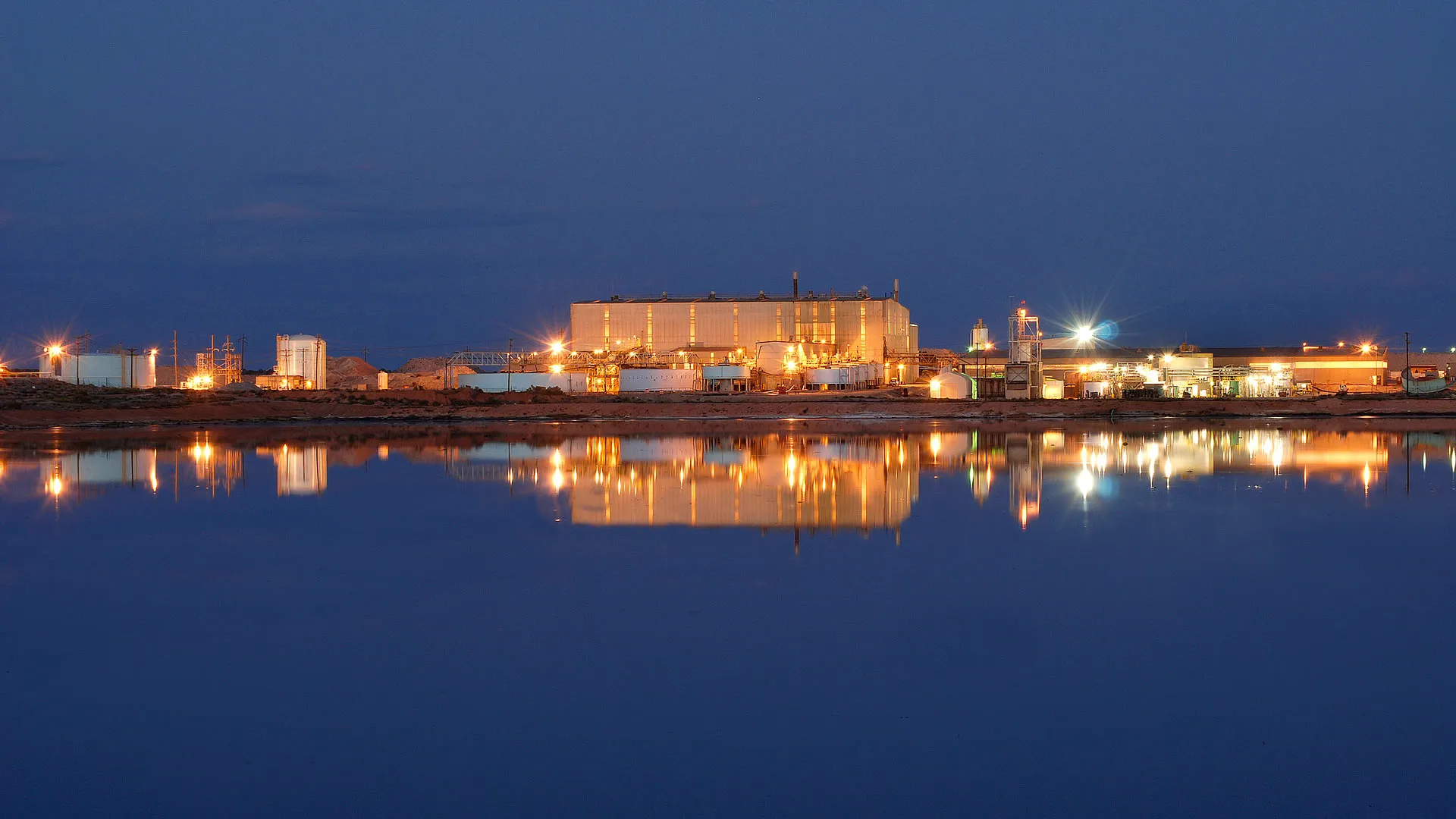
Energy Fuels' White Mesa Mill expansion positions the company as a key US rare earth processor, with Phase 2 targeting increased NdPr and heavy REE output.
- Western governments are prioritising domestic and allied supply chains for critical minerals, but processing capacity remains the primary bottleneck, not mine supply.
- Energy Fuels operates currently the only facility in the United States capable of processing monazite into separated rare earth oxides, giving it a differentiated position in the market.
- A January 2026 bankable feasibility study outlines a Phase 2 expansion of the White Mesa Mill, targeting materially higher production of neodymium-praseodymium (NdPr) and heavy rare earths (Dy, Tb).
- The expansion is supported by byproduct feedstock economics, which management believes could place operating costs among the lowest globally.
- For investors, the relevance lies in risk reduction and margin visibility, rather than rare earth price speculation, as permitted infrastructure alters execution and funding dynamics.
Why Rare Earth Supply Chains Are a Processing Problem, Not a Mining Problem
The critical minerals investment thesis has evolved considerably over the past decade. Early-stage capital flowed predominantly toward exploration and resource delineation, under the assumption that discovering deposits would generate value. The constraint on Western rare earth supply is not the availability of mineralised rock but the capacity to convert that rock into separated oxides and refined metals suitable for industrial use.
The Gap Between Resource Availability & Usable Materials
Rare earth elements exist in commercially relevant concentrations across multiple continents, including deposits in North America, Australia, Brazil, and parts of Africa. Yet the pathway from ore body to end-use application requires separation and metallisation infrastructure that remains concentrated predominantly in China. This imbalance means that Western mining projects, even those with strong resource grades and favourable economics, remain exposed to Chinese processing unless they can access alternative separation facilities.
A mining project without a processing pathway carries execution risk that cannot be resolved through additional drilling or resource upgrades. Processing is a key determinant of whether rare earth value can be realised outside Chinese supply chains.
Investor Implications of Processing Constraints
The processing bottleneck has direct consequences for capital formation and contract structures. Industrial users in electric vehicle manufacturing, wind turbine production, and defence applications increasingly require non-Chinese supply assurances. However, offtake agreements depend on demonstrated processing capability.
Energy Fuels has received qualification from POSCO, confirming its NdPr oxide meets commercial specifications. Processing capacity, once established and permitted, becomes a strategic asset that can attract feedstock from multiple sources rather than depending on a single deposit.
White Mesa Mill as a Case Study in Infrastructure Scarcity
The White Mesa Mill in southeastern Utah represents a rare combination of permitted capacity, operating history, and geographic positioning. Originally constructed for uranium processing, the facility has been adapted over decades to handle multiple feedstocks, including monazite sands containing rare earth elements.
Permitted Processing as a Barrier to Entry
Permitting timelines for processing facilities in the United States routinely extend beyond five years, with environmental reviews, community consultations, and state-level approvals creating sequential rather than parallel approval processes. Greenfield rare earth separation facilities face additional scrutiny due to the radioactive components present in many rare earth feedstocks.
White Mesa's existing permits allow for the processing of naturally occurring radioactive materials, a designation that would require years of regulatory engagement for a new entrant to obtain. The facility currently operates as the only conventional uranium mill in the United States and the only US facility capable of separating monazite concentrates into rare earth oxides. This permitting status functions as a structural barrier to competition and reduces the execution risk typically associated with processing facility development.
How Processing Assets Change Risk Profiles
Single-asset mining projects carry concentration risk that processing facilities can mitigate through feedstock diversification. A separation facility with multiple supply agreements is less exposed to operational disruptions at any individual mine, weather-related production shortfalls, or grade variability.
Mark Chalmers, Chief Executive Officer of Energy Fuels, noted the scale underlying the company's processing strategy:
"We're building out a two-step: Phase 1, Phase 2, the size of Lynas, but with separated heavies as well."
The reference to Lynas, currently the largest rare earth producer outside China, provides a benchmark for the intended scale of operations. The inclusion of heavy rare earth separation, particularly dysprosium and terbium, addresses a segment of the market where supply constraints are most acute.
Interpreting the Phase 2 Feasibility Study: What the Expansion Actually Changes
The bankable feasibility study released on January 15, 2026, provides the technical and economic parameters for Phase 2 expansion at White Mesa. For investors, the study translates operational ambitions into quantifiable metrics that can be assessed against industry benchmarks.
Key Metrics From the Expansion Plan
The existing Phase 1 circuit has installed capacity to produce approximately 1,000 tonnes per annum of NdPr oxide. The Phase 2 expansion targets a material increase in this capacity, with additional output of dysprosium and terbium oxides. These heavy rare earths command pricing premiums relative to light rare earths due to their essential role in high-performance permanent magnets used in electric vehicle motors and wind turbine generators. According to Benchmark Mineral Intelligence's 2032 supply forecast, production from Energy Fuels' projects has the potential to supply 85% of US demand for heavy rare earth oxides.
Cost Structure & Margin Sensitivity
The economic case for White Mesa expansion rests substantially on byproduct feedstock economics. Monazite, the primary rare earth-bearing mineral processed at the facility, is recovered as a byproduct from heavy mineral sand operations producing titanium and zirconium concentrates. The company has secured monazite supply through a sole offtake agreement with Chemours, in addition to feedstock from its own development projects.
Because monazite represents a secondary revenue stream for heavy mineral sand operations, feedstock pricing does not reflect the full cost of dedicated rare earth mining. This byproduct dynamic allows Energy Fuels to source material at costs below those faced by primary rare earth miners.
Chalmers addressed the quality of upstream feedstock opportunities, referencing the Toliara project in Madagascar. An updated feasibility study released on January 8, 2026, reported a net present value of $1.8 billion at a 10% discount rate:
"We still see Toliara as the lowest-cost undeveloped heavy mineral sand and monazite deposit in the world, long life, large scale."
Management believes that rare earth oxide production ranks among the lowest capital and operating costs globally, though investors should note this characterisation reflects the company's internal assessment.
Scale Effects in Rare Earth Separation
Separation facilities exhibit meaningful fixed-cost leverage. The infrastructure required for solvent extraction and oxide precipitation does not scale linearly with throughput, creating unit cost improvements as production volumes increase. Higher volumes improve margin capture even at constant pricing, providing a buffer against rare earth price volatility.
Integration & Capital Allocation: Reducing Risk Rather Than Chasing Growth
Securing non-Chinese monazite supply addresses both geopolitical and commercial risks. Dependence on Chinese-controlled feedstock exposes Western processors to supply interruptions, export restrictions, and pricing volatility. By developing relationships with heavy mineral sand producers and advancing proprietary projects including Toliara, the Donald Project in Australia, and Bahia in Brazil, Energy Fuels is building feedstock optionality.
How Integration Affects Capital Discipline
Vertical integration improves capital planning by aligning processing capacity with feedstock availability. Stranded processing capacity represents a risk for facilities dependent on third-party supply, as utilisation rates directly affect unit economics.
Chalmers addressed the company's execution philosophy:
"We're not promoters. We say what we're going to do and we do it. And we deliver."
The company processed 350,000 pounds of uranium in December 2025 alone, demonstrating operational capability at the White Mesa facility.
Balance Sheet Strength & Execution Risk in Capital-Intensive Projects
Processing facility expansion requires substantial capital investment, making balance sheet strength a relevant consideration for assessing execution probability.
Funding Large-Scale Processing Without Excessive Dilution
Energy Fuels completed an offering of $700 million in convertible senior notes in October 2025. Chalmers characterised the terms as a significant achievement:
"This quantum that we secured, $700 million at a coupon of three-quarters of a percent, I had a number of investors say that was the big event for Energy Fuels for the year, being able to raise that quantum at those kinds of terms."
Combined with existing liquidity, this positions the company to fund expansion alongside uranium operations, which management expects to yield mining of over 2.0 million pounds of U3O8 in 2026 with contract deliveries of 620,000 to 880,000 pounds.
Where the Remaining Risks Sit
The Donald Project in Australia is targeting a final investment decision as early as Q1 2026. The Toliara project in Madagascar requires formalisation of fiscal and stability terms with the host government. A memorandum of understanding was signed in December 2024, and negotiations are ongoing following a recent change of government.
Jurisdictional Exposure & Allied Supply Chains
US-based processing carries regulatory advantages relative to offshore alternatives. The company's Roca Honda uranium project has received Fast-41 Covered Project designation, reflecting federal prioritisation. Alignment with government critical mineral strategies, including potential participation in the proposed Uranium Reserve program, creates optionality that non-US facilities cannot replicate.
OEM and government preferences for non-Chinese supply create demand conditions that may support longer-term offtake structures and pricing stability.
The Investment Thesis for Energy Fuels
- Processing scarcity provide competitive advantage, as ownership of permitted separation infrastructure materially lowers execution and competitive risk relative to undeveloped deposits.
- Byproduct feedstock models reduce exposure to mining cost inflation by sourcing monazite from heavy mineral sand operations where rare earths represent secondary revenue.
- Strong liquidity, bolstered by October 2025 convertible note financing, supports large-scale capital projects without requiring forced dilution.
- US and allied sourcing preferences align with government critical mineral strategies, supporting long-term demand visibility.
- Integrated supply chain models reduce binary outcomes common in single-asset developers by diversifying feedstock sources and capturing value at multiple points.
The expansion of the White Mesa Mill highlights a broader shift in critical minerals investing: value increasingly flows to infrastructure that converts resources into usable materials, not to undeveloped deposits alone. This changes how risk, capital allocation, and long-term returns should be assessed. Anchoring analysis in permitted capacity, cost structure, and balance sheet strength, rather than commodity price forecasts, offers a more grounded way to evaluate processing assets in rare earth markets.
TL;DR
Energy Fuels operates the only US facility capable of separating monazite into rare earth oxides, giving it a differentiated position as Western governments prioritise non-Chinese supply chains. A January 2026 feasibility study outlines Phase 2 expansion at White Mesa Mill, targeting materially higher production of NdPr and heavy rare earths including dysprosium and terbium. The investment case centres on processing scarcity rather than commodity price speculation. Byproduct feedstock economics from heavy mineral sand operations support a competitive cost structure. The company's $700 million convertible note financing provides balance sheet strength for capital-intensive expansion without forced dilution.
FAQs (AI-Generated)
Rare earth deposits exist across multiple continents, but separation and metallisation infrastructure remains concentrated in China. Without access to alternative processing facilities, Western mining projects remain exposed to Chinese supply chains regardless of resource quality.
White Mesa holds existing permits for naturally occurring radioactive materials processing—approvals that would take new entrants years to obtain. It operates as the only conventional uranium mill and the only rare earth separation facility in the United States.
Monazite is recovered as a byproduct from heavy mineral sand operations producing titanium and zirconium. Because rare earths represent secondary revenue for these operations, feedstock pricing falls below costs faced by dedicated rare earth miners.
Dysprosium and terbium are heavy rare earths essential for high-performance permanent magnets in electric vehicle motors and wind turbines. They command pricing premiums due to acute supply constraints.
Energy Fuels completed a $700 million convertible senior notes offering in October 2025 at a 0.75% coupon, providing liquidity for expansion alongside ongoing uranium operations.
Analyst's Notes





Subscribe to Our Channel





Stay Informed



