Government Backed Advanced Public Development Projects Gaining Momentum


Iron and advanced battery metals projects progress toward 2026 production decisions with government backing, technical innovation, and strategic partnerships addressing Western supply vulnerabilities.
- Western dependence on concentrated supply sources has elevated battery metals from industrial commodities to national security imperatives, with single-country dominance in processing and production creating vulnerabilities that 2025 export restrictions and geopolitical tensions have starkly exposed across rare earths, nickel, and platinum group metals sectors.
- Coordinated financing mechanisms, expedited permitting frameworks, price support discussions, and multi-billion dollar bilateral agreements demonstrate fundamental policy shift from recognition of supply vulnerabilities to active deployment of development finance, export credit agencies, and sovereign wealth fund partnerships for strategically significant projects.
- Breakthrough processing technologies, geological advantages, and alternative extraction methods are demonstrating pathways to compete with incumbent low-cost producers through natural cost reductions, superior environmental performance, and elimination of traditional cost drivers rather than relying solely on premium pricing or subsidy support.
- Electric vehicle manufacturing, renewable energy infrastructure, steel industry transition to direct reduction processes, and defence system requirements generate sustained demand across battery metals value chains, with hybrid vehicle dynamics and clean steel production proving more favourable to metals demand than earlier transition scenarios anticipated.
- Multiple projects with completed or advancing feasibility studies, secured or progressing permits, established strategic partnerships, and near-term financing catalysts provide investors with exposure to assets transitioning from exploration to development execution within compressed 12-24 month timeframes backed by government coordination and strategic offtaker engagement.
Chinese export restrictions on rare earths, Indonesian dominance of nickel processing, and mounting concerns over Western defence and automotive manufacturing dependencies have elevated battery metals from industrial commodities to matters of national security. Against this backdrop, a cohort of advanced Western projects is progressing toward production with government backing, technical innovation, and partnership strategies designed to address the supply vulnerabilities that recent events have starkly illuminated.
For investors evaluating battery metals exposure, the distinction between aspirational exploration projects and assets approaching development decisions with government support, strategic partnerships, and demonstrated technical viability has become critical. The projects examined here—spanning heavy rare earths in Sweden and Australia, platinum-palladium in Brazil, and nickel and iron in Tanzania and Canada —represent advanced-stage opportunities positioned at the intersection of strategic necessity and commercial readiness.
Europe & Australia's Heavy Rare Earth Supply Security
Leading Edge Materials is advancing its Norra Kärr heavy rare earth project in Sweden towards a prefeasibility study expected to complete in the first half of 2026. The project's strategic significance derives from both its production profile and timing. CEO Kurt Budge emphasises the scale:
"If I look at the Lynas announcement back in October 2025 about the expansion of their Malaysian plant for heavy rare earth production, their nameplate capacity for that plant was 250 tonnes of dysprosium and 50 tonnes of terbium oxide. Norra Kärr is 248 tonnes of dysprosium and 38 tonnes of terbium oxides."
This comparison positions Norra Kärr's output at comparable scale to expansions undertaken by Lynas Rare Earths, one of the few significant rare earth producers outside China. The project benefits from 16 years of technical work providing substantial data foundation. The current programme focuses on optimising mineral processing through 28,000 metres of drill core test work and upgrading the mineral resource classification.
Defence implications add urgency beyond industrial applications.
"When it comes to defence and whether it be equipment or armaments, depending on what global alliances form, can we really be reliant on heavy rare earths that come from jurisdictions that may not necessarily be fully aligned with Europe in our manufacturing processes to produce the equipment to the armaments we need," Budge questions.
Leading Edge is pursuing a mining lease decision in Sweden expected in the near future whilst engaging with downstream permanent magnet manufacturers. The development timeline positions the resource approximately three to four years from production.
Interview with Kurt Budge, CEO of Leading Edge Materials
Cobra Resources is advancing a heavy rare earth in-situ recovery project in South Australia with unique palaeochannel geology that bypasses traditional clay-hosted operational challenges. Recent field hydrology studies demonstrate exceptional permeability and connectivity, achieving pump rates of nearly 20,000 litres per day with 60% tracer recovery in four days at 7-metre well spacing.
The most significant technical development is natural acid generation from sulfide-rich organics within the ore body. As Managing Director ad CEO Rupert Verco explained,
"Our ore body is very unique. It's got natural high sulfides in the organics. And we've shown in bench scale tests and based on some of the observations in our field tests, we put an oxidant into that ore and it creates a reaction that produces sulfuric acid."
This characteristic addresses one of the largest cost drivers in rare earth recovery.
"Sulfuric acid's one of your primary costs in the recovery of rare earth and this gives us a significant opportunity to really decouple ourselves from supply chain risk, particularly sourcing equipment and consumables from China and give ourselves some self-reliance, further drive down that cost basis and control our acid generation," Verco added.
Current testing indicates acid consumption under 4 kilograms per ton of ore—dramatically lower than typical rare earth operations. Metallurgical breakthroughs centre on cerium suppression with the ability to suppress 90% of cerium and results to concentrate containing 35% magnet rare earths and nearly 50% heavy rare earths—exceptional by global standards.
The company controls 3,300+ square kilometres of prospective tenure and plans resource drilling in early 2026, targeting 4,000-5,000 tons annual mixed rare earth carbonate production with modular, low-capex development.
Interview with Rupert Verco, CEO of Cobra Resources
The platinum-palladium market has shifted dramatically from anticipated decline to structural deficit. ValOre Metals CEO Nick Smart,Smart explains the dynamics:
"Instead of this declining picture, you've had a steady level of demand, but the last few years with prices as low as they have been has not incentivized as new supply to come on. As a result, you've got the situation of steady demand, declining supply, so older mines particularly in South Africa which become more and more challenging to operate, more costly to operate, and you have a drop off in terms of supply and that leads to that deficit situation that we're seeing today."
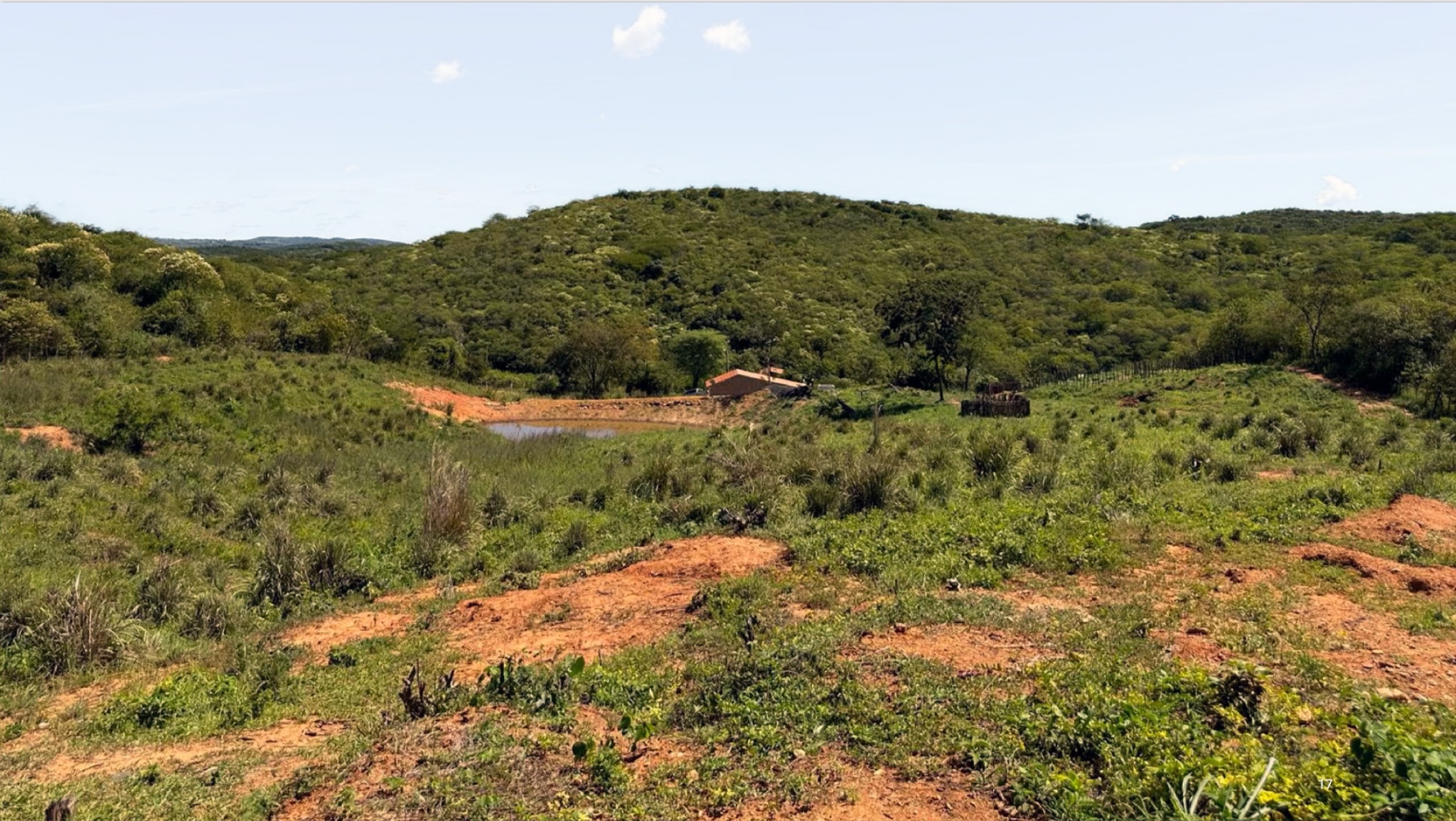
ValOre Metals is transforming from a single-asset platinum-palladium explorer into an integrated precious metals producer across Brazil, pursuing strategic acquisitions of advanced-stage projects whilst advancing the flagship Pedra Branca project towards a preliminary economic assessment by end-2026.
Stable jurisdiction, fantastic infrastructure, good access to electricity and a supportive government in terms of permitting and bringing that forward - that's a huge advantage for us," Smart noted.
ValOre targets H2 2028 production from Pedra Branca's initial phase following an 18-month construction period after licensing approval, leveraging Brazil's trial mining pathway that allows demonstration-scale operations at one-tenth of full capacity.
Interview with Nick Smart, CEO of ValOre Metals
Nickel Secures Major Projects Office Referral
Lifezone Metals acquired BHP's 17% stake in Kabanga for deferred consideration, gaining 100% control of one of the world's highest-grade undeveloped nickel assets. Chief Financial Officer Ingo Hofmaier detailed the transaction economics: payment is structured as $10 million due 12 months after FID, plus $28 million indexed to Lifezone's share price after declaring commercial production.
"Tanzania is expected to become an exporter of electricity in the next couple of years once they have gone through a maintenance cycle of the older ones now that the newer ones are coming on," Ingo confirmed.
Tanzania's infrastructure improvements have fundamentally altered the project's viability. The country commissioned three new hydropower stations creating electricity surplus where shortages previously existed, with 95-98% grid availability replacing diesel generators.
"Environmental concerns are one element but the key thing is that traceability of nickel sulfates that ultimately go through western smelters and end up in the defense industries or the stainless steel industry," Ingo emphasises.
Indonesian production, primarily Chinese-controlled, now represents 70-80% of global supply—concentration exceeding OPEC's oil market dominance. Lifezone is in advanced discussions with US DFC, European ECAs, and Mineral Security Partnership members. The company targets 60/40 debt-to-equity project financing with FID targeted for late 2026.
"We are in regular touch with European capitals, Washington and Tokyo through the MSP, the Mineral Security Partnership. We are very well advanced in due diligence exercises with several of them," Ingo confirmed.
Interview with Ingo Hofmaier, Chief Financial Officer of Lifezone Metals
Canada Nickel's Crawford project has been referred to Canada's Major Projects Office, becoming one of only three mining projects selected for expedited government support. The Minister of Natural Resources Tim Hodgson personally flew to the Crawford site for the announcement. His statement emphasized the project's national significance:
"With global nickel demand surging, now is the moment for Canada to build on over 140 years of nickel-mining legacy in Northern Ontario - and bring greater reliability and sustainability to the global commodities market for our allies. That's why the Crawford Nickel Project is now with the Major Projects Office: to move faster, get shovels in the ground sooner, unlock jobs and Indigenous equity opportunities, and raise the bar for clean, responsible mining."
Prime Minister Carney stated that Crawford is setting a new standard in terms of how responsible mining gets done, representing explicit political commitment. Canada Nickel CEO Mark Selby emphasised the significance:
"When you have the Prime Minister of the country talking about the fact that Crawford is setting a new standard, using those kind of words in the speech that he did, you can be certain that he wants to make sure that we deliver on what his statement is saying as coming true."
Beyond domestic coordination, the MPO facilitates connections with international funding sources. Selby explained that being sponsored by the major project office means having express pass to the front of the line referencing French, German, and Japanese funding programmes.
Canada Nickel committed to breaking ground by end of 2026, as Selby outlined, targeting construction decision in late Q3 or early Q4 2026.
"Starting from now, you'll see a number of financing announcements from the different bits and pieces with a view to having the package in place by mid-year."
Interview with Mark Selby, CEO of Canada Nickel
Steel Decarbonisation
Champion Iron operates at the nexus of battery metals supply chains through its role in steel industry decarbonisation. The company's ultra-high-grade iron ore concentrate proves essential to the direct reduction iron processes that enable low-carbon steel production for electric vehicles, wind turbines, and clean energy infrastructure.
CEO David Cataford explains the strategic importance:
"As we go into the next years and we get into a bigger transition into decarbonising the steel industry, we definitely think those premiums can increase. We have seen those sort of shifts. Is it predictable to a sense that we can put a date on it? No. But we know the trends make quite a lot of sense for us to position our material."
Champion delivered its strongest quarterly performance in two years with approximately $175 million EBITDA and record sales of 4 million tonnes. The company's $500 million DR Pellet Feed project is over 80% complete and on track for delivery, transitioning half of production to up to 69% iron ore concentrate—amongst the world's highest grades.
"By producing 7-12 million tons of material that's higher grade, we want to sell more into North Africa, Middle East, and in Europe. That's going to reduce significantly our shipping costs while at the same time increasing our premiums for our material," Cataford detailed.
This geographic reorientation enables sales into markets where direct reduction iron production is accelerating as steel manufacturers respond to decarbonisation mandates.
The company's positioning captures the steel industry's inevitable transition toward lower-carbon production methods essential for battery metals supply chains. Electric vehicle manufacturing requires high-quality steel components, wind turbine construction demands structural steel meeting stringent specifications, and battery production facilities require steel infrastructure—all increasingly produced through direct reduction processes that depend on Champion's ultra-high-grade concentrate.
Interview with David Cataford, CEO of Champion Iron
What to Expect in 2026
Government support mechanisms continue advancing, with European price support policies under active discussion, the US-Australia $8 billion critical minerals agreement creating funding pathways, and Canada's Major Projects Office demonstrating coordinated permitting and financing approaches. Strategic partnerships with downstream manufacturers, particularly in permanent magnets and battery materials, should accelerate as supply chain diversification imperatives translate into commercial arrangements.
"What they need now is capex to take it up to full operation," Smart noted. "Through our positioning with ValOre and being backed by Discovery Group, access to capital from North America and Canada in particular is a big advantage."
The $8 billion agreement between the US and Australian governments for critical minerals development has increased investor interest. Verco emphasises,
"We're going to be in a race with a number of other projects. So we're going to deploy a process with great efficiency to make sure that when that funding does reach projects, we're in a very competitive position for it."
The 2026 calendar presents multiple inflection points across battery metals projects:
- Leading Edge Materials expects prefeasibility study completion in H1 2026 alongside mining lease decision, serving as catalysts for government support programmes or strategic partnerships.
- Cobra Resources commences resource drilling in early 2026 with results expected after several months of drilling and analysis, establishing the foundation for economic studies already supported by demonstrated metallurgical and hydrological parameters.
- Lifezone Metals targets late 2026 FID for Kabanga following completion of project financing, with multiple financing components expected to materialise throughout the year.
- Canada Nickel anticipates federal permit approval in early 2026, followed by progressive financing announcements through mid-year supporting the committed end-2026 construction start.
- ValOre Metals expects preliminary economic assessment completion by end-2026 for Pedra Branca whilst pursuing acquisitions that could provide production in 2026.
- Champion Iron's DR Pellet Feed project completion positions the company for first commercial shipments of ultra-high-grade concentrate in early 2026, with the seven-year capital expenditure cycle ending to enable material free cash flow generation with thedestocking of approximately 3 million tonnes of high-grade concentrates.
The Investment Thesis for Premium Metals
- Single-country concentration exceeding 70-90% across critical battery metals has elevated supply security to national security priority, catalysing coordinated government support through development finance, expedited permitting, and price support mechanisms transitioning from policy discussion to capital deployment
- Processing innovations including natural acid generation, hydrometallurgical alternatives, in-situ recovery methods, and surface mineralisation demonstrate pathways to compete with incumbent producers through fundamental cost reductions rather than relying exclusively on premium pricing or subsidies
- Electric vehicle motors, renewable energy infrastructure, steel industry direct reduction processes, and defence systems create sustained demand, with hybrid vehicle dynamics and clean steel trajectories proving more supportive than earlier scenarios whilst supply remains constrained
- Multiple projects with completed feasibility studies, secured permits, strategic partnerships, and government backing progressing toward 2026 final investment decisions and construction commencements provide exposure to assets transitioning from exploration to execution within compressed timeframes
- Feasibility-stage projects with bankable economics, proven technical parameters, experienced management teams, and strategic government coordination trading at valuations not reflecting near-term catalysts, replacement costs, or strategic positioning in stable jurisdictions
- Exposure spanning heavy rare earths, nickel, platinum group metals, and steel decarbonisation materials across projects from near-term production through study completion enables staged capital deployment whilst capturing multiple demand drivers across automotive, industrial, energy, and defence applications
- Projects concentrated in established mining regions with reliable infrastructure, proven regulatory pathways, and community support provide optionality on government programmes and premium pricing for traceable materials whilst contrasting with emerging market political risk
TL;DR
Battery metals supply chain vulnerabilities exposed through 2025 export restrictions have elevated strategic importance from industrial concern to national security imperative, catalysing government coordination mechanisms, multi-billion dollar financing agreements, and expedited permitting frameworks. Advanced Western projects spanning rare earths, nickel, platinum group metals, and steel decarbonisation materials are progressing toward 2026 development decisions with demonstrated technical breakthroughs enabling cost-competitive production, completed feasibility studies establishing bankable economics, and strategic partnerships securing downstream offtake. Supply concentration exceeding 70-90% in incumbent producers, structural demand growth from decarbonisation imperatives across electric vehicles, renewable energy, and clean steel production, and government backing transitioning from policy recognition to capital deployment create favourable conditions for projects with jurisdictional advantages, proven management teams, and near-term execution catalysts. The 2026 calendar presents multiple inflection points including prefeasibility completions, final investment decisions, permit approvals, and construction commencements across projects positioned at the intersection of strategic necessity and commercial readiness.
Frequently Asked Questions (FAQs) AI-Generated
Supply chain concentration has reached levels exceeding traditional energy security concerns, with single countries controlling 70-90% of processing capacity across critical materials. Recent export restrictions demonstrated the vulnerability of Western manufacturing—particularly defence systems, electric vehicles, and renewable energy infrastructure—to supply disruptions. This concentration exceeds OPEC's historical oil market dominance, whilst the materials involved prove essential for both economic competitiveness in clean energy technologies and military capabilities including permanent magnets in guidance systems, high-performance alloys in aerospace applications, and battery materials in defence electronics. Governments increasingly recognise that dependence on potentially adversarial jurisdictions for materials critical to both economic and military security represents unacceptable strategic risk requiring domestic or allied supply chain development.
Several innovations are demonstrating pathways to cost-competitive production without relying solely on premium pricing or government subsidies. Natural acid generation from sulfide-rich ore bodies eliminates purchase and transportation of one of the largest operating cost components in rare earth recovery. Hydrometallurgical processing using renewable electricity provides alternatives to energy-intensive smelting operations whilst creating zero-emission pathways increasingly valued under tightening environmental regulations. In-situ recovery methods bypass conventional mining capital intensity whilst achieving comparable or superior recovery rates. Surface mineralisation enables open-pit mining rather than expensive deep-level underground operations. These technical advantages, combined with jurisdictional benefits including reliable infrastructure and stable regulatory frameworks, position certain Western projects to compete on fundamental cost structures rather than depending on temporary price premiums or ongoing subsidy requirements.
Government support increasingly concentrates on projects demonstrating several key characteristics: advanced technical studies with bankable economics, secured or progressing permits reducing regulatory uncertainty, established community support and First Nations partnerships providing social licence, strategic partnerships with downstream manufacturers creating offtake visibility, experienced management teams with operational delivery track records, and jurisdictional positioning in stable mining regions with reliable infrastructure. Governments employ competitive selection processes evaluating technical feasibility, scale significance, deliverability timelines, and alignment with strategic objectives rather than distributing support broadly across numerous early-stage exploration projects. Projects selected for major project offices, strategic minerals partnerships, or development finance backing undergo rigorous technical assessment and represent the subset considered most likely to successfully reach production within realistic timeframes.
Steel industry transition to direct reduction iron processes creates structural demand for ultra-high-grade iron ore whilst simultaneously driving battery metals demand through multiple pathways. DRI-produced steel enables lower-carbon manufacturing of electric vehicles, wind turbines, and battery production facilities—infrastructure essential for battery metals value chains. The processes require extremely high-grade iron ore feedstock in structurally limited supply, with premiums currently at historical lows suggesting significant upside as DRI capacity expands and supply constraints become apparent. This creates parallel investment opportunities in both direct battery metals production and enabling materials essential for clean steel manufacturing, with demand linked to the same decarbonisation imperatives driving electric vehicle adoption, renewable energy deployment, and industrial emissions reduction mandates across Western economies.
The 2026 calendar features multiple inflection points providing progressive de-risking and newsflow across advanced battery metals projects. Early-year milestones include prefeasibility study completions establishing updated economics, federal permit approvals removing regulatory uncertainty, and resource drilling programmes defining scale potential. Mid-year timeframes target comprehensive financing package assemblies combining government support, strategic partnerships, and project-level debt arrangements. Late-year decisions encompass final investment determinations, construction commencements, and initial production from projects employing accelerated development pathways. Strategic partnership announcements with downstream manufacturers, government funding programme selections, and sovereign wealth fund co-investment agreements should materialise progressively as coordinated support mechanisms translate policy commitments into capital deployment. Projects with near-term catalysts provide regular newsflow whilst advancing toward production timelines compressed relative to historical development cycles through coordinated government permitting, financing facilitation, and explicit political commitment to project completion.
Analyst's Notes





Subscribe to Our Channel










.png)
.png)
Stay Informed