




EU Designates 46 Critical Mineral Projects That Prices Will Not Finance



With exploration spending down over 10%, projects with secured construction funding could gain value as the EU pursues its 2030 supply targets.
- The European Commission designated 46 Strategic Projects across 16 EU countries on October 9, 2026, covering 15 of the bloc's 17 strategic raw materials but requiring €21.1 billion ($23.7 billion) in capital to advance.
- Strategic designation caps permitting at 27 months for extraction and 15 months for processing and recycling, shortening approval timelines without guaranteeing construction funding.
- As of October 9, 2026, more than €2 billion in public funding had been mobilized for 60 projects designated in 2025, while the 2026 cohort alone requires €21.1 billion in capital, highlighting the financing challenge.
- International Energy Agency (IEA) reported that critical mineral investment fell 9% in 2025 and exploration spending declined more than 10%, limiting capital for future supply projects.
- Positive critical mineral investment growth in the IEA's 2027 outlook would signal renewed spending, but EU Strategic Projects would still need secured construction funding.
EU Designates 46 Projects Facing €21.1B Funding Need
The European Commission designated 46 Strategic Projects across 16 EU countries, covering 15 of the bloc's 17 strategic raw materials, including copper, lithium, nickel, graphite, and rare earths. The projects require €21.1 billion ($23.7 billion) in public and private capital, making secured funding essential to advancing construction.
The 60 projects designated in 2025, including 13 outside the EU, have advanced slowly, with developers warning that funding shortages could prevent further progress. More than €2 billion in public funding has been mobilized for that group, while the new 46-project cohort requires €21.1 billion, making additional financing essential to construction.
Permitting Caps Shorten Deadlines Without Securing Capital
Under the Critical Raw Materials Act, permitting for designated projects is capped at 27 months for extraction and 15 months for processing and recycling, starting when the permitting process begins. However, the latest designations came nearly nine months after applications closed, delaying access to Strategic Project status.
Strategic designation does not guarantee EU funding, as the Commission only helps developers access financing. Faster permitting can bring financed projects closer to construction, while funding shortages continue to delay the 2025 cohort.
9% Investment Decline Threatens Future Mineral Supply
Critical mineral investment fell 9% in 2025 and exploration spending declined more than 10%, limiting funding for new supply projects. Lithium specialists cut investment by about 40% and battery-material companies by 20%, while copper-focused firms increased spending 8%, creating uneven financing prospects. Fatih Birol, Executive Director of the IEA, highlighted a mineral security premium amid geopolitical uncertainty, indicating that securing diversified supply carries an additional cost.
44% NdPr Price Drop Weakens Rare Earth Project Economics
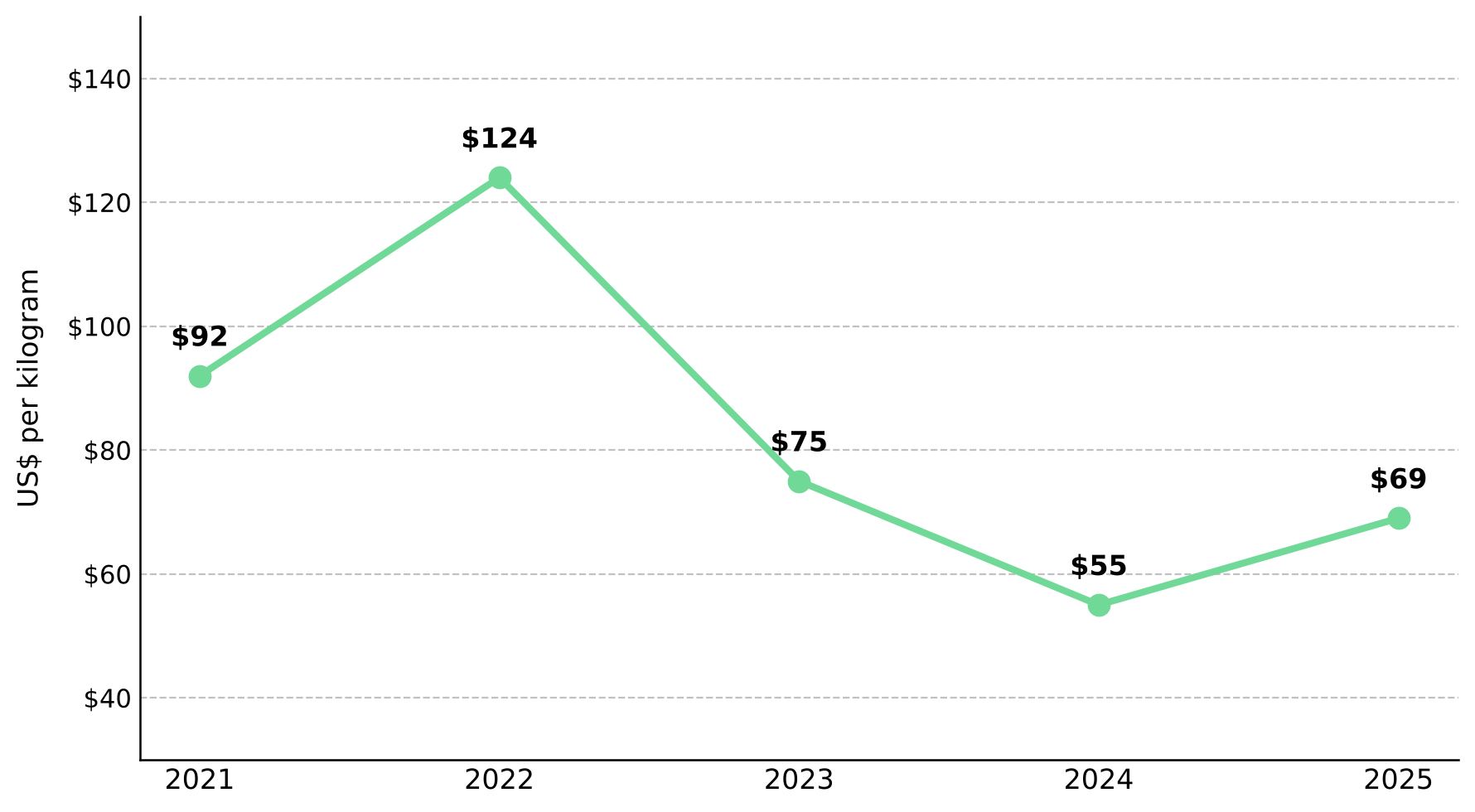
Development-stage rare earth projects in the EU and allied countries face weaker economics as neodymium-praseodymium (NdPr) oxide averaged $69 per kilogram in 2025, down 44% from $124 in 2022. Projects modeled at 2022 prices would generate less revenue at 2025 prices, weakening their ability to secure construction funding.
Projects with secured construction funding can use the EU's 27-month extraction and 15-month processing or recycling permitting caps to advance toward production. Unfunded projects remain unable to begin construction because the Commission connects developers with lenders rather than providing capital.
Among the 46 Strategic Projects, those without secured construction capital face uncertain financing timelines, favoring developers with committed funding. Concentrated exposure to a single unfunded developer carries the risk of permanent capital loss if financing fails.
Why Funded Projects Could Gain Value
The EU has designated 106 Strategic Projects across two rounds, yet the latest 46 still require €21.1 billion in capital. Faster permitting can shorten development timelines, but secured construction funding remains essential for projects to advance.
For development-stage critical mineral miners in the EU and allied jurisdictions, secured construction funding allows faster permitting to advance projects toward production. Without that funding, strategic designation alone provides limited support for project valuations.
NdPr oxide prices fell 44% from 2022 to 2025, weakening project economics and discouraging investment despite the EU's 2030 supply targets. Reduced investment could limit future Western supply, increasing the value of projects with secured construction funding if shortages emerge.
Analyst's Notes





Subscribe to Our Channel


Stay Informed



