




Diesel Margins Keep Oil Earnings High as Crude Slips on Iran Talks



US distillate stocks sit 12% below the five-year average as refining capacity declines, favoring Gulf Coast refiners with diesel yields and export access.
- Brent fell 0.8% to $103.48 a barrel and West Texas Intermediate (WTI) declined 0.7% to $90.86 on October 9, 2026, after President Trump ruled out a US strike on Iran before the midterms, reducing near-term supply disruption risks.
- The US Gulf Coast ultra-low sulfur diesel (ULSD) crack spread rose from $28.62 a barrel in January to $107.90 in September 2026, widening gross refining margins for diesel-focused refiners.
- Crude flows through the Strait of Hormuz fell 27% week on week to at least 10.1 million barrels a day, the lowest since late July, tightening seaborne oil supply.
- China approved about 3.7 million metric tons of fuel exports for October, below the more than 4 million tons estimated for September, limiting potential global fuel supply.
- A US Gulf Coast diesel crack spread below $60 a barrel would weaken refiners' earnings advantage and shift the oil sector's earnings focus back toward crude prices.
Iran Strike Delay Pushes Brent Down 0.8%
Brent fell 0.8% to $103.48 a barrel and WTI declined 0.7% to $90.86 after President Trump ruled out a US strike on Iran before the midterms, citing talks with Tehran. The decision reduced near-term supply disruption concerns, weighing on crude prices.
Despite falling crude prices, US distillate inventories stood at 105.1 million barrels, down 13.5% from 121.6 million a year earlier and 12% below the five-year average, supporting elevated diesel refining margins.
Tanker Attacks Threaten Hormuz Oil Shipments
Crude flows through the Strait of Hormuz fell 27% week on week to at least 10.1 million barrels a day, with just seven commodity carriers crossing on Tuesday, the fewest since late July. Attacks on at least 12 tankers carrying crude, liquefied petroleum gas, and liquefied natural gas heightened shipping risks, threatening further supply disruptions.
US sanctions on 17 additional tankers carrying Iranian crude, fuels, and petrochemicals restricted shipping capacity, while record Persian Gulf freight rates drew more vessels into ship-to-ship transfers. Hani Abuagla, Senior Market Analyst at XTB MENA, said production shutdowns ahead of Hurricane Isaias curtailed roughly 25% of US Gulf of Mexico output, adding to supply constraints.
China's Lower Fuel Export Approvals Limit Supply Relief
China approved 3.7 million metric tons of gasoline, diesel, and jet fuel exports for October, below September's estimated 4 million-plus tons, while exports over the first eight months fell 9.6% to 34.24 million tons, limiting replacement fuel supply. Stuti Jhunjhunwala, Oil Market Analyst at Energy Aspects, noted that markets remained tight amid continued Middle Eastern supply disruptions, supporting elevated diesel refining margins.
Diesel Scarcity Lifts Crack Spreads to $107.90
US Gulf Coast refiners with high diesel yields and export access benefited from a crude-to-diesel spread of $107.90 a barrel in September, supporting gross refining margins. In contrast, Brent's 0.8% decline pressured upstream revenue per barrel and crude-linked fund returns. On-highway diesel prices reached $6.199 a gallon, up from $3.748 in September 2025, raising fuel costs and squeezing trucking margins.
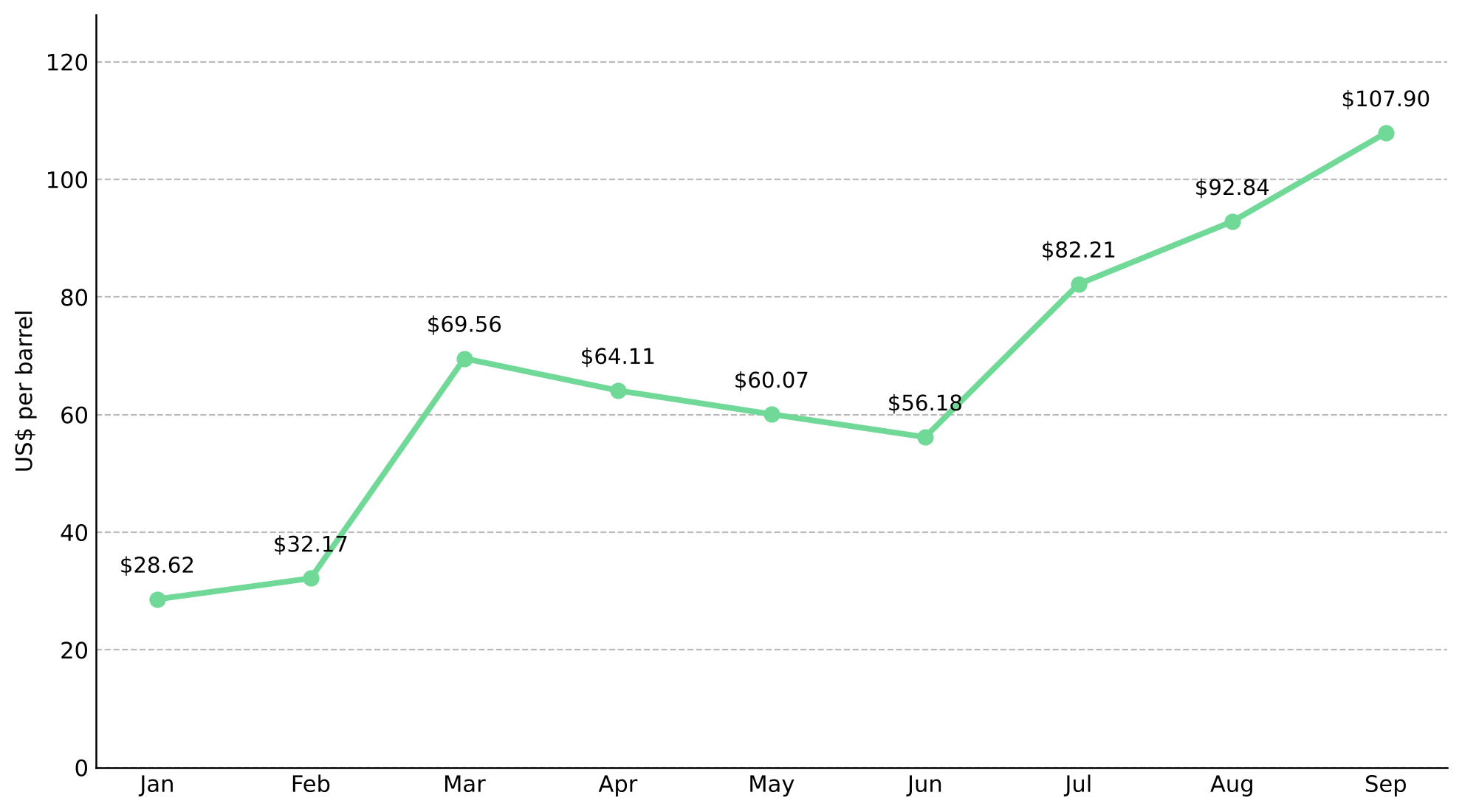
US Gulf Coast (PADD 3) refinery utilization rose to 95.0% from 93.5% a year earlier, while distillate exports increased to 1.764 million barrels a day from 1.244 million, benefiting refiners with high diesel yields and export access. June Goh, Senior Analyst at Sparta Commodities, noted that China's resumption of fuel exports was anticipated, but volumes fell short of expectations, limiting potential supply relief.
A shift in US policy toward Iran or a recovery in Hormuz shipments could narrow diesel crack spreads, weakening refiners' earnings advantage. A return from September's $107.90 a barrel to January's $28.62 would sharply reduce gross margins for diesel-focused refiners.
Why Capacity Limits Favor Refiners
Iran talks pushed crude prices lower, while shipping constraints and limited fuel exports kept diesel refining margins elevated. The US Gulf Coast diesel crack spread reached $107.90 a barrel in September, favoring diesel-focused refiners over companies whose earnings depend primarily on crude prices.
US Gulf Coast refiners with high diesel yields and export access benefited from wider product spreads despite falling crude prices, making refining margins more important to earnings than crude prices alone. US operable refining capacity declined to 18.027 million barrels a day from 18.160 million a year earlier, reinforcing the value of existing refineries with diesel production and export capabilities.
Limited US refining capacity supports the earnings potential of diesel-focused refineries and export infrastructure, even if diplomatic progress reduces crude prices. These assets can continue benefiting from tight fuel supplies as long as refining margins remain elevated.
Analyst's Notes





Subscribe to Our Channel







Stay Informed


