




Copper Drops as Oil Surges, Yet Exchange Stocks Fall 41% Since April


Rate-hike fears are pulling copper prices down while US stockpiling drains world supply, shifting profit from copper buyers to miners that sell at spot prices.
- LME three-month copper fell 1.2% to $14,300.50 per tonne on October 8 after touching $14,646.50. The trigger was a 5.7% jump in Brent crude on renewed Middle East shipping attacks, Reuters reported.
- Oil reaches copper through interest rates. Higher fuel costs lift inflation, CME FedWatch puts the odds of at least one more Fed hike by December at about 81%, and growth-linked metals sell first.
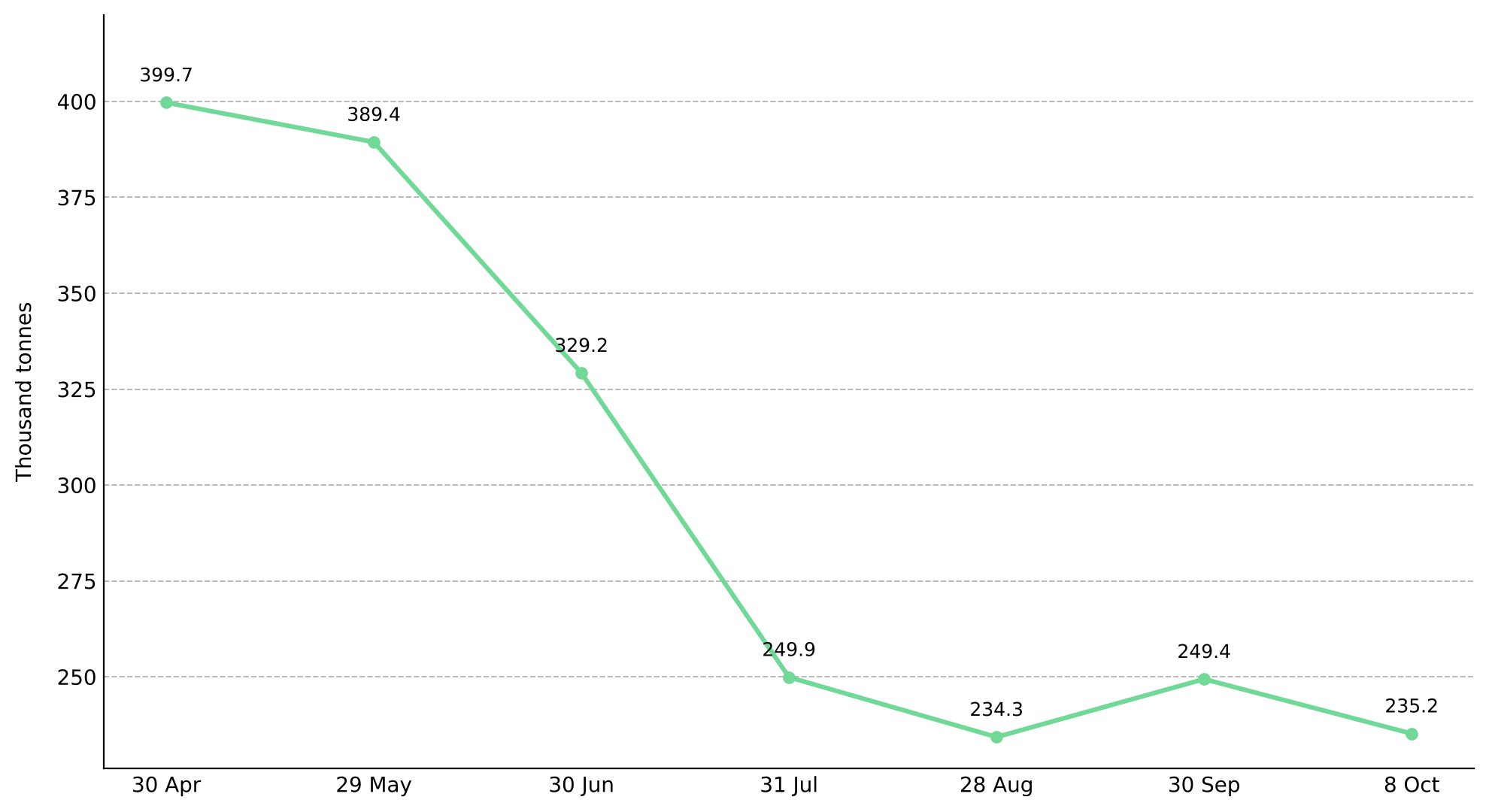
- Physical copper tightened on the same day. The LME cash premium over three-month metal widened to $98 from about $89, and LME stocks are down 41% since April 30.
- Unhedged producers selling on prompt pricing capture the premium. A Fed-driven demand slowdown, however, can cut the flat price faster than the spread pays them.
- A flip in the LME cash-to-three-month spread from premium to discount would signal the physical squeeze has broken.
Oil Spike Erases Copper's Post-Holiday Gains as China Import Premium Climbs
London Metal Exchange (LME) three-month copper fell 1.2% to $14,300.50 per tonne on October 8, Reuters reported. Earlier in the session, it had reached $14,646.50, its strongest since September 25. Brent crude rose 5.7%, the largest daily gain in almost a month, after attacks on Middle East shipping increased.
Chinese buyers returned from the Golden Week holiday, and the Yangshan premium, the extra paid over LME prices for copper imported into China, rose 5% from its pre-holiday level to $125 per tonne, the highest since November 2022. The cash contract’s premium over three-month metal, known as backwardation, widened to $98 from about $89. LME copper stocks stood at 235,225 tonnes on October 8, 41% below April 30. Mine strikes in Chile and the Philippines threatened further supply.
US Stockpiling Drains Global Copper Stocks While Rate-Hike Fears Set the Price
The squeeze starts in US warehouses. Washington imposed tariffs on copper wire and other copper products in July 2025. The US exempted refined cathode pending a study, and no decision has been announced. Buyers moved metal into the US ahead of a possible levy. BMO Capital Markets estimates US holdings at up to 2 million tonnes, the Wall Street Journal reported on October 1. Saxo Bank on October 8 cited a strike at a major mine in Chile, the largest producer.
The flat price, however, trades off the Fed. The US 10-year Treasury yield touched a 24-year intraday high above 5.36% on October 7, Saxo Bank reported. The move followed September FOMC minutes showing unanimous support for a 25-basis-point hike. Fed Governor Christopher Waller said on October 8 the energy shock from the Iran war has yet to fade. Each oil spike lifts the inflation path, extends the hiking cycle and pushes macro funds out of growth-linked metals, whatever warehouse levels show.
Locked-Up US Inventories Keep Prompt Copper Tight Through the Fed Meeting
The tightness will not clear on one macro headline, because metal shipped into the US is unlikely to return soon. Daniel Ghali, head of metals research at Deutsche Bank, told the Wall Street Journal on October 1 how US-landed copper leaves world supply:
“Once onshore, the metal is no longer available for purchase by the world's demand centers."
In the tightening path, Ghali forecasts a 50% rise in 2027 to $22,050 per tonne, his estimate of the price at which industrial users switch to aluminum; the WSJ called the forecast an outlier among analysts. In the macro path, Brent above $100 a barrel and a December Fed hike compress demand. CME FedWatch puts the odds of at least one more hike by December at about 81%, and a hike on top of high oil could pull LME cash copper back toward its July 1 settlement of $13,170. The two paths split on whether US-held metal re-enters global supply.
Copper’s direction may rest on two releases: the LME’s daily warehouse stock report and the Fed’s October 27-28 meeting, with an answer by December. The shortage is over once copper for immediate delivery trades below the three-month price. On October 8, buyers paid $98 per tonne extra for immediate metal, Reuters reported. Losing the extra would cut what miners selling at spot prices now earn.
Prompt-Market Premium Shifts Copper Margin From Fabricators to Unhedged Producers
Margin pressure falls first on copper fabricators outside the US. They pay a multi-year-high Yangshan premium and a cash premium on top of the base price. Unhedged copper producers selling on prompt pricing capture the same premium; their sale price is set against the LME average over a short quotational period. Copper developers carry no output. They trade on the flat price and the discount rate, and both move against them as yields rise.
Ghali places aluminum substitution at $22,050 per tonne, and switching typically requires product redesign. As a result, unhedged producers supplying wire-rod and electrical uses hold pricing power longer than producers selling into substitutable applications.
Neither the Fed path nor the US refined-copper tariff decision can be forecast. A position in unhedged copper producers built around the October 27-28 meeting risks a flat-price drop larger than the spread gain. Single-asset copper developers can lose most of their value. Sizing exposure to the physical balance rather than a Fed date limits the damage from a call nobody can make in advance.
Physical Copper Scarcity Outlasts Oil-Driven Price Selling
Copper now trades as two markets. The flat price answers to oil and the Fed. The prompt market answers to warehouse metal, and warehouse metal is leaving circulation faster than macro selling can reverse.
Value has shifted toward unhedged producers selling into prompt pricing. It has shifted away from fabricators outside the US, who pay both the base price and the premium for near-term metal. Inventory scarcity belongs in producer valuations as realized-price uplift, not in a risk footnote. Developers stay priced off the discount rate, and rising yields keep pressure on their net present values even as physical supply tightens.
Weak days in the flat price favor accumulating spot-priced producers. Meanwhile, the oil shock deters new mine capital and thins the supply pipeline the next demand cycle will draw on.
Analyst's Notes





Subscribe to Our Channel







Stay Informed


