




EU Trade Protection & Steel Demand Support European Industrial Earnings



EU steel import limits and green infrastructure funding support demand for industrial suppliers, though project delays could slow earnings growth.
- The European Commission will allow member states to redirect up to 0.6% of GDP over three years toward green energy investments, increasing spending on electrification, grid upgrades, and industrial infrastructure projects.
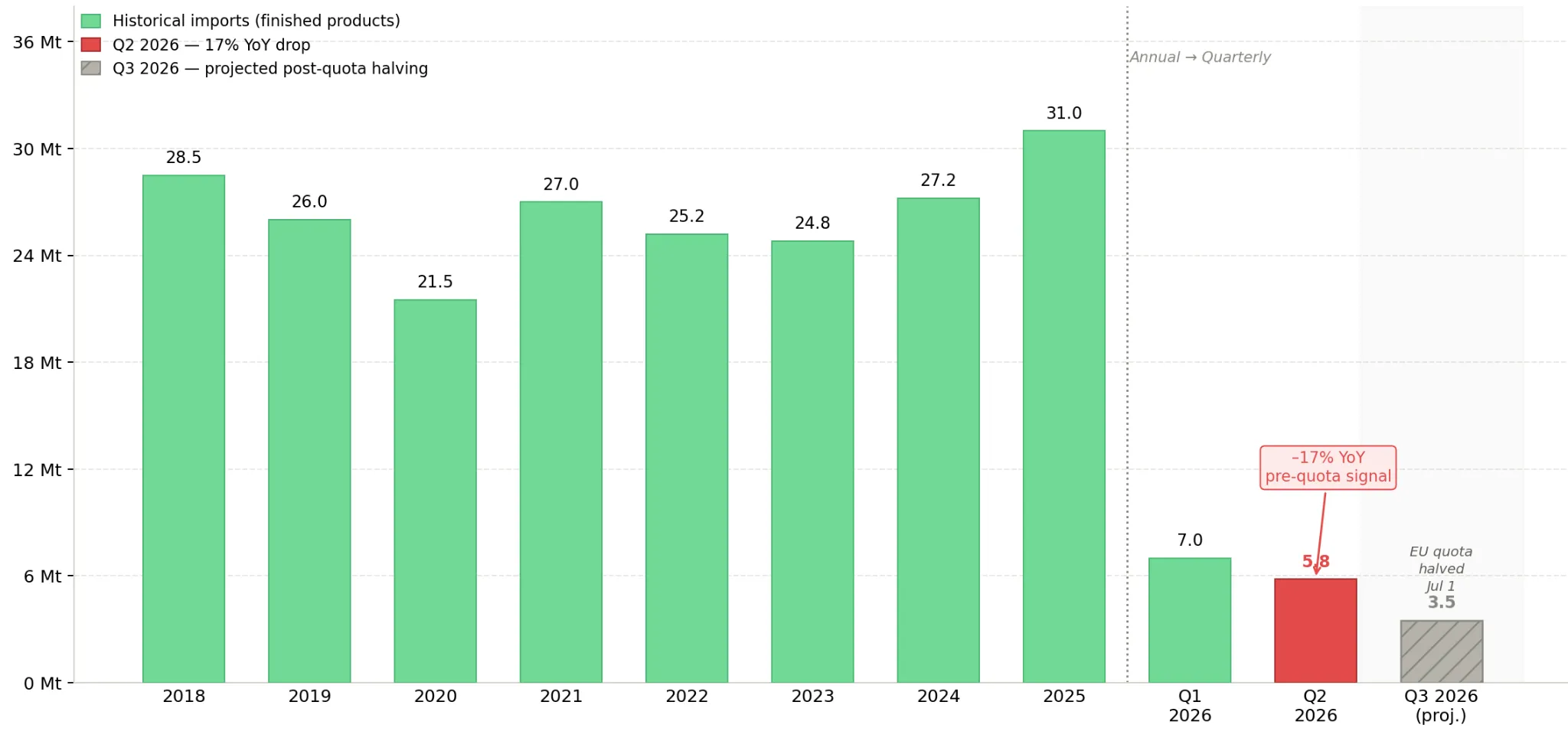
- The EU will halve steel import quotas from July 1, 2026, after steel imports into the bloc fell 17% year-over-year in the second quarter, reducing foreign competition for European steel producers.
- Austrian steelmaker Voestalpine is targeting fiscal 2026/27 EBITDA of €1.60 billion to €1.85 billion, above analyst expectations of €1.76 billion, as the EU prepares to halve steel import quotas from July 1.
- Voestalpine warned that delays in energy projects could reduce earnings gains in its heavy plate business despite stronger steel market conditions.
- European industrial earnings could fall short of expectations if governments do not deploy planned transition spending or if weaker industrial demand offsets the benefits of import restrictions and carbon-border protections.
EU Trade Protection & Green Infrastructure Funding Support European Manufacturers
On June 3, the European Union allowed member states to redirect up to 0.3% of GDP annually toward green-transition projects and confirmed a 50% reduction in steel import quotas from July 1. Voestalpine maintained fiscal 2026/27 EBITDA guidance of €1.60 billion to €1.85 billion, above analyst expectations of €1.76 billion. Voestalpine shares were broadly unchanged following the announcement.
The policy changes affect European manufacturers beyond the steel sector. The EU is reducing import competition while directing public spending toward electrification, heat pumps, solar projects, and industrial decarbonization. The combination supports order growth for companies supplying equipment, materials, and industrial infrastructure. For investors, the key question is whether new spending projects convert into higher order books and earnings.
Steel Import Quotas & Infrastructure Projects Increase Demand for Equipment and Materials
Steel imports into the EU's 27-member bloc fell 17% year-over-year during the second quarter of 2026, and the EU will halve steel import quotas from July 1. Lower import volumes reduce competition from lower-cost suppliers and support steel prices for European producers.
Instead of permitting fossil-fuel subsidies, the European Commission authorized additional government spending on green infrastructure. The policy directs capital toward heat pumps, solar systems, electric vehicles, and related projects that increase demand for industrial equipment and materials. Countries that have already used their defense-spending flexibility must complete debt sustainability assessments before accessing the additional allocation.
Project Timelines Delay Revenue Growth for Industrial Companies
Industrial spending does not translate into revenue immediately because projects must move through financing, permitting, procurement, and construction. Voestalpine warned that delays in energy projects could reduce earnings gains in its heavy plate business despite stronger steel market conditions.
Investors should monitor earnings releases, order intake, and project approvals from European industrial companies through 2026 and 2027. Rising order intake, backlog growth, and stable guidance would indicate that infrastructure spending is converting into revenue and earnings growth.
Company Selection Matters More Than Sector Exposure
Companies supplying steel, electrification equipment, industrial infrastructure, heat pumps, grid upgrades, and renewable-energy projects are most exposed to the new spending and trade protections. Reduced import competition supports steel prices, while government-backed capital spending increases demand for industrial equipment and materials.
Voestalpine's warning on project delays shows that policy support alone does not guarantee earnings growth. Companies with diversified customer bases, strong balance sheets, and a record of delivering projects are more likely to convert policy support into revenue and cash flow growth.
Government spending approvals do not automatically translate into construction activity or revenue. Order intake, backlog growth, capital expenditure commitments, and earnings guidance revisions provide earlier evidence that infrastructure spending is reaching industrial companies.
Spending Deployment Must Translate Into Orders and Earnings
The July 1 implementation of the 50% steel import quota reduction and the deployment of additional green-transition spending are the key conditions supporting European industrial earnings. Lower import competition and higher infrastructure spending support demand for domestic industrial producers and energy-transition infrastructure suppliers.
European industrial earnings could fall short of current forecasts if governments do not deploy the authorized spending, if debt sustainability concerns limit participation, or if project delays reduce infrastructure demand. Lower earnings growth would reduce the case for higher valuations across European industrial companies.
Whether government spending converts into industrial demand will be visible through the July 1 steel quota reduction, European Commission updates on member-state spending deployment, and quarterly earnings guidance from companies such as Voestalpine. Rising order books and stable EBITDA guidance would indicate that infrastructure spending is reaching industrial companies, while project delays and weaker demand would point to slower revenue and earnings growth.
Analyst's Notes





Subscribe to Our Channel
.jpg)




Stay Informed


