




Gold Below $4,000 Despite Safe-Haven Demand: Fed Rate Hike Bets Outweigh Middle East Conflict


Fed rate hike expectations outweighed Middle East conflict, pushing gold below $4,000 as markets tracked policy signals over safe-haven demand.
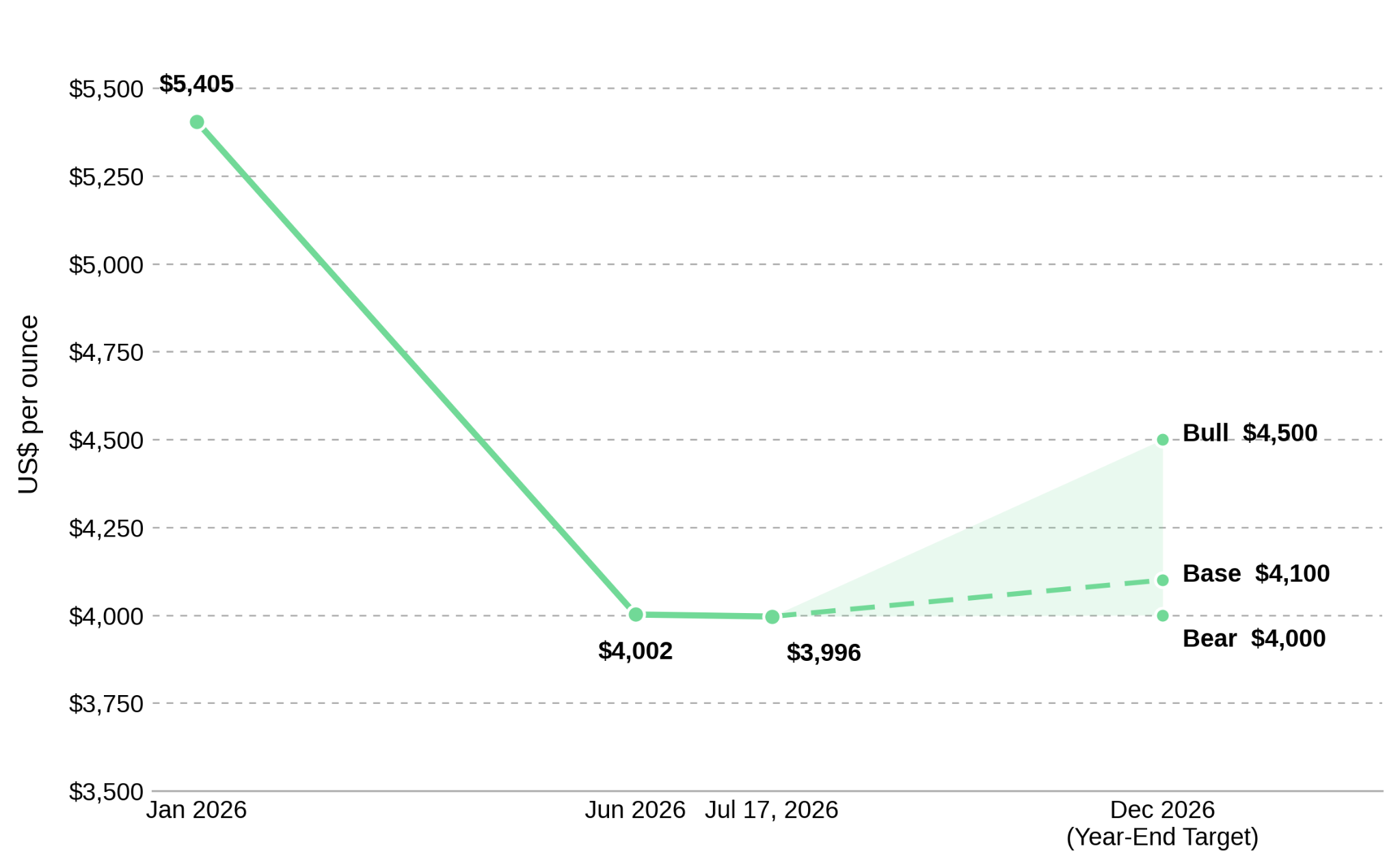
- Spot gold fell more than 3% this week to $3,996.29 per ounce, its lowest level since July 1, showing that Fed rate expectations outweighed geopolitical risk despite a sixth straight night of Iran-US strikes.
- September Fed hike odds rose to about 50% after Dallas Fed President Lorie Logan and Fed Vice Chair Philip Jefferson signaled support for further tightening.
- The World Gold Council's base case places gold within plus or minus 5% of $4,100 per ounce through year-end, assuming at least one Fed rate hike by October.
- Sustained trading below $4,000 could trigger additional selling pressure, while a break above $4,500 requires a clear signal of global economic deceleration.
- India gold discounts widened to a one-month high as buyers waited for lower prices, indicating physical demand has not yet supported gold near $4,000 per ounce.
Fed Rate Expectations Outweigh Geopolitical Risk & Push Gold to a Weekly Loss
Spot gold rose 0.7% to $3,996.29 per ounce after hitting its lowest level since July 1 earlier in the session but remained down more than 3% for the week. US gold futures for August delivery rose 0.2% to $4,000 per ounce.
Iran launched fresh strikes on US facilities in the Middle East for a sixth straight night, further unwinding last month's truce and supporting higher oil prices. Gold's weekly loss during active conflict shows Fed rate expectations outweighed geopolitical risk.
Fed Policy Signals Lift Rate Hike Odds & Increase Pressure on Gold
Dallas Fed President Lorie Logan called for a Fed rate hike, while Fed Vice Chair Philip Jefferson signaled support for tighter policy unless inflation improves. Their comments pushed the probability of a September Fed rate hike to about 50%.
Higher rate expectations reduce gold's appeal by increasing the opportunity cost of holding a non-yielding asset. Iranian strikes disrupted traffic through the Strait of Hormuz and lifted oil prices, raising inflation expectations and strengthening the case for higher interest rates. That shifted demand toward yield-bearing assets and away from gold.
Global Central Bank Policy Shapes Gold's Outlook & Defines Bull and Bear Scenarios
Gold's second-half outlook depends on more than a single Fed meeting. Gold prices reflect demand from consumers, investment funds, and central banks worldwide rather than US monetary policy alone. Base case: at least one Fed rate hike by October, alongside tighter policy from the Bank of England, Bank of Japan, and European Central Bank, keeps gold within plus or minus 5% of $4,100 per ounce through year-end.
Bear case: sustained trading below $4,000 triggers additional selling and a decline of more than 10% before long-term buyers historically return. Bull case: clear evidence of global economic deceleration pushes gold above $4,500.
Fed Policy Uncertainty Drives Gold Risk & Keeps Market Expectations in Focus
Gold mining equities and gold-backed ETFs recorded average 30-day realized volatility of 30% through June 26, highlighting continued price swings. This week's price action showed that rising Fed rate expectations outweighed geopolitical risk as the primary driver of gold prices. MUFG's Derek Halpenny said continued conflict in the Middle East supported the US dollar, while higher Fed rate expectations weighed on gold. MetLife's Tani Fukui expects no Fed rate hike in 2026, contrasting with market pricing that placed the probability of a September hike at about 50%.
The gap between market pricing and policy forecasts remains the key variable to monitor. Whether the Fed raises rates in September or the Iran-US conflict escalates further remains uncertain. The World Gold Council's base case keeps gold within plus or minus 5% of $4,100 through year-end, while this year's 7% decline illustrates the downside risk if tighter monetary policy continues to outweigh geopolitical demand.
What to Track Before the Next Move
Gold is trading between $3,996 and $4,100 per ounce while the probability of a September Fed rate hike remains near 50%, showing that safe-haven demand is offsetting pressure from higher rate expectations. The World Gold Council's base case assumes at least one Fed rate hike by October and keeps gold within plus or minus 5% of $4,100 through year-end. Sustained trading below $4,000 would support the bear case and pressure gold mining equities and gold-backed ETFs, while a move above $4,500 requires clear evidence of global economic deceleration.
Key indicators to monitor include September Fed rate expectations, the LBMA Gold Price PM relative to the $4,000 and $4,500 thresholds, and physical gold discounts in India as a measure of recovering consumer demand.
Analyst's Notes





Subscribe to Our Channel





Stay Informed






















