




Sovereign Metals' Transition to Project Delivery & What It Means for Kasiya's Investment Case


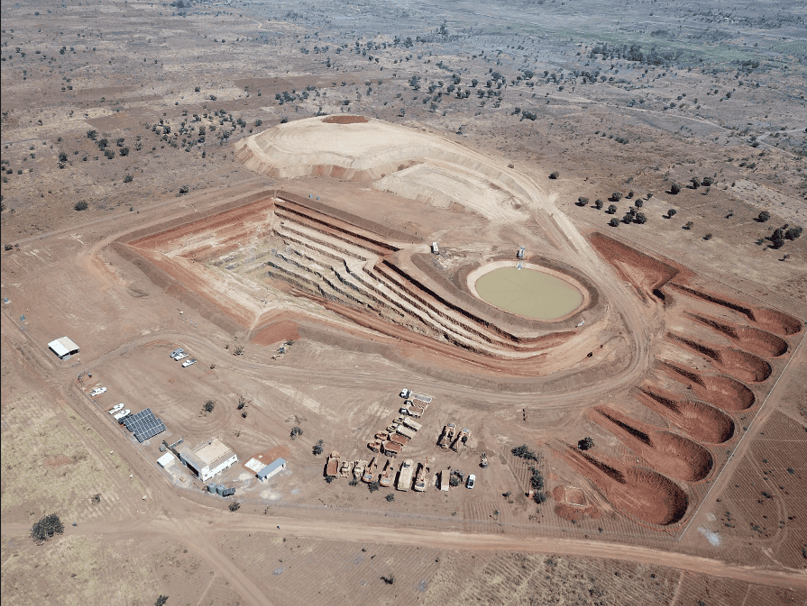
Sovereign Metals enters project delivery at Kasiya as full control shifts focus to financing, permitting, and offtake execution following completion of its DFS.
- Rio Tinto has stepped back from becoming Kasiya's operator, handing Sovereign Metals full commercial and operational control at a moment when speed of decision-making matters most.
- Rio Tinto remains an approximately 18.2% shareholder, preserving alignment without an operational role.
- With the Definitive Feasibility Study (DFS) complete, the investment case now hinges on execution: financing, offtake agreements, and permitting.
- Sovereign is positioning Kasiya as a non-Chinese source of titanium and graphite for US and allied supply chains.
- Financing progress, permitting milestones, and offtake conversion are the catalysts most likely to move the stock from here.
Full Control Changes the Calculus for Kasiya
Rio Tinto's decision not to exercise its option to become Kasiya's operator hands Sovereign Metals (ASX: SVM | AIM: SVML | OTCQX: SVMLF) direct control over commercial negotiations. Sovereign Metals now holds exclusive marketing rights and faces no partner consent process when pursuing offtake agreements or financing term sheets.
This removal of decision-making friction matters because the completed Definitive Feasibility Study creates a narrow window in which momentum compounds. Each month of avoided delay strengthens Sovereign’s ability to secure counterparties ahead of competitors.
What Changed When Rio Tinto Stepped Back
The shift delivers a direct swap of control for retained capital exposure. Under the prior Investment Agreement, Rio Tinto held rights to market 40% of Kasiya’s annual production, pre-emptive rights over third-party offers, and consent rights over commercial decisions. Those rights have now lapsed, leaving Sovereign Metals as operator with full authority to advance the project.
Rio Tinto’s equity position remains unchanged at approximately 18.2%. The company retains the right to appoint a nominee director while its stake sits at or above 15% and the right to be notified of future equity issues while it holds at least 10%. This structure keeps Rio Tinto aligned as a major shareholder while eliminating operational decision-making constraints for Sovereign management.
Execution Now Drives the Investment Case
Sovereign’s base-case economics from the Definitive Feasibility Study now serve as the primary benchmark for financing discussions. Sapan Ghai, Chief Commercial Officer of Sovereign Metals, described the project’s scale and cash flow potential:
"Look, 25 years for 700 million or 730 million dollars up front, you're going to have an operation, a business that for the best part of 25 years, if not way longer, is going to be producing around 470 million dollars of EBITDA. It's going to be throwing off well over 400 dollars of free cash flow a year, 2.2 billion dollars of NPV."
The Definitive Feasibility Study outlines upfront capital expenditure of approximately 727 million dollars, annual earnings before interest, taxes, depreciation, and amortisation (EBITDA) of approximately 476 million dollars, a 23% internal rate of return (IRR), and a net present value at an 8% discount rate (NPV8%) of 2.2 billion dollars. These figures anchor the market's judgment of future financing terms. From this point, valuation is expected to track execution milestones rather than additional technical validation. Converting memoranda of understanding with Mitsui and Traxys into binding offtake agreements, advancing discussions with the International Finance Corporation (IFC) and US-linked institutions, and progressing the Environmental and Social Impact Assessment (ESIA) and mining licence represent the clearest near-term re-rating drivers.
Permitting timelines in Malawi sit partly outside Sovereign’s direct control, and any slippage would delay the construction decision. Financing for a project of this capital intensity also requires sequenced layers of debt, equity, and offtake-linked finance, where the order of closing can materially affect final terms.
Kasiya’s Position in US & Allied Supply Chains
Kasiya offers a non-Chinese source of titanium and graphite to markets where the US maintains virtually no domestic supply. Ghai tied that dependency directly to the defence platforms it feeds:
"You're not going to have your jet fighters. You're not going to have your Virginia class submarines. You're not going to have your M1 Abrams tanks if you don't have your titanium, and your titanium guys are saying we're not going to be able to produce this without your rutile."
Full commercial control now enables Sovereign to engage directly with US and allied counterparties. This strengthens its ability to secure offtake and financing packages that reflect Kasiya’s strategic value to Western supply chains.
The Investment Thesis for Sovereign Metals
- Full commercial control accelerates Sovereign’s path from feasibility to a financed, permitted project.
- Base-case economics point to a 25-year mine life, a 23% internal rate of return, and a 2.2 billion dollar net present value at an 8% discount rate.
- Rio Tinto’s continued 18.2% stake preserves an aligned shareholder without operational friction.
- Existing relationships with the International Finance Corporation and prospective offtake partners offer a tested commercial pathway.
- Kasiya’s non-Chinese titanium and graphite supply gives Sovereign a strategic hook with United States and allied buyers.
Taken together, Kasiya’s investment case now rests on Sovereign’s ability to convert its unencumbered commercial position into signed agreements, secured financing, and permits on a defensible timeline.
TL;DR
Rio Tinto’s decision not to operate Kasiya hands Sovereign Metals full commercial control by removing prior consent, marketing, and pre-emptive rights, while Rio Tinto retains its 18.2% stake. The investment case now centres on execution: converting offtake discussions into binding agreements, closing financing alongside the International Finance Corporation and US-linked institutions, and clearing permitting steps including the Environmental and Social Impact Assessment and mining licence. Kasiya’s Definitive Feasibility Study base case outlines a 25-year mine life, approximately 727 million dollars in upfront capital expenditure, roughly 476 million dollars in annual EBITDA, a 23% internal rate of return (IRR), and a 2.2 billion dollar net present value (NPV), positioning Sovereign as a prospective low-cost, non-Chinese supplier of titanium and graphite to US and allied markets.
FAQs (AI-Generated)
Analyst's Notes





Subscribe to Our Channel


.png)



.png)
Stay Informed


