

Excellon Books First Revenue at Mallay, Cash Flow to Fund District-Scale Exploration


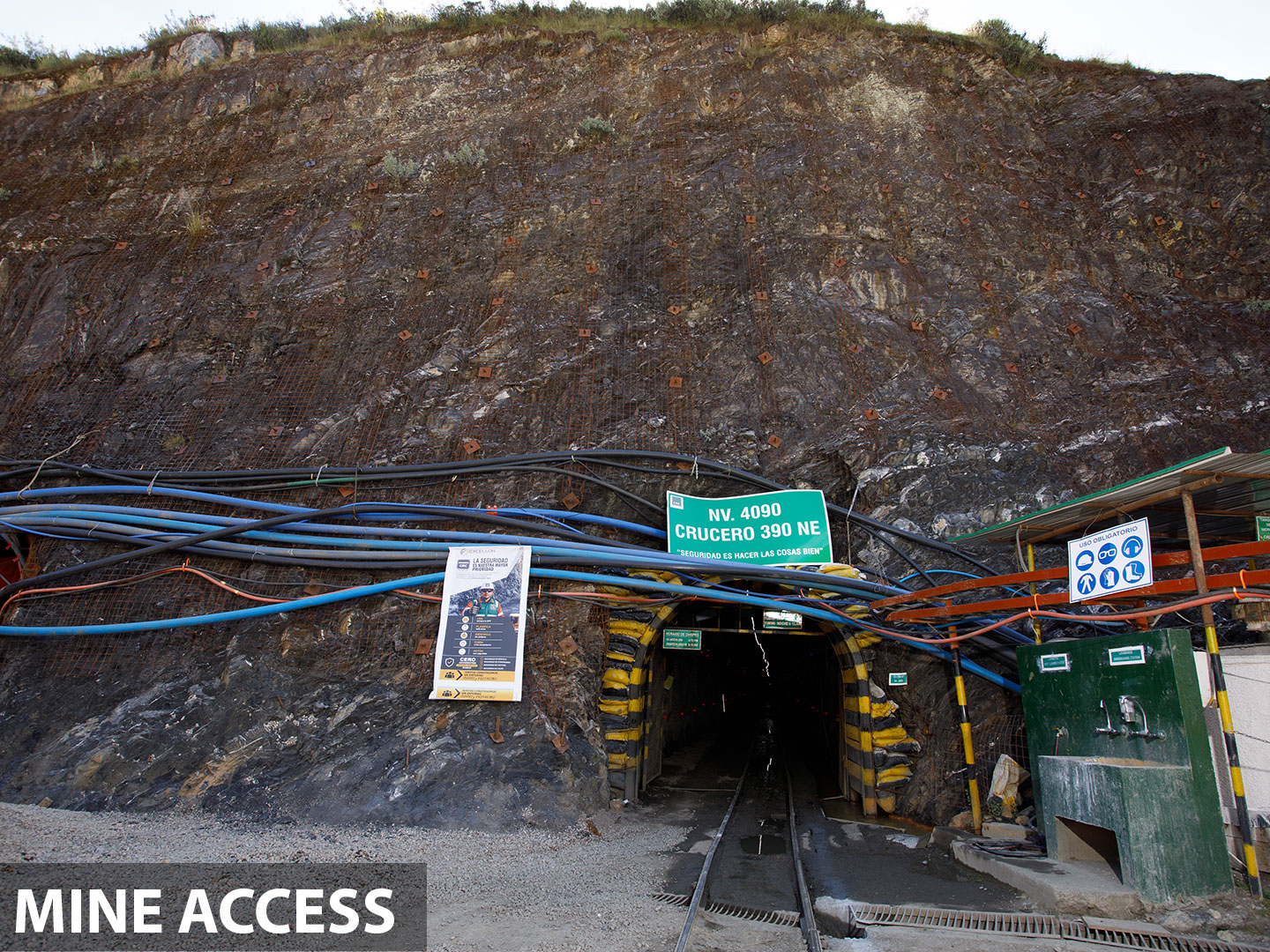
Excellon Resources earned US$4.4M from Mallay concentrate and targets 600 tpd by mid-2027, with Tres Cerros drilling targeted for the first half of 2027.
- Excellon Resources collected US$4.4 million from concentrate sold to Glencore after 3 pre-commissioning campaigns processed 19,884 tonnes at Mallay.
- The company is targeting a consistent 300 tonnes per day (tpd) through the first half of 2027 and 600 tpd rated capacity by mid-2027.
- Mining is shifting from 1 to 1.5-metre narrow veins to 3 to 4-metre replacement zones accessed through the 400 Ramp.
- Liquidity of US$5 million in cash plus an undrawn US$5 million Glencore facility is backed by non-dilutive options on non-core assets.
- Deep Drillhole Electromagnetics (DHEM) drilling and a 5,000-metre Tres Cerros programme targeted for the first half of 2027 carry the district exploration case.
Excellon Resources (TSXV:EXN) has moved its Mallay silver-lead-zinc mine in central Peru from restart planning to first revenue. Its 3 pre-commissioning milling campaigns have processed 19,884 tonnes and returned US$4.4 million from concentrate sold to Glencore under an offtake agreement. The company is now targeting the mill’s rated capacity of 600 tonnes per day (tpd) by mid-2027. That target is backed by a February 2026 mineral resource of 12.01 million ounces (Moz) silver-equivalent in the indicated category and 4.00 Moz inferred.
The restart lands in a market that values near-term revenue differently from pure exploration. Speaking with Crux Investor in Zurich during a European investor tour, management said the prospect of production is gaining traction in those meetings. At a market capitalisation of C$112 million as of November 2, 2026, Excellon is presenting Mallay as a restart that can fund its own growth: deeper mining at Mallay, near-mine exploration and a first drill programme at the adjacent Tres Cerros gold-silver property.
From Test Milling to Commercial Ramp-Up
The campaigns drew mainly on surface stockpiles and narrow-vein stopes above the 4090 Level. The company reports 52,860 ounces of silver recovered in concentrate, with recoveries of 84% for silver, 84% for lead and 81% for zinc. The revenue is small next to the ramp-up plan. The campaigns established that the plant operates, that concentrate can be transported and sold, and that the offtake with Glencore is functioning.
President and Chief Executive Officer of Excellon, Shawn Howarth, said the milling campaigns answered the processing question ahead of the underground ramp-up: “Bringing ore to the surface and processing it through the process plant and understanding the recoverabilities, we’ve effectively de-risked the surface infrastructure.”
Excellon has engaged a new mining contractor to move from bulk sampling to production mining. Howarth said the path to commercial production comes down to people, equipment and execution capability; the company has not yet declared commercial production. He outlined a stepped target: a consistent 300 tpd through the first and second quarters of 2027, building to 600 tpd by mid-year. At rated capacity, this puts a projected output at around 2 Moz silver-equivalent a year. He said that figure is based on historical production and is neither NI 43-101 compliant nor guidance.
Interview with Shawn Howarth, President & CEO of Excellon Resources
Wider Ore Shoots & Mechanized Mining at Depth
The ramp-up case depends on mining a different style of mineralization from the historical operation.
Buenaventura started the mine in 2012 and worked veins of 1 to 1.5 metres using manual cut-and-fill methods. Howarth said that approach needed very high grades to earn returns at silver prices of US$20 to US$25 per ounce. Excellon is now targeting replacement-style mineralization at widths of 3 to 4 metres, with scope for up to 5 metres, which suits trackless, mechanized mining with scoops.
The 400 Ramp is the access route to those deeper zones below the 4090 Level. It has been dewatered and is being rehabilitated. Howarth said the work is on schedule for year-end, behind an internal October target. He said it is not on the critical path, because early feed will come from the upper parts of the ore shoots, known locally as clavos. The company’s October 29, 2026 release targets completion of the rehabilitation in the first quarter of 2027.
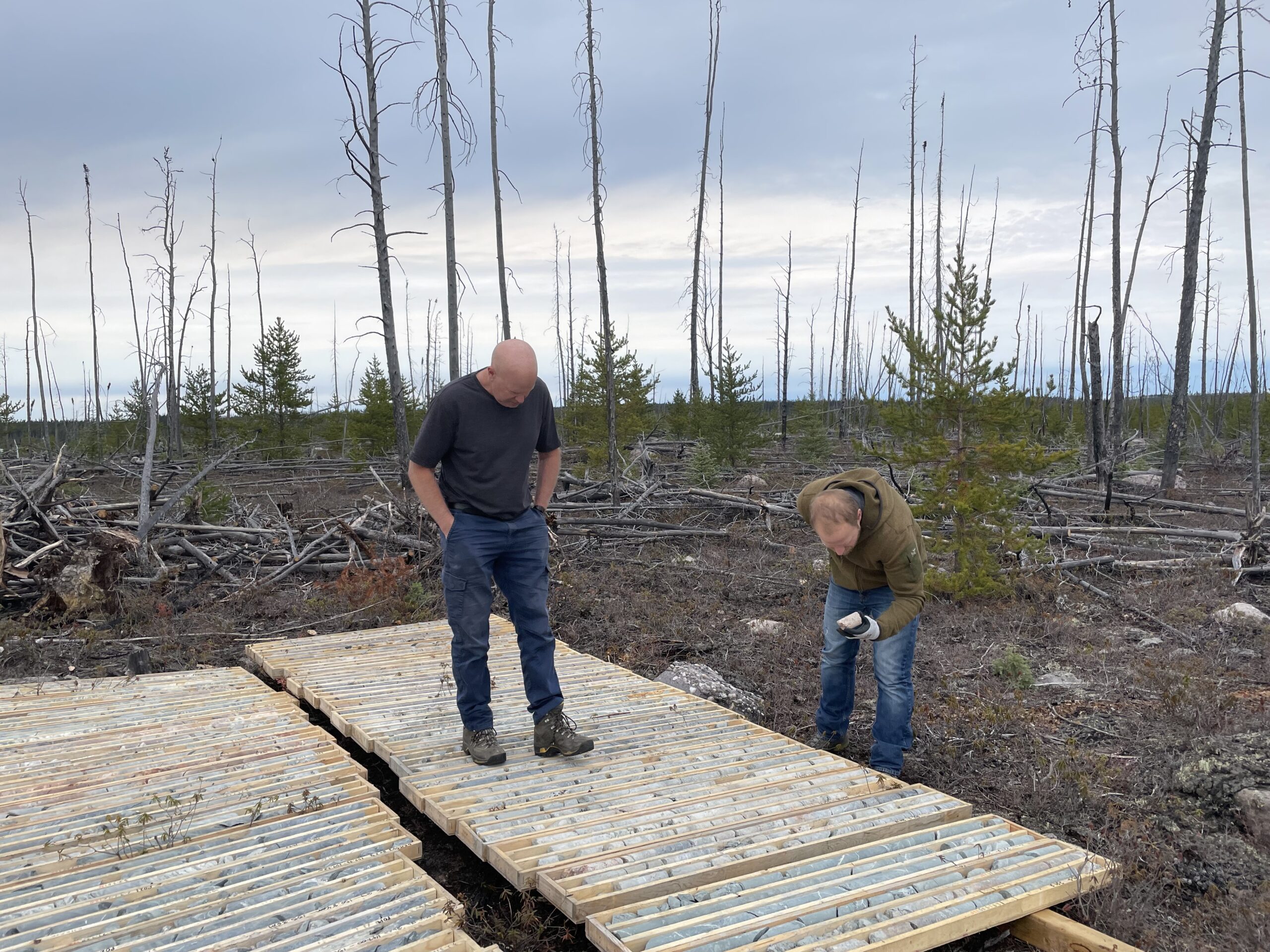
About 9,000 metres of the 10,000-metre 2026 infill and step-out programme have been completed, including 27 infill holes. That data feeds an updated resource estimate and mine plan targeted for year-end 2026. The programme also drilled through a calc-silicate zone on the footwall of the Isguiz vein system. Howarth said it is too early to say how that zone enters the mine plan, but added width from adjacent zones could lift the tonnes and ounces produced from each metre of development.
Indicative Economics & Funding the Ramp-Up
Howarth outlined indicative economics, again based on historical production and not on an NI 43-101 study. He described a total cost of around US$200 per tonne, made up of roughly US$90 per tonne for mining and US$30 to US$40 per tonne for processing, plus general and administrative costs and mine development. At about 200 g/t silver, he estimated a silver-only cash cost of US$30 to US$35 per ounce.
"When we’re successful with this, and we’re talking 6 months through this ramp up, you’re generating free cash flow that’s sufficient not only to support the development of the mine and getting deeper but also to do the exploration across an entire district," Howarth explained.
Excellon Resources' cash stood at US$5 million, alongside an undrawn US$5 million credit facility with Glencore. Howarth said those funds, together with revenue from continued ramp-up, are sufficient to advance restart planning. If delays emerge, he pointed to three non-dilutive options: strategic alternatives for the Kilgore gold project in Idaho, a potential spin-out of the Silver City silver project in Germany, and discussions with Glencore on extending existing credit facilities.
The company has also amended its base metals stream with Adar Mining to defer remaining lead and zinc deliveries until January 1, 2031. That amendment is subject to TSX Venture Exchange approval.
Tres Cerros & the District Exploration Case
Howarth described the long-term goal as a district play rather than a single 600 tpd mine. He pointed to roughly 10,000 tpd of installed processing capacity across 5 or 6 operations in the district around Mallay, including Buenaventura’s Uchucchacua and Yumpag operations to the east. Those operations mine the same stratigraphy and structural trends, though with different ore bodies and deposit styles.
Deep drilling at Mallay is testing that thesis. A first downhole electromagnetic (DHEM) hole of about 800 metres intersected skarn-style alteration from about 600 metres. That zone returned anomalous copper values roughly 300 to 400 metres below the epithermal veins now being mined. A second DHEM hole is underway, with results targeted around year-end, and downhole geophysics will guide follow-up drilling.
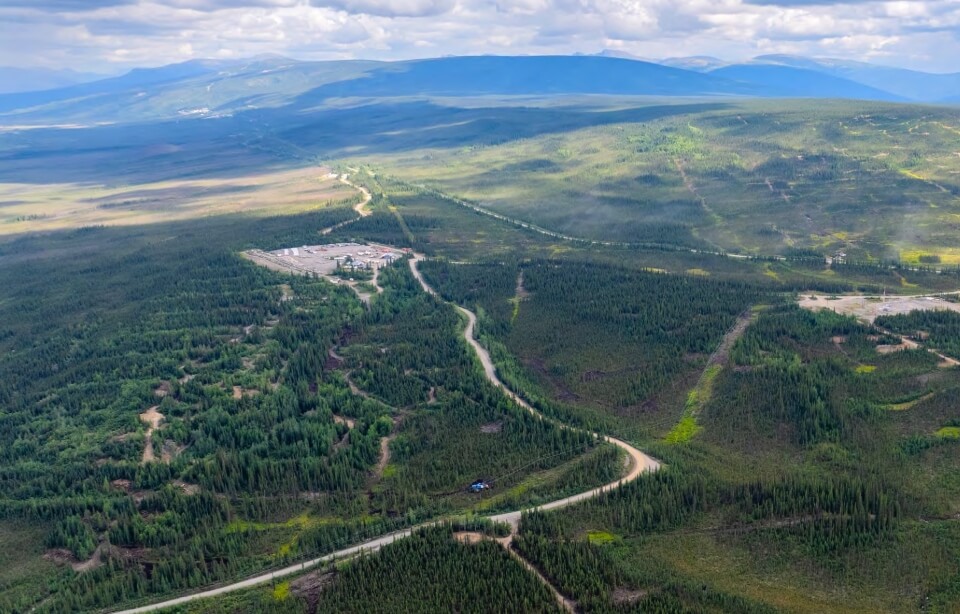
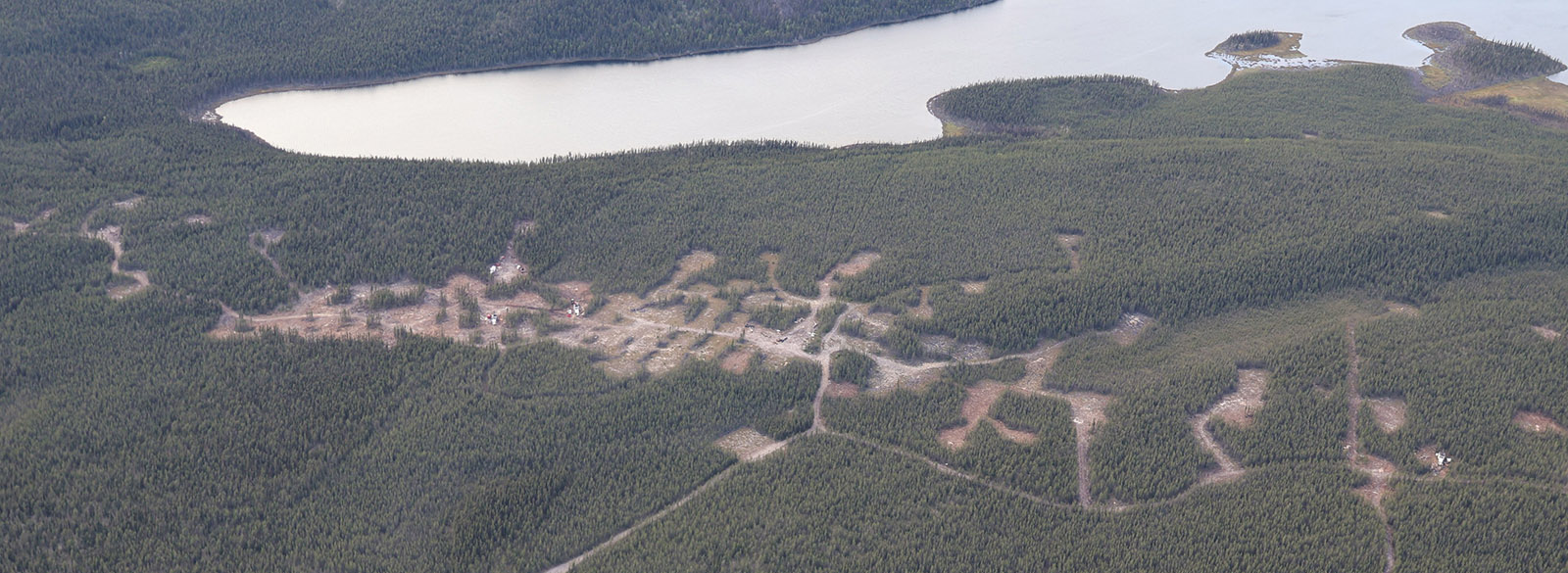
Tres Cerros, 6 kilometres west of Mallay’s infrastructure, is the larger exploration bet. Excellon has mapped a 2.5-kilometre strike of an intermediate-sulfidation epithermal system and defined 7 targets. The initial 5,000-metre programme will focus on 2 or 3 high-priority targets, and the drill permit is targeted for the first half of 2027. Howarth said the programme would expand if the system proves as large as the company believes.
Looking Ahead to 2027
Excellon enters 2027 with a working plant, first revenue and a sequenced restart plan. The company’s targets are the updated resource estimate and SRK Consulting mine plan by year-end 2026, completion of the contractor transition and 400 Ramp rehabilitation in the first quarter of 2027, Clavo 6 production in the second quarter, and 600 tpd by mid-2027.
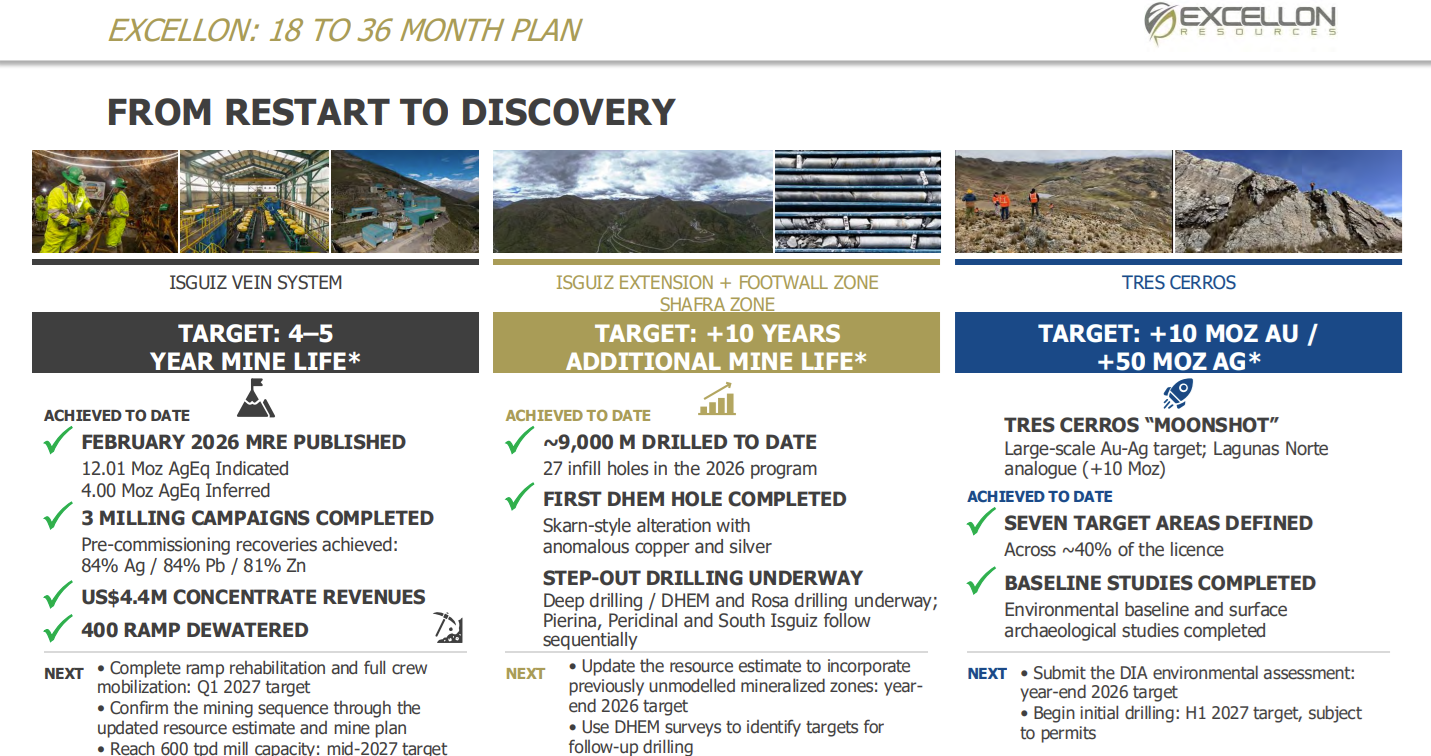
On the exploration side, two results come first: the second DHEM hole and the Tres Cerros environmental assessment, which is targeted for submission by year-end 2026. A first drill programme follows, targeted for the first half of 2027 and subject to permits. The funding position is tight at US$5 million in cash, though the Glencore facility, milling revenue and non-core assets give management several routes through the ramp-up. Delivery against the 300 tpd step in the first half of 2027 is the first test of whether the self-funding model holds.
The Investment Thesis for Excellon Resources
- Excellon has collected US$4.4 million from initial concentrate sales to Glencore after processing 19,884 tonnes in 3 pre-commissioning campaigns at Mallay.
- The company is targeting the mill’s rated capacity of 600 tonnes per day by mid-2027, with management aiming for a consistent 300 tonnes per day through the first half of 2027.
- Wider replacement-style zones of 3 to 4 metres and mechanized mining through the rehabilitated 400 Ramp are intended to lift productivity relative to the historical narrow-vein operation.
- Cash of US$5 million and an undrawn US$5 million Glencore credit facility are backed by non-dilutive options around Kilgore, Silver City and credit extensions.
- Monitor the updated mineral resource estimate and mine plan targeted for year-end 2026, which gate production from the deeper ore shoots.
- Tres Cerros adds district-scale exploration exposure, with an initial 5,000-metre programme across 7 targets targeted for the first half of 2027, subject to permits.
Macro Thematic Analysis
Restart stories are drawing a different kind of attention from capital markets. When observed that near-term revenue stories are being valued differently from exploration plays. Howarth agreed that the tangibility of a producer, or of potential production, is gaining traction with investors he met in Europe.
Howarth framed today’s 600 tpd mill as the starting point for the district case:
“The question that we bring back to our guys all the time is, this is a snapshot in time, this throughput, what we’re doing right now. How do we unlock what that broader district is?”
Mallay’s own history shows how far the price backdrop has moved. Buenaventura placed the mine on care and maintenance in 2018, when silver traded at about US$15 per ounce. The February 2026 resource used a US$30 per ounce silver price. According to US Geological Survey data cited by Excellon, Peru is the world’s second-largest silver and zinc mine producer and holds the largest silver reserves. That gives a restart in an established belt access to existing infrastructure and trained labour.
Excellon’s own peer chart places its C$112 million market capitalization below selected silver producers and restart companies. Those peers range from C$229 million to over C$1 billion, though the company notes that Mallay’s restart economics have not been demonstrated.
TL;DR
Excellon Resources has completed 3 pre-commissioning milling campaigns at its Mallay silver-lead-zinc mine in Peru, processing over 19,800 tonnes and collecting US$4.4 million from concentrate sold to Glencore. The company is targeting 600 tpd by mid-2027, stepping through a consistent 300 tpd in the first half. A new contractor and the rehabilitated 400 Ramp are intended to open wider, deeper ore shoots for mechanized mining. Liquidity is US$5 million in cash plus an undrawn US$5 million Glencore facility. Exploration continues through DHEM drilling below the mine and a 5,000-metre programme at Tres Cerros targeted for the first half of 2027. Management describes the restart as the cash engine for district-scale exploration.
Frequently Asked Questions
Analyst's Notes





Subscribe to Our Channel






Stay Informed