
US Midterms Lower Spending Expectations: Why Policy Risk Supports Gold



US midterms lower spending expectations, but ongoing policy risk supports gold as a portfolio hedge and puts efficient producers in focus.
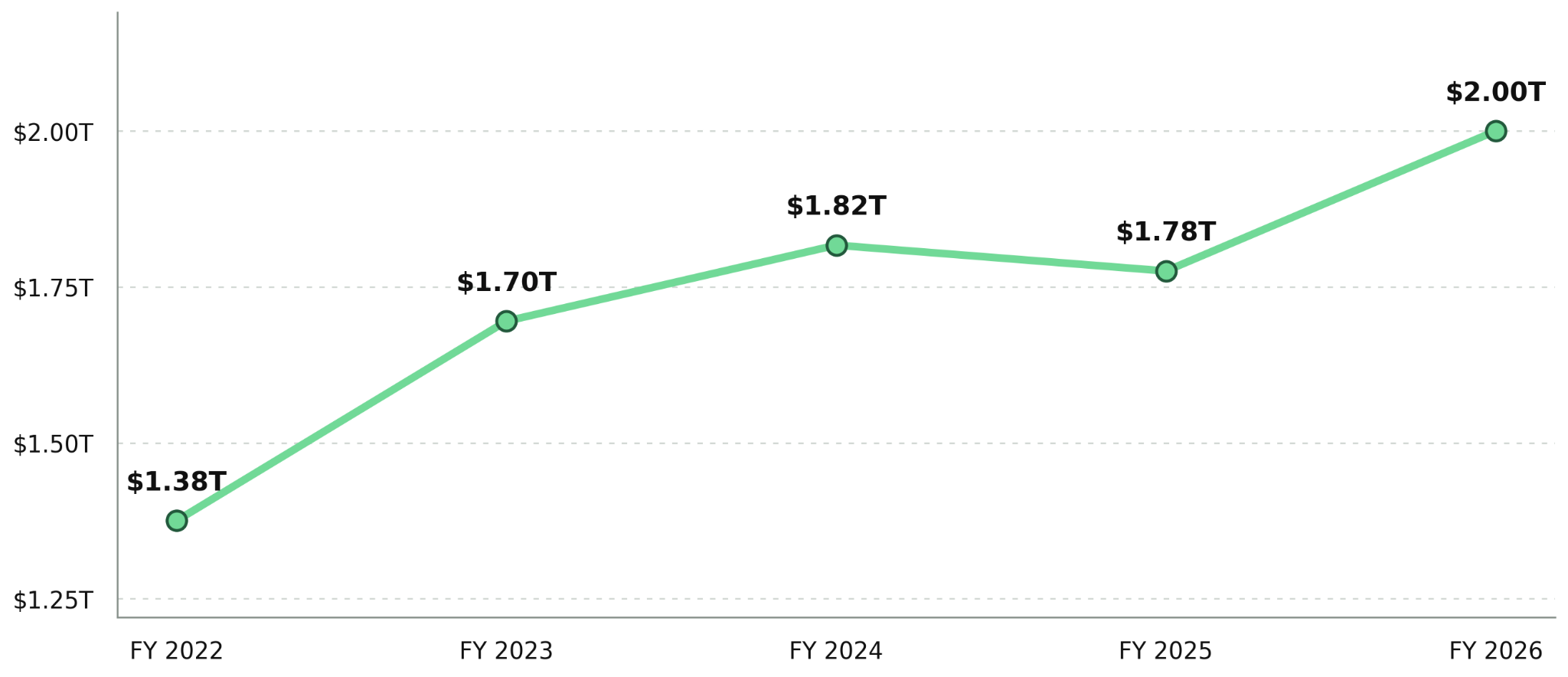
- The US midterm results reduced expectations for new deficit-financed spending, while the $2.0 trillion federal deficit in fiscal year 2026 highlighted substantial borrowing needs.
- The World Gold Council (WGC) identified executive orders, technology regulation, and war funding decisions as sources of policy uncertainty that could reinforce gold's role as a hedge.
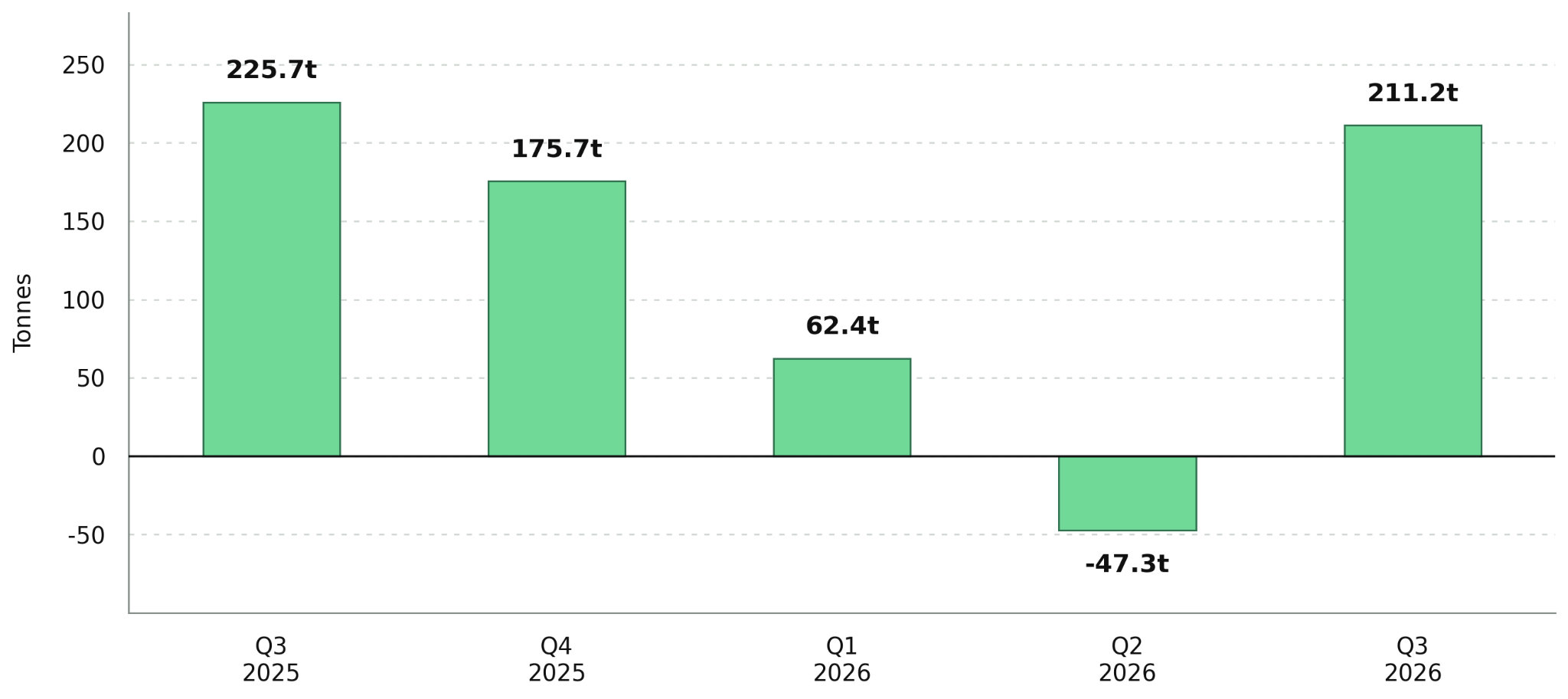
- Gold exchange-traded funds (ETFs) attracted 211 tonnes in the third quarter and $2.7 billion in October, while central banks purchased 321 tonnes in the third quarter, reinforcing gold's investment and reserve demand.
- Global gold supply declined 1% in the third quarter despite record third-quarter mine production, as recycling fell 8% and producer de-hedging reduced supply by another 17 tonnes.
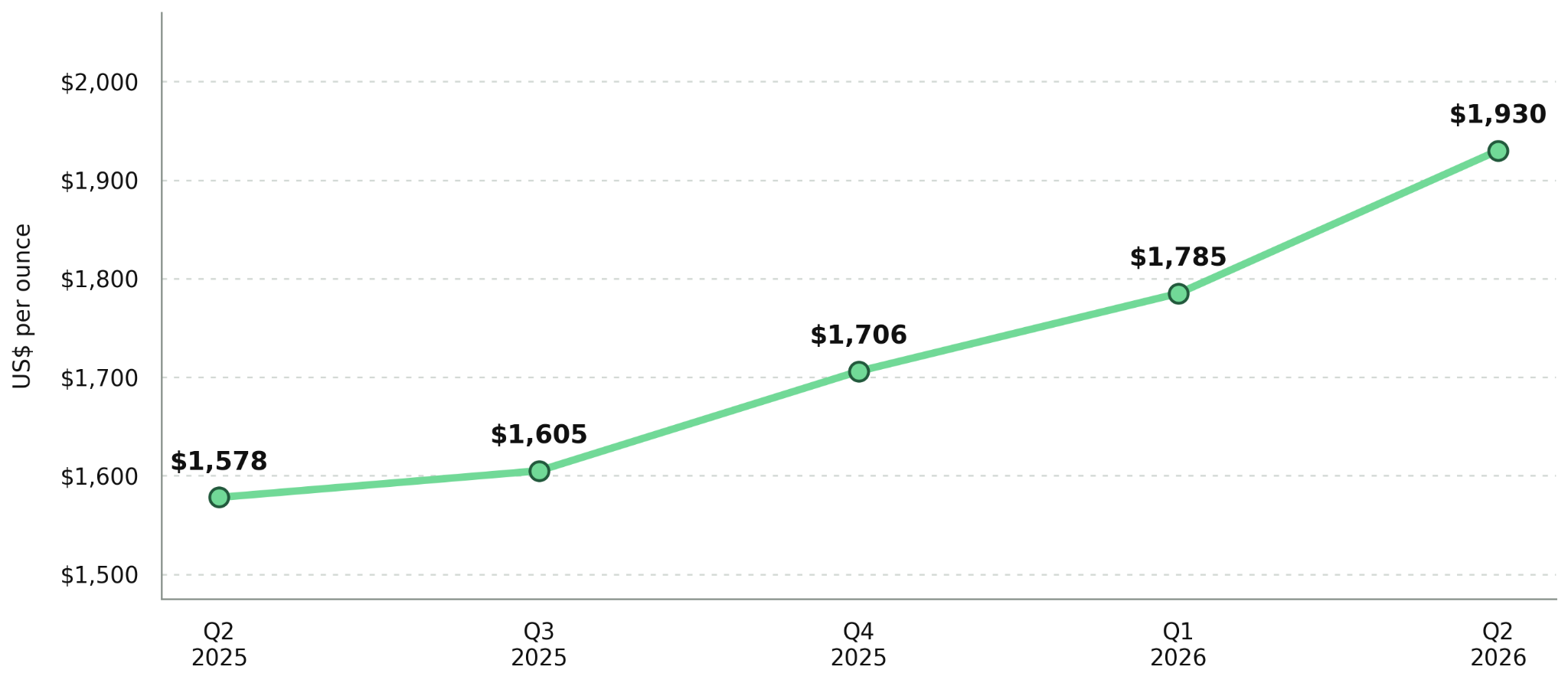
- Industry all-in sustaining costs (AISC) rose 22% year over year to $1,930 per ounce in the second quarter, increasing the importance of gold recovery and cost control in protecting mining margins.
Midterm Results Reduce Fiscal Expectations as Policy Risk Supports Gold
WGC reported that Democratic victories in the US midterms reduced expectations for further fiscal expansion. The Congressional Budget Office (CBO) reported a $2.0 trillion federal deficit for fiscal year 2026, up $217 billion from the previous year, highlighting substantial borrowing needs despite reduced prospects for additional spending legislation.
With the new congressional majorities taking office in January 2027, legislative constraints could increase reliance on executive orders and emergency powers. Legal challenges could delay policy implementation, while decisions on AI regulation and war funding could affect equity valuations, inflation expectations, and geopolitical risk. These developments reinforce gold's role as a hedge against policy uncertainty.
Initial gold declines following the 2016 and 2024 presidential elections largely reversed as markets reassessed subsequent policies. These reversals suggest that subsequent policy decisions can matter more for gold prices than immediate election reactions.
Fiscal Concerns Sustain Gold Demand Amid Currency Shifts
Physically backed gold ETFs attracted 211 tonnes of inflows worth approximately $31 billion in the third quarter, including 92 tonnes into European-listed funds. European demand reflected concerns about fiscal sustainability, inflation, and government bond markets, reinforcing gold's role as a portfolio diversifier before the US midterms.
Gold ETFs attracted $2.7 billion in October inflows, increasing holdings by 19 tonnes to 4,275 tonnes. Central banks purchased an estimated 321 tonnes in the third quarter, up 42% year over year, bringing nine-month purchases to 675 tonnes. Sustained demand from investment funds and central banks provides a supportive market backdrop for established gold producers expanding output.
Mineros S.A. produced 62,565 ounces of gold in the third quarter, up 14% year over year, and raised its 2026 production guidance for the second time to 235,000-245,000 ounces. Higher output at Hemco and improved gold recovery at Nechí support the revised outlook, while accumulated ore stockpiles provide additional material for future gold sales.
Daniel Henao, President and Chief Executive Officer of Mineros S.A., discusses how dollar movements affect gold's relative value:
"The peso has appreciated massively against the dollar, or the dollar has lost a lot of value against a lot of currencies, including gold. We've been able to offset all of that with all the cost initiatives we've been working on."
Falling Recycling Reduces Gold Supply Despite Record Mine Output
WGC reported that global mine production rose 3% year over year to a third-quarter record of 1,071 tonnes, while recycled gold fell 8% to approximately 314 tonnes. Net producer de-hedging removed another 17 tonnes, leaving total gold supply down 1% at approximately 1,369 tonnes despite record mine output.
Global gold demand reached 3,881 tonnes in the first nine months of 2026, nearly matching the 3,884-tonne record for the same period in 2025, with demand valued at $566 billion. With recycling subdued, mine production remains the principal potential source of additional annual supply, increasing the importance of reliable output from existing operations and timely commissioning of new projects.
Rising Mining Costs Make Efficiency Key to Producer Margins
Industry average AISC rose 22% year over year to $1,930 per ounce in the second quarter, driven by higher energy, consumables, and sustaining capital costs. At a given realized gold price, rising production costs narrow mining margins and reduce cash available for expansion, debt reduction, and shareholder returns.
Higher recovery rates and improved processing efficiency can help producers increase saleable gold output without proportional increases in costs, supporting operating margins and generating cash flow for further expansion.
Higher Recovery Rates Strengthen Producer Cash Flow
TRX Gold reported preliminary fiscal fourth-quarter production of 8,173 ounces, up 28% year over year, bringing annual output to 29,650 ounces, a 57% increase that reached the top end of guidance. Improved gold recovery and processing performance at Buckreef support further production growth, while operating cash flow is intended to help fund the planned expansion.
US gold mine production declined 7% year over year in the third quarter, partly due to lower ore grades at several operations. This highlights the importance of efficient mining and reliable processing in maintaining gold output, improving operating performance and supporting future expansion.
Integra Resources produced 17,652 ounces of gold at Florida Canyon in the third quarter, up 8% from the previous quarter and 40% from the first quarter, while maintaining 2026 production guidance of 70,000 to 75,000 ounces. Increased mining activity and improved ore processing support continued production growth, while $119 million in cash provides funding for further mine improvements and development of its DeLamar and Nevada North projects.
Existing Mine Infrastructure Supports Faster Gold Supply Growth
Mine production remains the principal source of potential gold supply growth in 2026, although subdued recycling could still reduce total annual supply. Using existing processing facilities and mine infrastructure can lower development costs and accelerate additional production, supporting a more capital-efficient path to expansion.
Existing Mill Capacity Strengthens Project Economics
New Found Gold reported a 38% increase in measured and indicated gold resources at Queensway and plans to begin processing its ore at the existing Pine Cove mill in the fourth quarter of 2027. With Hammerdown already producing gold, the company plans to fund Queensway's initial development through available cash, existing credit facilities and operating cash flow, supporting a path toward additional production.
Canada's gold mine output increased 22% year over year in the third quarter, supported by newly commissioned mines and expansion at existing operations. This growth highlights the opportunity for established producers to increase output by developing nearby deposits and making greater use of existing infrastructure.
West Red Lake Gold Mines is producing at Madsen and plans to bring its Rowan deposit online in 2029. Its November 4 integrated pre-feasibility study projects average annual gold production of 108,000 ounces from 2029 to 2034 and an after-tax net present value (NPV) of C$764 million, assuming a gold price of US$3,568 per ounce. Using Madsen's existing processing infrastructure supports expansion while reducing the need for new facilities.
Shane Williams, President and Chief Executive Officer of West Red Lake Gold Mines, explains how changing gold prices affect mine profitability:
"These sorts of mines are very sensitive to gold prices, both up and down… But when you look at it today, even with all that, if we're mining at that rate, we're still making a good margin."
Mine Commissioning Creates New Gold Sales Potential
With gold recycling declining, newly commissioned mines play an important role in expanding future supply. Projects progressing toward commercial production can establish recurring gold sales and generate cash flow to support further expansion.
Higher Processing Throughput Supports Future Cash Flow
Cabral Gold announced its first gold pour of 1,130 ounces at Cuiú Cuiú on September 10, two months ahead of schedule, and is targeting commercial production in the fourth quarter of 2026. The fully funded first-stage operation targets approximately 25,000 ounces in its first year, with future cash flow intended to support further expansion and exploration while reducing reliance on new equity financing.
Alan Carter, President and Chief Executive Officer of Cabral Gold, links higher gold throughput to projected cash flow:
“I expect next year, at the current projections, we'll probably be cash flowing 75 to 80 million US dollars, maybe more than that. If we can double the throughput during 2028, those numbers double at the current gold price.”
Expanding existing gold operations provides another avenue for increasing mine supply. Investments in processing capacity, supported by access to additional ore and regulatory approvals, can strengthen production growth while making greater use of established infrastructure.
Serabi Gold produced 11,008 ounces in the third quarter and ended September with $63.2 million in cash and no debt. The company completed installation of its fourth ball mill at Palito on schedule and within budget, with commissioning underway and annual processing throughput targeted at 330,000 tonnes in 2027. The expanded capacity and expected lower capital spending support future production growth as Coringa's operating approvals advance.
Policy Uncertainty Supports Gold's Portfolio Role After Midterms
Global gold ETFs attracted $41 billion in inflows through October 2026, the third-strongest year-to-date total on record. These allocations demonstrate substantial gold investment demand before the US midterms reduced expectations for additional fiscal expansion.
Despite lower expectations for new deficit-financed spending, substantial federal borrowing needs remain, while decisions on executive authority, AI regulation, and war funding could introduce further policy uncertainty. These risks could sustain gold's appeal as a portfolio hedge, while mining equities depend on reliable production, cost control, and financed expansion to translate gold market strength into cash flow.
The Investment Thesis for Gold
- Gold's role as a portfolio hedge remains supported by fiscal concerns, regulatory uncertainty, and geopolitical risks, even as the US midterms reduce expectations for additional government spending.
- Sustained ETF inflows and central bank purchases provide an established demand base for gold, while subdued recycling increases the importance of reliable mine supply.
- Producers with dependable output, higher recovery rates, and effective cost control are better positioned to translate favorable gold prices into stronger operating margins and cash flow.
- Rising production costs increase the importance of operational efficiency, as higher expenses can offset the financial benefits of stronger gold prices.
- Existing processing infrastructure and funded expansion plans can support additional gold production while limiting the capital requirements and execution risks associated with new development.
- Disciplined capital allocation, regulatory compliance, and financial flexibility remain essential for sustaining production and protecting mining margins across changing market conditions.
The US midterm results reduced expectations for additional fiscal spending but left substantial borrowing needs and uncertainty over future executive, regulatory, and geopolitical decisions. Gold's investment case therefore extends beyond election outcomes, supported by portfolio diversification, central bank demand, and constrained supply growth. Within this environment, established gold producers offer exposure to the metal's broader investment appeal, with reliable production, disciplined cost management, and funded expansion providing opportunities for sustained cash flow and long-term growth.
TL;DR
The US midterm results reduced expectations for additional fiscal spending, but substantial borrowing needs and uncertainty over executive decisions, AI regulation, and war funding could sustain gold's role as a portfolio hedge. Strong ETF inflows and central bank purchases demonstrate continued investment demand beyond election trading. Meanwhile, declining recycling limited total gold supply despite record mine production. Rising operating costs also increase the importance of recovery improvements, processing efficiency, and disciplined expansion. For gold producers, the investment opportunity lies in translating favorable market conditions into reliable production, stronger operating margins, and sustainable cash flow.
FAQs (AI-Generated)
Analyst's Notes





Subscribe to Our Channel












Stay Informed