




Fed Repricing & ETF Liquidation Drive Silver 13% Lower Despite a 762Moz Inventory Drawdown


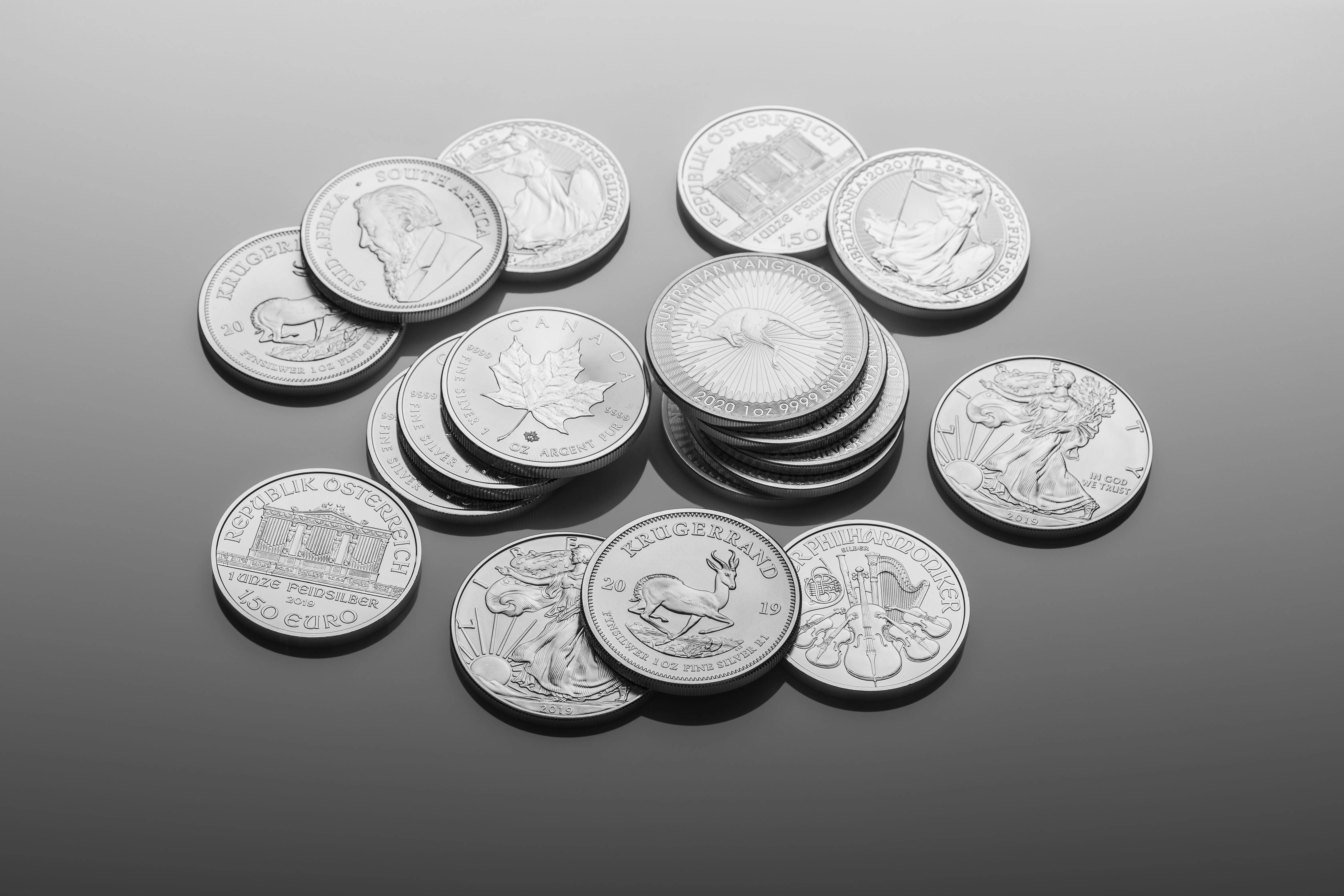
Silver fell 13% on Fed repricing and ETF selling despite a 46.3Moz supply deficit and 762Moz inventory drawdown, highlighting tight physical markets.
- Silver fell approximately 13% as stronger-than-expected US employment data, 4.2% headline CPI, Goldman Sachs removing all 2026 rate-cut forecasts, and renewed US-Iran tensions increased expectations for higher interest rates and reduced demand for non-yielding precious metals.
- The gold-to-silver ratio rose to 65.0 during the selloff as higher rate expectations reduced investment demand while industrial demand from solar, electronics, EVs, and AI infrastructure remained intact, a combination that has historically preceded periods of silver outperformance.
- The World Gold Council's Weekly Markets Monitor identified six drivers of the selloff, including leveraged ETF rebalancing and extended hedge fund positioning, indicating forced liquidation rather than weaker physical demand.
- The Silver Institute's World Silver Survey 2026 projects a 46.3 million ounce supply deficit for 2026, the sixth consecutive annual shortfall, with cumulative above-ground stock drawdowns reaching 762 million ounces since 2021 despite recent paper-market selling.
- Silver producers, developers, and explorers offer different risk-reward profiles based on operating performance, financing requirements, and exploration success.
Rate Expectations Drive Silver Selloff While Supply Deficits Persist
Silver's largest weekly selloff of 2026 occurred as the Silver Institute projected a 46.3 million ounce supply deficit for 2026 and cumulative above-ground stock drawdowns of 762 million ounces since 2021. The selloff reflected changing rate expectations, while physical supply remained in deficit.
Silver fell from about $74 per ounce to $64 during the week, a decline of approximately 13%. The gold-to-silver ratio rose to 65.0 from 55.16 in May and 59.2 in mid-May, reaching a range that has historically preceded periods of silver outperformance during precious metals bull markets. Higher rate expectations reduced investment demand for silver, while industrial demand representing roughly 55% to 60% of consumption through solar, electronics, EVs, and AI infrastructure remained largely unchanged. As a result, silver prices fell even as the physical market remained in deficit.
Labor Data, Inflation & Rate Expectations Drive Silver's 13% Decline
Three macro events drove silver's selloff: stronger-than-expected employment data, higher inflation, and a major revision to interest-rate forecasts. Together, they reduced expectations for lower interest rates and increased pressure on non-yielding assets such as silver.
Stronger US Payrolls & Higher-For-Longer Pressure on Silver
US nonfarm payrolls rose 172,000 in May 2026, more than double the Dow Jones consensus estimate of 80,000, following an upwardly revised 179,000 in April, while unemployment held at 4.3%. Goldman Sachs subsequently removed all remaining 2026 rate-cut forecasts from its outlook and pushed its first expected reduction to June 2027. For silver, higher rate expectations increase the opportunity cost of holding a non-yielding asset, strengthen the US dollar, and raise costs for international buyers. The data also suggested domestic demand remained strong enough to reduce pressure on the Fed to lower rates, reinforcing a higher-for-longer interest-rate outlook.
Higher Inflation & Reduced Scope for Fed Easing
Headline CPI rose 4.2% year-over-year in May 2026, the highest reading since April 2023, with more than 60% of the increase driven by higher energy prices linked to disruptions in Persian Gulf energy flows. Core CPI slowed from 0.4% in April to 0.2% in May, while the annual core rate eased to 2.9%, giving policymakers a basis for holding rates rather than hiking. The CME FedWatch Tool showed a 98.4% probability of a June hold and a 27.8% probability of a September rate hike. For silver, inflation remained high enough to support higher-for-longer rates but not broad enough to drive significant inflation-hedging demand.
Goldman Sachs Removes 2026 Rate Cuts & Pressures Silver Positioning
Goldman Sachs' removal of all 2026 rate-cut forecasts prompted hedge funds and commodity trading advisors to reduce precious-metals exposure as expectations for lower rates were pushed further out. The World Gold Council identified six drivers of the selloff, including extended hedge fund positioning, leveraged ETF rebalancing, and stronger-than-expected employment data, which together accelerated selling pressure across precious metals markets. Markets were also positioning ahead of the June 16-17 FOMC meeting, the first chaired by Kevin Warsh, increasing uncertainty and encouraging further risk reduction.
Gold-to-Silver Ratio Reaches 65 & Signals Relative Value in Silver
The gold-to-silver ratio measures how many ounces of silver are required to purchase one ounce of gold. At 65.0, with gold near $4,165 and silver at $65.24, the ratio reflects weaker investment demand for silver and a level that has historically been followed by periods of silver outperformance.
Silver often underperforms gold when interest-rate expectations rise because higher real yields reduce investment demand for precious metals and increase concerns about economic growth. Industrial demand responds differently. Solar manufacturers, EV supply chains, and AI data-center operators buy silver to meet production and investment plans rather than short-term market sentiment, making their consumption less sensitive to moves in bond yields. According to the Silver Institute, industrial fabrication accounted for approximately 55% of silver demand in 2025, supported by renewable energy deployment, EV production, and AI infrastructure investment.

Historically, gold-to-silver ratios between 60 and 70 have been followed by periods of silver outperformance over the subsequent six to eighteen months. The ratio exceeded 100 in March 2020 as the COVID-19 shock triggered rapid liquidation of non-yielding assets, before silver outperformed gold through 2020 and 2021 as interest rates fell and industrial demand recovered. The current ratio of 65.0, up from 55.16 in May, reflects weaker investment demand driven by higher rate expectations rather than a deterioration in physical market fundamentals.
Rising Silver Demand & Limited Mine Supply Extend Market Deficits
While futures markets repriced sharply, the physical supply outlook for silver remained unchanged. The Silver Institute's World Silver Survey 2026 projects a 46.3 million ounce supply deficit for 2026, the sixth consecutive annual shortfall and an increase from 40.3 million ounces in 2025. Since 2021, cumulative drawdowns from above-ground silver inventories have reached 762 million ounces.

Mine production is forecast to remain roughly flat in 2026. Recycling reached a twelve-year high of 197.6 million ounces in 2025, yet even that record secondary supply recovery was insufficient to close the deficit. Approximately 70% of global silver mine output is generated as a co-product of copper, zinc, and lead mining, which limits the industry's ability to increase supply in response to higher silver prices because production decisions are driven primarily by the economics of those metals rather than silver itself.
Oliver Turner, Executive Vice President of Corporate Development at Americas Gold & Silver, explains why rising demand has not translated into higher silver supply:
"We've had six years of deficits. Demand continues to increase, particularly from solar and other industrial applications. Seventy percent of silver comes as a byproduct from other mines, so additional demand does not automatically create additional silver supply."
Silver Supply Deficits & Different Risk-Reward Profiles Across Mining
The silver supply deficit creates different opportunities across producers, developers, and explorers. Producers offer exposure through operating performance, developers through financing and construction milestones, and explorers through discovery success. As a result, each stage carries different catalysts, financing requirements, and sensitivity to silver prices.
Rising Silver Interest Improves Access to Development Capital
For development-stage projects, rising investor interest in silver can improve access to development capital. Vizsla Silver completed a November 2025 Feasibility Study for its Panuco project outlining an after-tax NPV of US$1.8 billion, an IRR of 111%, and a 7-month payback period using a silver price assumption of US$35.50 per ounce. The company also secured a MXN$173 million working capital facility from Mexican government-backed lender Fideicomiso de Fomento Minero, including a two-year principal grace period on an unsecured basis. The financing provides external validation of the project as it advances toward a potential construction decision.
Michael Konnert, President and Chief Executive Officer of Vizsla Silver, explains how industrial demand and monetary demand are driving renewed investor interest in silver:
"Silver sits at this crossroads of industrial growth and monetary anxiety. Silver is starting to catch up with gold, and seasoned investors know that when that happens, silver moves can be explosive and silver equities can outperform."
Low Silver Inventories Increase Demand for New Discoveries
For explorers, low silver inventories increase demand for discoveries capable of adding future silver supply. GR Silver Mining reported its best-ever drill results at the San Marcial area in May 2026, with hole SMS26-04 returning 45.1 metres true width at 1,623 grams per tonne silver, including 8.25 metres true width at 8,579 grams per tonne silver. Three rigs are active on a 20,000-meter step-out program targeting completion in the second half of 2026, followed by an updated Mineral Resource Estimate and Preliminary Economic Assessment.
Daniel Schieber, Vice President of Corporate Development and Relations at GR Silver Mining, discusses how tight silver inventories are increasing demand for new silver supply:
"The content that we would eventually produce is more valuable the higher silver content it has. It commands a premium and can support offtake financing and equity involvement from parties that want access to the metal. This metal is in a bit of a squeeze. If you look at silver inventories, they're at historical lows. That's why silver is spiky. Access to the actual silver is critical."
The Investment Thesis for Silver
- The Silver Institute projects a sixth consecutive annual supply deficit of 46.3 million ounces in 2026, while cumulative above-ground inventory drawdowns have reached 762 million ounces since 2021, indicating that physical supply remains tight despite recent price weakness.
- The gold-to-silver ratio of 65.0 sits within a range that has historically preceded periods of silver outperformance, reflecting higher interest-rate expectations rather than weaker physical demand.
- Operating silver producers that convert higher-grade resources near existing infrastructure can improve margins without major capital expenditure, providing a company-specific catalyst alongside silver price exposure.
- Development-stage projects with completed Feasibility Studies and government-backed financing support offer both published project economics and external validation, helping investors assess the likelihood of advancing toward construction.
- Exploration-stage silver discoveries with high-grade drill results and active resource-expansion programmes offer exposure to discovery-driven value creation, provided companies have sufficient funding to complete drilling and resource definition work.
- The June 16-17, 2026 FOMC meeting, the first chaired by Kevin Warsh, is the key near-term catalyst for silver because changes to the Fed's rate outlook could alter expectations that are currently supporting the US dollar and weighing on precious metals.
- Silver's industrial demand from solar photovoltaics, electric vehicles, electronics, and AI infrastructure is less sensitive to interest-rate expectations than investment demand, helping support physical consumption during periods of macro-driven selling.
Silver at $64 per ounce reflects stronger US economic data, higher inflation, and rising interest-rate expectations rather than a change in the metal's supply-demand balance. The Silver Institute projects a sixth consecutive annual supply deficit in 2026, cumulative inventory drawdowns have reached 762 million ounces since 2021, and industrial demand from solar, EVs, and AI infrastructure remains strong. The June 16-17 FOMC meeting is the key near-term catalyst because changes to the Fed's rate outlook could alter expectations that are currently weighing on silver.
TL;DR
Silver declined 13% as stronger US employment data, 4.2% inflation, and the removal of all 2026 rate-cut forecasts pushed interest-rate expectations higher and triggered ETF and hedge fund selling. Despite the price decline, physical market fundamentals remained tight, with the Silver Institute projecting a sixth consecutive supply deficit of 46.3Moz in 2026 and cumulative inventory drawdowns of 762Moz since 2021. The gold-to-silver ratio rose to 65, a level historically associated with subsequent silver outperformance, while industrial demand from solar, EVs, electronics, and AI infrastructure continued to support physical consumption.
FAQs (AI-Generated)
Analyst's Notes





Subscribe to Our Channel










Stay Informed






