




Integra Resources' Florida Canyon 2026 Cost Spike: 6 Things Investors Need to Know


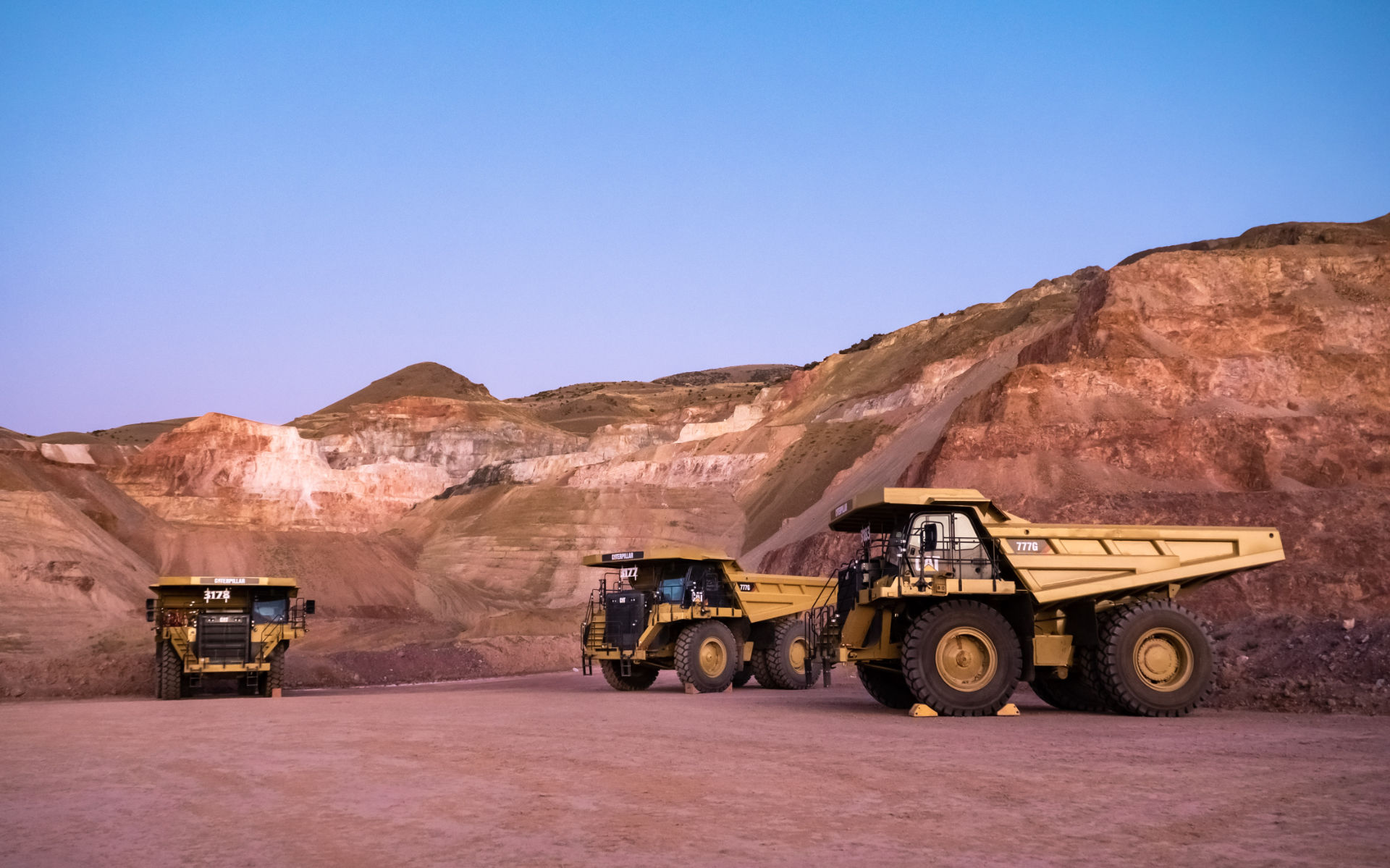
Integra's 2026 Florida Canyon AISC rises to US$3,300 to US$3,500/oz, a catch-up year, the feasibility study says, that precedes falling costs from 2027.
Project Overview
Integra Resources (TSXV: ITR | NYSE American: ITRG) operates the Florida Canyon mine, a producing conventional open-pit heap-leach gold operation in Nevada. The updated Technical Report feasibility study and life-of-mine plan released on June 25, 2026, resets the asset to an 8-year active operating life through 2033, followed by 2 years of residual leaching starting in 2033. Average annual gold production across the mining years reaches 82,000 ounces, a 17% increase over the prior 70,000-ounce plan.
The figure that moved most sharply for 2026 is a cost number, and its distance from the 8-year plan is where the investment question sits.
1. 2026 Site-Level All-in Sustaining Cost Against the Life-of-Mine Average
The 2026 site-level all-in sustaining cost (AISC) guidance of US$3,300 to US$3,500 per ounce is far above the US$2,331 per ounce life-of-mine figure, making 2026 the costliest year of the plan rather than its run rate.
Integra revised 2026 site-level AISC guidance to US$3,300 to US$3,500 per ounce, up from US$2,750 to US$2,950, in the June 2026 feasibility study, while re-confirming 2026 production guidance of 70,000 to 75,000 ounces. Against that near-term range, the life-of-mine site-level AISC is US$2,331 per ounce net of silver by-product, excluding closure costs, and US$2,373 per ounce including closure costs, under the study's base-case assumptions.
The 2026 range sits well above the US$2,331-per-ounce life-of-mine figure. It frames 2026 as a single elevated year, not the cost base the mine carries for the remaining seven.
2. Drivers of the 2026 Cost Increase
The 2026 increase is attributable to catch-up, price-linked, and timing factors rather than a permanent rise in the cost base.
Four identifiable pressures account for the step-up. Higher tonnes mined, stacked, and processed to support production, combined with a heavy waste-stripping campaign, drive the operating side. Inflation in diesel fuel and explosives, higher royalties and excise taxes tied to stronger gold prices, and lower gold ounces sold in the first quarter of 2026 account for the rest.
President and Chief Executive Officer of Integra Resources, George Salamis, is candid about the fuel and explosives component of the increase:
"Fuel prices are high, explosive prices are high, and that's being reflected in our all-in sustaining costs right now. That's a small part of it, not the main part. It's a fact of life we have to just deal with, as every other producer does."
Two of those pressures, input inflation and price-linked charges, move with the year rather than the plan, and a third, first-quarter sales timing, reverses within it.
3. The Central Pit Stripping Campaign & Pit Sequencing
The Central Pit pre-stripping campaign concludes in 2026, opening access to higher-grade, lower-strip ore and setting a mining sequence that runs to 2033.
The heaviest single call on 2026 spending is the Central Pit pre-stripping campaign. Capitalised stripping of US$86.5 million, carried within sustaining capital, completes a catch-up campaign that began in 2025 and concludes in 2026. Removing that waste opens access to higher grades and lower strip in the main pits and fixes the mining sequence: the Central Pit runs from 2026 through 2028, the Radio Tower Pit from 2028 through 2030, then the Jasperoid Pit and historic waste rock stockpiles from 2030 through 2033.
Salamis frames the concentrated spend as a setup rather than a run rate:
"It all starts with still playing catch-up for the next two quarters on what was left behind by the previous owner. We're spending all this money over the next two quarters to set ourselves up for the next eight years of mining, which is higher grades, lower strip, lower cost."
The spending is concentrated in the quarters that clear the waste, while the schedule it unlocks carries the operation to 2033.
4. Growth Capital & Fleet Replacement
The elevated 2026 spend includes reinvestment funded by the mine's own cash flow, with no upfront capital, including the full replacement of the legacy 777 truck fleet by 2029.
Beyond the stripping, the profile carries growth capital of US$91.8 million, split into US$55 million for 2 heap-leach pad expansions within the existing footprint and US$37 million for fleet modernisation. The legacy 777 haul trucks and aging loaders are being replaced with larger, more productive 785 haul trucks. The 777 fleet is fully retired in 2029, and equipment leasing ends in 2030, lowering costs for the remainder of the mine life.
Salamis puts the reinvestment in the context of an operation that pays its own way:
"We will continue to spend money on this operation. We've got some more equipment to buy this year, and in another two years from now, we'll be buying even more equipment to entirely replace that 777 fleet that we inherited from the previous owners, but it does sustain itself."
Because the reinvestment is internally funded, the 2026 spend does not carry the dilution a conventional build year would imply.
5. Cost Structure & the Life-of-Mine Cost Floor
The per-tonne cost structure shows why the life-of-mine floor settles just above US$2,300 per ounce and does not fall further.
Over the mining years 2026 to 2033, the total site operating cost is US$9.77 per tonne placed: US$5.50 for mining, US$3.03 for crushing, conveying, and processing, and US$1.24 for general and administrative. This per-tonne structure is what holds the life-of-mine floor at US$2,331 per ounce.
The life-of-mine cash cost is US$1,940 per ounce, with the sustaining capital that separates it from AISC concentrated in the early stripping years and easing thereafter. That floor is set by the deposit's grade profile, which is why the plan does not target a sub-US$2,000-per-ounce outcome. The result is a cost curve that falls after 2026 and then holds, rather than one that continues to compress.
6. The 2027 to 2029 Delivery Window
Whether the cost inversion holds is an execution question with a dated answer across 2027 to 2029.
Production is targeted to step up to a consistent level near 80,000 ounces from 2027, with current guidance of 80,000 to 85,000 ounces across 2027 and 2028, against re-confirmed 2026 guidance of 70,000 to 75,000 ounces. Site-level AISC is targeted to decrease meaningfully from 2027 as the stripping and sustaining spend are complete. Management identifies 2027, 2028, and 2029 as the window to demonstrate lower costs, higher production, and operating efficiency, the period against which the plan will be judged.
Key Takeaway for Investors
- The 2026 site-level all-in sustaining cost guidance of US$3,300 to US$3,500 per ounce is well above the life-of-mine figure of US$2,331 per ounce, making 2026 the costliest year of the plan rather than its steady state.
- The increase is driven by catch-up stripping, diesel and explosives inflation, price-linked royalties and taxes, and first-quarter sales timing rather than a permanent rise in the cost base.
- Capitalised stripping of US$86.5 million completes the Central Pit campaign in 2026 and opens access to higher-grade, lower-strip ore across a mining sequence that runs to 2033.
- Growth capital of US$91.8 million and the fleet replacement are funded from the mine's own cash flow with no upfront capital, with the legacy 777 truck fleet retired in full by 2029.
- Site-level all-in sustaining cost is targeted to fall from 2027 toward the life-of-mine floor of US$2,331 per ounce set by the deposit's grade profile, with 2027 to 2029 the window to prove it.
The investment question at Florida Canyon is not the headline 2026 cost, but whether the reinvestment behind it converts into the lower-cost, higher-production years the plan describes. The spend is bounded, internally funded, and tied to specific pits and equipment on a defined schedule, which turns the case into one of delivery over 2027 to 2029 rather than of funding or scale.
Bottom Line
Florida Canyon's 2026 site-level AISC guidance of US$3,300 to US$3,500 per ounce appears to be a deterioration only in isolation. Set against the US$2,331-per-ounce life-of-mine figure from the June 25, 2026, feasibility study, it is the peak of a curve that declines from 2027 onward, driven by catch-up stripping, input inflation, and price-linked charges that do not persist. The reinvestment in that year, growth capital of US$91.8 million, and the 777 fleet replacement are funded from the mine's own cash flow rather than a raise. What remains unproven is delivery, and management has put a date on it: 2027 to 2029, the window to convert a costly setup year into the 8-year plan.
Analyst's Notes





Subscribe to Our Channel




.png)
.jpg)

Stay Informed






















