




Abitibi Metals: B26's High-Grade Feeders & the Case for a Larger Source at Depth


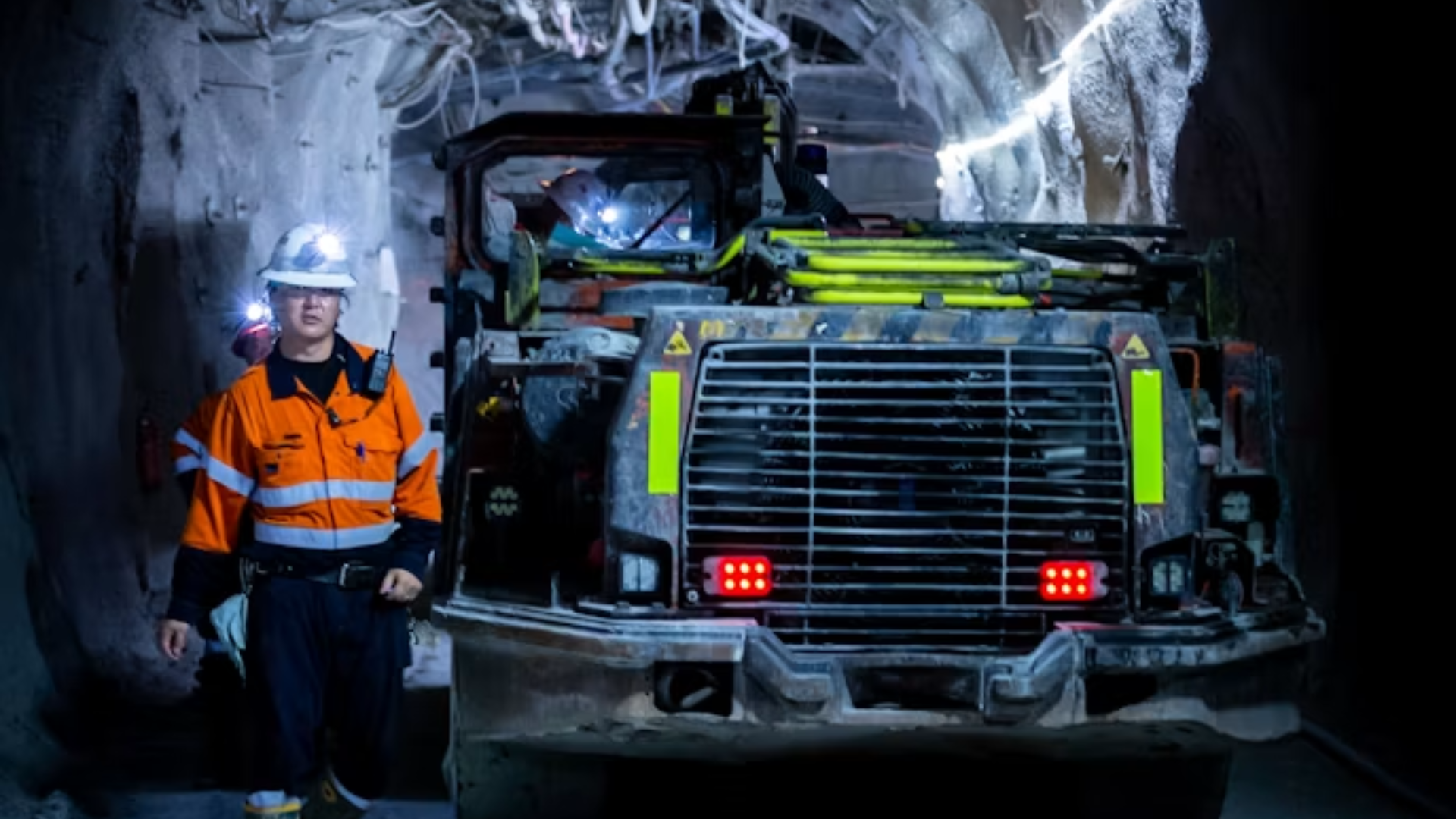
B26's high-grade copper-gold feeders persist at depth, and Abitibi Metals is searching for the larger source that may feed the deposit.
- B26 hosts a combined 25.3 million tonnes of resource at 2.1% copper equivalent in Quebec's Selbaie Mining Camp, a stacked volcanogenic massive sulphide (VMS) system.
- The highest-grade copper-gold intercepts strengthen below 800 metres depth, reaching 17.91% copper equivalent over 6.3 metres.
- Recent drilling has more than doubled the grade modelled at the western down-plunge and extended mineralisation to a depth of 150 metres below the previous limit.
- A magnetotelluric survey and downhole geophysics are targeting a deeper, larger source that may feed the known deposit.
- A fully funded 80,000-metre drill programme carries the scale test to a Preliminary Economic Assessment (PEA) and an updated resource targeted for the first quarter of 2027.
The B26 Deposit & Its Geological Setting
Abitibi Metals (CSE: AMQ | OTCQB: AMQFF | FSE: FW0) controls B26, a polymetallic volcanogenic massive sulphide (VMS) system in the Selbaie Mining Camp of northwestern Quebec. The deposit is a stacked, kilometre-scale copper-gold-zinc body, and its resource is divided into three zones: a copper feeder, a zinc horizon, and a remobilised silver-zinc zone. The nearby Selbaie Mine, a former producer in the same camp, sets the scale to which a system of this type has already grown in the district.
The company describes the geology as a VMS system that leaves pockets of the deposit unusually gold-rich. Whether that gold sits with the copper or comes from a separate, offset source changes both how much metal the system could hold and where the next holes should point.
President and Chief Executive Officer of Abitibi Metals, Jon Deluce, frames the deposit's central geological question this way:
"We see pockets of the deposit that are very gold-rich. Does that truly run with the copper, or could there be an offset source of the gold?"
The answer sets the terms for what the current drill programme is trying to establish about the deposit's eventual size. Until the copper-gold relationship is resolved, the defined resource stands as a floor rather than a measure of the whole system.
The 2026 Resource & Grade Distribution
The January 2026 resource estimate defines 25.3 million tonnes at 2.1% copper equivalent, calculated on a base-case deck of US$2,500 per ounce of gold and US$4.50 per pound of copper. It splits into 12.96 million tonnes in the indicated category at 2.08% copper equivalent, grading 1.19% copper, 1.16% zinc, 0.44 grammes per tonne gold, and 30.8 grammes per tonne silver, and 12.34 million tonnes in the inferred category at 2.20% copper equivalent, grading 1.60% copper, 0.16% zinc, 0.68 grammes per tonne gold, and 8.1 grammes per tonne silver. The copper equivalent reflects metallurgical recoveries of 98.3% copper, 96.1% zinc, 90.0% gold, and 72.1% silver, so the copper equivalent already accounts for the metal expected to report to concentrate, while the individual grades are reported in situ and undiluted.
Grade holds across the cut-off range rather than depending on a single threshold. Lowering the cut-off by 20% expands the resource to 15.73 million tonnes indicated at 1.88% copper equivalent and 14.50 million tonnes inferred at 2.01% copper equivalent, while raising it by 20% concentrates the resource to 10.80 million tonnes at 2.27% copper equivalent and 10.09 million tonnes at 2.44% copper equivalent. Within the estimate, the copper feeder carries the highest grade, with 9.29 million tonnes indicated at 1.60% copper and 11.82 million tonnes inferred at 1.67% copper. The underground cut-off is set at an in-situ value of US$100 per tonne, equivalent to 1.03% copper, 3.50% zinc, 1.38 grammes per tonne of gold, or 143.9 grammes per tonne of silver after recoveries, so grade is assessed on the combined in-situ value rather than on any single metal.
The defined resource holds roughly 775 million pounds of copper, 471,000 ounces of gold, 16 million ounces of silver, and 376 million pounds of zinc. Since the 2023 option, contained copper has grown 40%, contained gold 22%, contained silver 21%, and contained zinc 9%, broadening the metal base the deposit carries. That base is the reference point against which the deeper and step-out drilling is measured.
High-Grade Intercepts by Depth
Grade does not weaken as the deposit is followed downward. In the upper 400 metres, drilling has returned 2.26% copper equivalent over 89.5 metres, including 1.84% copper and 0.48 grammes per tonne gold, a broad but moderate-grade interval. Between 400 and 800 metres depth, the intercepts narrow but the grade climbs, with results of 7.83% copper equivalent over 5.9 metres, 7.72% over 7.8 metres, 6.32% over 4.5 metres, 5.32% over 8 metres, and 4.15% over 7 metres.
Below 800 metres depth, the strongest grades in the deposit appear. The best intercept returned 17.91% copper equivalent over 6.3 metres, carrying 13.48% copper and 5.15 grammes per tonne gold, and a separate hole returned 5.23% copper equivalent over 8 metres at 4.00% copper. Results from November were characterised as world-class, with a high gold credit. Grade strengthening at the base of the drilled system, rather than tapering, has guided the search for a larger source at depth. With continuity and high tonnes per vertical metre through the body, grade held at depth adds volume rather than isolated high-grade hits.
Resource-Improvement & Step-Out Drilling
Recent drilling has both raised the grade assigned to known ground by the model and pushed the deposit beyond its prior limits. A hole tracing the western down-plunge returned 1.48% copper equivalent over 46.7 metres, including 4.04% copper equivalent over 14 metres, more than doubling the 1.5% grade the 2026 block model had assigned to that area. That is, a grade added within the existing resource envelope, where conversion, rather than discovery, drives the gain.
The second result came from stepping out. An April hole intersected 2.71% copper equivalent over 7 metres within a broader interval of 1.8% copper equivalent over 15 metres, at a 150-metre step-out at depth, in ground below the modelled deposit.
Deluce is precise on what the step-out delivered:
"In April, we again delivered on our expansional goal, which intercepted 2.71% over 7 metres within 1.8% over 15 metres, once again having a notable gold credit. That was a 150-metre step-out at depth, and a significant step-out."
Extending the deposit at that distance, while also upgrading its grade, widens both the tonnage and the grade available for the next resource estimate. The two results push the resource in opposite directions at once, upward in grade and outward in extent. The company frames the programme as delivering on both objectives together, with down-dip extensions in new ground alongside grade improvement within the known resource.
Open Extensions & the Search for a Deeper Source
B26 remains open laterally and at depth, and its limits are not yet defined. The zinc-silver lens has been traced significantly farther west than historical drilling indicated, suggesting additional parallel lenses remain to be found. A new principal geologist joined within the last month, assigned full-time to the geological model and to the open questions on both the copper-gold and zinc-silver mineralisation, including those producers themselves raise about the project. Reading the system as a multi-commodity precious-metal deposit, rather than a copper deposit with by-products, changes how much of the metal inventory the model can credit.
The central question is whether a larger, more massive source of copper feeds the lenses drilled so far. A magnetotelluric (MT) survey is running over the deposit to map deep feeding structures, and downhole geophysics on every extensional hole is searching for off-hole conductors that surface surveys could not detect. The company points to Foran Mining's McIlvenna Bay, where drilling well outside the deposit intersected an offset zone at depth with no footprint above 750 metres vertical, as evidence that such systems can extend over large distances.
Deluce puts the search for a deeper source plainly:
"Is there a more massive source of the copper mineralisation in line with those results? It's something we continue to look for, and we are completing a magnetotelluric survey over the deposit to look at some of the deep feeding structures of the system."
Confirming a deeper source through geophysics before drilling it out is what would distinguish a defined 25.3 million-tonne deposit from a materially larger one. It is also the difference between converting the current resource and demonstrating a new one. The west extension of the zinc-silver lens points in the same direction, widening the volume that the next drill campaign must test.
Funding, Programme & Path to the 2027 PEA
The programme to test the deposit's scale is funded. Abitibi holds a treasury of about C$44 million to C$45 million, funded through to 2028, and is drilling a fully funded programme of up to 80,000 metres across 2026 and 2027. The company is turning 3 rigs as the Phase 4 programme runs, with scope to scale to 4 or 5 rigs if they become available, and a first regional exploration programme is targeted for the winter.
Management is targeting resource growth from 25.3 million tonnes toward 40 to 45 million tonnes. A Preliminary Economic Assessment (PEA) and an updated resource estimate are both targeted for the first quarter of 2027, drawing on the current drilling together with Stage 2 metallurgical and geotechnical testing. The assessment turns the drilling and the metallurgical work into the first economic read on the deposit, ahead of the feasibility and construction stage-gates. The agreement with SOQUEM then sets a C$6 million payment on completion of a feasibility study, or within 3 years of closing, and a further C$6 million on a construction decision, or within 5 years.
The constraints are specific. The 12.34 million tonnes in the inferred category are not reserves and have not been demonstrated to be economically viable. An industry-wide rig shortage could slow the move from 3 to 5 rigs, and the metallurgical and geotechnical results that feed the assessment are still pending. Missing the feasibility milestone would add 1% to SOQUEM's net smelter return (NSR) royalty and hand it a 12% project interest, while missing the construction milestone would add a further 0.5% and a 6% interest.
The Investment Thesis for Abitibi Metals
- Abitibi Metals controls 100% of a 25.3 million tonne polymetallic volcanogenic massive sulphide deposit grading 2.1% copper equivalent in Quebec's Selbaie Mining Camp.
- Because grade strengthens with depth rather than tapering, tonnes added at depth arrive with grade attached rather than diluting the deposit, which is the mechanism behind the search for a larger source below the known lenses.
- The paired grade upgrade in known ground and the 150-metre-deeper extension feed the next resource estimate from both directions at once, higher grade and new tonnes, which is what the 40 to 45 million-tonne target rests on.
- A magnetotelluric survey and downhole geophysics are being used to test whether a larger, deeper copper source feeds the lenses drilled to date.
- A treasury of about C$44 million to C$45 million fully funds an 80,000-metre drill programme and the studies through to 2028 without a dilutive raise.
- Management is targeting resource growth toward 40 to 45 million tonnes ahead of a Preliminary Economic Assessment and an updated resource in the first quarter of 2027.
The investment case rests on the scale that the current resource does not yet capture. The defined 25.3 million tonnes is grade-continuous and anchored by a high-grade copper feeder; the deepest drilling has returned the strongest grades, and the geophysics now underway is designed to establish whether a larger source sits beneath the known lenses. Execution risk lies in the share of the resource still in the inferred category and in the pending metallurgical and geotechnical work, but the value lever is the gap between a 25.3 million-tonne deposit and the 40 to 45 million-tonne system the drilling is targeting.
TL;DR
B26 is a 25.3 million-tonne copper-gold VMS deposit in Quebec whose highest grades appear at its greatest drilled depths. Recent holes have more than doubled the grade modelled at the western down-plunge and extended the deposit 150 metres deeper, while an MT survey and downhole geophysics search for a larger source feeding the known lenses. A treasury of about C$44 million to C$45 million fully funds an 80,000-metre drill programme and a PEA targeted for the first quarter of 2027. The central question is not whether B26 is economic at 25.3 million tonnes, but how much larger the system becomes as the deeper source is tested.
FAQs (AI-Generated)
Analyst's Notes





Subscribe to Our Channel




.jpg)




Stay Informed






















