




Flagship Minerals Establishes 2.1M Ounce Foothold in Chile’s Maricunga Gold Belt


%20(1).webp)
Flagship Minerals doubles Isidora gold to 2.1M oz without drilling. $6/oz acquisition targets 125-150k oz/yr at sub-$1,500 AISC. Trading $40/oz vs $200 peer avg.
- Flagship Minerals announced a maiden mineral resource estimate (MRE) of 2.1 million ounces at the Isidora Gold project in Chile's Maricunga gold belt (115.2 million tons at 0.56 g/t), effectively doubling the project's ounces without drilling
- The project was acquired for US$12.6 million, representing approximately $6 per ounce at the current resource level, with 80% of consideration deferred until 2030
- Flagship targets 125,000-150,000 ounces per year production over 10+ years, with the first 5-6 years utilising heap leach processing before transitioning to sulfide treatment
- Expected all-in sustaining costs below $1,500/oz, benchmarked against Rio2's Fenix project ($1,237 AISC), positioning Isidora in the bottom third of the global cost curve
- Currently trading at approximately $40/oz on an enterprise value basis versus peer group average of $200/oz, with the updated NI 43-101 resource removing significant investment risk
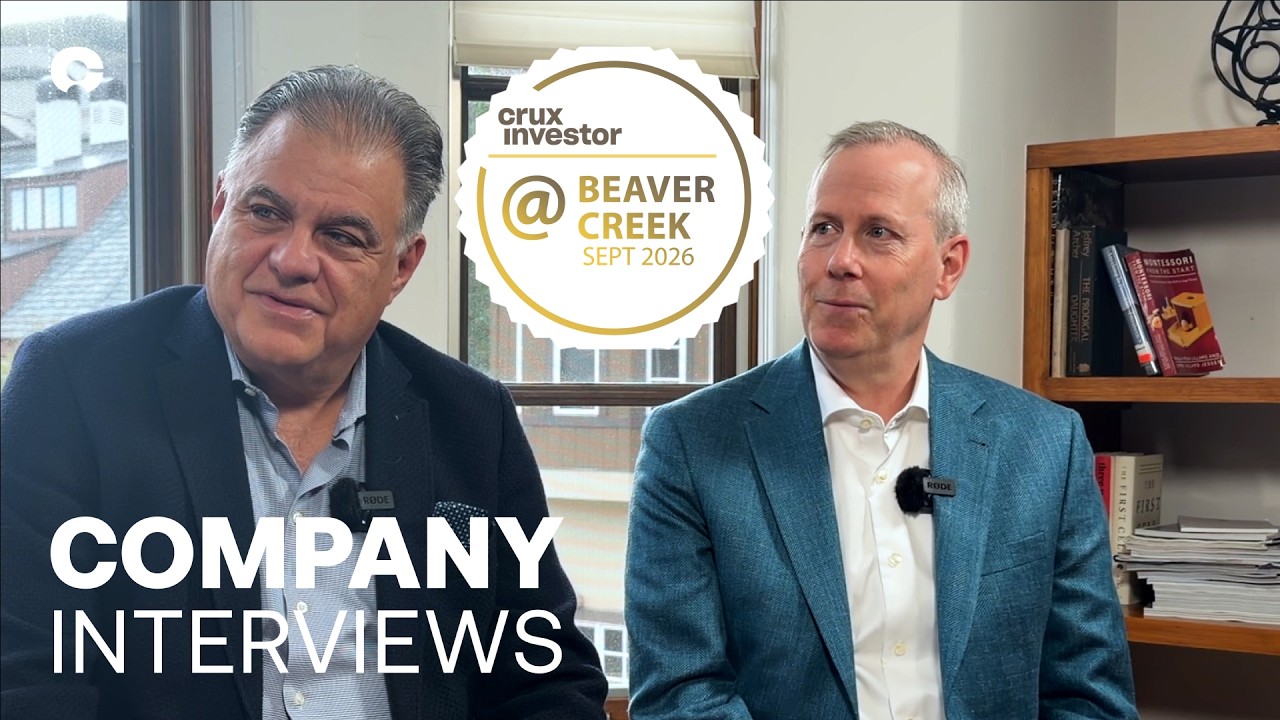
Paul Lock, Managing Director of Flagship Minerals, recently detailed the company's updated mineral resource estimate for the Isidora Gold project, a surface gold porphyry deposit in Chile's prolific Maricunga gold belt. The announcement of 2.1 million ounces represents a significant milestone for the junior mining company, achieved through resource remodelling rather than exploration drilling. The interview provides insight into Flagship's strategic approach to developing a low-cost, bulk tonnage gold operation in one of South America's most established mining districts.
Doubling Resources Through Economic Remodeling
The updated MRE reports 115.2 million tons grading 0.56 grams per ton for 2.1 million ounces of gold. This represents a doubling from the 2010 NI 43-101 resource of just over one million ounces that came with the project when Flagship acquired it in April 2025. Lock explained that the resource expansion was achieved without new drilling by optimising the cutoff grade and pit shell parameters to reflect current economic conditions.
"When we picked it up, the resource was cut on a 0.3 cutoff and in a gold price environment of about just over $1,000. So 16 years later, we're in a much healthier gold price environment. We could drop the cutoff grade down to 0.16 in the oxide zones, and that allows us to bring more ounces in."
The resource was calculated using a gold price of approximately $3,650 per ounce, which Lock described as conservative in the current market environment. The pit-constrained resource comprises oxide, mixed, and sulfide zones, with approximately 80% classified in measured and indicated categories based on historical drilling.
Strategic Location in the Maricunga Gold Belt
Isidora sits in the center of the Maricunga gold belt, a 40-kilometer-wide by 150-kilometer-long district hosting over 65 million ounces of gold resources. Nearby projects include Tiernan’s Volcan, Kinross’s Maricunga-related assets, and Kinross’s Lobo Marte, among other major deposits in the district.
This concentration of resources in an established mining district provides several advantages, including proven geology, existing infrastructure corridors, established relationships with communities and regulators, and benchmarks for technical and economic assumptions. The proximity to producing and advanced-stage projects also validates the district's mining potential and reduces exploration risk.
Target Production Economics
Flagship's development strategy targets a 10+ year operation producing six-figure ounces annually. The first five to six years would utilise heap leach processing for oxide and mixed material, with transition to sulfide processing thereafter. Using a 75% recovery assumption for the current resource, Lock outlined production scenarios of approximately 125,000 ounces over 12 years or 150,000 ounces over 10 years.
The heap leach approach significantly reduces initial capital requirements compared to conventional milling operations. Lock referenced Rio2's Fenix project, which commenced production in early 2026, as the key benchmark. Fenix achieved first gold with capital expenditure of approximately $120 million and NI 43-101 all-in sustaining costs of $1,237 per ounce.
"If you're looking at an AISC below $1,500 in this gold price environment, that's a good start. And you want to keep that capex quite low at the front end so you get a bit of cash flow building up for when you need to bring in a larger plant and equipment."
Flagship expects slightly higher capital costs than Fenix due to the inclusion of crushing equipment earlier in the mine life, whereas Fenix operates as a dump leach facility. However, the economics remain compelling given current gold prices and the project's low operating cost profile.
Interview with Paul Lock, Managing Director, Flagship Minerals
Acquisition Terms and Value Proposition
Flagship acquired Isidora for US$12.6 million, with approximately 80% of consideration deferred until 2030. At the updated resource of 2.1 million ounces, this represents an acquisition cost of approximately $6 per ounce. The project came with extensive historical data from previous operators Anglo American, Kinross, and junior explorer Orosur, who conducted drilling programs through 2012.
The acquisition occurred during a relatively quiet period for gold markets, and Lock acknowledged favourable timing and relationship factors contributed to securing the asset. The 2010 NI 43-101 resource provided a foundation for due diligence, while substantial post-2010 drilling data offered clear potential for resource expansion through remodelling.
From a risk perspective, the updated NI 43-101 resource removes significant uncertainty for investors. Australian regulations require heightened disclosure around "qualifying foreign estimates" that haven't been updated to current standards, creating investment hesitation. The new resource eliminates this concern and provides a current basis for engineering studies and economic evaluation.
Path to Feasibility
Flagship commenced baseline environmental studies in December 2025 and is advancing preliminary mine scheduling work based on the updated pit shell. The company expects to complete infill drilling and deliver an updated MRE around November-December 2026, incorporating additional ounces from under-drilled areas within the current pit shell and near-mine extension targets.
Lock indicated the feasibility study could follow quickly after the updated resource, potentially in December 2026 or January 2027, though he acknowledged this timeline might be optimistic. The strategy prioritises efficient capital deployment, focusing drilling on "easy answers" - infill holes in data gaps within the pit shell that can add ounces with minimal expenditure.
"It's all about dilution, or if you need to dilute, diluting at the right price and time. In the current resource there are holes in the data where we just need to drill in that. We would look to increase the oxide and mixed zones with a bit of extensional drilling later."
Solving the Water Challenge
Water supply represents a critical challenge for Maricunga belt projects. Rio2's Fenix operation trucks water approximately 160 kilometers from near Copiapo at sea level to the mine site at 5,000 meters elevation, yet still achieves bottom-third cost curve performance. Lock indicated Flagship has been conducting water studies and expects to announce a water solution within the coming months, though he did not disclose specific details.
Beyond water, the company must navigate Chilean environmental permitting processes and community engagement. Lock noted that the current Kast government has signalled intent to accelerate approval timelines compared to the previous Boric administration, when Fenix obtained its permits. The company is leveraging Fenix's approval experience to understand potential hurdles and structure its applications appropriately.
Community support plays a crucial role in permitting success in Chile. Flagship has prioritised early engagement with local communities around the project site, recognising that social license to operate influences both approval timelines and long-term project sustainability.
The Investment Thesis for Flagship Minerals
- Valuation Dislocation: Trading at ~$40/oz enterprise value versus peer group average of $200/oz for pre-feasibility projects, offering 5x multiple expansion potential based purely on sector normalisation
- Asset Quality at Entry Cost: Acquired 2.1M oz resource for $6/oz with 80% payment deferred to 2030, providing exceptional cost basis and limited near-term cash burden on capital structure
- District-Scale Validation: Located in proven Maricunga gold belt (65M+ oz district resources) surrounded by major operators (Kinross, Newmont, Tieran), reducing geological risk and validating commercial viability
- Low-Cost Production Profile: Target AISC below $1,500/oz positions project in bottom third of global cost curve; 6+ years heap leach operation requires minimal initial capex (~$120-170M estimated) versus conventional milling
- Resource Expansion Without Dilution: Doubled ounces to 2.1M without drilling; identified additional upside through infill drilling in pit shell gaps and near-mine extensions with minimal capital required
- De-Risking Catalyst Timeline: Updated NI 43-101 removes "foreign estimate" concern; upcoming drilling results (H2 2026), updated MRE (Q4 2026), and feasibility study (late 2026/early 2027) provide multiple re-rating opportunities
- Economies of Scale Focus: 100,000-150,000 oz/year production target over 10+ years provides operational leverage versus high-grade/small tonnage peers that struggle with cost performance despite grade advantages
Macro Thematic Analysis
The gold sector is experiencing a fundamental revaluation of bulk tonnage, lower-grade deposits as rising gold prices render previously sub-economic resources viable while capital intensity and permitting challenges plague higher-grade underground projects. Isidora exemplifies this shift: a 0.56 g/t surface deposit that languished for over a decade now commands serious attention at $4,600+ gold. Statistical analysis of Australian producers reveals that six of the ten lowest-cost operations are also the lowest-grade projects, demolishing the "grade is king" mythology through economies of scale. As Lock notes,
"When you start heading towards plus 100,000 ounces a year production, you start to get the benefits of economies of scale. Your capex might be larger for a sulfide project, but you're putting more through it and you get the benefits."
Projects like Isidora, positioned in the bottom third of the cost curve with minimal capital requirements and multi-decade potential, represent the sweet spot for investors seeking leverage to sustained elevated gold prices without the execution risk inherent in complex, high-capex developments.
TL;DR: Executive Summary
Flagship Minerals doubled its Isidora gold resource to 2.1 million ounces without drilling, acquired for just $6/oz with deferred payments. The Chilean heap leach project targets 125,000-150,000 oz/year production at sub-$1,500 AISC, positioning it in the bottom third of the global cost curve. Trading at $40/oz enterprise value versus $200/oz peer average, with upcoming drilling and feasibility catalysts in H2 2026, Flagship offers compelling revaluation potential backed by proven district geology and operational benchmarks.
FAQs (AI Generated)
Analyst's Notes





Subscribe to Our Channel

.jpg)


Stay Informed






















