From 75K to 90K Ounces: Integra Resources Charts Path to Production Inflection


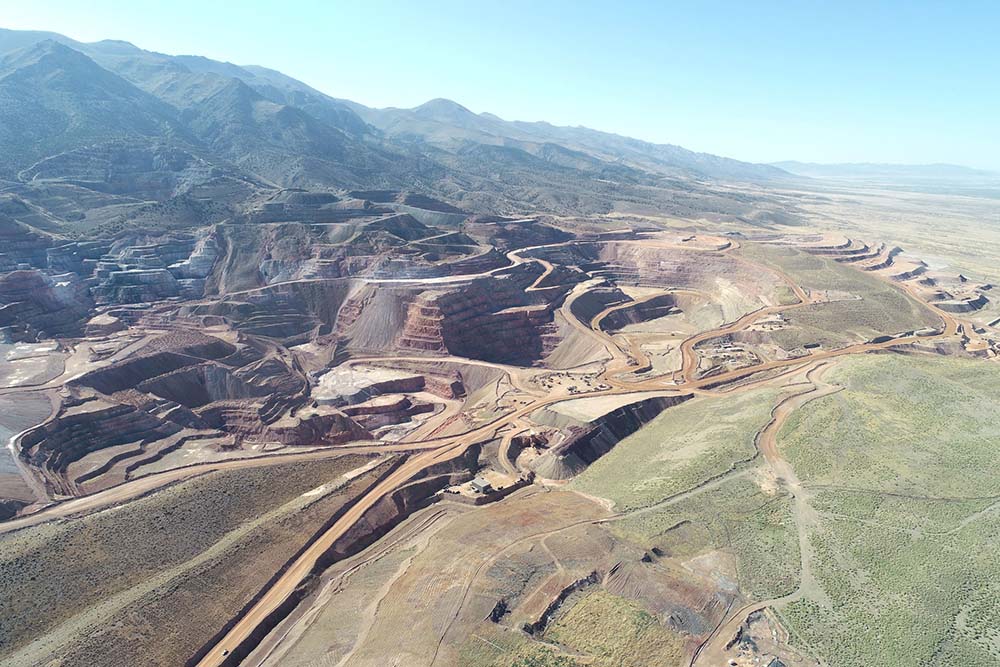
Integra invests $62-68M in 2026 at Florida Canyon for 80-90K oz production in 2027-28. $110M+ cash funds DeLamar early works. Extended mine life, self-funded growth path.
- Integra Resources expects 70-75K oz production in 2026 at planned high AISC ($2,750-$2,950), setting up for 80-90K oz annually in 2027-2028 at lower costs
- $62-68M sustaining capital in 2026 focused on stripping campaigns and fleet renewal to access higher-grade Central Pit ore body
- Feasibility study coming in months will show Florida Canyon mine life extending beyond current 5 years, potentially 7+ years with low-grade stockpiles and exploration success
- $60M equity raise funds early works and long-lead items for DeLamar project; strategic ranch acquisition ($12.5M) secures water rights and mitigation opportunities
- With over $110M in cash; company expects to self-fund DeLamar equity portion from Florida Canyon cash flow, targeting development in 2028 without further major dilution
Integra Resources Corp. (TSXV: ITR) has released its 2026 guidance and three-year production outlook, marking a pivotal year of strategic investment at its Florida Canyon gold mine in Nevada. President and CEO George Salamis outlined the company's bold vision, describing 2026 as a setup year designed to unlock significantly higher production and lower costs in 2027 and 2028. For investors evaluating the company's trajectory, understanding this near-term investment phase is critical to appreciating the medium-term value creation opportunity.
2026 Production Guidance: Building Capacity for Tomorrow
Integra has guided 2026 production at Florida Canyon to approximately 70,000-75,000 ounces of gold, with all-in sustaining costs (AISC) ranging from $2,750 to $2,950 per ounce. While these costs appear elevated compared to industry averages, they reflect a deliberate capital allocation strategy rather than operational inefficiency. The company is executing intensive stripping campaigns to access higher-grade ore zones, particularly in the Central Pit, which represents one of Florida Canyon's largest ore bodies.
Salamis acknowledged that analysts had previously modeled the operation at 70,000-75,000 ounces in perpetuity, making the revised outlook a positive surprise.
"I do believe that this sort of guidance range is two years out to 80 to 90,000 ounces per year in 2027 and another 80 to 90,000 ounces in 2028. That was a surprise."
The market reaction, though early, appeared favourable, with covering analysts recognising the production upside not previously incorporated into their models.
Capital Expenditure Program: Locked-In Investments
The 2026 sustaining capital budget of $62-68 million primarily funds two critical areas: waste stripping and fleet renewal. The stripping component, which constitutes the majority of this expenditure, is designed to expose the Central Pit ore body. According to Salamis, this capital is "locked in" with minimal execution risk because the ore-waste boundaries are well-defined through extensive geological modeling and mine planning inherited from previous operators.
Fleet renewal and reliability-spending comprise the balance of the capital program. The company is implementing both new equipment purchases and strategic rebuilds of existing machinery to ensure operational continuity through the high-production years ahead. Additional minor investments include metallurgical circuit optimisations and smaller-scale mining equipment acquisitions. Salamis emphasised that cost creep is not expected within the $60-70 million range, providing investors with confidence in capital discipline.
Production Profile: The Two-Year Transformation
The dramatic shift in Florida Canyon's production profile from 2026 to 2027-2028 represents the core investment thesis. By completing the current stripping campaigns, Integra will access higher-grade ore with substantially reduced strip ratios in subsequent years. This operational transition should drive three simultaneous improvements: higher gold production (80,000-90,000 ounces annually), lower all-in sustaining costs (as stripping intensity declines), and stronger free cash flow generation.
The revised mine plan, while not substantially different from technical reports filed by Florida Canyon's previous owners, validates the asset's original design assumptions. What has changed is Integra's commitment to executing the capital-intensive preparation phase required to realise the mine's full potential. The company's willingness to invest through a high-cost year demonstrates management's confidence in the underlying geology and long-term economics.
Interview with George Salamis, CEO of Integra Resources
Mine Life Extension and Exploration Success
Contrary to concerns that intensive near-term stripping might indicate a short remaining mine life, Salamis positioned the current program as mine-life extending rather than mine-life consuming. The company currently reports five years of remaining mine life, but an updated feasibility study expected in coming months will materially extend this figure.
Several factors contribute to the mine life expansion. First, extensive drilling programs have successfully defined extensions to existing ore zones. Second, approximately 50 million tons of low-grade stockpiled material around the mine site, previously classified as waste, is likely to be reclassified as ore in the forthcoming feasibility study. "Just that alone adds two years. So we're talking five to seven," Salamis explained. Combined with ongoing exploration success, Integra now expects Florida Canyon to demonstrate mine life "well in excess" of five years, addressing investor concerns about asset longevity.
Strategic DeLamar Ranch Acquisition
In a complementary strategic move, Integra recently acquired a 6,600-acre ranch property for $12.5 million, which sits between the DeLamar deposit and the proposed heap leach operations. While this acquisition does not accelerate the NEPA permitting timeline, it provides three critical benefits that de-risk the DeLamar project.
First, the ranch comes with senior water rights, providing a backup water supply beyond the quantities identified in the DeLamar feasibility study. Given increasing climate volatility, this insurance policy protects against extended drought scenarios that could interrupt operations. As Salamis noted, even one year of lost production would represent $200 million in foregone cash flow, making the $12.5 million investment economically rational from a risk mitigation perspective.
Second, the property offers environmental mitigation opportunities. Wetland disturbances required for DeLamar's development can be offset through habitat restoration and conservation activities on the ranch property, strengthening the environmental case in permitting discussions. Third, the acquisition establishes Integra as a stakeholder within the local ranching community in Owyhee County, Idaho, potentially smoothing community relations and social license to operate.
Capital Allocation Philosophy and the $60 Million Raise
Integra's recent $60 million equity raise, which added 12 new institutional investors to the shareholder base, generated questions about why the company chose external financing rather than fully self-funding from Florida Canyon cash flow. With over $110 million in treasury, the company had adequate liquidity to fund both Florida Canyon's capital program and DeLamar early works.
Salamis defended the decision by emphasising risk management:
"Why would we stress our one producing asset? That asset is going to fund a lot of things for us going forward. Why would we put that asset at risk to that level by putting that much stress on it?"
Following a 300-400% share price appreciation over two years, management viewed equity financing as opportunistic, preferring to preserve financial flexibility at the operating level while tapping strong institutional demand for the stock.
The proceeds will specifically fund DeLamar early works programs, including purchasing long-lead equipment items in preparation for full development in 2028. By segregating growth capital for DeLamar from Florida Canyon's operating cash flow, Integra maintains optionality and reduces execution risk at its producing asset.
Path to Self-Funding and Delamar Development
Looking forward, Integra's financial strategy centers on building treasury cash to fund the equity portion of DeLamar's development without significant additional dilution. The DeLamar project carries a capital requirement of approximately $380 million, with a portion expected to come from project debt financing. Debt discussions are planned for the second half of 2026.
If gold prices remain near current levels, management expects Florida Canyon will generate sufficient free cash flow - particularly during the high-production, low-cost years of 2027-2028 - to cover Integra's equity contribution to DeLamar. "We could effectively get to the finish line without major dilution for the project build," Salamis stated, providing a roadmap for value accretion without substantial share count expansion.
The Investment Thesis for Integra Resources
- Near-term production inflection: 15-20% production growth from 2026 to 2027-2028 (70-75K oz to 80-90K oz annually) with expected AISC reduction as stripping intensity declines
- Extended Florida Canyon mine life: Forthcoming feasibility study will demonstrate 7+ year mine life versus previous 5-year outlook, reducing asset obsolescence risk
- Self-funded growth optionality: $110M+ treasury and projected strong free cash flow generation 2027-2028 positions company to fund DeLamar equity without major dilution
- De-risked DeLamar pathway: Strategic ranch acquisition and early works funding demonstrate systematic approach to permitting and development milestones for $1.8B NPV5 project
- Operational leverage to gold prices: At current gold price levels (~$5,000/oz), even elevated 2026 AISC of $2,750-$2,950 provides substantial operating margins; lower-cost production years ahead amplify this leverage
- Multi-asset portfolio diversification: Three projects (Florida Canyon producing, DeLamar advancing, Nevada North in study phase) provide multiple value creation pathways
- Strong institutional validation: Recent $60M raise added 12 new institutional investors following 300-400% share price appreciation, indicating sophisticated capital confidence
Macro Thematic Analysis
Integra Resources exemplifies a critical investment theme in the gold sector: the transition from single-asset producer to diversified mid-tier developer. With gold prices sustained above $4,000 per ounce - levels described by Salamis as unprecedented for industry conferences - the economic value of development-stage projects has expanded materially.
Companies demonstrating disciplined capital allocation, operational execution, and systematic de-risking of large NPV projects are attracting significant institutional interest. Integra's willingness to invest through a high-cost year while building treasury for DeLamar development positions it within this favorable macro context, particularly as consolidation pressures and resource nationalism drive majors toward North American jurisdictions with established permitting frameworks.
TL;DR: Executive Summary
Integra Resources is executing a deliberate 2026 investment year at Florida Canyon with $62-68M sustaining capital focused on stripping and fleet renewal, positioning for 80-90K oz annual production in 2027-2028 versus 70-75K oz currently. With $110M+ treasury, strategic $60M raise funding DeLamar early works, and ranch acquisition providing water rights and environmental mitigation, the company is building a self-funded pathway to developing its $1.8B NPV DeLamar project without major dilution while extending Florida Canyon mine life beyond seven years.
FAQs (AI Generated)
Analyst's Notes


Subscribe to Our Channel


Stay Informed