




From Earn-In to Operator: How Majority Control Unlocks Execution Speed at B26


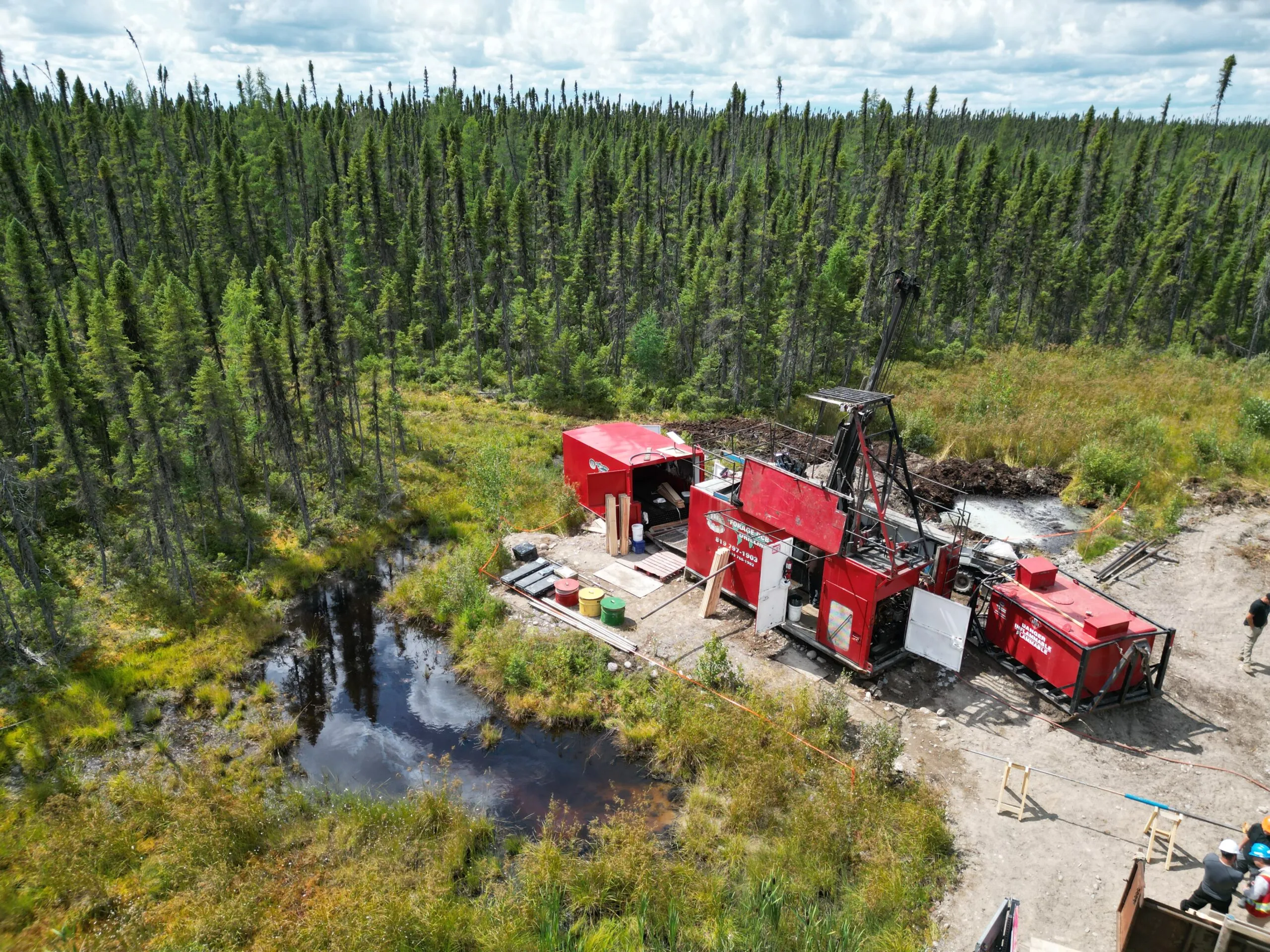
Abitibi Metals secures 80% of Quebec's B26 deposit, gaining operator control to accelerate drilling, resource conversion, and development beyond earn-in limits.
What Has Happened
Abitibi Metals Corp. (CSE: AMQ) completed the second phase of its option agreement with SOQUEM Inc. on March 12, 2026, securing an 80% undivided interest in the B26 Polymetallic Deposit in Quebec. But the ownership figure is not the operative development. What changed is the nature of the company's authority over the project.
Under a staged earn-in, capital deployment and programme sequencing are conditioned on satisfying thresholds in advance, imposing a sequential logic on exploration that is difficult to override regardless of what the geology shows. Operator status, which Abitibi now formally holds as project Manager under the joint venture (JV) framework established with SOQUEM, removes that constraint. The shift from earn-in participant to majority owner is, in practical terms, a shift from conditional execution to continuous execution.
Earn-In Structures Naturally Slow Projects Down
Earn-in agreements are one of the most common mechanisms in junior mining for managing capital and geological risk. Rather than paying full consideration upfront for an unproven asset, an earning party commits to defined expenditures across staged thresholds in exchange for proportional ownership. The practical consequence of this structure is that exploration pace becomes tied to contractual sequencing rather than geological opportunity. The structure serves both parties: the vendor secures continued investment without self-funding, and the earner limits exposure until geological confidence is established. Each stage must be satisfied before the next begins, programme scope is tied to contractual thresholds, and capital allocation occurs within a framework negotiated before the geology was understood at its current level of detail.
The governance dimension compounds this. As a partial-interest holder during earn-in phases, a company's operational authority is real but bounded. Significant decisions may require agreement or confirmation from the other party, adding a layer of coordination to choices that, once majority control is secured, can be made unilaterally. That is not a flaw in the structure. It is the structure. And it is precisely what Abitibi has now exited.
Abitibi completed its earn-in requirements for the 80% threshold, including exploration expenditures and the issuance of 3,793,864 common shares to SOQUEM, ahead of the scheduled timeline. The company received SOQUEM's formal confirmation that all earn-in obligations had been met. What followed was not just a change in ownership percentage. It was an exit from the earn-in framework entirely, and an entry into a different operational mode.
Operator Status Removes Decision Friction
The JV structure formalised through this milestone designates Abitibi as project Manager, with a joint management committee providing oversight. That committee structure, which includes representation from both Abitibi and SOQUEM, governs exploration programmes, technical studies, and project budgets. But the distinction between governance and operations matters here.
As operator, Abitibi now controls drill prioritisation, budget allocation, and programme sequencing without the milestone-gated structure of the earn-in phase. The company does not need to satisfy a contractual threshold before initiating the next stage of work. It can design a programme, fund it, and execute it, subject to JV committee review, in a continuous and parallel fashion.
That operational continuity is not a minor administrative distinction. In practice, the difference between stop-start exploration, where programmes are designed around staged ownership milestones, and continuous execution, where programmes are designed around what the geology requires, is often measured in years of project timeline. Stages that would otherwise be sequential can be run in parallel. Technical workstreams that would otherwise wait for resource confirmation can begin alongside resource-building drilling.
President and Chief Executive Officer of Abitibi Metals, Jon Deluce, framed the transition in terms of forward momentum. The emphasis on acceleration, rather than merely on scale, is the operative signal:
"By achieving the early exercise of our option and securing 80% ownership of the B26 Project, we have strengthened our position as majority owner and enhanced our ability to accelerate exploration and development."
The 40,000m Programme: Capital Deployed Without Constraint
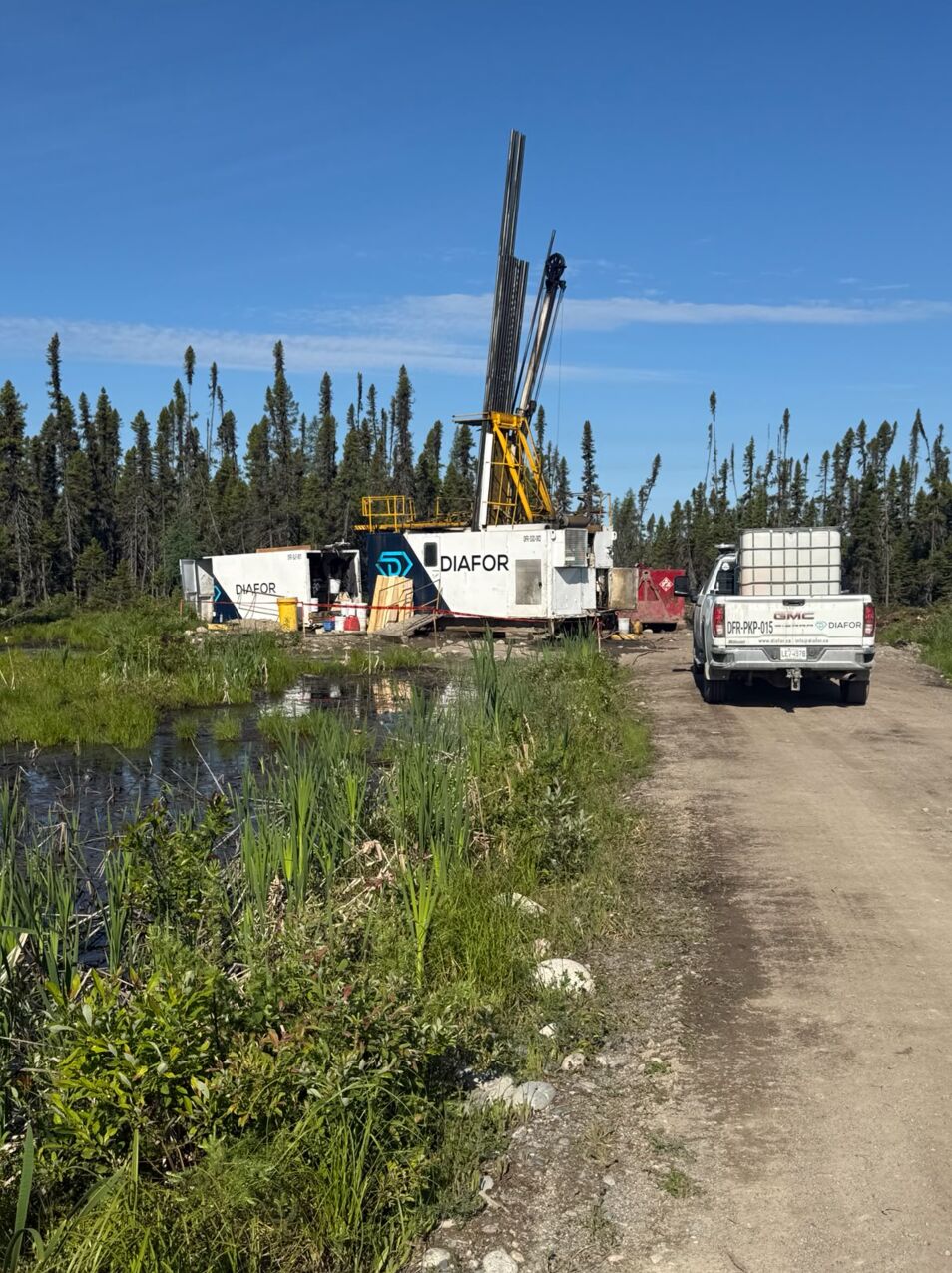
The 40,000 metre drill programme currently underway is the largest in Abitibi’s history, but its significance lies less in scale than in what it represents. It has been designed, funded, and initiated as an expression of operator control rather than as a response to earn-in requirements. With that control, the company is no longer sequencing work around contractual thresholds, but around what the geology and development pathway demand.
The programme runs three workstreams in parallel: resource expansion at the B26 deposit, infill drilling to upgrade Inferred material to Indicated, and a regional exploration campaign targeting 5 to 6 high-priority targets identified through VTEM and Gravilog surveys. This concurrent approach would be difficult under an earn-in structure, where capital allocation and programme scope are tied to staged milestones. As an operator, Abitibi can deploy capital across all fronts simultaneously, aligning exploration, resource conversion, and district-scale targeting within a single programme.
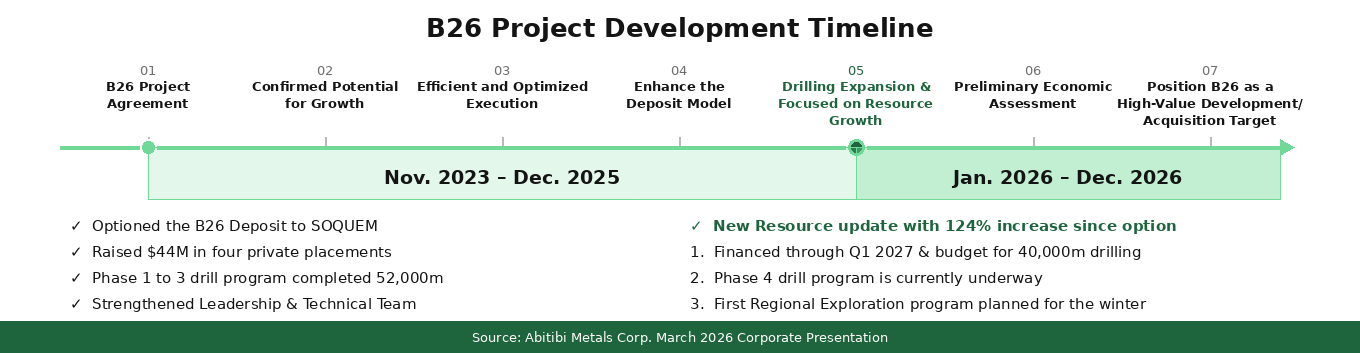
Fully funded through the first quarter of 2027, the programme also removes a common source of delay in junior exploration: mid-programme funding gaps. Continuous drilling supports a steady flow of results, faster resource updates, and earlier initiation of engineering studies. At the same time, metallurgical, geotechnical, and hydrogeological work is advancing alongside drilling, reflecting a shift toward parallel technical development. The result is not just more drilling, but a structure designed to compress timelines across the project’s next stages.
The SOQUEM JV: Supportive, Not Restrictive
SOQUEM retains a 20% participating interest in B26 under the JV, a meaningful economic stake but not a control position. SOQUEM’s contribution is less about control and more about institutional strength. As a subsidiary of Investissement Québec, it brings established regulatory relationships, deep regional experience, and alignment with provincial development objectives. Its additional 5% equity stake in Abitibi further reinforces that alignment, positioning SOQUEM as a supportive partner rather than a procedural constraint on decision-making.
Deluce was direct about the value SOQUEM brings to the partnership:
"Their technical expertise and long-standing presence in Quebec laid an important foundation for the work being carried out today. The complementary strengths between SOQUEM and Abitibi's Tier One technical team create a strong partnership with the potential to unlock the broader opportunity at B26 and across the surrounding region."
In Quebec's permitting environment, where Indigenous consultation, community engagement, and environmental baseline work are critical to timelines, SOQUEM's institutional presence functions as a structural de-risking asset. The combination of a state-backed regional partner and an operationally focused majority owner creates a JV dynamic oriented toward advancement rather than friction.
Timeline Compression: Why Control Is the Value Driver
The progression from mineral resource estimate (MRE) to Preliminary Economic Assessment (PEA) to Feasibility Study (FS) is shaped not just by geology, but by how quickly a company can move through each stage. That pace depends on capital, technical capacity, and operational authority, three factors that are directly strengthened by majority control.
Capital follows control. An 80% ownership position with operator status presents a clearer, more investable structure to financing counterparties than a project still governed by staged earn-in obligations. At the same time, technical workstreams can advance in parallel rather than sequentially. Environmental baseline studies, metallurgical testing, hydrogeological work, and mine optimisation can all proceed alongside drilling, rather than waiting on ownership milestones to be met.
The company’s development roadmap, from internal scoping to PEA and ultimately feasibility, remains standard in form, but not necessarily in pace. Operator control removes the conditional pauses that typically separate these stages, enabling a more continuous progression. In the junior mining sector, projects that advance quickly under a clear operational structure, supported by funding and a stable JV partner, tend to attract a different calibre of institutional attention than those still working through earn-in phases.
From 'Earning In' to 'Building Forward': A Strategy Shift
Between November 2023 and December 2025, Abitibi's operational posture at B26 was defined by proof. The company was proving that the deposit could grow, that the geological model was extendable, and that the earn-in investment was justified by what the drilling was finding. Completing 52,000 metres across three phases and delivering a 124% increase in the MRE in less than three years served that purpose. The earn-in logic was satisfied.
The strategic posture from March 2026 onward is different in kind, not just in degree. The question is no longer whether B26 merits the investment. The question is how efficiently that investment can now be converted into study-grade outputs: a PEA with credible economics, a resource with sufficient Indicated confidence to support engineering assumptions, and a technical package that positions the deposit for development or acquisition interest.
Abitibi has moved from a company earning the right to develop B26 to a company that holds the authority to develop it. How that authority is deployed, and at what pace, is what the remainder of 2026 will begin to demonstrate.
What to Watch Next
The most immediate observable is the pace and continuity of drill results from the 40,000 metre Phase 4 programme. The frequency and continuity of results, particularly from the regional exploration component, will indicate whether the programme is running without interruption and whether regional targets carry standalone discovery potential. As infill drilling progresses, the resource conversion ratio will also shift: a faster move in the proportion of Indicated to Inferred tonnes signals study-grade resource quality being built, not just total tonnage. The mandate and timeline for a PEA is the single most important near-term study milestone, and any announcements of programme modifications, additional rig commitments, or budget revisions from the joint management committee will signal whether the programme target is tracking on schedule.
Beyond drilling, two parallel workstreams will confirm whether technical and regulatory advancement are genuinely running concurrently. Completion of environmental baseline studies and progress on Indigenous consultation protocols are prerequisites for permitting, and early progress reported alongside drill results would validate the parallel execution model the company has outlined. The supporting NI 43-101 technical report for the February 5, 2026, MRE update is due on SEDAR+ within 45 days of that announcement, providing qualified-person validation of the resource methodology underpinning the current deposit scale.
Analyst's Notes





Subscribe to Our Channel





Stay Informed






















