




From Fault Lines to High-Grade: How Structural Targeting Is Reshaping Hycroft's Exploration Playbook


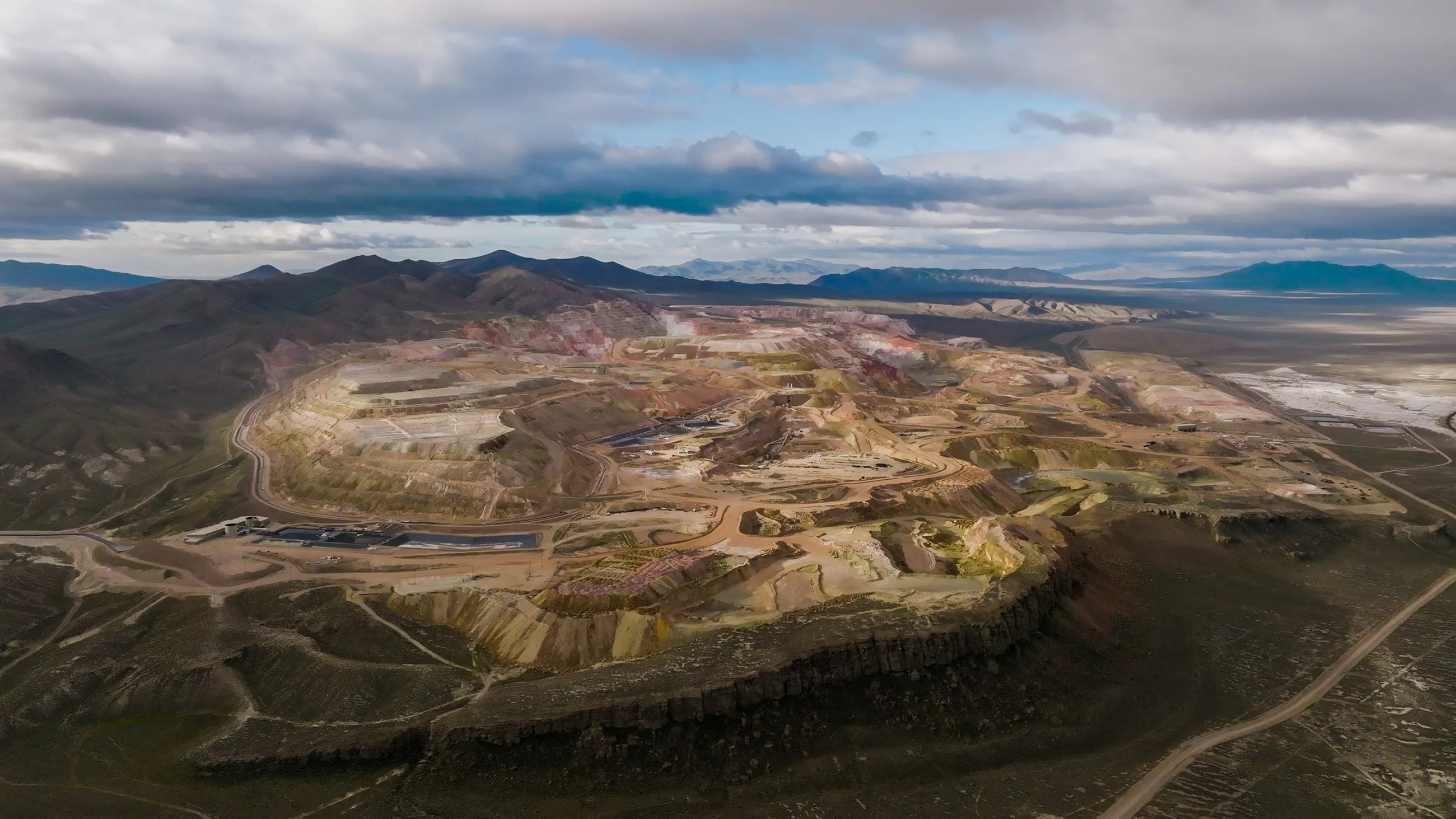
Hycroft’s Vortex drill results validate a fault-controlled model, improving targeting precision and supporting district-scale high-grade discovery potential.
- Hycroft Mining has released new drill results at the Vortex target, with the headline intercept returning 53.37 meters at 304.14 grams per tonne (g/t) silver and 1.33 g/t gold, including a high-grade subinterval of 0.88 meters at 2,890.00 g/t silver and 33.70 g/t gold.
- The result validates a fault-controlled structural model built over two years of systematic core logging, with the latest hole designed to test the intersection of the Break and Albert Faults.
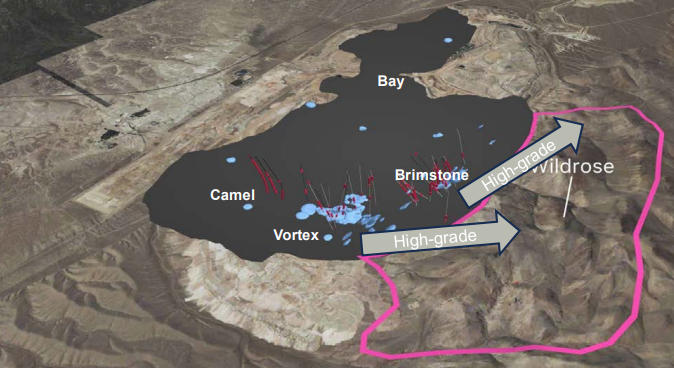
- At Brimstone, drilling has returned good grades 150 meters below the last known drilling, with the team targeting a geophysical anomaly interpreted as a potential high-grade feeder system.
- Hycroft is applying its structural targeting methodology across a 64,000-acre land package, with management reporting correlations that suggest high-grade mineralisation extends beyond the two known targets.
- Near-term milestones include expanding the drill program from three to five rigs, an updated mineral resource estimate, and a preliminary economic assessment (PEA) incorporating updated metallurgical recoveries for the pressure oxidation (POX) process.
What Has Happened
Hycroft Mining Holding Corporation (Nasdaq: HYMC) has released additional results from its 2025 to 2026 exploration drill program at the Hycroft Mine in northern Nevada, with the headline intercept at the Vortex target returning 53.37 meters at 304.14 grams per tonne (g/t) silver and 1.33 g/t gold, including a high-grade subinterval of 0.88 meters at 2,890.00 g/t silver and 33.70 g/t gold.
The result is notable not simply for its grade but for what it confirms structurally. The latest drill hole was specifically designed to test the intersection of two named fault systems, the Break Fault and the Albert Fault, an approach that uses fault intersection geometry as the primary drill targeting tool rather than broad mineralised envelopes.
Validating the Structural Model
The most important signal in this drill release is not the grade, though the grade is exceptional. It is the methodology that produced it. The latest drill hole was not a step-out designed to chase known mineralisation along strike. It was a deliberate test of a structural prediction, drilled to confirm that the team's three-dimensional (3D) interpretation of the fault architecture was guiding the drill bit to the right places.
President and Chief Executive Officer of Hycroft Mining, Diane Garrett, underscores why that confirmation mattered before the company committed further capital to the program:
"Because we're drilling in unknown territory and we know what controls the mineralisation structurally, we needed to make sure that our structural model, the way we were interpreting it, and the way we were forecasting where those structures are going, was indeed accurate. And so we drilled a couple of holes to confirm that, and they hit a very good grade, and we're still within those structural control areas."
The structural model now guides drill targeting across both Vortex and Brimstone, with the program scaling from three to five rigs as confidence in the model increases.
Fault Controls & Fluid Pathways: The Architecture of High-Grade Mineralisation
At Brimstone, drilling has begun to reveal a system defined by discrete, well-defined veins stacked along fault planes, with crosscutting structures creating the intersections where mineralising fluids concentrate. This geometry, rather than a broad disseminated envelope, is what the team is now systematically following across both targets, as fault-controlled vein intersections are where the highest grades have been confirmed.
Garrett explains how the fault architecture is directly guiding where the drill bits are pointed:
"What we see in Brimstone is a series of stacked veins. They're very well-defined veins, and we know that they're controlled by these faults, and then we have crosscutting faults. We're following these faults and these crosscutting fault structures where they intercept, because that's where the fluids follow the path of least resistance. So when you've got these faults and these openings, that's where those fluids are coming up through, and they're depositing those heavy metals along that area."
At Vortex, the latest drill hole opened ground at depth and along strike that had not previously been tested, though it did not reach its full target depth after encountering a previously unknown structure. Follow-up drilling in this area has been planned.
From Discovery to District: Applying the Playbook Across the Land Package
The structural targeting methodology being refined at Vortex and Brimstone is not staying confined to those two targets. Hycroft is now applying the same framework across a land package exceeding 64,000 acres, of which less than 10% has been explored to date, according to the Hycroft Mining Corp. Company Presentation, First Quarter 2026.
Garrett describes what that process is already revealing across the broader property:
"We are taking everything that we have learned about these high-grade systems, and we are applying it to other areas in our land package, and we're seeing some very interesting correlations there. And so we do believe that the high-grade is not confined to just Vortex and Brimstone, but that we will see it in other areas of the property. So we're looking at this as really a district setting."
That framing carries weight given what Hycroft already holds. The project hosts one of the world's largest precious metals deposits, with a 2026 resource update reflecting a roughly 55% increase in measured and indicated contained gold ounces and a 56% increase in measured and indicated contained silver ounces compared to 2023. With 696 million ounces of contained silver across measured, indicated, and inferred categories, the project has already secured inclusion in the SILV and Solactive Global Silver Indices. The team is targeting high-grade mineralisation across additional areas of the land package, with management reporting structural correlations consistent with those observed at Vortex and Brimstone.
What to Watch Next
Expansion of the drill program. Two additional core rigs are arriving in the coming months, scaling the program from three to five rigs across Vortex and Brimstone.
Deep drilling results at Brimstone. The team has already returned good grades 150 meters below the last known drilling at Brimstone, targeting a geophysical anomaly interpreted as a large magmatic source sitting deep in the system. Further results will test whether it represents a high-grade feeder system to the intercepts already defined.
Updated mineral resource estimate. An updated mineral resource has been flagged as a near-term catalyst. The update will reflect drilling completed across Vortex and Brimstone during the 2025 to 2026 program.
PEA release and updated project economics. The preliminary economic assessment (PEA) will incorporate updated metallurgical recoveries for the pressure oxidation (POX) process and evaluate a potential heap leach restart, providing the first formal economic parameters for the project.
District-scale targets. Applying the structural model across the broader 64,000-acre land package has identified additional targets. Drilling beyond Vortex and Brimstone will test whether the high-grade system continues at a district scale.
FAQs (AI-generated)
The results validate a fault-controlled structural model, showing that high-grade mineralisation can be targeted systematically rather than discovered randomly, improving exploration confidence.
Structural geology helps identify where mineralised fluids concentrate, particularly at fault intersections, making exploration more predictable and reducing geological risk.
Not on its own. The key is that the intercept confirms a repeatable targeting method, which is more valuable than a single high-grade result.
It means the same structural model could apply across Hycroft’s 64,000-acre land package, suggesting high-grade mineralisation may extend beyond known targets like Vortex and Brimstone.
Key catalysts to monitor include the expansion to five drill rigs, deep drilling results at Brimstone, an updated mineral resource estimate, and the upcoming PEA, which will define project economics.
Analyst's Notes





Subscribe to Our Channel






Stay Informed






















