




Global Jet Fuel Demand Offsets Record US Supply, Supporting Refinery Margins Despite Oil Price Pullback



Record US jet fuel output has not lowered prices as global demand absorbs supply, supporting refinery margins while airlines face higher fuel costs.
- Brent crude fell $1.14 (1.2%) to $93.11 per barrel and WTI declined $1.30 (1.4%) to $90.00 on June 9, after both benchmarks surged about 5% in the previous session.
- US jet fuel production averaged more than a record 2 million barrels per day through May 1, according to the EIA, helping lift inventories to 45 million barrels by May 29, about 7% above the five-year average.
- Exports to Europe and Asia are absorbing a large share of US jet fuel output, limiting inventory growth and keeping jet fuel prices above levels domestic supply alone would suggest.
- Airlines face higher fuel costs when jet fuel prices remain elevated, regardless of moves in crude oil, with US Gulf Coast jet fuel averaged $3.91 per gallon from March through May.
- Rising inventories above the current 45 million barrels or weaker export demand would pressure refinery margins, while consecutive inventory draws would support jet fuel prices and refinery profitability.
Refined Fuel Markets Remain Tight Despite Oil Price Pullback
Brent crude fell 1.2% to $93.11 per barrel and US West Texas Intermediate declined 1.4% to $90.00 on June 9 after diplomatic efforts reduced concerns about near-term Middle East supply disruptions. The decline followed a roughly 5% rally in both benchmarks during the previous session.
Jet fuel prices remained high even as crude oil prices fell. US Gulf Coast jet fuel averaged $3.91 per gallon between March and May, even as benchmark crude prices fluctuated. This means refinery margins and airline fuel costs depend on jet fuel supply and demand, not crude prices alone. Higher refinery output does not guarantee lower fuel prices if export demand absorbs much of the additional supply.
Record US Production Is Being Absorbed by Overseas Demand
US jet fuel production averaged more than a record 2 million barrels per day through May 1, according to the EIA. Higher production helped lift inventories to about 45 million barrels by May 29, roughly 7% above the five-year average.
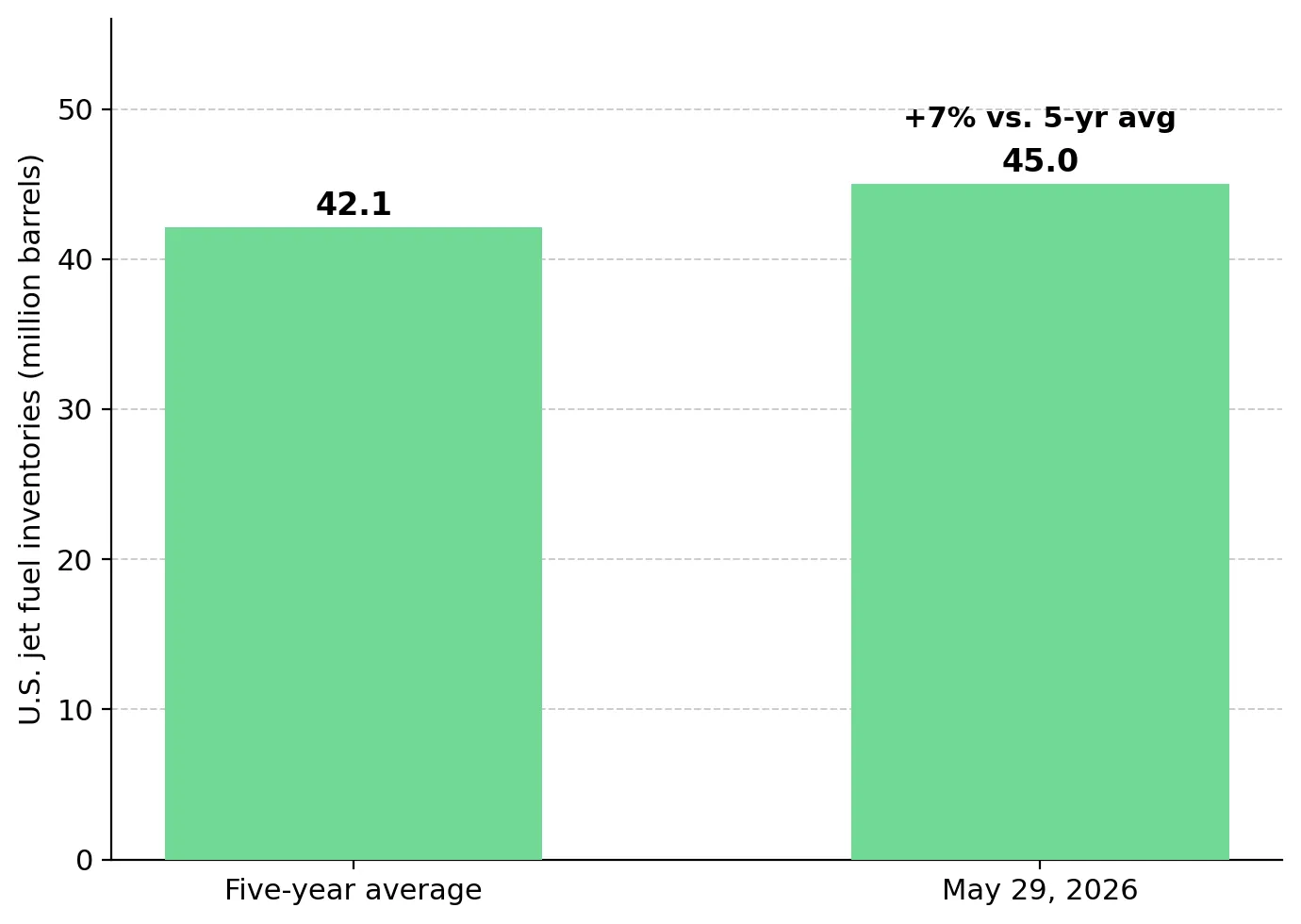
Record US production has not pushed jet fuel prices lower. EIA data show that buyers in Europe and Asia continue importing US refined products, absorbing much of the additional supply. Higher overseas demand increased imports from the United States, limiting inventory growth and helping keep jet fuel prices high despite record production.
Refinery profits depend on refined-product margins, not crude prices alone. Refiners can maintain profits even when Brent crude falls if jet fuel prices remain high. Airlines face margin pressure when jet fuel prices stay high, regardless of moves in crude oil.
Refiners Benefit While Airlines Face Margin Pressure
Lower crude prices do not immediately reduce airline fuel costs. An Air Canada spokesperson told Reuters on June 8 that the airline relies on a "very strong balance sheet" built to withstand fuel-price volatility, indicating that higher fuel costs can affect earnings for several quarters. Fuel contracts, hedging programs and route planning can delay the benefit of lower crude prices.
EIA's Weekly Petroleum Status Report should be monitored for changes in jet fuel inventories and exports, which indicate whether the current 45 million-barrel inventory surplus is growing or declining.
Refined fuel prices affect airlines, transport companies and refiners more directly than crude oil prices. Airlines, logistics operators and transport companies face lower profit margins when fuel costs rise faster than ticket prices or freight rates. Refiners can increase profits when fuel prices stay high relative to crude oil costs.
Balance-Sheet Strength Matters More Than Oil Price Forecasts
Companies with lower debt, stronger liquidity and diversified revenue can absorb higher fuel costs for longer. Reuters reported that Canada offered up to C$150 million in repayable airline support, while US officials rejected industry-wide assistance.
Refinery margins can remain strong if export demand continues absorbing growth in US jet fuel inventories. The current 45 million-barrel inventory surplus has not pushed jet fuel prices lower because overseas buyers continue absorbing US supply.
Inventory & Export Trends Will Determine the Next Move
Refinery margins would come under pressure if export demand weakens or jet fuel prices fall. Brent crude below $90 per barrel would not by itself weaken refinery profits.
The EIA's Weekly Petroleum Status Report provides the key data for tracking jet fuel supply trends. Jet fuel production should be monitored relative to the recent 2 million barrel-per-day benchmark, inventories relative to 45 million barrels, and export volumes. Rising inventories and weaker exports would increase the risk of lower jet fuel prices and weaker refinery margins.
Analyst's Notes





Subscribe to Our Channel

.png)






Stay Informed


