




Red Sea Attacks Lift Oil Near $100 Despite Steady Shipping, Raising Diesel Costs for Open-Pit Miners


Red Sea attacks lifted Brent near $100, raising diesel costs for open-pit gold miners as oil price risks and fuel exposure drive AISC higher.
- Brent settled above $100 a barrel on July 23, its first close since May, before falling 3.96% to $96.70 the next day while remaining up nearly 10% for the week.
- Jefferies estimates every 10% increase in crude prices adds about $10 an ounce to open-pit gold AISC, a threshold Brent's weekly gain nearly reached.
- Orla Mining says a $10-a-barrel increase in oil adds about $2.50 an ounce to its 2026 AISC, with diesel accounting for 4% of operating costs.
- Open-pit exposure also varies by producer, ranging from 100% at G Mining Ventures to 85% at Endeavour Mining and 52% to 66% at Barrick Gold.
- Hormuz transits held at three vessels a day for three days while Bab el-Mandeb crossings rose to 32 from 26, suggesting shipping flows remained resilient despite the attacks.
Red Sea Attacks & Kazakh Supply Disruptions Lift Oil Prices, Raising Fuel Cost Risks for Open-Pit Mining
Brent settled above $100 a barrel on July 23, its first close since May, before falling 3.96% to $96.70 on July 24. WTI fell $3.15, or 3.42%, to $89.04 but remained up nearly 8% for the week. The gains followed Houthi claims of strikes on two Saudi tankers in the Red Sea alongside a 13th consecutive day of US strikes on Iran.
The Caspian Pipeline Consortium then suspended loadings at its Black Sea terminal, disrupting about 80% of Kazakhstan's oil exports, while Kazakhstan confirmed production cuts after suspected drone strikes. Together, the supply disruptions increased the risk of higher diesel costs for open-pit miners, where fuel is a significant operating expense.
A 10% Oil Price Increase Adds About $10/oz to Open-Pit AISC, Defining the Cost Threshold
Shipping data does not support a full blockade, limiting the risk of a prolonged oil supply shock. UBS analyst Giovanni Staunovo said vessel traffic continues through the affected waterways, indicating shipping flows remain intact. Unless shipping volumes decline, diesel cost pressure on open-pit miners is likely to remain contained. Jefferies estimates every 10% increase in crude prices adds about $10 an ounce to open-pit gold AISC, a threshold Brent's 9.7% weekly gain nearly reached.
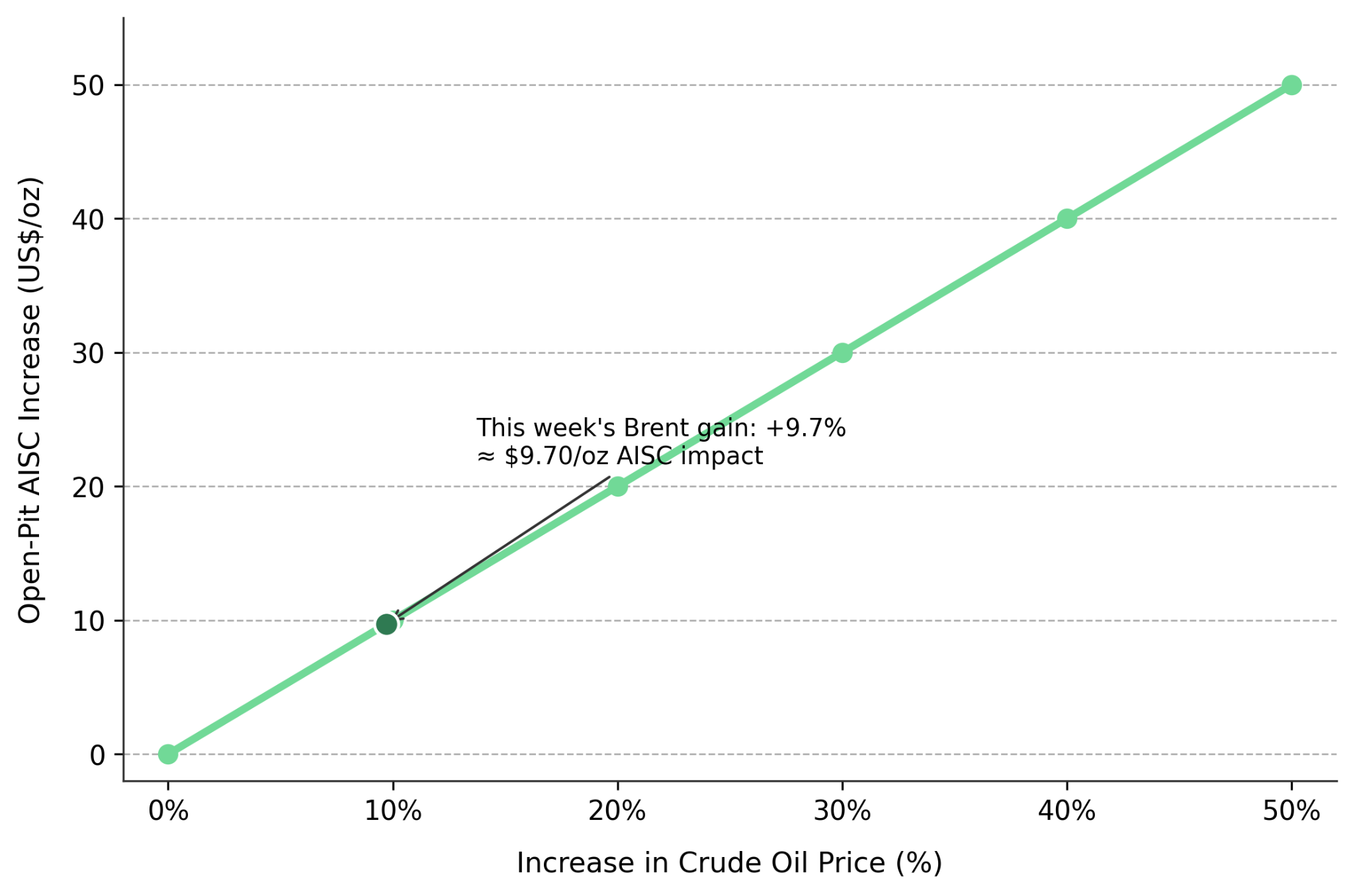
The impact varies by producer because G Mining Ventures is 100% open-pit, compared with 85% for Endeavour Mining and 52% to 66% for Barrick Gold. In J.P. Morgan's base case, supply disruptions last three months, lifting Brent's monthly average toward $114 and pushing open-pit AISC above the $10-an-ounce threshold. In the bear case, stable shipping activity pulls Brent back toward the high-$80s and keeps the AISC increase near $10 an ounce.
Fuel Hedging Reduces Diesel Cost Pressure While Mine Type Drives Exposure
Orla Mining says a $10-a-barrel increase in oil prices adds about $2.50 an ounce to its 2026 all-in sustaining cost, with diesel accounting for 4% of operating costs. Freeport-McMoRan also said higher diesel and sulfuric acid prices increased its 2026 cost estimates above its January baseline.
Fuel hedging can reduce that exposure, with B2Gold and Kinross locking in fuel prices 12 to 18 months ahead until those hedges expire. Underground and higher-grade mines are less exposed because they consume less diesel than open-pit haulage operations. Whether Brent's rally continues depends on developments around the Hormuz and Bab el-Mandeb shipping routes. As a result, margin risk varies by producer based on fuel hedging and open-pit exposure rather than a uniform increase in oil prices.
Hormuz & Bab el-Mandeb Traffic Holds Steady, Limiting Blockade Risk
Hormuz transits were held at three vessels a day for three days, with additional ships continuing to enter the Gulf. Bab el-Mandeb transits rose to 32 on July 23 from 26 the previous day. Neither route shows the traffic collapse expected under a full blockade. The Houthis declared a naval blockade on Saudi Arabia, targeting the pipeline route Riyadh uses to bypass the Strait of Hormuz.
Iran has urged the Houthis to close Bab el-Mandeb if US strikes continue, while President Trump has threatened further military action after additional Red Sea attacks, supporting the geopolitical risk premium in oil prices.
$96.70 Brent Keeps Diesel Costs Elevated Unless Shipping Volumes Decline
Brent above $96.70 and WTI above $89.04, the levels each held at 0946 GMT on July 24, 2026, keep the week's near-10% gain, and the roughly $10-an-ounce AISC hit Jefferies' sensitivity implies, intact. While both benchmarks hold above those marks, diesel-cost pressure stays priced into open-pit guidance.
A sustained drop in Hormuz or Bab el-Mandeb vessel counts below the three-a-day and 26-a-day floors logged this week would signal the blockade risk is not holding, pressuring Brent toward the high-$80s where WTI already trades and narrowing the diesel line in AISC guidance.
The next confirmation points are twofold: the EIA's Weekly Petroleum Status Report, published each Wednesday, and the round of second-quarter AISC updates producers file through August, where any diesel-cost revision shows whether this week's move was absorbed or is compounding.
Analyst's Notes





Subscribe to Our Channel
.png)




Stay Informed


