Why IsoEnergy Is Prioritising Discipline Over Speed Across Its Uranium Portfolio


Margin calls and stagflation restrict capital access. Gold developers are prioritising domestic processing to insulate project margins and protect core returns.
- IsoEnergy is prioritising disciplined project sequencing over rapid mine restarts to reduce execution risk and maximise long-term project value.
- Tony M remains the company's near-term production focus, with updated technical studies and a preliminary economic assessment (PEA) targeted in 2026 before any restart decision.
- A diversified portfolio across Canada, the US and Australia allows IsoEnergy to allocate capital across multiple projects rather than relying on a single asset.
- Management believes the long-term uranium supply deficit, not AI-driven electricity demand, remains the core investment thesis for the sector.
- The company's 2025 Sustainability Report highlights governance, environmental management and stakeholder engagement as supporting long-term project execution across its portfolio.
IsoEnergy Is Prioritising Discipline Over Speed
The uranium sector has spent the past 2 years discovering that stronger long-term market fundamentals do not automatically translate into successful mine restarts. While long-term uranium prices remain supportive and demand forecasts continue to strengthen, several restart projects have struggled to meet operational expectations, increasing investor scrutiny around execution risk.
Against that backdrop, IsoEnergy (TSX: ISO; NYSE American: ISOU) is positioning itself differently. The company's recently released 2025 Sustainability Report, continued integration of the Toro Energy acquisition, and management’s latest comments on capital allocation all point to the same strategy: build a diversified uranium business by sequencing projects according to technical readiness rather than pursuing production at the earliest opportunity. The distinction matters because successful project execution ultimately determines whether favourable uranium market conditions translate into long-term shareholder value.
Why IsoEnergy Is Taking a Different Approach to Mine Restarts
Improving uranium market fundamentals have encouraged many developers to accelerate production plans, but recent industry experience suggests speed alone does not guarantee successful execution. Several restart projects across the sector have encountered operational challenges, contributing to weaker investor confidence in near-term production stories.
Chief Executive Officer of IsoEnergy, Phil Williams, reflected on why many uranium mine restarts have struggled in recent years:
"I think where we run into problems in our sector is that asset quality can be quite low, and we've seen it time and time again now over the last two or three years restarts have pretty consistently failed to deliver"
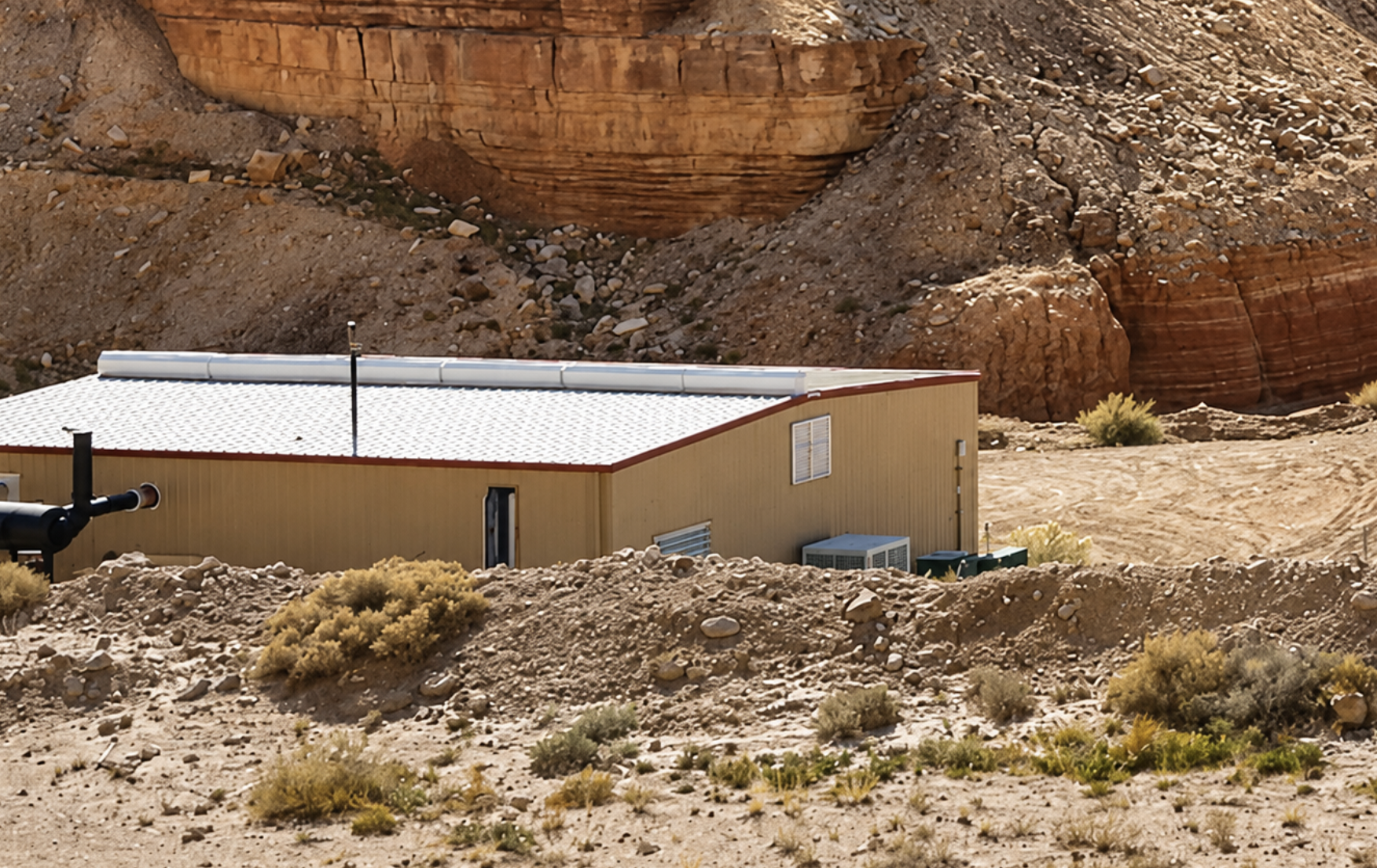
That philosophy underpins IsoEnergy's approach to the Tony M Mine in Utah. Rather than committing immediately to production, the company is completing technical studies intended to improve confidence in the project's economics before making a restart decision. IsoEnergy has completed bulk sampling, advanced beneficiation test work that retained more than 90% of the uranium while removing approximately 75% of the volume, and is targeting a preliminary economic assessment (PEA) during 2026. The company has also completed an enhanced evaporation study designed to reduce permitting timelines and future capital requirements.
Delaying production until updated economics are complete reduces execution risk at a time when several uranium restart projects have underperformed. The strategy prioritises project returns over near-term production growth, reflecting management's view that disciplined execution can create more value than accelerating a restart simply because market conditions appear favourable.
Diversification Has Become a Risk Management Strategy
IsoEnergy's approach extends beyond individual projects. The company has deliberately assembled a portfolio spanning Canada, the US and Australia, allowing capital to be allocated according to project maturity rather than relying on a single development outcome.
The company highlights a diversified resource base comprising 133 million pounds uranium oxide, Measured & Indicated resources, 39 million pounds Inferred resources, plus historical resources across multiple projects. The recently completed Toro Energy acquisition added the Wiluna Uranium Project in Western Australia, expanding the company's medium-term development pipeline. IsoEnergy also reported approximately C$131.5 million in cash and an equity investment portfolio valued at approximately C$40.2 million, providing financial flexibility to advance multiple work programmes simultaneously.
Williams said diversification has been central to the company's strategy from the outset:
"We understood from the very beginning that single-asset, single-jurisdiction companies are far more risky, particularly in the uranium space, and you can be the greatest project in the world; it can be developed for all kinds of reasons they can't foresee and so having a port taking a portfolio approach is the way to insulate yourself and insulate shareholders from being exposed to what could be a binary outcome"
That strategy also shapes capital allocation. Management has outlined a staged development pathway that prioritises Tony M as the potential near-term production asset, Wiluna as a medium-term development project and Hurricane as a longer-term high-grade growth opportunity. Sequencing projects in this way reduces the risk that delays at any single operation materially alter the company's broader development pipeline.

Looking Beyond the AI Narrative
Growing electricity demand from artificial intelligence infrastructure and data centres has increased investor interest in nuclear power, but Williams argues that these themes should not be confused with the uranium market's underlying fundamentals.
Discussing the market, Williams said:
"All of the noise around AI doesn't really impact to me in my mind and the work that we've done on the fundamental thesis. There's a supply deficit exactly how much it is and when it really is. We can debate about that, but the deficit is real, and it's going to come and expand irrespective of how much new power comes on for what AI does and what data centres do"
Using data from the World Nuclear Association's 2025 World Nuclear Fuel Report, which projects reference-case uranium demand of approximately 391 million pounds of uranium oxide by 2040 compared with approximately 179 million pounds of identified supply. The company’s July 2026 corporate presentation identifies a substantial supply gap under the reference scenario, reinforcing management's focus on long-term supply fundamentals rather than short-term thematic drivers. The implication is that project quality, permitting progress and execution remain the primary determinants of long-term value creation, regardless of whether artificial intelligence continues to dominate market headlines.
Responsible Growth Extends Beyond Project Development
IsoEnergy's 2025 Sustainability Report reinforces that management views responsible development as part of project execution rather than a standalone environmental, social and governance (ESG) initiative. Across Canada, the US and Australia, regulatory approvals, community engagement and environmental management all influence permitting timelines and development risk as projects advance toward production.
The report outlines the company's approach to governance, workforce development, environmental stewardship and engagement with Indigenous communities and other stakeholders. These activities support the technical work already underway across the portfolio by helping maintain the regulatory and social foundations required to advance projects through successive development stages.
These disclosures provide additional context for how management intends to execute across multiple jurisdictions. As projects move closer to development decisions, operational discipline increasingly depends not only on engineering and economics, but also on maintaining the relationships and governance frameworks that support long-term project advancement.
What To Watch Next
IsoEnergy's recent disclosures present a consistent strategic framework. Rather than measuring success by how quickly projects reach production, management is sequencing development according to technical readiness, market conditions and capital efficiency while continuing to evaluate acquisition opportunities that strengthen the existing portfolio.
Over the next 12 months, investors are likely to focus on several milestones that will test this strategy. These include completion of the updated economic work supporting a production decision at Tony M, continued drilling and resource expansion at Hurricane, technical advancement of the Wiluna Uranium Project following the Toro acquisition, and the company's ability to deploy its strong balance sheet into value-accretive development or acquisition opportunities.
Whether this disciplined approach ultimately delivers superior shareholder returns will depend on execution rather than uranium prices alone. However, the strategy outlined by management suggests IsoEnergy is positioning itself to benefit from favourable long-term market fundamentals while seeking to reduce the operational and jurisdictional risks that have affected several uranium developers during the current cycle.
FAQs (AI-Generated)
Analyst's Notes





Subscribe to Our Channel












Stay Informed