




Developer Resilience & Margin Protection in a Stagflationary Market


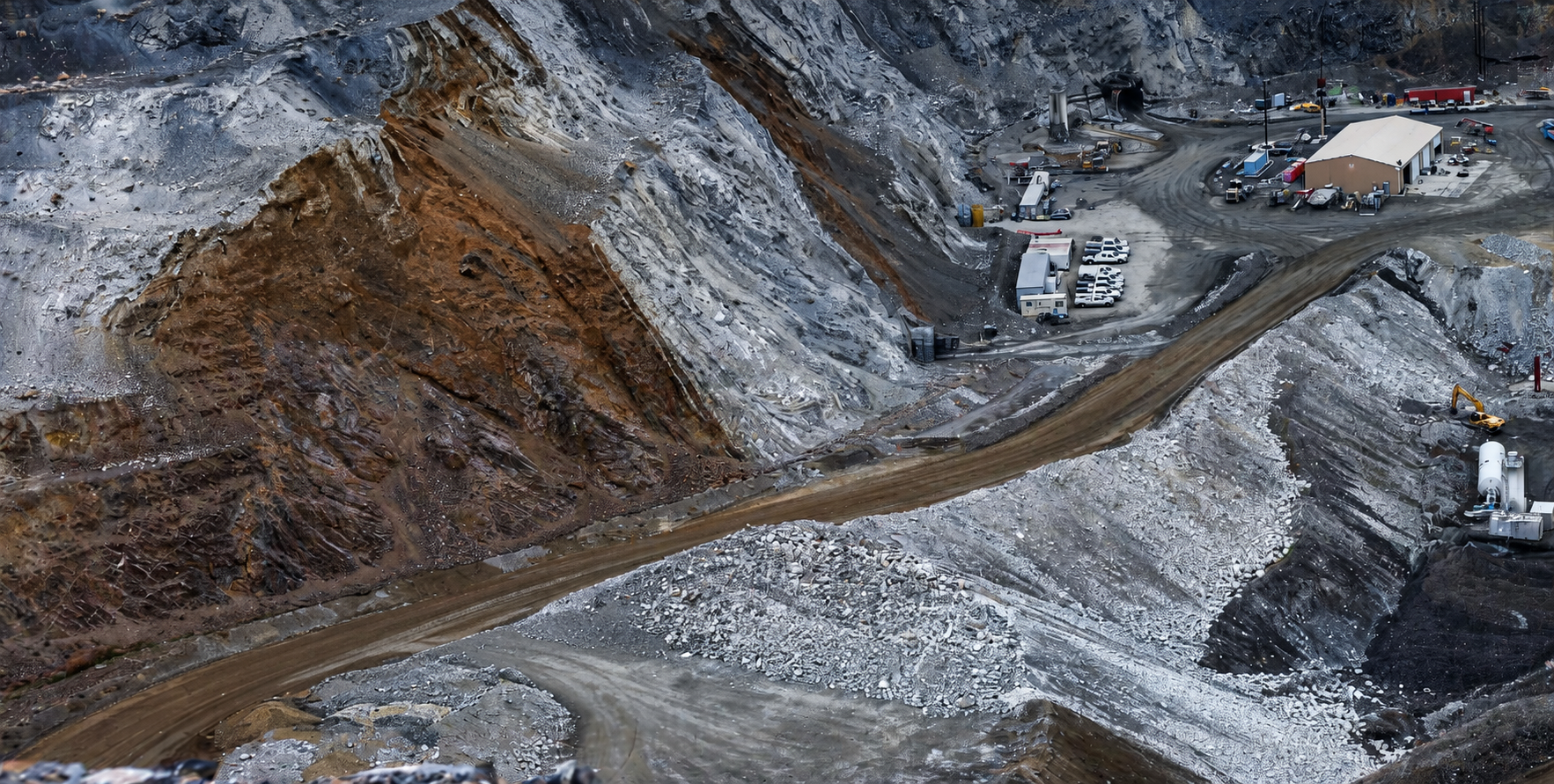
Margin calls and stagflation restrict capital access. Gold developers are prioritising domestic processing to insulate project margins and protect core returns.
- Gold developers are prioritising margin protection over rapid expansion as tighter financing conditions, higher construction costs, and capital constraints reshape project development.
- Owner-operated processing infrastructure is becoming a key strategy because it can improve recovery rates, reduce reliance on third-party toll milling, and strengthen project economics.
- Balance sheet strength and secured funding are increasingly important, with companies using recapitalisations, debt reduction, and structured financing to limit equity dilution.
- Nevada remains a preferred mining jurisdiction due to its regulatory clarity, established infrastructure, and strong investment attractiveness, helping reduce execution risk.
- Permitting and resource conversion remain major hurdles, with lengthy environmental approvals and extensive drilling required before projects can advance to construction.
Liquidity Constraints & the Developer Dilemma
Gold developers are increasingly balancing high commodity prices against tighter financing conditions and elevated construction costs. Against this backdrop, gold's recent decline to US$4,519.69 per ounce illustrates a macroeconomic shift driven by forced institutional liquidation and cross-asset margin calls. This price action reflects liquidity mechanics rather than underlying fundamentals, mirroring the stress events of March 2020 and 2008, when precious metals faced pressure before resuming their upward trajectories. Market data indicating the outflow of more than US$2.9 billion from North American and European gold exchange-traded funds over a single week underscores a market dominated by short-term cash management.
This environment creates structural capital access constraints for the development sector. As institutional liquidity limits access to traditional equity financing, the strategic focus across the industry has shifted from capacity expansion to strict margin preservation and balance sheet protection. Operating cash flow and heavily capitalised treasuries provide the reliable buffers against tighter capital markets, compelling management teams to shelter project economics from volatile pricing dynamics.
The developer dilemma is intensifying because equity dilution carries a higher cost of capital under current market valuations. To survive the consolidation phase, companies must prove their resilience by establishing independent infrastructure and advancing clean balance sheets. Projects that remain entirely dependent on external funding cycles or third-party processing agreements find themselves exposed to market forces they cannot control, accelerating the industry's pivot toward self-funded execution pathways.
Industry Context: Stagflation& Market Pressures
The structural drivers of the current market are rooted in persistent stagflationary conditions across the global economy. Elevated energy prices, highlighted by market data showing Brent crude trading at US$112.57 per barrel, are transmitting persistent inflation into global mining, production, and transportation costs. These input pressures generate sticky consumer inflation even as underlying economic growth weakens, raising the baseline capital expenditure required to bring new mine construction online.
These stagflation conditions constrain Federal Reserve policy flexibility, leaving central banks with a binary trade-off between cutting rates to avoid recession or holding them elevated to fight inflation. This monetary constraint directly impacts the cost of capital, making debt servicing more expensive and narrowing the financing pathways available for greenfield operations. Consequently, the carry advantage of gold is sustained, but the cost of building the infrastructure required to extract it reaches historic highs.
Within this tightened economic framework, operating cash flow, fully funded treasuries, and pre-feasibility-supported economics have become critical buffers against market pressures. Producers operating below an all-in sustaining cost of US$1,300 per ounce retain the capacity to generate robust margins exceeding US$3,200 per ounce, reinforcing the necessity of cost control. For developers, proving economic resilience requires locking down cost inputs and securing capital well before construction decisions are forced onto the balance sheet.
Emerging Practices: Securing Domestic Infrastructure
In response to margin compression, developers are increasingly internalising their processing infrastructure to move away from reliance on third-party toll milling. The strategic value of owner-operated processing facilities lies in the greater operational control they offer over the production timeline and recovery yields. By keeping the processing circuit domestic and internal, companies isolate their operational margins from external tolling contracts that drain profitability from every tonne of ore extracted.
The economic impact of this internalisation practice is transformative for project payability. Owner-operated infrastructure bridges the substantial gap between low toll-milling payability factors, which often range from 55% to 60% for refractory material, and the optimal recovery yields that can reach up to approximately 92% through dedicated pressure oxidation circuits. Capturing that differential internally transforms the net present value of a development asset without requiring additional geological discovery.
To fund these infrastructure builds without triggering significant equity dilution, companies are deploying strategic recapitalisations, eliminating legacy debt, and embracing royalty financings. These structured finance packages shield developer balance sheets from public market volatility, ensuring that capital is available to fund multi-year construction cycles regardless of short-term commodity price fluctuations. The combination of secured capital and owner-operated processing has become an increasingly common approach among developers.
Applying Industry Strategies in a Constrained Capital Market
i-80 Gold Corp (NYSE American: IAUX | TSX: IAU) provides a clear example of how developers are responding to tighter financing conditions by strengthening capital structures while investing in owner-operated infrastructure. Its recapitalisation secured more than US$1.0 billion in total available capital to fund its Nevada development plan, positioning the company to advance construction without relying solely on future equity markets. Central to this strategy is the US$430 million refurbishment of the Lone Tree autoclave, which is expected to increase refractory material payability from 55% to 60% under toll milling to approximately 92% through owner-operated processing. Together, secured funding and internal processing illustrate how developers can protect project economics while improving long-term operational control.
Chief Operating Officer of i-80 Gold Corp, Paul Chawrun, stated:
"We'll have the Lone Tree plant producing gold by the end of 2027 with a bit of a ramp-up in 2028 and in the range of about 150,000, depending on the grade, to maybe 160,000 ounces per year."
Other developers are adopting similar approaches to strengthen resilience, although through different execution pathways. Hycroft Mining Holding Corporation has prioritised balance sheet restructuring and institutional funding to support development of its Nevada asset, while Tudor Gold is pursuing a smaller, higher-grade development strategy to improve capital efficiency. U.S. Gold Corp has reduced permitting risk by advancing its CK Gold project through state-level approvals in Wyoming. Collectively, these examples reinforce the broader industry shift towards disciplined capital allocation, infrastructure control and execution strategies designed to reduce financing risk in a constrained capital market.
Nevada as a Jurisdictional Shield
The regional backdrop plays a crucial role in mitigating the risks associated with infrastructure-heavy development strategies. The 2025 Fraser Institute Annual Survey of Mining Companies found that Nevada ranked as the number 1 jurisdiction globally for mining investment attractiveness. This premier status reflects the market's preference for regions that provide regulatory clarity and geological certainty during periods of intense capital constraint.
Favourable public policy, established supply chains, and existing infrastructure networks in Nevada reduce execution uncertainty for greenfield builds in emerging markets. Developers operating in the state benefit from a highly skilled workforce accustomed to pressure oxidation technology and complex underground mining methods, lowering the operational friction associated with ramping up new processing facilities.
These regional advantages further strengthen i-80 Gold's development strategy by reducing execution risk for its Nevada asset portfolio. Operating in the world's top-ranked mining jurisdiction provides access to established infrastructure, experienced mining and processing expertise, and a predictable regulatory environment, supporting the company's strategy of investing in owner-operated processing capacity at Lone Tree. More broadly, Nevada's combination of regulatory clarity and mature mining infrastructure continues to enhance the investment case for developers advancing construction-ready projects amid capital market uncertainty.
Remaining Challenges: Permitting & Feasibility Friction
Despite the shift toward internal infrastructure and secured funding, the industry faces persistent gaps related to regulatory friction. Even fully funded processing strategies remain strictly bound by the lengthy Environmental Impact Statement processes dictated by federal and state agencies. These comprehensive reviews represent a regulatory bottleneck that cannot be resolved simply by deploying more capital.
Multi-year federal permitting timelines inherently delay cash-flow generation and prolong developer exposure to inflationary capital expenditure risks. Companies advancing large-scale open-pit or underground operations must routinely target 3-year completion timelines for environmental permitting from the effective dates of their technical reports, creating a prolonged transition period where macroeconomic conditions can shift drastically.
Furthermore, the sector faces the geological hurdle of converting inferred resources to the measured and indicated categories required to support bankable feasibility studies. Extensive, high-cost drill programmes are necessary to achieve the resource confidence levels demanded by institutional debt providers, forcing developers to spend heavily on exploration even as they attempt to protect their balance sheets for imminent construction cycles.

Industry Outlook
As financing conditions remain constrained and inflationary pressures persist, many gold developers are placing greater emphasis on funded infrastructure, operational control, and balance sheet discipline. Internal processing capacity and higher recovery rates are increasingly being prioritised as strategies to improve project economics and reduce reliance on third-party processing.
If these conditions continue, investors are likely to place greater weight on a developer's ability to secure funding, advance permitting, and control key processing infrastructure. Recent industry developments suggest companies with well-funded projects and clear execution pathways may be better positioned to progress toward construction despite a more challenging capital market.
FAQs (AI-Generated)
Analyst's Notes





Subscribe to Our Channel




.jpg)




Stay Informed






















