




Gold ETFs Lose US$8.9 Billion as COMEX Buying Climbs, Signaling Rate Bets Still Outweigh Ceasefire Relief


Gold rebounded on ceasefire hopes, but US$8.9B in ETF outflows and Fed rate expectations suggest higher real yields still dominate market direction.
- Spot gold rose 1.6% to $4,071.59 per ounce after ceasefire hopes between Iran and Israel improved risk sentiment.
- Physically backed gold ETFs lost US$8.9 billion in June, reducing global holdings by 74 tonnes to 4,047 tonnes and assets under management by 13% to US$526 billion.
- North American funds accounted for most of the selling, redeeming US$5.5 billion in June and lifting first-half outflows to US$7.7 billion, the region's weakest half-year since 2013.
- COMEX net longs increased 16% month on month to 538 tonnes, the highest month-end level since January, signaling futures traders remained bullish.
- The Fed's July 29-30 policy decision and CME FedWatch's 64% probability of a September rate hike remain the key catalysts for whether gold holds above $4,000 or ETF outflows resume.
Ceasefire Hopes Lift Gold Prices: Rebound or Short Covering?
Spot gold rose 1.6% to $4,071.59 per ounce after Tehran received a proposal for a 10-day ceasefire, while August gold futures gained 1.5% to $4,076.00. The rebound followed ten consecutive nights of US military strikes on Iran.
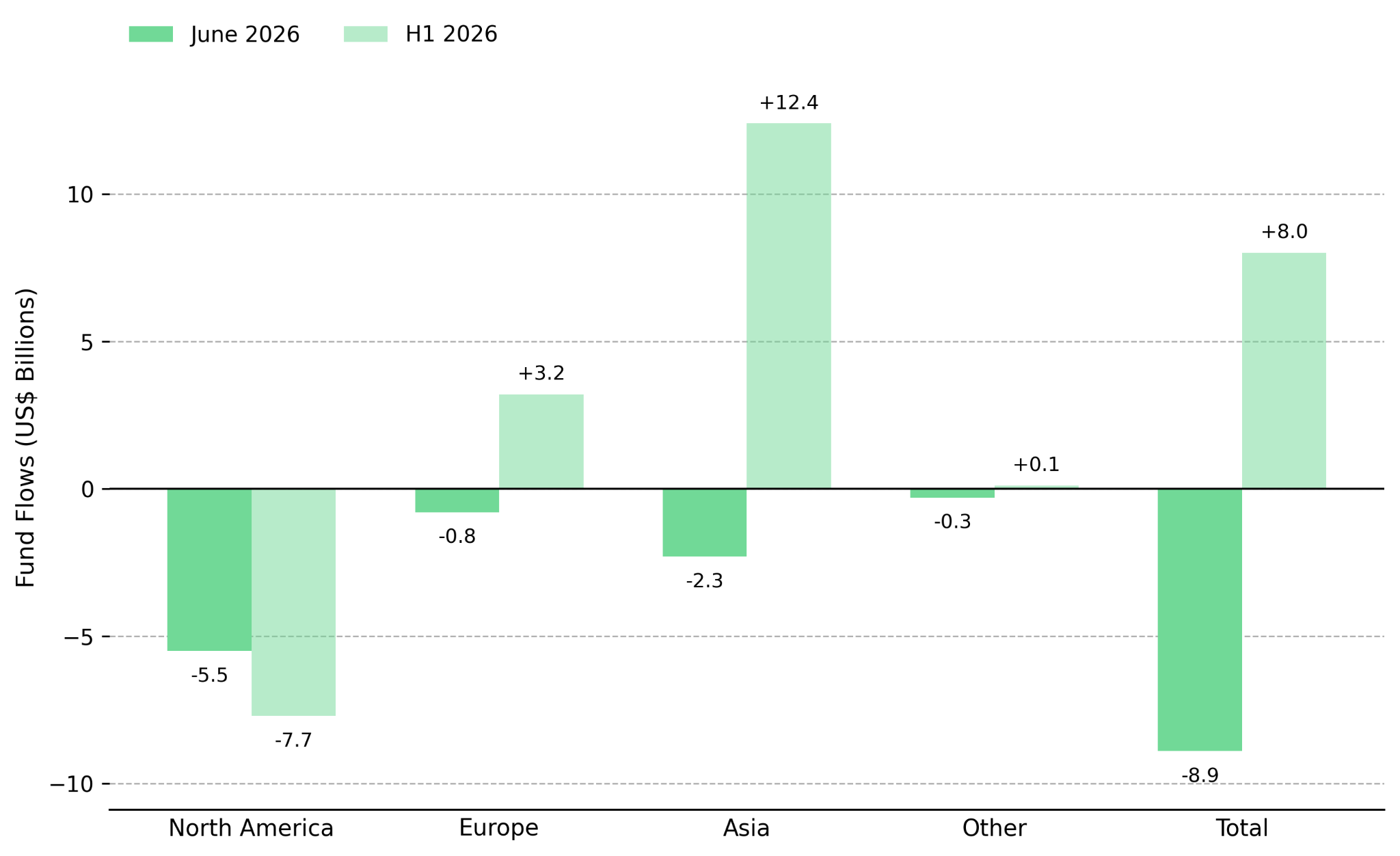
In June, physically backed gold ETFs recorded US$8.9 billion in outflows, reducing global holdings by 74 tonnes to 4,047 tonnes and assets under management by 13% to US$526 billion. The largest monthly redemption of H1 2026 suggests July's rebound may reflect short covering rather than renewed investment demand.
Higher Real Yields Pressure Gold: Why ETF Selling Accelerated
The US military struck Iran for ten consecutive nights, increasing geopolitical risk before ceasefire talks emerged. Brent crude remained nearly 21% higher for the month, highlighting continued inflation risks tied to shipping through the Strait of Hormuz. Fed Chair Warsh's hawkish comments lifted real yields and the US dollar, driving US$5.5 billion of North American gold ETF outflows in June, the region's largest monthly loss.
The European Central Bank reinforced the higher-rate outlook by raising interest rates 25 basis points, its first increase since September 2023, citing inflation risks linked to the US-Iran conflict.
Fed Rate Expectations Split Gold Positioning: Why Futures Buying Outpaced ETF Demand
The US dollar indicates gold's opportunity cost will likely remain elevated despite progress toward a ceasefire. The dollar index eased 0.05% to 100.9 after reaching its highest level since July 15, while markets continued to price at least one Fed rate hike in 2026. "A sustained depreciation of the US dollar looks more like a 2027 story," said Jimmy Jean, chief economist and strategist at Desjardins.
COMEX net longs rose 16% month on month to 538 tonnes in June, the highest month-end level since January, even as nonreportable positions declined and other reportable positions increased 16%. Base case: The Fed holds rates at its July 29-30 meeting while markets maintain a 64% probability of a September rate hike, keeping gold in a $4,000 to $4,100 range through August. Bear case: The ceasefire proposal fails, the dollar index rises above 101, and gold ETF outflows return toward June's US$8.9 billion pace.
Higher Real Yields Reshape Gold Demand: Why India Bought While Others Sold
Higher real yields increased gold's opportunity cost, driving US$5.5 billion of North American gold ETF redemptions in June. Regional flows differed, with Indian gold ETFs adding US$388.5 million as buyers used lower prices to add exposure, while Chinese and Japanese funds recorded net outflows.
Price action suggests support near $4,000. "It looks like gold is trying to find a base somewhere around this ($4,000) level" before attempting to push higher, said Ilya Spivak, head of global macro at Tastylive. The ceasefire proposal and the Fed's September decision remain the key near-term catalysts for whether gold holds above $4,000.
68% Odds of a September Cut: What It Means for Gold and ETF Flows
Spot gold and August futures are trading near $4,072, holding above $4,000 as long as the Fed keeps its current rate expectations intact and the 10-day ceasefire proposal stays in place. A September hike, priced by CME FedWatch at 64%, or a ceasefire collapse would lift real yields, strengthen the dollar, and extend the ETF outflows that pulled $8.9 billion out in June.
Three catalysts will determine which way it breaks: the Fed's July 29-30 decision sets the rate path, CME FedWatch's updated September odds will show if hike bets are building, and the World Gold Council's next Gold ETF Commentary will confirm whether outflows have resumed.
Analyst's Notes





Subscribe to Our Channel

.png)

.png)




Stay Informed






















