




Gold Falls 23% as Dollar Hits 13-Month High, $4,000/oz Floor Now Critical



Gold has fallen 23% since February as higher Fed rate expectations and a 13-month-high US dollar pressure demand, putting the $4,000/oz level in focus.
- Spot gold fell 0.8% to $4,174.50/oz, its lowest level since June 11 and its third consecutive weekly decline.
- A hawkish Fed and a US dollar index at a 13-month high increased the opportunity cost of holding gold, putting pressure on prices.
- Goldman Sachs cut its December 2026 gold target by 9% to $4,900/oz from $5,400/oz, citing weaker near-term price expectations while maintaining upside from current levels.
- Stalled US-Iran talks and large price swings reduced physical gold demand in China and India as buyers delayed purchases until prices stabilized.
- A sustained break below $4,000/oz would signal further downside for gold, while next week's US inflation data could either support a rebound or extend the decline.
Stronger US Dollar & Gold's 23% Decline Since February
Spot gold fell 0.8% to $4,174.50/oz, its lowest level since June 11, while US gold futures dropped 1.2% to $4,192.80. Gold has traded below its 200-day moving average since June 5, signaling a weakening long-term price trend.
Gold has fallen 23% since the US-Israeli conflict with Iran began in late February. The decline suggests a stronger US dollar and higher rate expectations are outweighing safe-haven demand, making macroeconomic factors more important than geopolitical headlines for gold prices.
Warsh's Inflation Focus & Weaker Asian Gold Demand
Physical gold demand weakened across major Asian markets. In China, gold traded at a $4-$8/oz discount to the global benchmark, compared with a $1-$5/oz premium a week earlier, signaling weaker local demand. In India, dealer discounts widened to $54/oz as gold fell to 146,252 rupees per 10 grams and physically backed gold ETFs recorded their first monthly outflow in a year.
Gold faces pressure from Fed policy expectations, with nine of 19 policymakers projecting a 2026 rate hike from the current 3.50%-3.75% range as Chair Kevin Warsh prioritizes inflation control. US-Iran peace talks in Switzerland were cancelled after Vice President JD Vance withdrew from the meeting, but the setback failed to trigger significant safe-haven buying in gold.
Fed Policy Uncertainty & Gold's $4,000-$4,900 Range
Expectations of a quick rebound overlook how prolonged volatility can delay physical gold purchases. Peter Fung, head of dealing at Wing Fung Precious Metals, said the Shanghai gold market remains quiet as investors wait for greater clarity on Middle East developments. Delayed inventory replenishment is likely to slow any recovery in physical demand until buyers regain confidence in price direction.
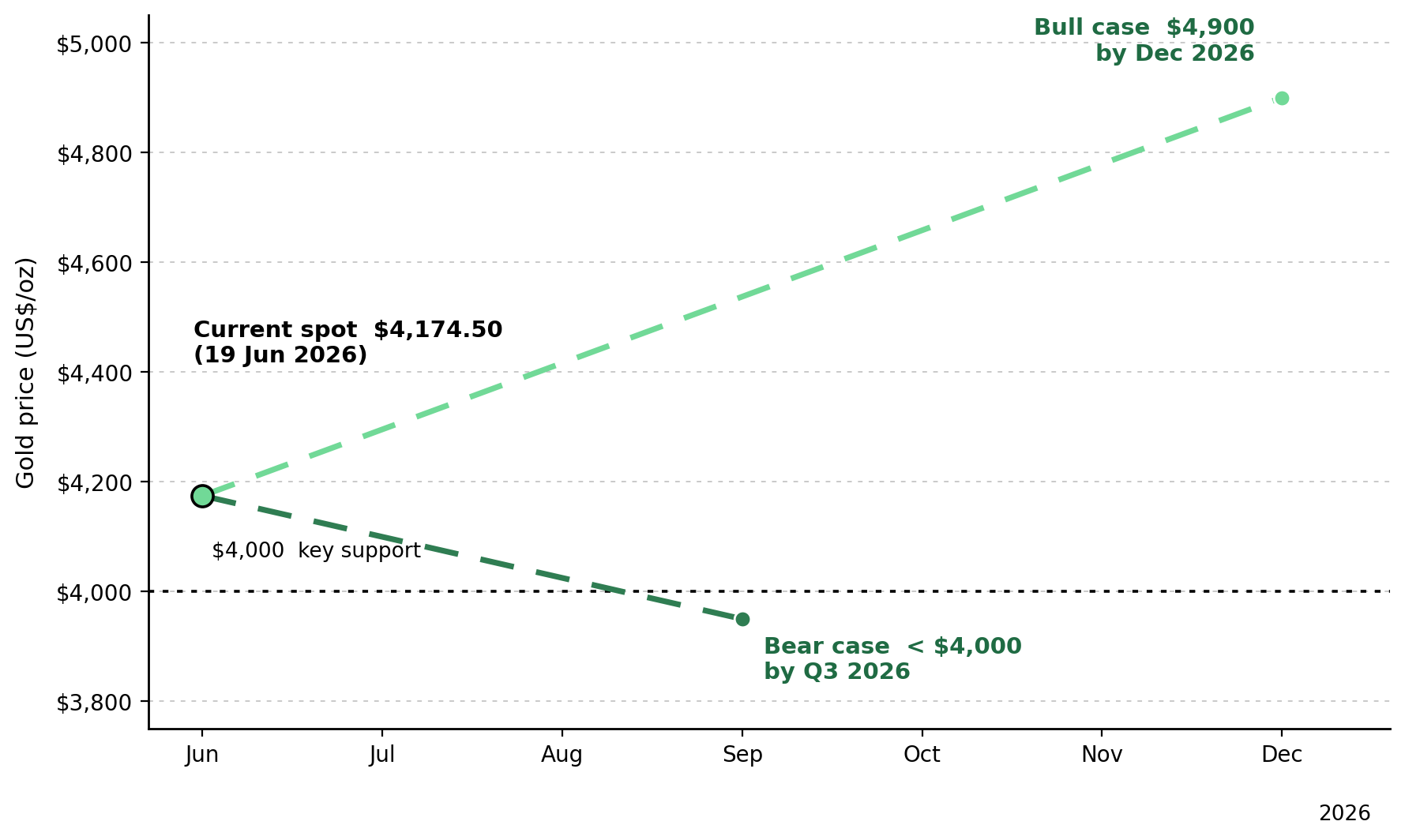
Continued hawkish Fed policy could push spot gold below $4,000/oz by Q3 2026, extending the current downtrend as higher interest-rate expectations increase the opportunity cost of holding bullion. A reversal in Fed expectations and a weaker US dollar could support a recovery toward $4,900/oz by December 2026, in line with Goldman Sachs' revised price target.
Next week's US inflation data could determine whether gold extends its decline or rebounds by reshaping market expectations for future Fed policy.
Higher-for-Longer Rates & Delayed Gold Buying
Gold faces growing pressure from rising interest-rate expectations. With the dollar at a 13-month high and traders pricing a 70% chance of a Fed hike by September, dollar-priced metals become more expensive for overseas buyers, reducing demand. Nikos Tzabouras of Tradu.com said higher-for-longer Fed expectations are negative for non-yielding assets. Because gold generates no income, it becomes less attractive as yields on cash and bonds rise.
Price volatility is disrupting physical gold buying patterns. An Ahmedabad-based jeweller said lower prices are attracting buyers, but large price swings are causing some customers to delay purchases until market direction becomes clearer.
US-Iran diplomatic developments remain difficult to predict, making short-term trading decisions based on headlines highly uncertain. Physical and ETF demand may remain weak until Asian buying recovers and inflation data provides greater clarity on future Fed policy. Gold could decline further before finding support, and recent price trends do not predict future returns.
The $4,000 Gold Threshold & Fed Rate Expectations
Gold remains in a downtrend while trading below its 200-day moving average, a level it has failed to reclaim since June 5. Expectations for a rate increase from the current 3.50%-3.75% range continue to support the US dollar and favor assets that benefit from higher interest rates.
A sustained break below $4,000/oz would signal further downside for gold and could accelerate ETF outflows and dealer discounts across Asia. A recovery would likely require lower rate expectations, which could support gold's move toward Goldman Sachs' $4,900/oz target and restore premiums in key physical markets.
Next week's US inflation data and CME FedWatch probabilities will help determine whether gold's decline continues or stabilizes, with markets currently pricing a 70% chance of a September rate hike. A decline in September hike odds below 50% would signal weakening rate expectations and could improve the outlook for gold during the current quarter.
Analyst's Notes





Subscribe to Our Channel





Stay Informed






















