Gold’s Recovery May Depend on Fuel Prices Reaching US Inflation


Gold hit a 14-month low on Fed hike bets. Crude has fallen 32%, but diesel still lifts US inflation, keeping pressure on gold prices and mining costs.
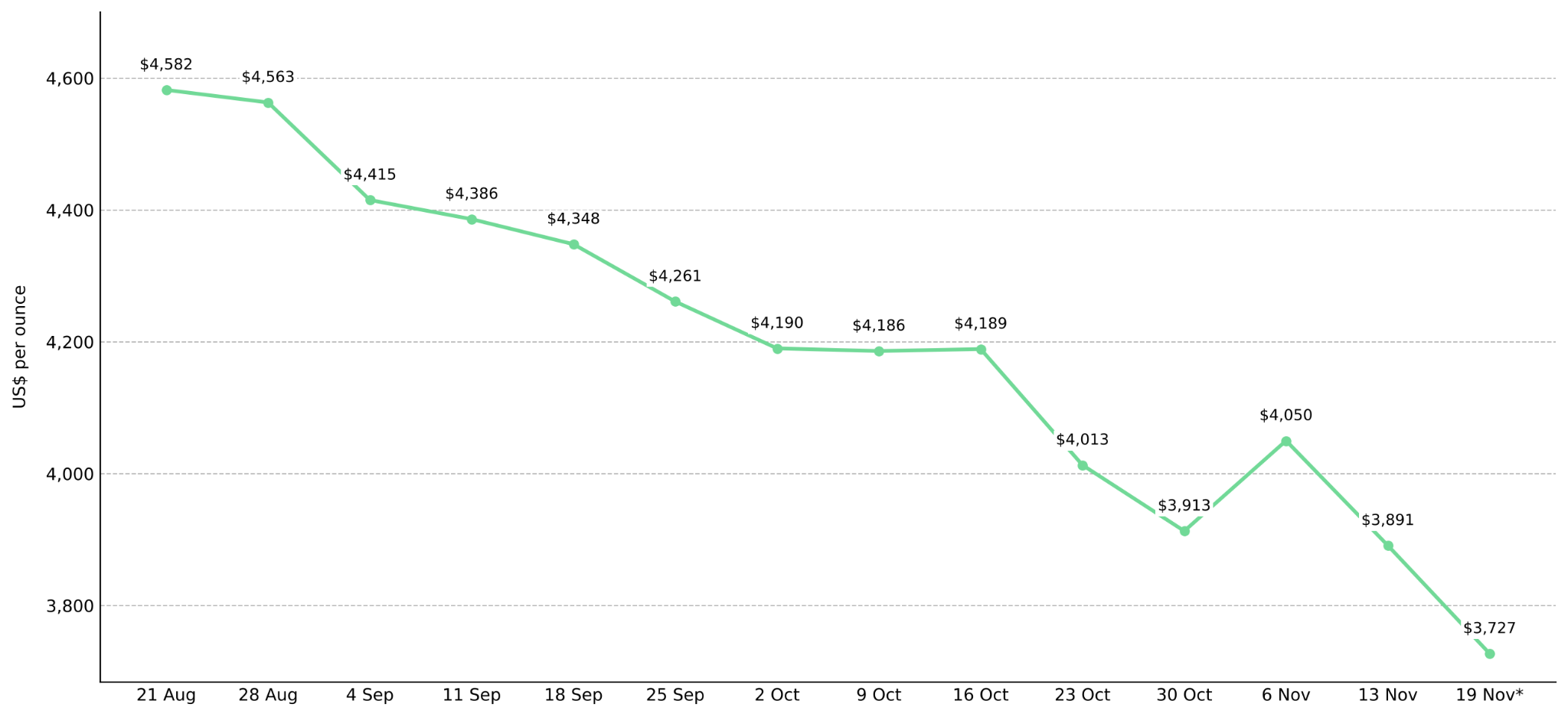
- Spot gold fell to $3,585.92 per ounce on Nov 20 after touching a 14-month low. It is heading for an 8% weekly loss as markets price in a 99% chance of a December Fed hike.
- North Sea Dated crude fell 32% from its early-October high to US$93 a barrel, but gold has not benefited because energy still lifts inflation data.
- US gasoline prices rose 37.4% over the 12 months to October, and Fed minutes show most officials citing high energy prices.
- The IEA names tight diesel supply as the overriding concern for consumers. Diesel feeds both inflation and gold mining costs.
- The Fed decides on Dec 9, a day before November CPI. A monthly fall in the CPI energy index signals that crude's decline is reaching inflation.
Fed Hike Bets Send Gold to its Worst Week Since March
Spot gold fell 1% to $3,585.92 per ounce by 11:13 GMT on Nov 20, after touching $3,513.54, a 14-month low, Reuters reported. Bullion shed about 8% over the week, the steepest weekly drop since the week ended March 20, after Philadelphia Fed President Anna Paulson flagged inflation risks warranting another rate increase. CME's FedWatch tool priced a 99% chance of a 25-basis-point hike at the Dec 8-9 meeting.
The selloff came as crude, a major source of the Fed's inflation concern, was already falling. North Sea Dated crude dropped 32% from $136 a barrel in early October to $93 as Gulf exports recovered, the International Energy Agency (IEA) reported on Nov 13. Gold has not benefited because the inflation data behind Fed policy still carries the earlier energy spike.
Energy Inflation Keeps the Fed Hiking and Gold Under Pressure
Energy reaches the Fed through consumer prices with a lag. US gasoline prices rose 37.4% in the 12 months to October, the Bureau of Labor Statistics (BLS) reported on Nov 10. September PCE inflation reached 3.6%, with energy up 21% year on year, per the World Gold Council (WGC). Minutes of the Oct 27-28 Fed meeting show "almost all participants" judged further rate increases likely appropriate, with the vast majority citing high energy prices. Each hike raises the cost of holding gold, which pays no interest.
Refined fuel keeps the pressure on after crude falls. The IEA calls tight product supply, especially diesel, the overriding concern for consumers, and Fed officials listed refined fuel constraints among upside inflation risks. Middle East shut-ins still averaged 2.5 million barrels a day in October, down from 10.9 million in May, the US Energy Information Administration (EIA) estimates.
Crude's 32% Drop Has Yet to Fully Reach the Inflation Data Driving Gold
The Fed decides on Dec 9, a day before November CPI on Dec 10, so rates are set before the November report can show how far crude's slide has reached consumers. Former US Mint Director Philip Diehl, president of U.S. Money Reserve, told CNBC gold's recovery depends on oil normalizing and pump prices falling enough for rates to stabilize:
"I'm confident gold prices will return to their upward trajectory in 2027."
The EIA's Nov 10 outlook is targeting Brent at $77 a barrel by the fourth quarter of 2027, and Fed staff see total inflation stepping down sharply next year as energy prices slow. Diesel points the other way. The EIA is targeting retail diesel at $5.03 a gallon in 2027, against $4.05 in early 2026, keeping headline inflation and Governor Christopher Waller's 50-basis-point option alive. The EIA's own forecast keeps diesel about 18% above its early-2026 level by late 2027, even as Brent falls below its own.
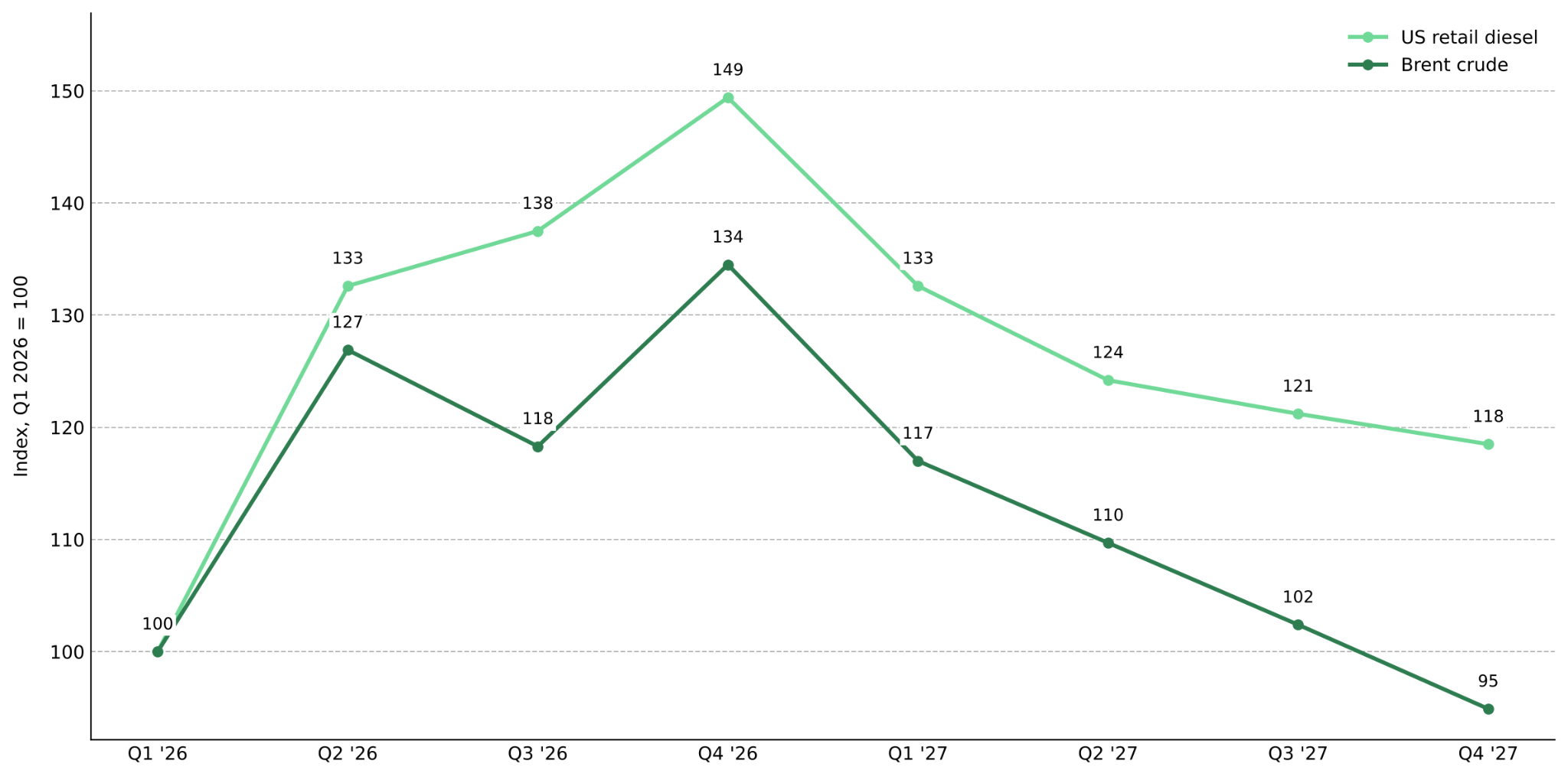
A monthly decline in the CPI energy index on Dec 10 would be the first sign crude's fall is reaching the data behind Fed hikes. The horizon runs to the second quarter of 2027, when the EIA targets Brent below $90.
Sticky Diesel Prices Raise Costs for Gold Producers as Revenue Falls
Diesel-intensive gold producers absorb the move from two sides: lower gold revenue and fuel costs that lag crude. The WGC put global average all-in sustaining costs (AISC), the full cost of keeping a mine producing, at a record $1,930 an ounce in the second quarter. Barrick reported third-quarter AISC of $1,911, up from $1,538 a year earlier, with elevated diesel prices among the drivers alongside lower grades, higher royalties and sustaining capital. Spot gold sits about 16% below the WGC's $4,262 third-quarter average.
Open-pit mines running diesel haul fleets and diesel-fired power, with fuel unhedged, absorb the higher bill in full until the decline the EIA targets for 2027 arrives. Grid-connected operations and producers with hedged fuel supply carry less of the same cost.
No holder can know when diesel supply loosens, and Bannockburn Capital Markets' Marc Chandler told CNBC no chart pattern yet shows a low in place. Gold equities can fall faster than bullion when prices and costs move against them together, and losses can exceed the metal's decline.
Cheaper Energy Sets Up a Double Gain for Gold Producers
Energy is a central thread in gold's 2026 decline, routed through interest rates. Crude has already fallen, yet gold's floor may depend on refined fuel prices reaching the inflation data, which ties the Fed's path to diesel as much as to crude.
The same fuel relief that ends the case for further hikes also lowers mining costs, so diesel-intensive producers gain on revenue and costs at once when it arrives. Low-cost producers on grid power hold the strongest position through the wait, while high-cost operations running diesel fleets carry the most risk until refined fuel prices fall. Gold's recovery and the producer margin rebuild run on the same clock, and diesel may set it.
Analyst's Notes





Subscribe to Our Channel






Stay Informed