
Carolina Rush Keeps 100% of Brewer, Opens Growth Path Around Existing Mine Footprint


Carolina Rush regains 100% of its Brewer gold-copper project, targets 1 million ounces from a 540,000-ounce base, and defers a US$30 million option payment.
- Carolina Rush regained 100% of the Brewer gold-copper project after OceanaGold withdrew from its earn-in in September 2026, keeping about US$2 million of partner-funded data and core.
- Brewer holds a near-surface resource of about 540,000 ounces of gold, and management is targeting 1 million ounces or more from 10,000 to 15,000 meters of drilling.
- A deep step-out hole pierced the lithocap and returned rising gold and copper values, which the company says confirms a porphyry system that has not yet been located.
- An August 2026 amendment defers the estimated US$30 million purchase price until a new mine is fully permitted, and the EPA has indicated a bond of about US$8 million.
- With limited cash, the company has paused drilling to run metallurgical, geophysical and age-dating work while it seeks financing and a porphyry partner.
Carolina Rush Corp. (TSXV: RUSH | OTCQB: PUCCF) has full control of its Brewer gold-copper project in South Carolina again, with a maiden resource of about 540,000 ounces of gold and two separate routes to value. Brewer is a past-producing open-pit mine 15 kilometers (km) from OceanaGold’s Haile Gold Mine, the largest producer among that company’s four mines. Heap leaching at Brewer recovered about 178,000 ounces of gold between 1987 and 1995.
The investment case has two layers. Near-surface epithermal gold forms the resource base and the nearer-term growth opportunity. A copper-gold porphyry system at depth, the likely source of that surface gold, is the larger and higher-risk exploration target. Following OceanaGold’s exit from an earn-in agreement in September 2026, Carolina Rush retains 100% of both.
Full Ownership & a 540,000-Ounce Starting Point
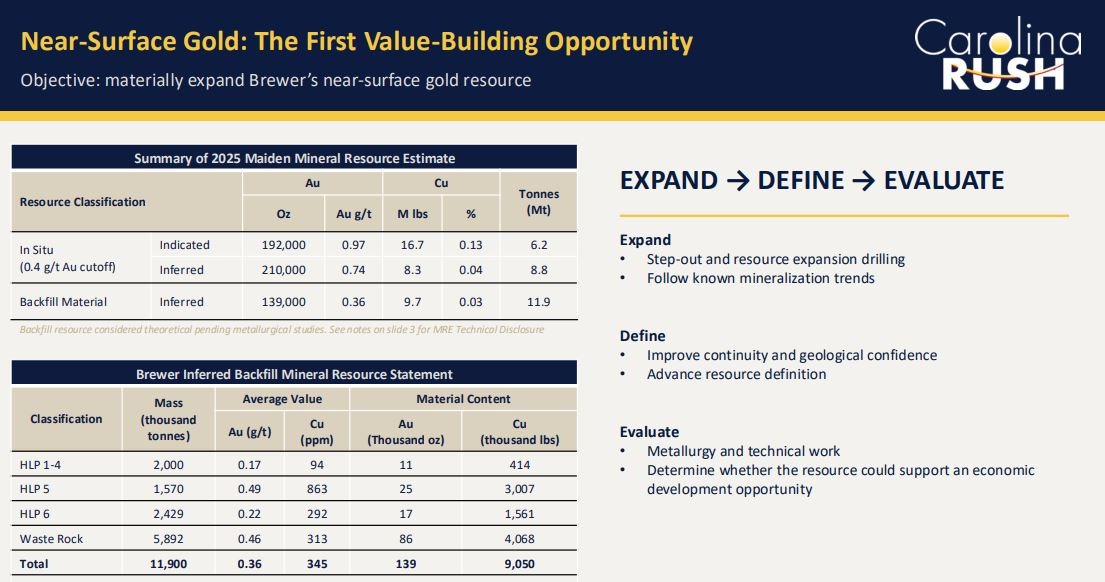
The 2025 maiden resource, prepared under NI 43-101, has three parts. The in-situ indicated resource is 6.2 million tonnes (Mt) at 0.97 grams per tonne (g/t) gold for 192,000 ounces, with 0.13% copper. The in-situ inferred resource is 8.8 Mt at 0.74 g/t gold for 210,000 ounces. An inferred backfill resource adds 11.9 Mt at 0.36 g/t gold for 139,000 ounces, which the company describes as theoretical pending metallurgical studies.
The whole resource lies within about 150 to 175 meters (m) of surface. The land position has also grown. Brewer covers roughly 920 acres, and private mineral leases at the adjacent Jefferson project lift the contiguous package to about 3,524 acres. The October 2026 acquisition of the A1 gold prospect added a historically drilled gold anomaly about 2 km northeast of Brewer.
President and Chief Executive Officer of Carolina Rush, Layton Croft, said company drilling since late 2020 has repeatedly returned 50 to 100 m intervals grading around 1 g/t gold, and he tied the next step in valuation to resource scale:
“When we get this thing to a million or more ounces, which we have confidence is entirely possible with 10,000 to 15,000 meters of drilling, I think it really does help rerate the company from a commercial perspective.”
What the OceanaGold Programme Delivered
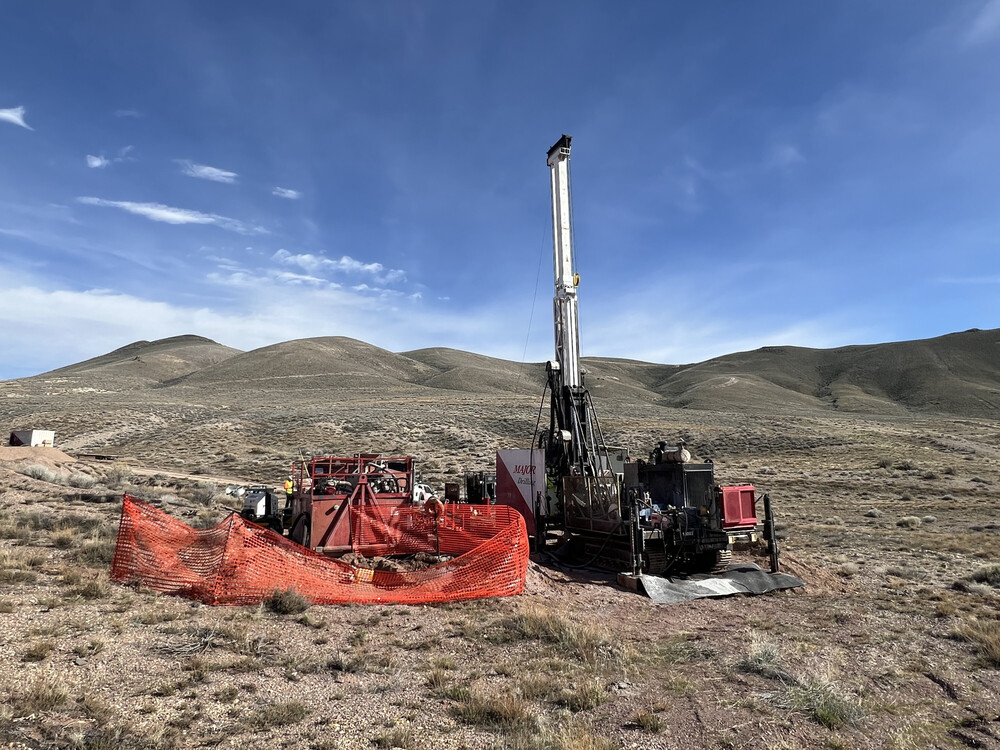
OceanaGold funded about US$2 million of work under an earn-in announced in September 2025. The programme drilled three deep holes totaling more than 3,500 m in 2026. Croft said the partner withdrew in September 2026 because the porphyry target is early stage and its corporate priorities favor advanced projects. Carolina Rush keeps the core and the data. Croft also noted that the 80% to 20% structure would have capped Carolina Rush’s share of any discovery.
The most important result came from a step-out about 1 km northwest of the former mine. That hole pierced the advanced argillic lithocap for the first time and passed into increasing gold and copper values, returning 60 m at 681 parts per million copper and 0.24 g/t gold from 1,027 m. Croft said the programme proved a porphyry system exists, although the deposit itself has not been found. An independent review by Dr. Richard Sillitoe supports the company’s tilted porphyry model. The next deep test needs a further step-out of 500 to 600 m, beyond the Brewer property, which explains the Jefferson lease additions.
A second deep hole tested a resistivity anomaly closer to the mine. It showed no porphyry alteration but intercepted 51.15 m at 0.62 g/t gold and 0.22% copper from 214 m, outside the current resource. Croft said this result supports the company’s view that expansion drilling below and around the former mine is likely to add ounces.
Near-Surface Gold as the First Path to Value
After the OceanaGold exit, the board completed a full technical inventory. The company now counts 11 drill targets across 9 target areas at Brewer and Jefferson, including Tanyard, B6, and the A1 prospect. All known gold at Brewer is hosted in breccia pipes. Carolina Rush discovered the Tanyard breccia in 2021 by stepping out 150 m to the south, and Croft said systems of this type often host several associated breccia bodies.
The near-surface plan combines expansion drilling around the known resource with discovery drilling for new breccia bodies. The company’s best intercept to date is 62.5 m at 8.45 g/t gold and 0.28% copper, and the Tanyard zone remains open, with a large under-tested gap toward Brewer and the B6 pit.
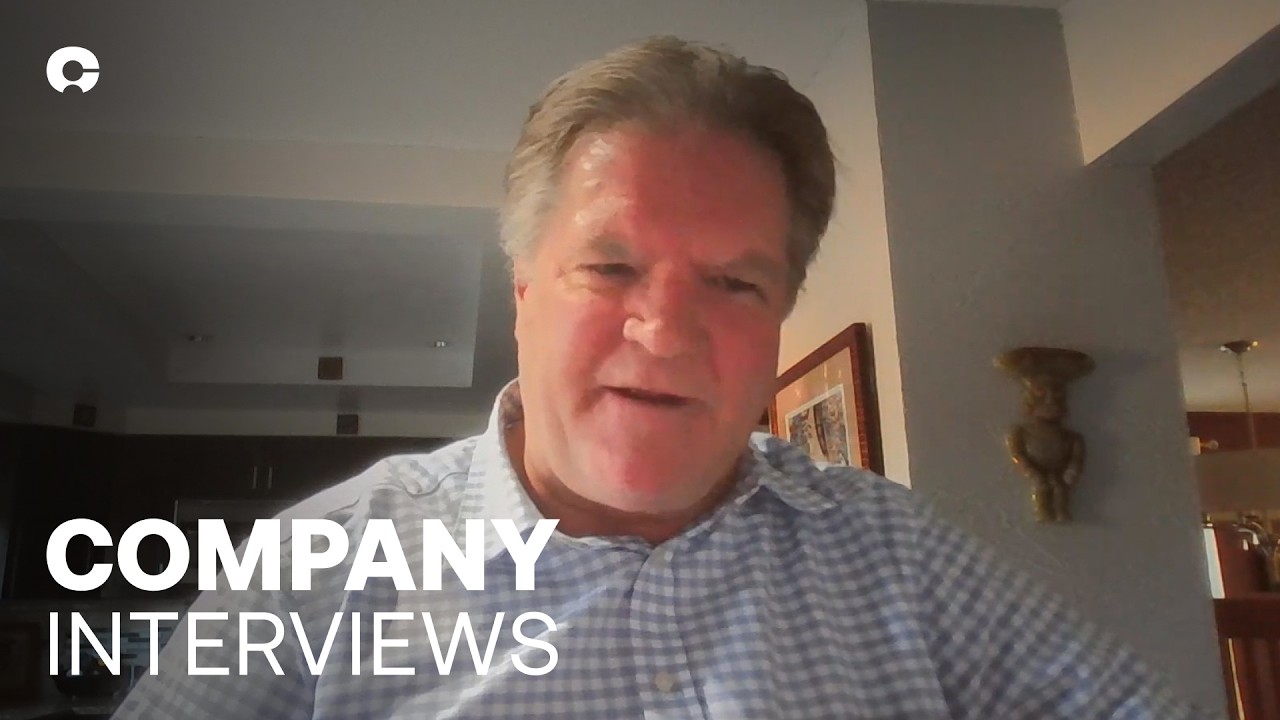
Interview with Layton Croft, President & CEO of Carolina Rush Corp.
Option Terms & the Backfill Opportunity
Brewer remains under an exclusive option with a court-appointed receiver representing the state and the Environmental Protection Agency (EPA). The option runs to the end of 2030. Under an August 2026 amendment, the estimated purchase price of about US$30 million is no longer due at closing. It becomes payable once a new mining operation is fully permitted at the state and federal level, spread over 10 years at about US$3 million a year. Croft said the EPA has more recently indicated a financial assurance bond of about US$8 million, compared with about US$100 million for the open pit at Haile.
The backfill is the earliest potential source of gold. It consists of previously leached ore and waste rock already blasted and crushed. Croft argued that removing and monetizing it could reduce or eliminate the groundwater acidification that costs the government about US$1.3 million a year to treat. A surface sludge pile from 25 years of wastewater treatment has assayed about 0.4 g/t gold and 0.7% copper, according to Croft.
Metallurgical testing is underway on the backfill, fresh rock, and sludge. Croft described a future toll-milling arrangement with the Haile mill as within the realm of possibility, although no agreement exists. He said four years is adequate time to reach a small, cash-generating operation, but leaves little time to waste.
Funding Strategy & Technical De-Risking
Croft put the treasury at about C$1.5 million while the board chose not to start drilling immediately after the OceanaGold exit. The plan is to raise capital when the timing is right, directed first at near-surface expansion. In parallel, management is in talks with multiple larger companies about a partnership on the porphyry target. No agreement has been announced.
Three technical programme are running while the drills are idle. Physical property testing on the deep core measures conductivity, resistivity, and chargeability, so the team can reinterpret the 2025 magnetotelluric and induced polarization survey. That survey does not fully align with the geological model, which holds that the system is tilted toward the northwest. The first OceanaGold hole, which tested a vertical resistivity anomaly near the mine, was unsuccessful. A geochronology study with the University of Alabama will date the multiple mineralizing pulses in a system estimated at about 550 million years old.
Croft said prospective partners consistently ask about metallurgy, including whether the mineralization responds to flotation or gravity recovery. The current work is designed to answer those questions and to direct limited drilling capital to the targets with the highest probability of success.
The Investment Thesis for Carolina Rush
- Carolina Rush owns 100% of a past-producing gold mine with a resource of about 540,000 ounces of gold, all within roughly 175 meters of surface.
- The OceanaGold programme left the company with about US$2 million of partner-funded drilling, data, and core, and a deep hole that pierced the lithocap and returned rising gold and copper values.
- Management is targeting 1 million ounces or more from 10,000 to 15,000 meters of near-surface drilling across 11 drill targets.
- The amended option defers the estimated US$30 million purchase price until a new mine is fully permitted, then spreads it over 10 years.
- The backfill resource of 139,000 ounces and a surface sludge pile give the company early metallurgical test material that could support a small starter operation.
- Investors can monitor the metallurgical and physical property results, any financing for near-surface drilling, and the outcome of partnership talks on the porphyry target.
The thesis combines a defined gold resource with a porphyry target that a well-funded partner has already helped vector. The near-term value test is whether drilling can lift the resource toward 1 million ounces before the option window closes.
Macro Thematic Analysis
Croft pointed to a pullback in gold, silver, and now copper in recent months. He cited gold near US$5,400 per ounce at the start of 2026 and about US$3,700 at the time of the interview, compared with about US$1,700 five years ago. He noted that all-in sustaining costs for some producers reach US$2,500, while others produce below US$1,500.The company’s November 2026 letter to shareholders notes that gold and copper prices have roughly doubled or more since Brewer drilling began in 2020.
Croft attributed the pullback to macro and geopolitical factors and placed it in a longer price context:
“It’s not a collapse, it’s a correction. And I think that being in the precious and base metals commodity space is in the medium and longer terms definitely a really good place to be.”
For junior explorers, a correction tightens access to capital before it changes asset quality. Carolina Rush’s response is to spend on low-cost technical work and defer drilling until financing terms improve. The setting supports that approach. Brewer is a brownfield site in a US mining district with existing infrastructure, about 15 km from Haile, which OceanaGold operates and which the company’s presentation credits with about 5 million ounces of gold.
Insider alignment is another factor. Croft said he is the company’s third-largest shareholder and plans to buy more shares at current prices.
TL;DR
Carolina Rush owns 100% of the past-producing Brewer gold-copper project in South Carolina after OceanaGold left a US$2 million earn-in, keeping the core and data. Brewer holds about 540,000 ounces of gold near surface. The company is targeting 1 million ounces or more from 10,000 to 15,000 meters of drilling across 11 targets. An August 2026 option amendment defers the estimated US$30 million purchase price until a mine is permitted. With C$1.5 million to C$1.7 million in cash, the company is running metallurgy, geophysics and age-dating work while it seeks financing and a partner for the deep copper-gold porphyry.
FAQs (AI-Generated)
Analyst's Notes





Subscribe to Our Channel







Stay Informed