




GR Silver Infills Record Silver Hole Ahead of 2027 Resource Update


GR Silver CEO Eric Zaunscherb on San Marcial's 45.1 m at 1,623 g/T silver hole, infill drilling, Plomosas bulk sampling and the H1 2027 resource update.
- GR Silver Mining's best drill intercept to date returned 45.1 m true width at 1,623 g/T silver, was 99.8% silver by value, and validated the company's structural model at San Marcial.
- The company is infilling around the hole at 45 m spacing so the zone can enter the indicated category in the resource update targeted for H1 2027.
- SEMARNAT has ruled that Plomosas needs no new environmental authorisation, and management sees small-scale bulk sampling there as a way to build social licence.
- GR Silver held C$26 million in cash at 30 June 2026, and in-the-money warrants are expected to add further funding over roughly 18 months.
- Security, road access and future development capital are the key risks, while management is reviewing M&A both as a potential target and as an acquirer.
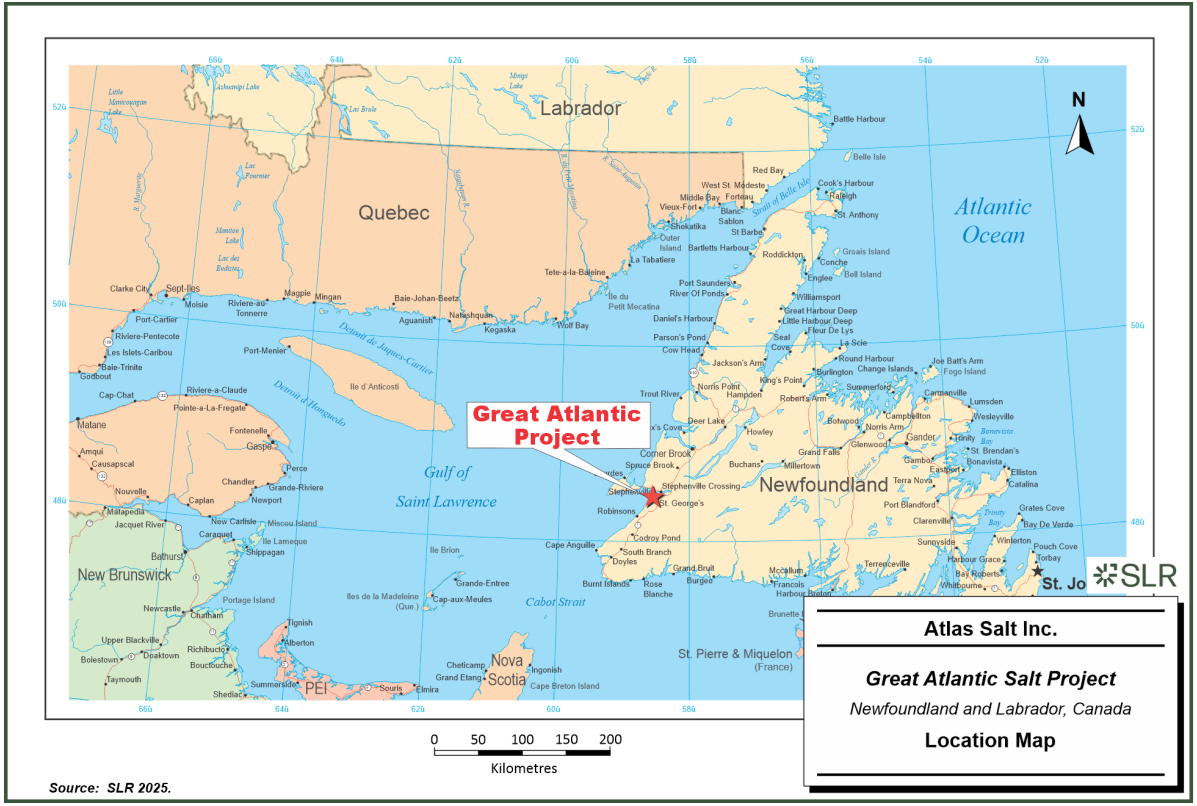
Silver's strength has renewed investor attention on explorers in Mexico, the world's largest silver producer. GR Silver Mining Ltd. (TSXV:GRSL, OTCQX:GRSLF) owns 100% of the Plomosas Project on the Sinaloa-Durango border, which combines the San Marcial silver discovery with the past-producing Plomosas Mine. President and CEO Eric Zaunscherb took on the company's Mexican operations after the death of founder Marcio Fonseca, whom he credited with leaving a strong vision and an exceptional team. Zaunscherb explained how the old mine could build community support, why the company's best-ever hole has changed how it drills rather than when it reports, and how management views mergers and acquisitions (M&A).
Built Around Social Licence
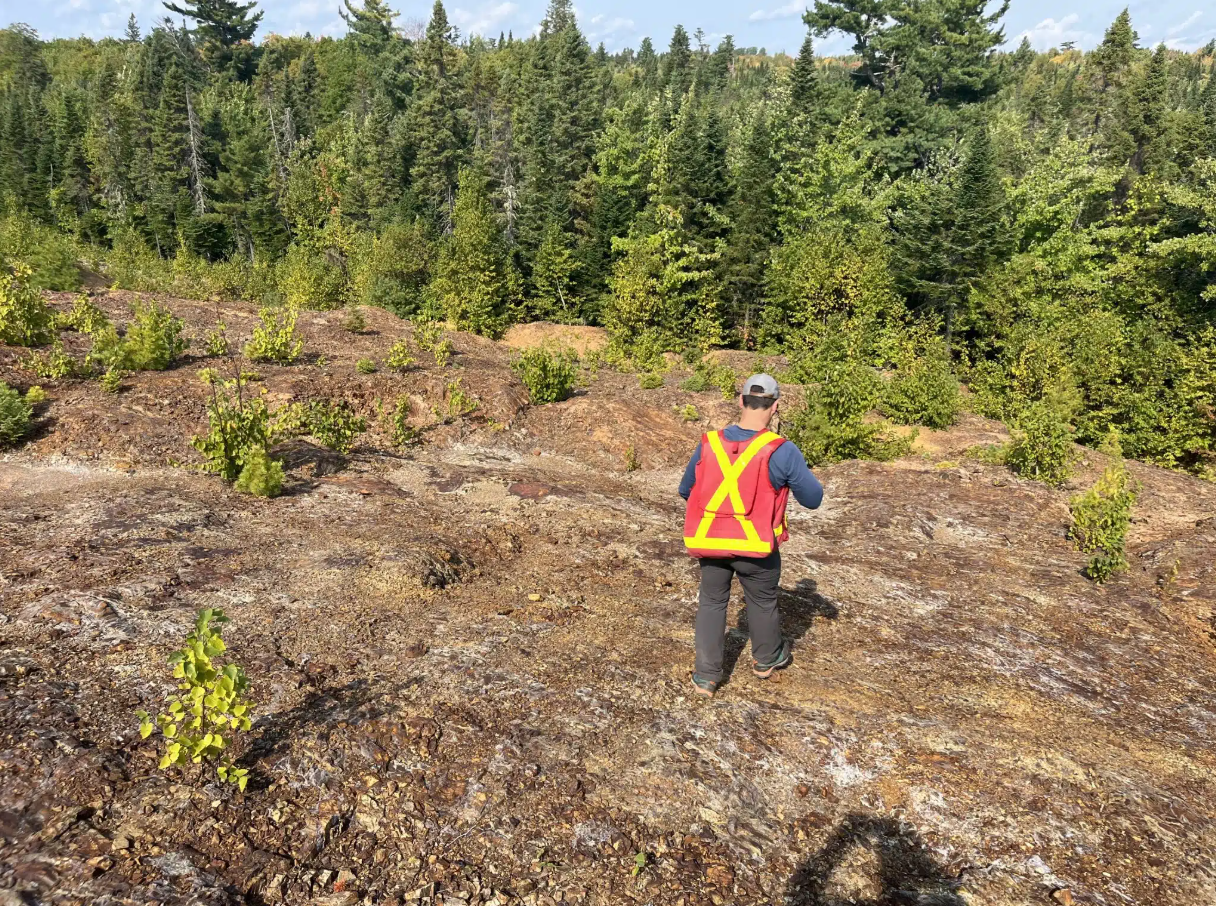
The Plomosas Mine operated from 1986 to 2000 under IMMSA, a Grupo Mexico subsidiary. In May 2026, Mexico's federal environmental regulator, SEMARNAT (Secretaría de Medio Ambiente y Recursos Naturales), ruled that GR Silver does not need a new Environmental Impact Authorisation (MIA) for the site. This opened the way for a bulk sample test mining (BSTM) programme, although Zaunscherb stressed that timing depends on the regional security situation.
Zaunscherb favours toll milling at one of several nearby mills, or a sale at the mine gate. He argued this avoids spending around $10 million on a small pilot plant, lowers capital expenditure, shortens the timeline to sales and reduces execution risk. The scale is modest. The mine was permitted for 600 tonnes per day, but available power points to 60 to 100 tonnes per day. Zaunscherb agreed that at this level the programme is not about the money. Its real value is social licence. The area is very poor, and GR Silver once employed more than 150 people from the local ejido, or agricultural cooperative. Restoring that work, alongside clean water and training, would mean local families need not turn to the cartels, he said.
Local Goodwill on San Marcial's Timeline
San Marcial lies about 5 kilometres south of Plomosas, and Zaunscherb expects goodwill earned at the mine to carry over.
"The much bigger prize is San Marcial. That is the future of our company. And so if we can cut the timeline down by a year or two at San Marcial, that has a massive impact on the NPV [net present value] in a positive sense to the benefit of the shareholder and the stakeholder in general."
Support has to be built at several levels. GR Silver holds separate agreements with two ejidos. Above them sit the municipality of Rosario and the state of Sinaloa, both keen on mining revenue. Zaunscherb believes the most influential shift is in Mexico City, where he described the Claudia Sheinbaum administration as more pragmatic than its predecessor. He also pointed to governors of mining states reminding the capital that their economies and employment depend on mining.
San Marcial's Record Hole Validates the Model
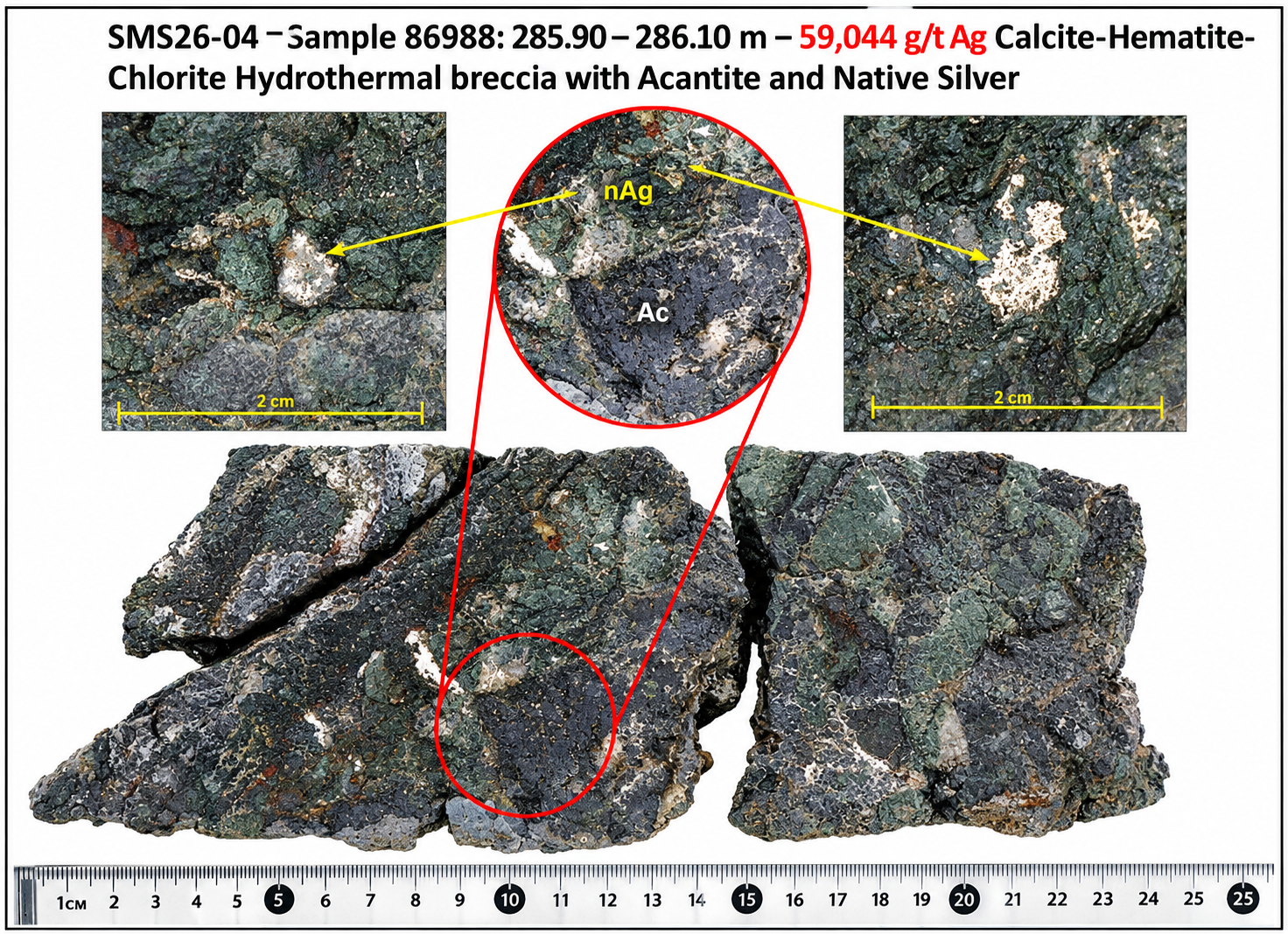
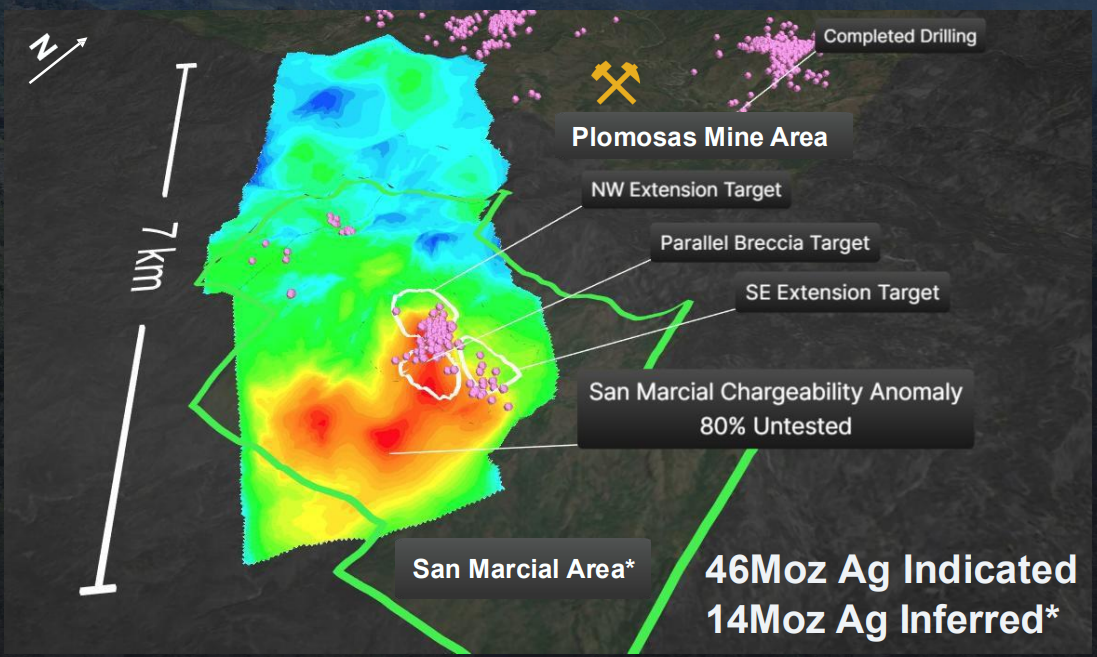
San Marcial hosts 46 million ounces (Moz) of indicated and 14 Moz of inferred silver under the 2023 mineral resource estimate (MRE). A drill hole SMS26-04 reported in May 2026 returned 45.1 metres (m) true width at 1,623 g/t silver, including 8.25 m at 8,579 g/T silver. It is the best result the company has reported on the project.
Zaunscherb said the hole matters most because it confirms the exploration model. Fluid pulses from an intrusive body fractured an overlying hydrothermal breccia. Metal dropped out where the fluids depressurised in dilation zones created by cross-cutting structures. The hole is also unusually pure, at 99.8% silver by value against roughly 90% for the 2023 resource.
A Deliberate Pace to the H1 2027 Resource
The 20,000 m programme is behind plan, with about 7,000 m completed. Security and a difficult rainy season slowed progress, and all access now comes from Durango through the mountains. The company is spending about $1 million to upgrade the road.
According to Zaunscherb, a rig is returning to that hole's platform this week to tighten spacing from 100 m, which supports inferred classification, to 45 m, which would bring the zone into the indicated category. The company will also chase the dilation zone to depth towards the southeast. Three rigs are on site, one being replaced, and a fourth and possibly fifth may follow. The resource update remains targeted for the first half of 2027.
Interview with Eric Zaunscherb, President & CEO of GR Silver Mining Ltd.
Funding, M&A & the Road to Development
GR Silver held C$26 million in cash at 30 June 2026. Zaunscherb expects about $25 million more from warrant exercises over roughly 18 months. The warrants average C$0.26 against a share price in the mid-to-high 30 cents.
The next step at San Marcial is to permit an access tunnel for underground drilling and a metallurgical bulk sample. An application at the end of 2026 and a permit in 2027 could allow underground drilling in later 2028. Zaunscherb repeated that San Marcial as a standalone project is five to seven years from potential cash flow. Plomosas would produce lead and zinc concentrates, with interested parties already in the data room, potentially including a strategic partner. San Marcial points to a Merrill-Crowe circuit producing silver doré.
Asked whether GR Silver is for sale or building a mine, Zaunscherb, a former mining analyst, said a company that puts up a "for sale" sign typically invites a discount of around 40%.
"What we're doing is advancing the project and derisking it. And if someone wants to come along and make an offer, that's up to the shareholders to accept or not."
M&A runs both ways. Management is also assessing acquisitions that could diversify risk, possibly in another Mexican state where small projects are held back by a lack of capital or decrepit equipment. Nothing is imminent, but Zaunscherb described reviewing them as management's duty.
The Investment Thesis for GR Silver Mining
- SMS26-04 was designed to test a structural inflection zone, and its success gives the company a repeatable targeting tool for further high-grade zones.
- Infill drilling at 45 m spacing aims to move the discovery zone into the indicated category in the H1 2027 resource update.
- Investors should monitor assays from holes already at the lab and the pace of rig additions against the 13,000 m remaining.
- The Plomosas bulk sampling programme is primarily a social licence tool, and its main value lies in potentially shortening San Marcial's timeline.
- C$26 million in cash plus in-the-money warrants fund the current plan, although San Marcial will need substantial further capital.
- Security conditions and access constraints in Sinaloa remain the key execution risks, as the slower drill programme has shown.
- The company's presentation cites an enterprise value of US$1.40 per in-situ silver ounce against a peer mean of US$3.28 (as at 4 September 2026), a gap that resource growth could test.
Macro Thematic Analysis
Zaunscherb avoids positioning himself as a commodity forecaster, but his view on silver rests on the currencies it is priced in.
"To me it's pretty obvious that six years ago, $1,000 bought you 50 ounces of silver. Today, it's 15 ounces of silver. There's a massive currency debasement that's going on here. And from what I can see, there's no influence to change that that direction."
He expects silver, gold and copper to keep rising when measured in fiat currencies. Industrial demand adds a second leg, with consumption growing in photovoltaic solar cells and electric vehicles. He also noted that physical silver inventories have declined dramatically.
Mexico sits at the centre of the supply picture. Zaunscherb called it the best place in the world for silver exploration while acknowledging the security and other risks that come with it. That tension shapes how investors price Mexican explorers. Security incidents and seasonal access problems can slow even well-funded programmes, regardless of improving policy signals.
For GR Silver, the share price has tracked the metal closely, and Zaunscherb said the market treats the stock as a silver proxy. That correlation cuts both ways. Rising silver can lift the shares ahead of company milestones, while a falling price could weigh on them regardless of drilling. He sees the investor base split between those who want continuous drill results and those who want a path to cash flow. The twin-track structure, pairing a small-scale operation at Plomosas with a larger silver deposit at San Marcial, is an attempt to serve both.
TL;DR
GR Silver Mining (TSXV:GRSL) is infilling around hole SMS26-04, which returned 45.1 m true width at 1,623 g/T silver at San Marcial, to lift the zone into the indicated category before a resource update targeted for H1 2027. About 7,000 m of a 20,000 m programme is complete after security and weather delays. At the past-producing Plomosas Mine, SEMARNAT has ruled no new environmental authorisation is needed. CEO Eric Zaunscherb sees a small bulk sampling programme mainly as a way to build social licence and shorten San Marcial's five-to-seven-year path to cash flow. The company held C$26 million in cash at 30 June 2026 and is reviewing M&A in both directions.
FAQ (AI-generated)
Analyst's Notes





Subscribe to Our Channel


Stay Informed


