$96.50 Uranium Contract Price Lets Developers Fund Through Offtake


Uranium's term price hit a record $96.50/lb as junior miners lag the metal. Offtake lets developers fund construction without costly equity raises.
- Uranium's year-end contracting season has opened with the long-term contract price at a record $96.50 per pound. The price has not fallen in any month since July 2025.
- Utilities are paying a premium to secure future supply. The term price has held above spot at every month-end since February 2026, and US utilities have only about 9% of their 2033 needs under contract.
- Junior uranium equities have gained 3.31% this year, about a third of spot's 9.81%, as new share supply and higher interest rates weigh on nuclear stocks.
- Offtake signed at current contract prices gives developers revenue that lenders can finance against, reducing the need to raise equity at today's share prices.
Utility Contracting Lifts Uranium Term Price as Junior Miners Trail the Metal
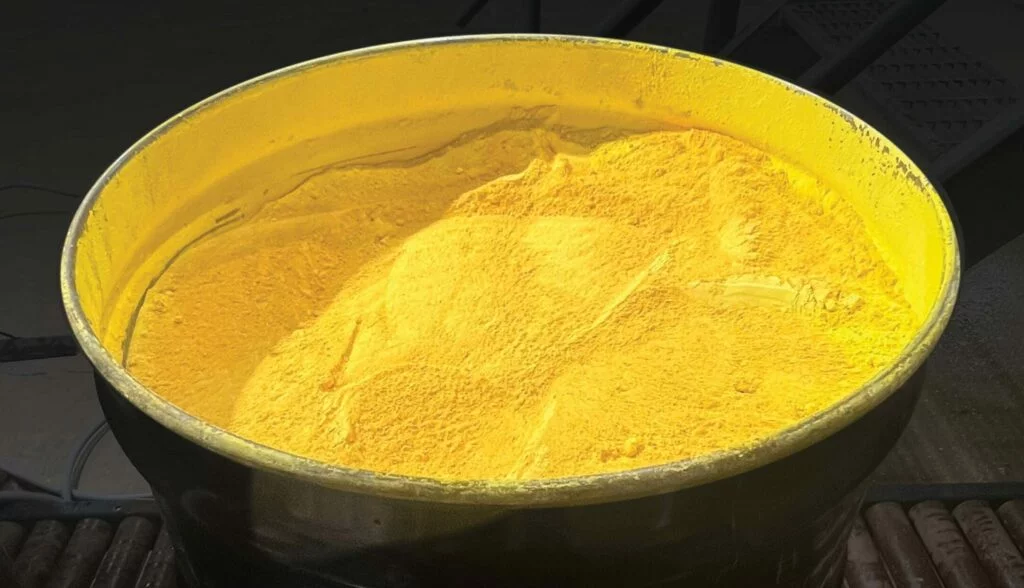
The uranium long-term price is the rate utilities pay for U3O8 (uranium concentrate) under multi-year contracts. It closed August 2026 at $96.50 per pound, the highest in the series, according to Cameco's average of UxC and TradeTech month-end prices. It has not fallen in any month since July 2025. Yet the Nasdaq Sprott Junior Uranium Miners Index rose 3.31% in the year to 31 August, against 9.81% for spot, the price for immediate delivery, per Bloomberg data in Sprott's 24 September uranium report.
The gap matters because juniors are meant to amplify the metal. In August they did, gaining 19.20% against spot's 3.63%. Over the three months to August, however, juniors fell 7.88% while spot rose 5.41%. Utilities are paying record prices for future pounds, but equity buyers are not paying up for the companies that would mine them.
Equity Supply & Higher Rates Discount Uranium Developers as Utilities Pay Up
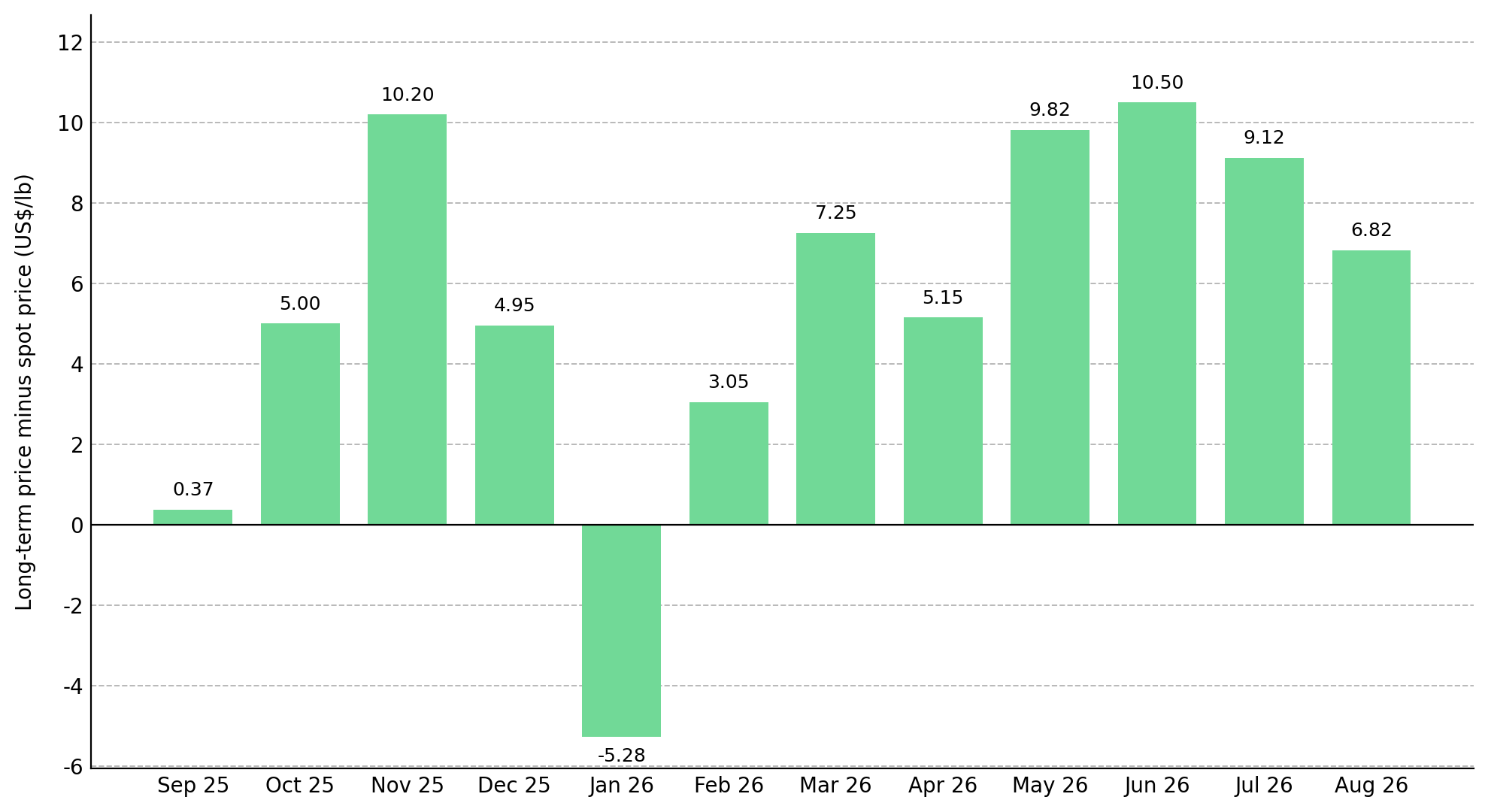
The term price has sat above spot at every month-end since February 2026, peaking at a $10.50 per pound premium in June, per Cameco. That premium is the cost of securing supply years out. Since 2020, spot has roughly tripled, while mine output rose only about 50% to an estimated 180 million pounds in 2026, mostly from restarts, per Sprott. New pounds must now come from greenfield mines, which the 2026 Red Book puts at 15 to 20 years from identification to production.
Equities are priced on different inputs. Citi equity analyst Vikram Bagri told the Wall Street Journal on 21 September that new nuclear listings and share raises have added stock to the market. Higher rates cut the present value of long-dated, capital-intensive projects, and uranium developers fit that profile. The Sprott Physical Uranium Trust buys uranium only by issuing units above net asset value (NAV). It closed 24 September 13.08% below NAV, which removes it as a spot buyer.
State Equity Claims & Share Dilution Cut Uranium Developer Returns
Pre-production uranium developers funding construction with equity carry the most exposure, as each raise at depressed prices issues more stock per dollar. Term-contracted producers are insulated. US developers gain a domestic buyer: the National Nuclear Security Administration is assessing about 4 million pounds a year of US-origin U3O8 from as early as 2030. On prepayment, BofA Global Research equity analyst Lawson Winder told the Wall Street Journal that more utilities may prepay for Centrus Energy's enrichment capacity as it progresses. That is evidence utilities will fund supply they want secured.
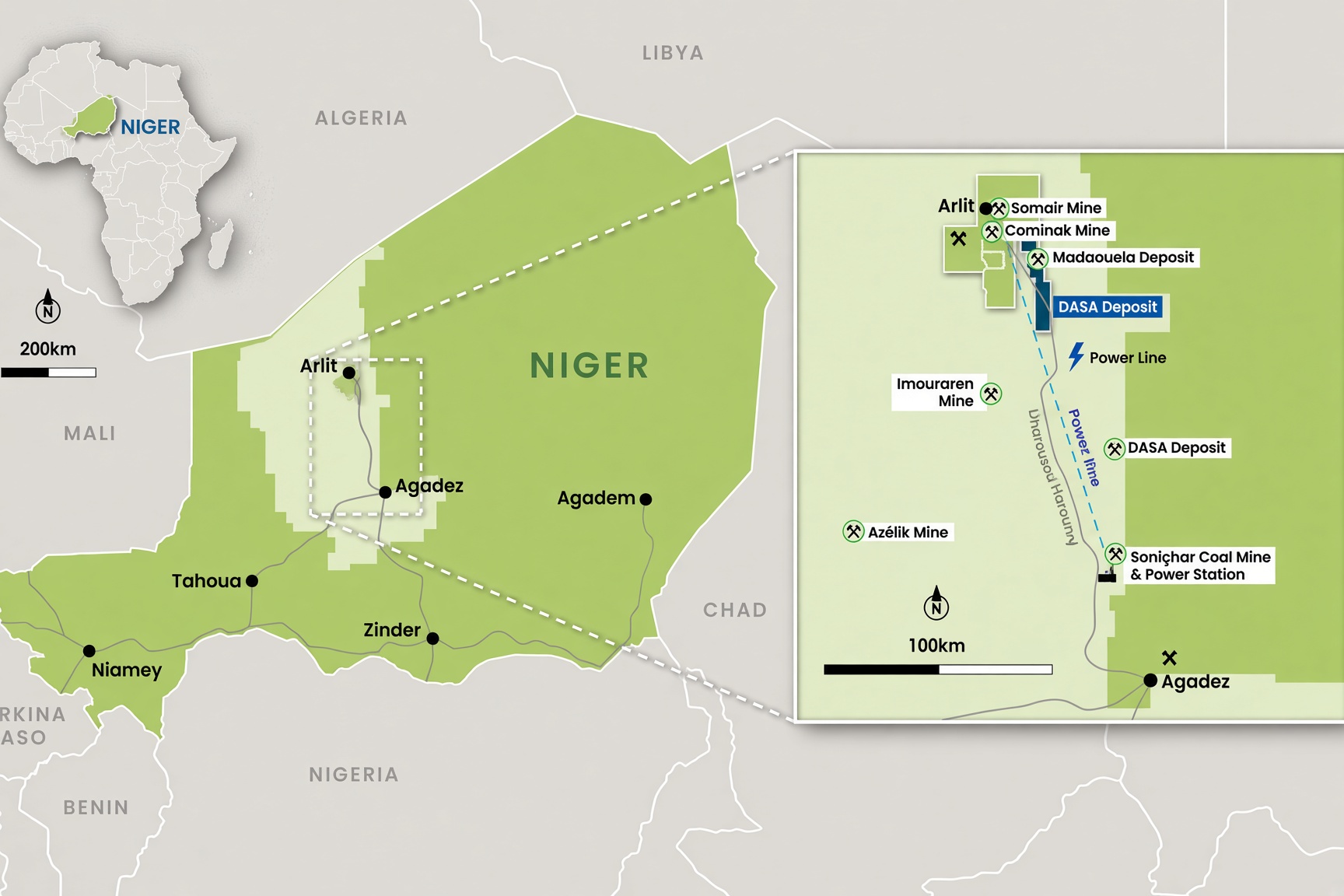
Two conditions separate developers: whether construction can be funded through offtake or prepayment rather than equity, and whether the host state's stake is settled. On the second, Niger's mines ministry said on 24 September it doubled its Madaouela stake to 40%.
Contracts are negotiated privately, leaving position size, not timing, as the variable a retail holder controls. Junior developers can lose most of their value if financing fails, and equity can trail the metal for months.
Why the Uranium Equity Lag is a Reason to Reposition
Utilities are paying the highest term price on record for uranium they cannot yet source. Equity buyers, meanwhile, price the companies that would supply it as if the metal had not moved.
Value is moving to pre-production uranium developers that turn record contract prices into signed offtake in stable jurisdictions, because contracted revenue replaces costly equity. Niger's 40% stake shows that host-state participation belongs in a developer's valuation.
A discounted equity market deters greenfield capital today, thinning the supply utilities need after 2030 and supports term prices for the developers that do get built. The equity lag is a reason to reposition toward contracted, jurisdictionally settled names rather than exit the sector.
Analyst's Notes





Subscribe to Our Channel




Stay Informed