




GR Silver's 2027 Resource Update Decides What Its Zinc Is Worth


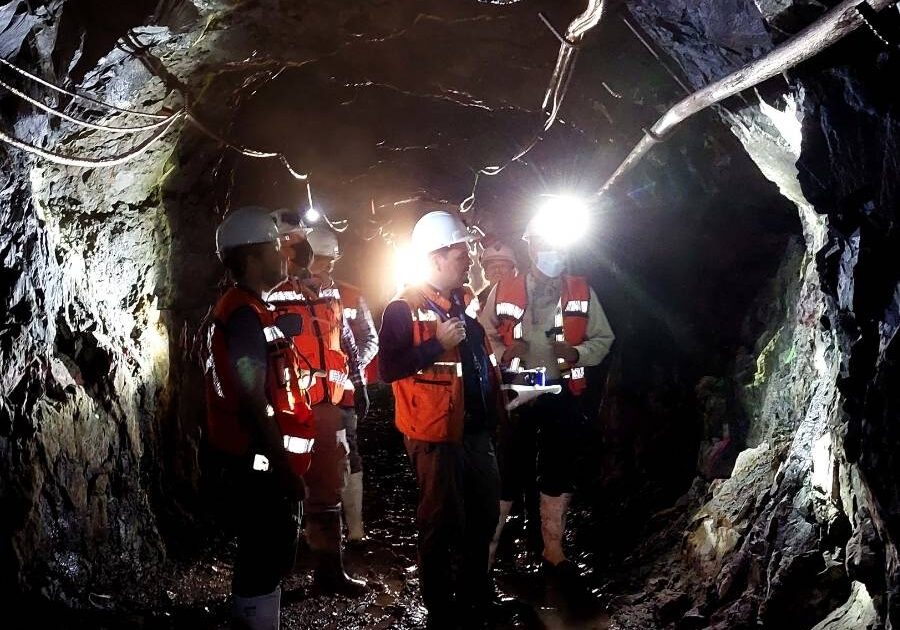
GR Silver targets San Marcial principally for pure silver, yet its 2023 resource already prices lead and zinc at assumed recoveries of 59% and 80%.
- Step-out results reported on September 8, 2026, provide lead and zinc grades, in addition to silver, for most intervals in the round.
- The richest zinc of the 2026 program so far is 5.8% over 4.15 meters (m) true width, reported on July 10, 2026.
- Base-metal grades climb with the silver: a 0.7 m true-width interval at 1,344 grams per metric ton (g/t) of silver returned 1.9% zinc.
- The 2023 resource uses US$1.10 per pound for lead and US$1.30 per pound for zinc, at assumed San Marcial recoveries of 59% and 80%.
- The recoveries come from preliminary metallurgical testwork completed in 2021.
What Has Happened
GR Silver Mining Ltd. (TSXV: GRSL | OTCQX: GRSLF | FRANKFURT: GPE) reported another round of step-out drill results from the San Marcial Area of the Plomosas Project in Mexico on September 8, 2026. The two best intervals were 16.1 meters (m) true width at 162 grams per metric ton (g/t) silver from 375.05 m depth, and 11.7 m true width at 147 g/t silver from 275.55 m depth. They push the mineralized breccias at least 300 m southeast and 75 m deeper than the edge of the company's 2023 resource, and the breccia system is now known over roughly 1 kilometer of strike.
Each reported interval is assayed for 4 metals, not one: silver, gold, lead, and zinc. The lead and zinc columns are the subject here, because a project the company describes as principally silver has reported lead and zinc grades alongside the silver in its 2026 drilling.
GR Silver Frames San Marcial Principally as a Silver Target
GR Silver Mining is a Canada-based, Mexico-focused exploration company that owns all of the Plomosas Project. That ground covers 7,823 hectares on the southwestern edge of the Sierra Madre Occidental at the border of Durango and Sinaloa, includes 78 square kilometers of advanced-stage exploration concessions, and holds a past-producing underground mine with road access and valid permits. San Marcial is the silver discovery inside that package, and it is early: no mine, no reserve estimate, and no economic study of any kind.
What San Marcial does have is a resource dating to 2023, holding 46 million ounces (Moz) of silver in the indicated category and 14 Moz in the inferred category. The 20,000-m step-out program running through 2026 is aimed at growing that figure, and the company describes what it is growing as principally silver. Step-out drilling continues principally targeting pure silver resources, and the stated business is cost-effective silver-gold resource expansion. Lead and zinc are named in neither description.
President and Chief Executive Officer of GR Silver Mining, Eric Zaunscherb, separates the grade the company quotes from a blended one:
"And again, that's a reminder that at San Marcial, we're talking about silver in the main breccia and not silver equivalent. So, that's half a kilo of silver, roughly 85 to 90% of these intersections are silver by value."
On that split, the rest of the value in those intersections is something other than silver.
Lead & Zinc Climb With the Silver Grade in Both 2026 Rounds
The base-metal columns are not noise, and the September round shows the pattern inside one hole. A 42.35 m true-width zone averaging 95 g/t silver returned 0.2% lead and 0.5% zinc. Within it, the 16.1 m true-width interval at 162 g/t silver returned 0.1% lead and 0.3% zinc. A 0.7 m true-width interval inside that, grading 1,344 g/t silver, returned 0.4% lead and 1.9% zinc. Each step down in width is a step up in silver and in both base metals.
The pattern held 2 months earlier. Results reported on July 10, 2026, from the same southeastern target, where high-grade silver mineralization had already been confirmed, gave a 21.9 m true-width interval at 168 g/t silver, 0.5% lead, and 1.41% zinc from 191.5 m depth. Inside it, a 4.15 m true-width section at 159 g/t silver returned 2.0% lead and 5.8% zinc, the richest zinc grade the 2026 program has produced. The parallel breccia target reported in that same round behaved the same way at narrower widths, in quartz-calcite-tourmaline veins carrying pyrite, silver sulfides, galena, and sphalerite, the lead and zinc sulfide minerals.
Two qualifications govern how any of these numbers read. The figures are rounded, uncut, and undiluted, so they are raw drill values with no mining dilution applied. And a metal below the reporting threshold is recorded as no significant result rather than as a zero, which happens often enough to shape the pattern: a 34.75 m true-width interval grading 15 g/t silver returned neither lead nor zinc worth reporting.
The 2023 Resource Already Gives Both Metals a Price & a Recovery
A grade quoted in silver is not the same thing as a resource counted in silver. The 2023 estimate reports the Plomosas Project in two ways: 55 Moz of silver in the indicated category, or 85 Moz on a silver-equivalent basis, and 22 Moz of silver inferred, or 49 Moz on a silver-equivalent basis. The distance between each pair is the gold, lead, zinc, and copper that the calculation credits.
Reaching a silver-equivalent ounce requires a price and a recovery for each metal, and the company publishes both. The calculation assumes US$22.00 per ounce for silver, US$1,750 per ounce for gold, US$1.10 per pound for lead, US$1.30 per pound for zinc, and US$4.20 per pound for copper. At San Marcial, it assumes metallurgical recoveries of 94% for silver, 59% for lead and 80% for zinc, and 0% for gold and copper. Each metal's grade is multiplied by its own price and its own recovery, and the total is divided by what silver alone would fetch.
Those recovery figures come from preliminary metallurgical testwork completed in 2021. The company has already decided what lead and zinc are worth in its own resource, at prices it has published, and a reader taking the 85 Moz figure at face value is taking those two metals along with it.
Broader Context
Polymetallic drill results at a silver project are consistent with the geology. The district hosts epithermal silver and gold mineralization, formed where hot, mineral-bearing water circulated near the surface and was hosted in hydrothermal breccias and veins. Repeated pulses of that fluid stacked several silver and polymetallic events on top of one another within the same breccia zones, leaving one structure with 4 metals to assay.
The district has sold lead and zinc before. Between 1986 and 2000, a Grupo Mexico subsidiary mined over 2.5 million metric tons of ore from the Plomosas mine on the same property, producing over 67 thousand metric tons of lead concentrate and 31 thousand metric tons of zinc concentrate. That was a different deposit and a different era, but it puts the two metals in the district's production record and not only in its drill tables.
What to Watch Next
Two things would turn the reported lead and zinc from a column in a table into a number in a valuation. The first is metallurgy. Management says some testwork is done and more is advancing, and the company is assessing pilot plant options for the past-producing mine on the property.
Zaunscherb names what the completed round was testing for:
"At the metallurgy, there's some metallurgical testing that's already gone to test for leaching and the potential for producing a doré."
A doré is an unrefined bar of precious metal poured at the mine site, so that work was aimed at silver and gold.
The second is the resource update, which the company is targeting for the first half of 2027 alongside an initial economic study, and GR Silver Mining says it is confident of a significant result. The ground gives the claim something to stand on: the September holes confirm mineralization beyond the 2023 boundary, 7 of the 21 holes drilled this year are still awaiting assays, and the system remains open at depth with no sign of grade falling away. The update will either give lead and zinc a category of their own in the resource or leave them outside one. Until it lands, the September tables are the record a reader can work from, and most of their intervals show a lead grade and a zinc grade beside the silver.
FAQs (AI-Generated)
Analyst's Notes





Subscribe to Our Channel

Stay Informed






