




GR Silver Returns 5.34 g/t Gold From a Second San Marcial Target


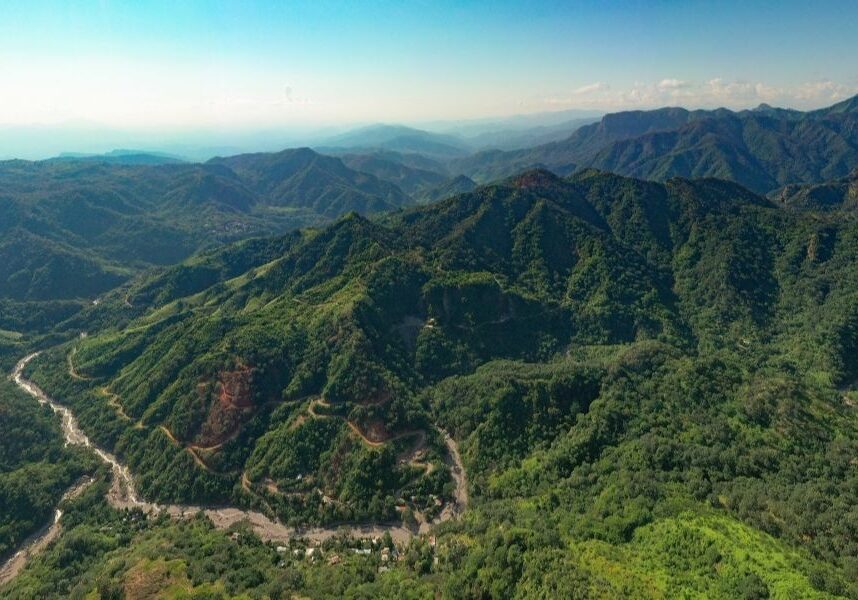
Step-out drilling at San Marcial returned 5.34 g/t gold from the parallel breccia target, a metal the 2023 resource estimate credits at zero recovery.
- GR Silver Mining reported step-out drill results from two separate targets in the San Marcial area of its Plomosas Project in Mexico on July 10, 2026.
- The southeast extension returned 21.9 meters (m) true width at 168 grams per metric ton (g/t) silver, extending high-grade mineralization at least 150 m past the 2023 resource boundary.
- The parallel breccia target returned 0.75 m at 5.34 g/t gold, and 2.85 m at 340 g/t silver with 0.32 g/t gold.
- The 2023 Mineral Resource Estimate (MRE) applies a 0% gold recovery to the San Marcial area, so gold adds nothing to that area's silver-equivalent grade.
- An MRE update is planned for late 2026, funded from a cash position of C$27.5 million as of March 31, 2026.
GR Silver Mining Ltd. (TSXV: GRSL | OTCQX: GRSLF | FRA: GPE) reported step-out drill results from the San Marcial area of its Plomosas Project in Mexico on July 10, 2026. One target extended the high-grade silver zone southeast of the current resource boundary. The other, a set of structures identified beside it in 2025, returned gold along with the silver.
Step-Out Drilling at the Southeast Extension
The southeast extension target was drilled to reach further along the main breccia structures that host the known silver zone. One hole returned 21.9 meters (m) true width at 168 grams per metric ton (g/t) silver, 0.08 g/t gold, 0.5% lead, and 1.41% zinc from 191.5 m depth, including 6.15 m at 447 g/t silver and 0.85% zinc. A second hole returned 12.25 m at 57 g/t silver and 0.23 g/t gold from 160.5 m depth.
Those intercepts confirm high-grade silver at least 150 m southeast of the 2023 Mineral Resource Estimate (MRE) boundary, and they tie back to 2023 step-out holes that returned 11.1 m at 584 g/t silver and 35.2 m at 134 g/t silver. Together they define one continuous silver zone at the contact between the upper Oligocene volcanic sequence and the lower Jurassic volcano-sedimentary unit beneath it. Drilling there also intersected economically significant mineralization within the lower Jurassic package.
Of the 15 holes listed in the current step-out program, 8 have returned assays, and 7 are pending.
Gold in the Parallel Breccia Target
The parallel breccia target was drilled in 2026 to characterize newly identified structures near the resource area. It returned narrower intervals than the southeast extension, and it returned gold with them. One hole cut 2.85 m at 340 g/t silver and 0.32 g/t gold from 63.0 m depth, including 1.70 m at 450 g/t silver and 0.37 g/t gold, then a deeper interval of 0.75 m at 5.34 g/t gold with 8 g/t silver from 195.0 m depth.
President and Chief Executive Officer of GR Silver Mining Ltd., Eric Zaunscherb, locates the gold in the breccias nearest the intrusive body:
"Now, what we're also finding are the existence of parallel breccias as we come in closer to that intrusive, basically, potentially concentric around that intrusive body. And that's where we're also seeing a very high contribution of gold, which is quite interesting."
Stockwork in this target, a dense network of small mineralized veins hosted in the lower Jurassic volcano-sedimentary sequence, holds continuous low-grade gold with localized higher-grade intervals, a style distinct from the main chlorite-hematite breccia in the resource area, where silver is the dominant economic commodity. The contrast may indicate at least two distinct gold-mineralizing events: an earlier one tied to Jurassic and Cretaceous intrusive activity, and a later Oligocene event that produced the silver-rich breccia system. Further drilling is needed to define the structural and geochemical controls on the gold and its relationship to the nearby intrusive bodies.
The Plomosas Project & the Rosario District
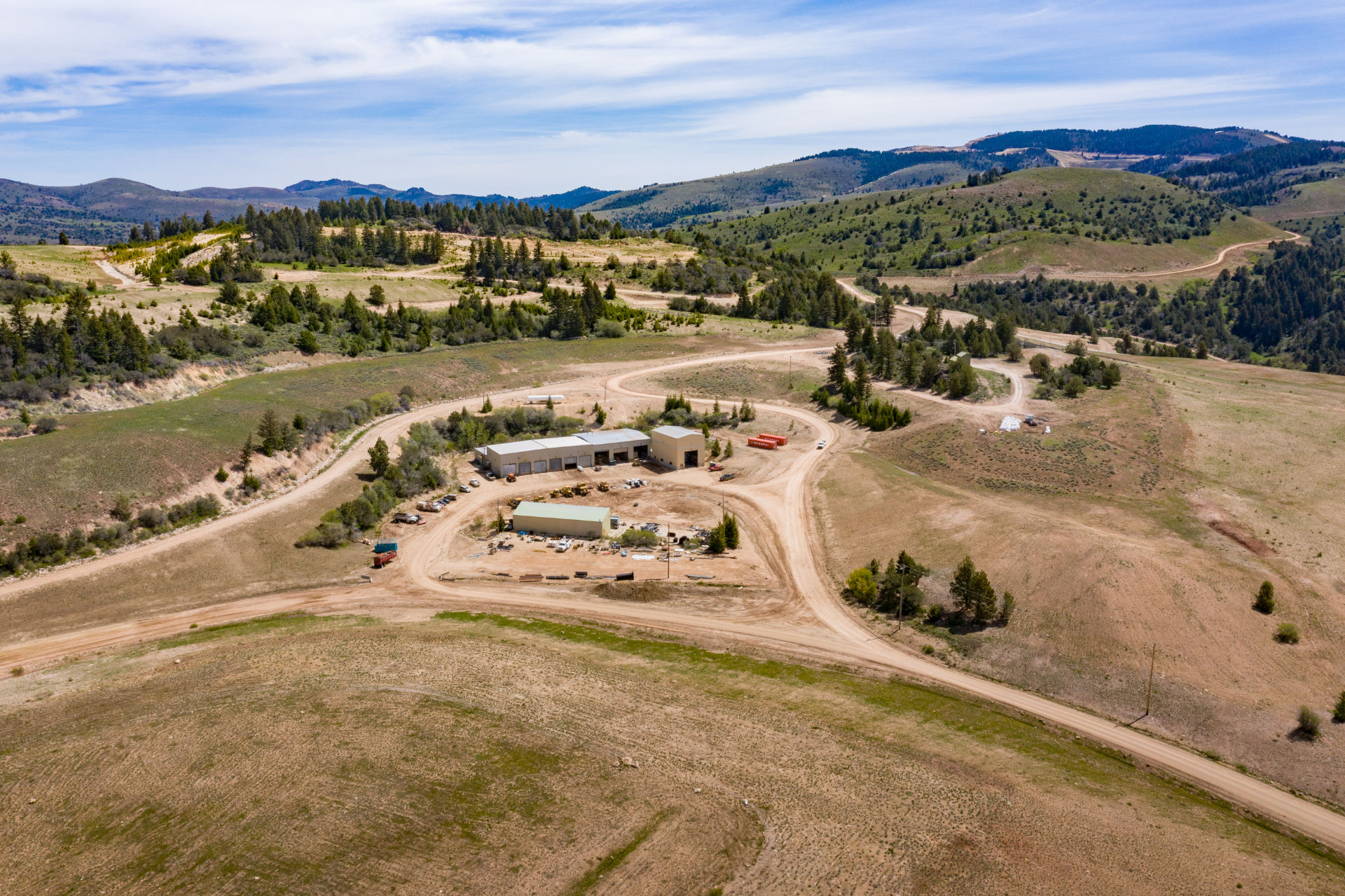
The Plomosas Project covers 7,823 hectares on the southwestern edge of the Sierra Madre Occidental, at the border of Durango and Sinaloa in Mexico, and it includes the historical Plomosas underground mine, with the infrastructure, road access, and permits of a past-producing site. The district contains intermediate to low-sulfidation epithermal silver and gold mineralization hosted within hydrothermal breccias and veins. GR Silver Mining owns 100% of its assets on the eastern edge of the Rosario Mining District, and counts 78 square kilometers of advanced-stage exploration concessions.
IMMSA, a subsidiary of Grupo Mexico, mined over 2.5 million metric tons of ore at the underground mine between 1986 and 2000, producing lead and zinc concentrates using the room-and-pillar method.
Zaunscherb describes what the drill core is tested for:
"So, when we were assaying, we're not just assaying for silver and gold. We're looking for all the pathfinders."
Pathfinder elements are trace metals that mark a hydrothermal system, and management says those results feed into the company's geological model. Core goes to SGS de México in Durango for assay, with silver results above 100 parts per million re-assayed.
Development Timeline & Funding
GR Silver Mining is running 20,000 meters of resource-expansion drilling at San Marcial, alongside four further planned catalysts: an update to the MRE, a Preliminary Economic Assessment (PEA), a bulk sample test mining program at the Plomosas mine, and pilot plant engineering. The MRE update is targeted for late 2026, with the PEA to follow in the first half of 2027.
The work is funded from C$27.5 million in cash as of March 31, 2026. A five-year drill permit covers the San Marcial area and the Plomosas mine. Mexico's environmental authority, SEMARNAT, confirmed in May 2026 that no new environmental impact authorization is required for the bulk sample program.
No economic study has been published, so there is no net present value, capital cost, or mine life on record. Those figures would first appear in the PEA.
What Gold in the Parallel Breccia Changes
The 2023 MRE does report gold at San Marcial: 11,700 ounces in the indicated category and 3,000 ounces inferred, at grades of 0.04 g/t and 0.03 g/t. It also applies a 0% metallurgical recovery to gold at San Marcial when calculating the area's silver-equivalent grade. Because the silver-equivalent formula multiplies each metal's grade by its price and its recovery, a zero recovery takes gold out of the figure altogether. The same terms apply to an 86% gold recovery at the Plomosas mine area and 79% at San Juan/La Colorada.
That assumption predates the 2025 discovery of the parallel breccia zone and the current program. Gold now coming out of that target, therefore, has no weight in the silver-equivalent grade used to measure the area.
The MRE update planned for late 2026 is the next point at which that assumption could be revisited, and changing it would need metallurgical work on parallel breccia material. The company has not said whether the update will treat gold differently.
Resource Base & Untested Ground
The San Marcial area holds 46 million ounces of indicated silver and 14 million ounces of inferred silver under the 2023 estimate. Across the whole Plomosas Project, the figures are 55 million ounces indicated and 22 million ounces inferred. Mineral resources are not mineral reserves and have not been shown to be economically viable.
The San Marcial chargeability anomaly, a zone picked out by an electrical survey, is 80% untested. Three targets have been drawn on it: the northwest extension, the parallel breccia, and the southeast extension.
Zaunscherb puts a proportion on how much of the intrusive body's perimeter the drill has reached:
"And on that shoulder, that only represents what we've drilled is about 20% of that perimeter all the way around that intrusive body. So, there's another 80% of that perimeter to go."
Untested ground has no category and no grade until it is drilled and estimated.
FAQs (AI-Generated)
Analyst's Notes





Subscribe to Our Channel





.png)

Stay Informed






