




Gabar’s 83,300-Barrel-a-Day Output: Investment & Exploration Drive the Next Growth Phase


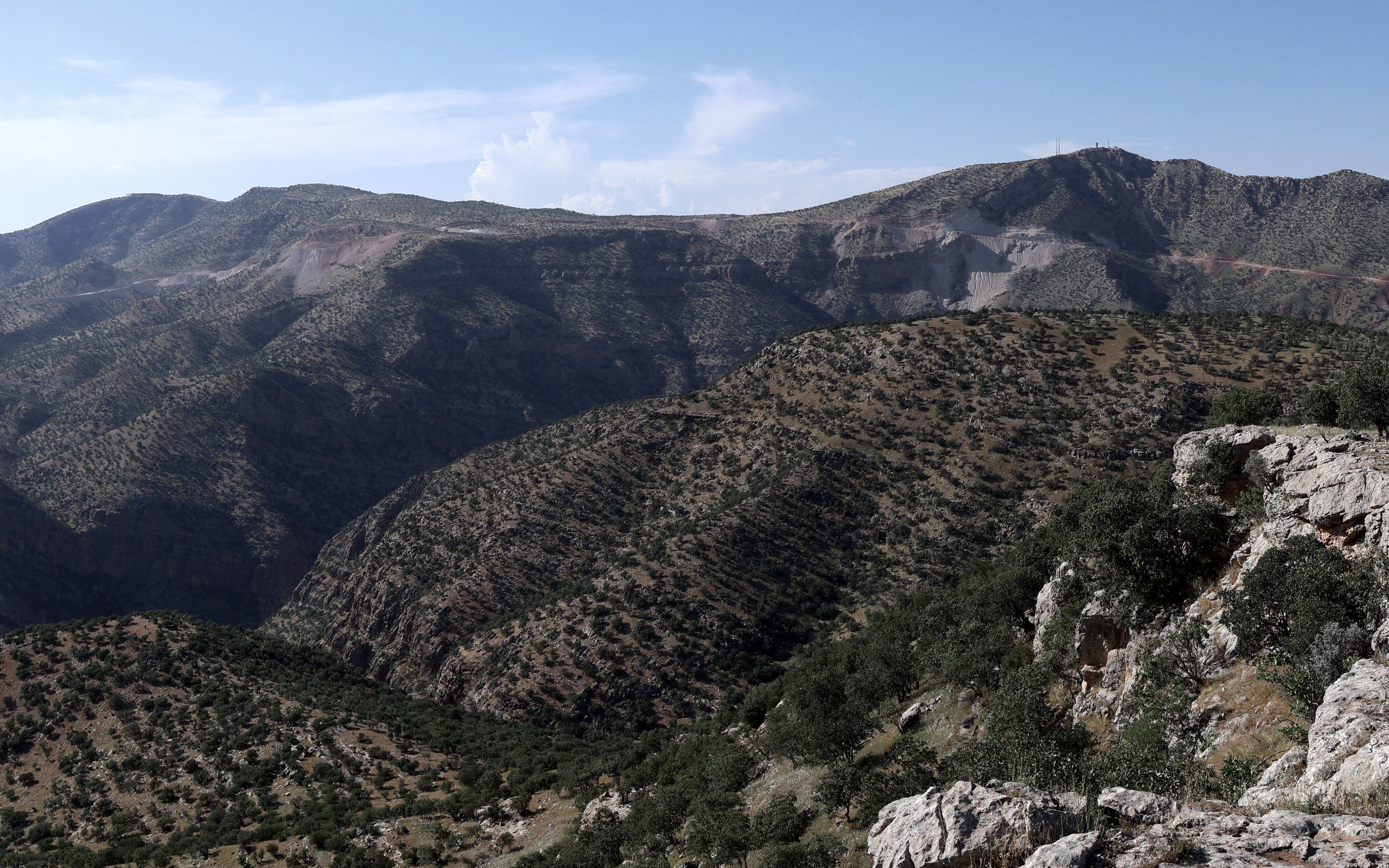
Gabar oil output reached 83,300 barrels per day over 5 years, yet an untested discovery there still requires equity to fund well re-entries.
- Türkiye imports more than 85% of the oil it uses.
- Production in the Gabar fairway rose from 0 to 83,300 barrels per day (bbl/d) in 5 years.
- Select international non-producing oil companies trade at a median of C$1.79 per barrel of oil equivalent of best-estimate contingent resources (2C).
- Dune Oil is offering up to C$8.3 million in units at C$0.10 to fund seismic, a C-2 re-entry, and a C-1 sidetrack.
- Once its debt settlement is paid, Dune Oil will have zero debt outstanding.
Introduction
Türkiye uses about 1.0 million barrels of oil per day, produces about 127,000 barrels per day, and imports more than 85% of its oil. The country pays an annual oil import bill of approximately US$35 billion. About 56% of its crude comes from Russia and about 16% from Iraq.
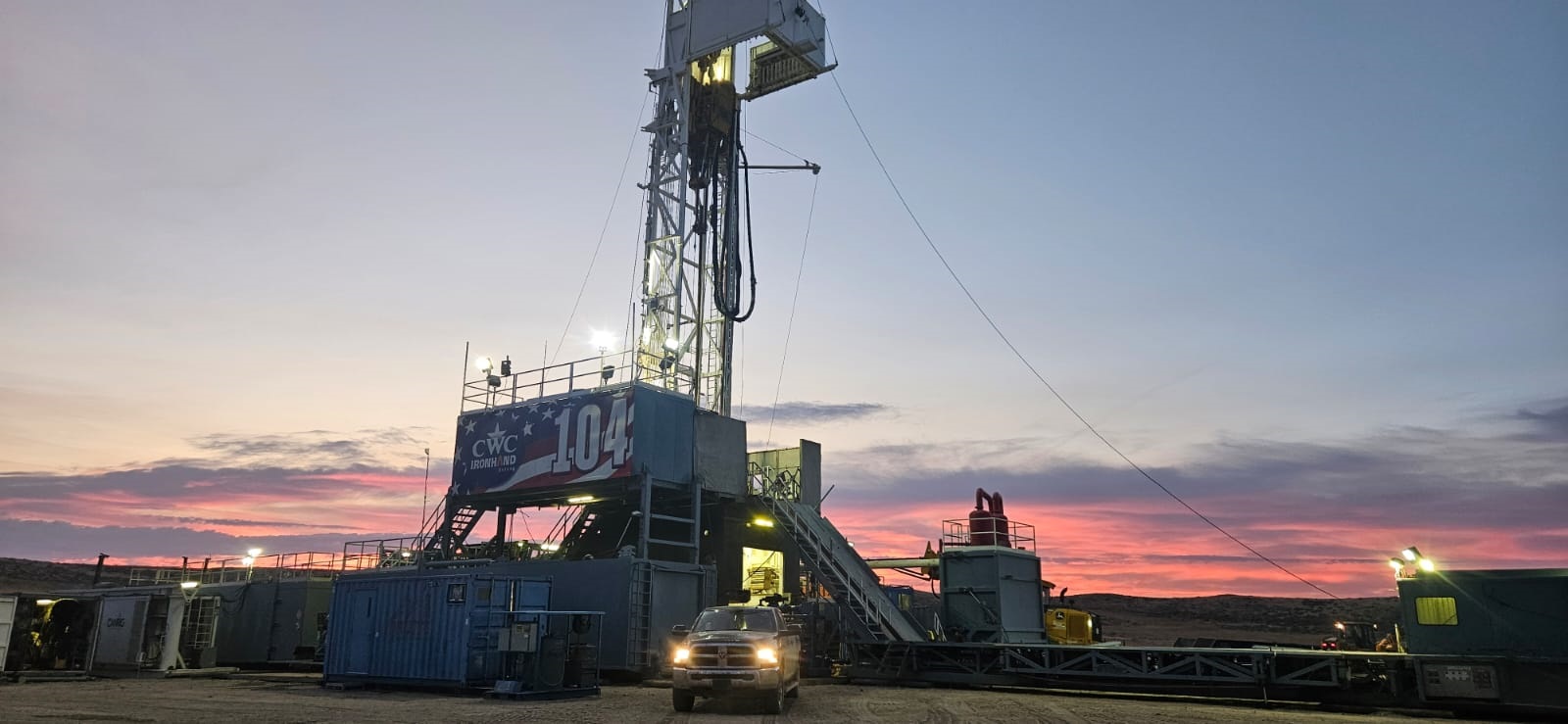
In the southeast, production in the Gabar fairway rose from 0 to 83,300 barrels per day (bbl/d) in 5 years. The region now supplies over half of Türkiye's onshore output and about 8% of national demand.
Those barrels come from fields operated by Türkiye Petrolleri Anonim Ortaklığı (TPAO). The regional field list also includes a discovery made in 2025 that is still pre-production. Its seismic, well re-entries, and flow tests come before any production revenue.
Industry Context
Gabar's growth followed at least 7 oil discoveries since 2021. Production comes from 7 TPAO-operated fields; cumulative output has exceeded 50 million barrels since 2021; and oil sales in the basin have exceeded US$2 billion from 2021 to 2025. More than 90% of Türkiye's natural gas is imported.
Six of those fields are Sehit Esma Çevik, Sehit Aybuke Yalcin, MİG, Bulmuslar, Agacyurdu, and Yağızoymak.
Estimated production in January 2026 was 33,000 barrels of oil equivalent per day at Sehit Aybuke Yalcin, 24,000 at Sehit Esma Çevik, 13,000 at MİG, and 8,000 at Bulmuslar. Agacyurdu produced 3,000, and Yağızoymak about 2,500. Sehit Aybuke Yalcin contains an estimated 1 billion barrels of petroleum initially in place, the volume in the ground before any recovery.
Emerging Practices & Industry Progress
TPAO has new wells planned across the fairway. Bulmuslar has 20 new wells planned for 2026, and Yağızoymak has 20 wells planned for its 2026 development. Agacyurdu has 14 new wells planned, targeting 6,000 barrels of oil equivalent per day. East Findik, a TPAO discovery made in 2026, is in its early stages.
A pipeline completed in 2026 has a capacity of more than 150,000 barrels of oil equivalent per day into Esma Çevik.
Remaining Challenges
Contingent resources are discovered volumes not yet considered commercially recoverable. They stay in that class until contingencies such as flow testing, a development plan, approvals, and financing are cleared. Select international non-producing oil companies trade at a median enterprise value of C$1.79 per barrel of oil equivalent of best-estimate contingent resources (2C), based on market data as of October 29, 2026.
Brent oil pricing was above US$115 per barrel as of October 30, 2026. Current prices are not necessarily indicative of future ones.
Company or Project Examples
Dune Oil (CSE: DUNE | OTCQB: DUNXF) is earning a 29% working interest under a farm-in agreement in the M47 block, licenses C3 and C4, in the Cudi-Gabar province. Its North Field discovery contains 27.6 million barrels of unrisked 2C light oil, company gross before royalty, or 22.3 million barrels risked for an 81% chance of development. An independent evaluation effective December 31, 2025, gives the North Field 2C an unrisked, before-tax net present value of US$734 million, company net, at a 10% discount rate and US$72.71 per barrel oil in 2027, escalated thereafter. Based on the company's interpretation of wireline logs, readings from instruments lowered into a well, the C-1 and C-2 wells encountered net oil pay, the thickness of rock judged able to produce oil. The Mardin reservoir has not been flow tested, and no development plan or approvals are in place.
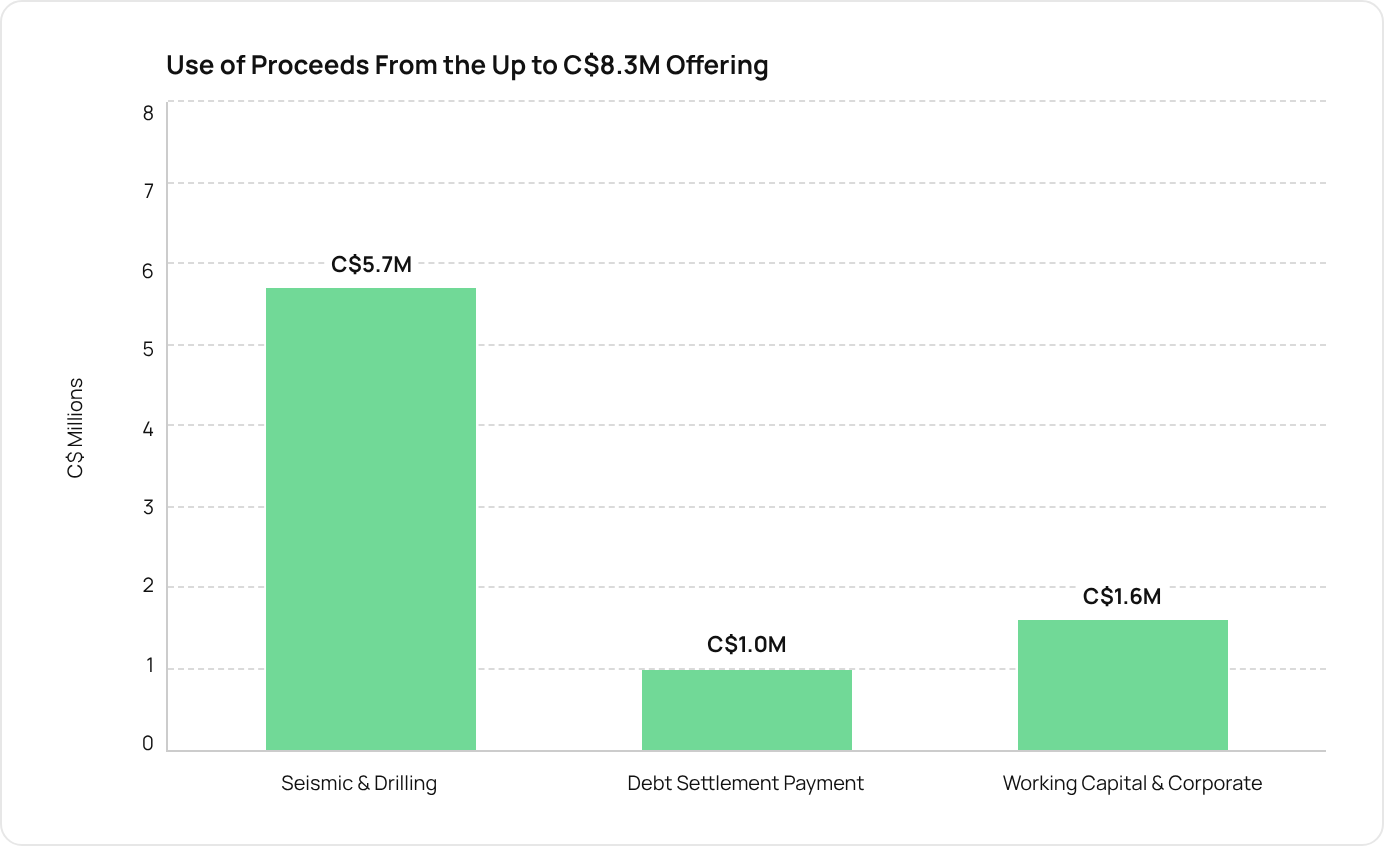
On October 30, 2026, Dune Oil announced a brokered offering of up to C$8.3 million in units at C$0.10 per unit. Research Capital Corporation is the lead agent for a syndicate that includes Canaccord Genuity Corp., and investors on a president's list are expected to subscribe for up to C$2.0 million. Each unit consists of 1 share and 1 warrant, and each warrant can be exercised at C$0.125 from 60 days after closing until 36 months after closing. Of the proceeds, C$5.7 million is allocated to seismic and drilling, C$1.0 million to a debt settlement payment, and C$1.6 million to working capital and general corporate purposes. The work covers a re-entry of C-2 for deepening and testing, a sidetrack of C-1, about 40 kilometers (km) of seismic, and an exploration well tentatively planned on the South prospect, subject to seismic results.
Once the debt settlement is paid, the recapitalization leaves Dune Oil with zero debt outstanding and, on a pro forma basis, with positive working capital and a 12-month funded work program. On a pro forma basis at the maximum offering, 166,707,697 existing shares plus 83,000,000 financing shares give 249,707,697 shares outstanding, or 354,763,124 fully diluted. Former debenture holders and management converted debt into common shares at C$0.15 per share, a 50% premium to the offering price. Assuming the maximum offering, 39% of post-financing shares are subject to staged lockup escrow release over 36 months. Management's pro forma enterprise value after the offering is about C$0.90 per barrel of unrisked company gross 2C.
Regional or Jurisdictional Perspective
Oil production in Türkiye is subject to a 12.5% government royalty and a 25% corporate tax rate. Resource figures stated as company gross are before that royalty, and figures stated as company net are after it.
Dune Oil's units are offered under the listed issuer financing exemption in Part 5A of National Instrument 45-106, in all provinces of Canada except Quebec and in other qualifying jurisdictions. They will be free-trading on closing. Its agents receive an 8.0% cash commission and broker warrants equal to 8.0% of the units sold, both of which are subject to reduction for certain subscribers on a president's list. Closing is expected on or about November 13, 2026, subject to approvals including conditional approval of the Canadian Securities Exchange.
Industry Outlook
TPAO's near-term target for the Gabar region is about 100,000 bbl/d, up from 83,300 bbl/d. That growth would add domestic supply in a country where only about 1 in 10 barrels consumed is produced domestically.
Not every discovery in the fairway is producing yet. On M47, production and testing of the C-1 and C-2 wells in the North discovery is targeted for early 2027. Mid or South Lead prospect drilling is planned for 2027. Full North Field development from 2027 onward would use an early production facility and tanker trucks to transport crude to the Tüpraş refinery in Batman, 130 km away.
FAQs (AI-Generated)
Analyst's Notes





Subscribe to Our Channel



Stay Informed


