




GR Silver's High-Grade Structural Discovery Expands San Marcial's Development Optionality


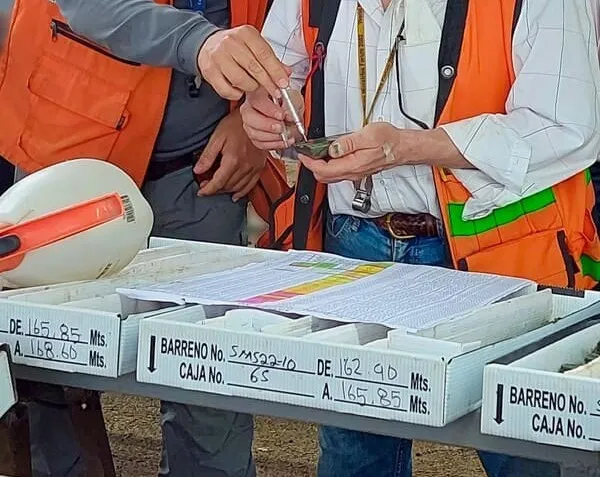
GR Silver Mining redefines San Marcial with high-grade structural silver discoveries, expanding resource growth and development optionality.
- GR Silver Mining reported high-grade drill results at San Marcial, including 45.1 metres at 1,623 grams per tonne silver, supporting a reinterpretation from bulk-tonnage to structurally controlled high-grade shoots.
- Structural geology models focusing on fault intersections and structural geometry enable predictive targeting that reduces exploration uncertainty and improves drilling efficiency for resource expansion.
- The existing 134 million ounces silver equivalent resource base has significant growth potential through the current 20,000-metre drilling campaign at a historical discovery cost of C$0.17 per ounce of silver.
- Existing Plomosas infrastructure with 7.4 kilometres of underground development and established permits could reduce development timelines through Bulk Sample Test Mining (BSTM) and pilot plant installation.
- Fully funded treasury of C$28.5 million with zero debt positions the company to deliver an updated Mineral Resource Estimate (MRE) and maiden Preliminary Economic Assessment (PEA) in the second half of 2026 without financing pressure.
Why High-Grade Discovery Models Matter in Silver Valuation
The market often differentiates between bulk-tonnage silver systems and structurally controlled high-grade discoveries based on how grade concentration influences future mining scenarios, potential operating margins, development sequencing, and investor perception. High-grade structural discoveries can command stronger market interest because they offer operational flexibility, potential for higher margins during volatile pricing environments, and reduced capital intensity compared to bulk-tonnage systems requiring larger throughput to achieve equivalent economic returns. Grade quality relative to absolute ounce count becomes critical when investors evaluate development risk, metallurgical complexity, and the ability to selectively mine higher-value zones during early production phases.
Structurally controlled systems enable predictive targeting models that reduce exploration uncertainty and improve drilling efficiency. The transition from conceptual exploration toward a predictive geological framework signals that a project is moving from discovery-stage speculation toward resource definition with repeatable success criteria. GR Silver Mining’s (TSXV: GRSL | OTCQX: GRSLF | FRA: GPE) recent drilling results at San Marcial reflect this transition, representing a structural inflexion point in how the deposit is understood and how future exploration capital will be deployed.
San Marcial's Geological Reinterpretation Changes the Investment Narrative
San Marcial was historically perceived as a broader bulk-tonnage silver system, with mineralisation distributed across a large footprint. Recent drilling alters that interpretation by demonstrating that ultra-high-grade intervals are not anomalous outliers but instead represent predictable concentrations within structurally controlled corridors. The drilling intersected 45.1 metres at 1,623 grams per tonne silver, including 18.85 metres at 3,846 grams per tonne silver, and including 8.25 metres at 8,579 grams per tonne silver. These intercepts are hosted within hydrothermal breccias, which exhibit polymetallic overprinting and are interpreted as the product of low- to intermediate-temperature boiling zones where metal deposition was concentrated due to pressure and temperature gradients.
Interim President and Interim Chief Executive Officer of GR Silver Mining, Eric Zaunscherb, frames the resource expansion potential:
"Our main focus is on expanding the resource at this point. We have 134 million ounces of silver equivalent, and we feel that that has a significant chance to grow through our 20,000 metre drill program."
The role of east-west, north-south, and northeast-southwest structural intersections has become central to understanding where high-grade silver is concentrated. Fault reactivation and tectonic history shaped mineralisation patterns, with reverse fault structures originating during an early deformation phase and later normal fault reactivation during a subsequent deformation phase, creating the permeability pathways that concentrated hydrothermal fluids. Structural understanding reduces exploration uncertainty by providing a framework for targeting future drill holes based on geological criteria rather than geochemical anomalies alone, and repeatable targeting models improve drilling efficiency and discovery consistency because they allow the company to predict where high-grade zones are likely to occur based on structural geometry.
Why Structural Shoot Discoveries Can Influence Future Project Economics
Investors often prioritise grade, continuity, metallurgical quality, and infrastructure access over headline resource size alone because these factors influence all-in sustaining cost (AISC) profiles, mining dilution, capital intensity, and development sequencing. The existing 134 million ounces silver equivalent resource base from the 2023 Mineral Resource Estimate (MRE) provides a foundation, but the discovery cost of C$0.17 per ounce of silver reflects historical exploration efficiency. The relationship between grade and potential AISC profiles is direct: higher-grade ounces require less tonnage movement to achieve the same revenue, which reduces dilution, lowers mining costs per ounce, and improves margin sensitivity to silver price volatility.
Zaunscherb describes the resource expansion potential and infrastructure advantages:
“The average in the resource at San Marcial is 22 metres thick, so that's why we can build ounces very quickly, very efficiently, and very cost-effectively.”
He also highlights the advancements at Plomosas:
“We have the Plomosas mine, and all the key permits are in place. We have 7.4 kilometres of underground development.”
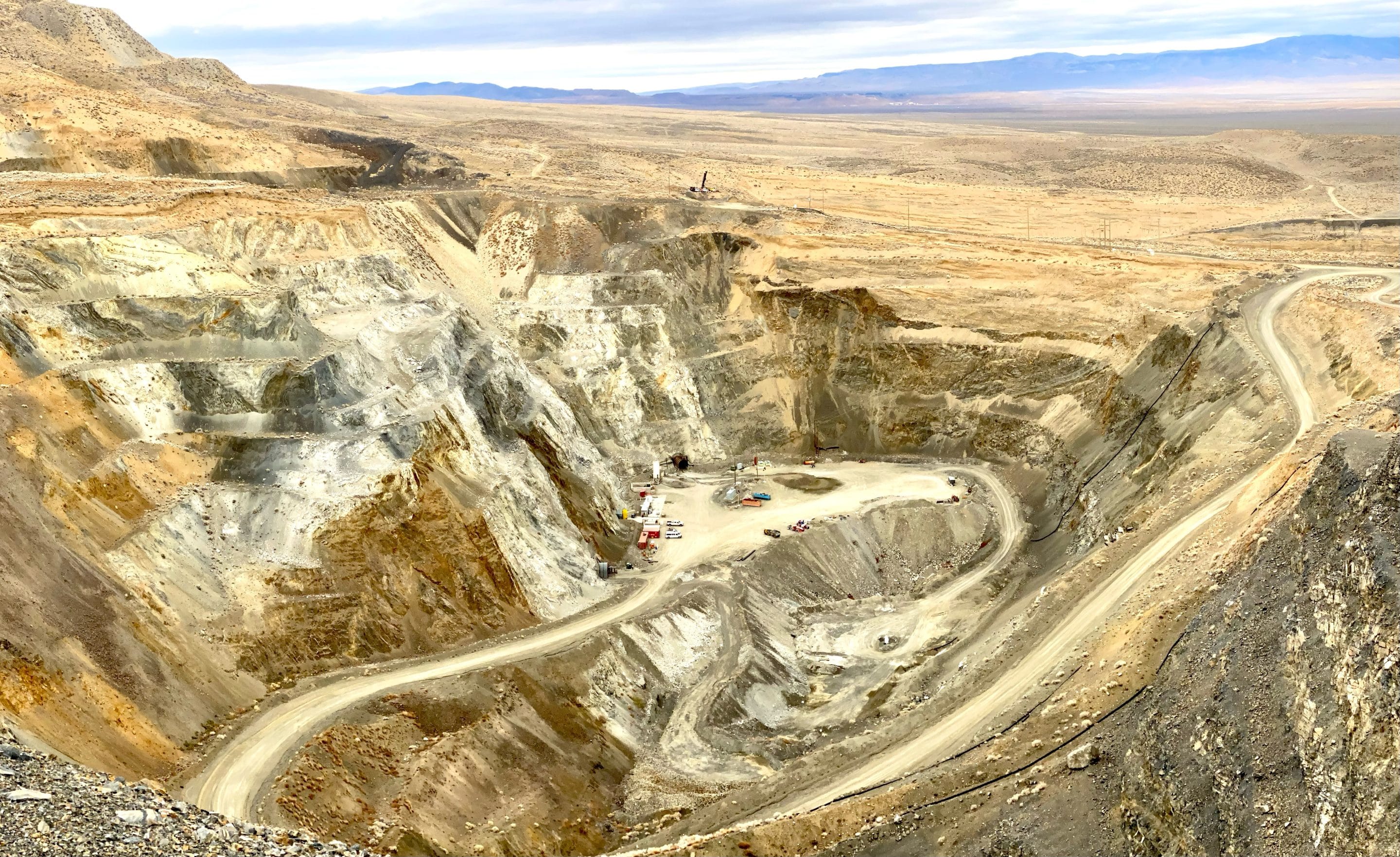
The historical Plomosas underground mine infrastructure provides existing access and permitting advantages that could reduce development timelines and capital intensity. The Bulk Sample Test Mining (BSTM) program spans 21 accessible underground areas, with a pilot plant installation planned to process material and validate metallurgical assumptions. The existing five-year drill permit eliminates permitting delays for near-term exploration, and the 7.4 kilometres of underground development at Plomosas could reduce the capital required to establish initial production capacity if the company pursues a phased development approach. Infrastructure reuse potential reduces development risk by eliminating greenfield construction timelines and associated cost inflation.
Catalyst Pipeline Positions GR Silver for Re-Rating Potential
The current 20,000-metre drilling campaign, combined with BSTM advancement and pilot plant installation, positions GR Silver to deliver an updated MRE and maiden Preliminary Economic Assessment (PEA) in the second half of 2026. Catalyst clustering matters in mining equities because multiple value-defining milestones within a compressed timeframe create repeated opportunities for market re-rating based on new technical data. An updated MRE will incorporate the high-grade structural intercepts from the 2026 drilling campaign, potentially improving average grade and increasing contained ounces within the indicated and inferred categories, while the maiden PEA will establish preliminary capital cost estimates, operating cost assumptions, and net present value (NPV) and internal rate of return (IRR) sensitivities.
GR Silver completed C$13.8 million and C$20 million financings in late 2025, resulting in a current cash position of C$28.5 million and zero debt. A fully funded treasury allows the company to execute its drilling program, complete the BSTM program, install the pilot plant, and commission the PEA without the operational disruptions or timeline delays that often accompany mid-program financing efforts. The ability to advance exploration and engineering without immediate financing pressure reduces dilution risk during the catalyst-heavy development period.
Zaunscherb confirms the company's readiness to execute:
"There's a good number of catalytic news items stacked out in the future over the next few months, and for that, we're fully financed."
The Investment Thesis for GR Silver Mining
- High-grade structural discoveries at San Marcial may materially improve resource quality by concentrating economic value within predictable geological corridors defined by fault intersections and structural geometry.
- Validation of a predictive structural targeting model reduces exploration uncertainty and supports resource expansion of the existing 134 million ounces silver equivalent base at a historical discovery cost of C$0.17 per ounce of silver.
- Existing infrastructure at Plomosas, including 7.4 kilometres of underground development, may reduce execution timelines and capital intensity through Bulk Sample Test Mining, pilot plant installation, and established regulatory pathways.
- Fully funded treasury of C$28.5 million and zero debt enable advancement through major catalysts without financing pressure, reducing dilution risk ahead of an updated Mineral Resource Estimate and maiden Preliminary Economic Assessment in the second half of 2026.
- The current 20,000-metre drilling campaign targets resource expansion and validation of continuous high-grade structural corridors, with catalyst clustering creating repeated opportunities for market re-rating based on new technical data.
The transition from a bulk-tonnage interpretation toward a high-grade structural shoot model matters for resource quality because it concentrates economic value within predictable geological domains, for development economics because it enables selective mining and margin optimisation, and for future valuation frameworks as it shifts investor perception from tonnage-driven resource scale to grade-driven margin potential. The convergence of high-grade drilling, existing infrastructure, funding strength, and development catalysts positions GR Silver as evolving from a conventional exploration company toward a more technically defined and increasingly de-risked silver development story.
TL;DR
GR Silver Mining's recent drilling at San Marcial intersected 45.1 metres at 1,623 grams per tonne silver, supporting a structural reinterpretation that concentrates high-grade mineralisation in fault intersections rather than distributed bulk tonnage. The company's fully funded treasury of C$28.5 million with zero debt, existing Plomosas underground infrastructure with 7.4 kilometres of development, and upcoming Mineral Resource Estimate and Preliminary Economic Assessment in the second half of 2026 position it as a technically defined silver developer. Validation of a predictive structural targeting model through the current 20,000-metre drilling campaign reduces discovery risk and supports resource expansion of the existing 134 million ounces silver equivalent base at a historical discovery cost of C$0.17 per ounce of silver.
FAQs (AI-Generated)
Analyst's Notes





Subscribe to Our Channel


%20(1)%20(1).jpg)




Stay Informed






