




Grade Up, Risk Down, Scale Massive: Koryx Copper's Haib Enters a New Phase


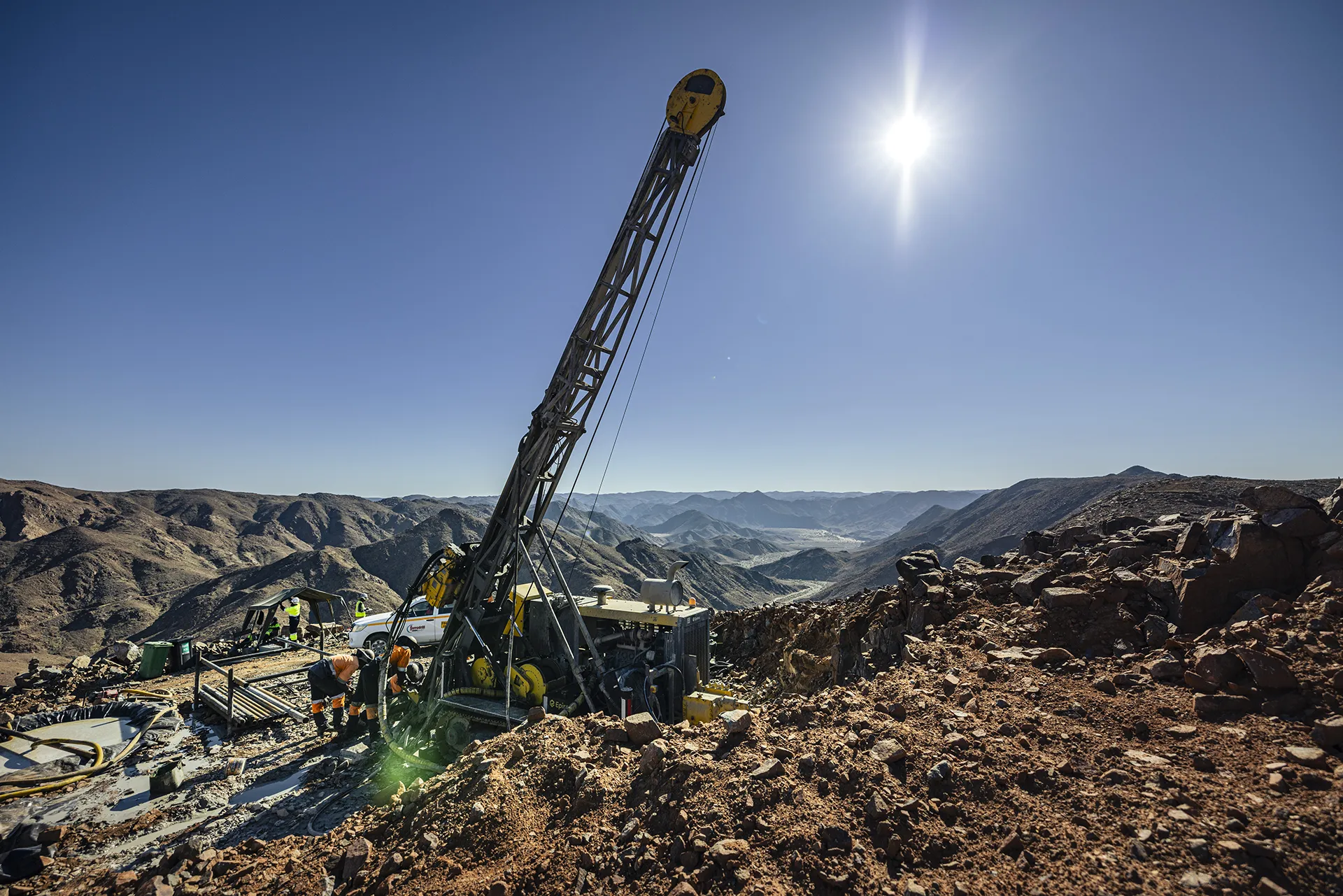
Koryx Copper advances Namibia's Haib project toward 120ktpa copper output, with flowsheet upgrades improving grade and economics ahead of a PFS and strategic partner process.
- Koryx Copper is advancing the Haib copper-molybdenum-gold project in Namibia, targeting 120,000 tonnes of copper production annually, with a mine life now extending beyond 30 years.
- A key flowsheet enhancement, coarse particle flotation (CPF), allows the project to reject approximately 25% of low-grade material before processing, lifting the effective copper equivalent grade to roughly 0.5% in the first decade.
- The removal of heap leaching and introduction of flotation-based processing has simplified the project, added molybdenum and gold byproducts (contributing ~15% additional value), and improved the strip ratio.
- Management expects NPV and core project metrics to improve by 20–30% relative to the prior PFS, with annual production rising from 90,000 up to 120,000 tonnes of copper.
- With an estimated capital requirement of approximately $1.8 billion, Koryx is actively pursuing strategic partners - including major miners, offtakers, and institutional investors - and posits M&A or a joint venture as the most probable development pathway.
Koryx Copper (TSXV:KRY) is a Canadian-listed mineral development company advancing the Haib copper project in Namibia, a large, long-life, open-pit deposit that management believes is on a trajectory to become a globally significant copper producer. In a detailed discussion, CEO Heye Daun outlined a series of technical and strategic developments that, taken together, materially alter the project's economics and its attractiveness to large-scale capital partners. With copper demand structurally supported by the global energy transition, the timing of Haib's advancement is not incidental.
A Project With Pedigree Reframed
Haib has been known to the mining industry for decades, historically dismissed by some as too low-grade to be commercially viable. When Koryx assumed control of the project approximately two years ago, management committed to a clear strategy: refinance the asset, assemble a capable technical team, and systematically re-engineer the project to extract more value from the ore body.
That strategy has now produced its most significant set of results to date. A recent press release detailed flowsheet enhancements, an updated resource model incorporating byproducts, and a revised mine plan - all of which combine to substantially improve the project's grade profile, production outlook, and economic competitiveness.
CPF Breakthrough: Flowsheet Optimisation
The single most consequential technical development is the introduction of coarse particle flotation (CPF) - specifically, the HydroFloat system supplied by Eriez, a technology used at major copper operations. CPF is a pre-processing step inserted before conventional milling and flotation. It works by exploiting the mineralogical properties of sulfide particles: coarser particles - which statistically contain less copper-bearing mineral - are separated out before entering the main plant.
At Haib, test work has demonstrated that approximately 25% of crushed material can be rejected at copper losses of only 4–8%. The practical effect is significant: the 75% of material that does proceed to the flotation plant does so at a materially higher grade. This, combined with a lower cutoff grade and the removal of heap leaching from the flowsheet, pushes the effective copper equivalent grade for the first decade of mining to approximately 0.5%, a level that removes Haib from the "low-grade" category that had historically constrained investor interest.
Daun was direct about the significance of this development:
"The CPF, coarse particle flotation, is a flotation technology. It's well understood, it's used at big mines, and it's a low-risk flowsheet, which is really the game changer for us."
The removal of heap leaching is an equally important simplification. Heap leaching, while lower in capital cost, is primarily effective for oxide ore and does not extract molybdenum or gold. Since Haib is a sulfide deposit, the switch to an all-flotation flowsheet not only reduces process risk but unlocks the byproduct stream - adding approximately 15% in incremental value through molybdenum and gold recovery.
Production Scale and Cost Curve Positioning
With the revised flowsheet and updated mine plan, Koryx is targeting annual copper production of approximately 120,000 tonnes - up from around 90,000 tonnes in the prior Preliminary Assessment. This places Haib among a relatively small group of development-stage copper projects globally with production profiles at this scale.
Equally important is cost positioning. Management expects Haib to sit in the second quartile of the global copper cost curve, a position that reflects both grade and operational efficiency. The mine plan contemplates a large open-pit operation running at 80–100 million tonnes per annum, utilising the largest available equipment - rope shovels, 500-tonne haul trucks, and multiple processing trains - consistent with the scale of the ore body. Mine life is expected to extend beyond 30 years, with an economic cutoff grade of approximately 0.15% copper equivalent.
Interview with Heye Daun, President & CEO of Koryx Copper
Namibia Jurisdiction as Competitive Advantage
The project's location in Namibia is presented not as a risk but as a structural advantage. The country hosts large-scale uranium and other mining operations, has a well-understood regulatory framework, and offers social licence that stands in contrast to many Western jurisdictions where community opposition can delay or derail projects.
Koryx has completed baseline environmental assessments and is currently engaged in public participation processes. Management expects to receive an Environmental Clearance Certificate within approximately six to twelve months, with a target of obtaining environmental approval before the middle of next year. A mining licence, treated as a separate but similarly predictable process, follows thereafter.
Water supply from the Orange River and power access through NamPower have been identified as the key utility solutions underpinning the project's infrastructure case.
Financing and Strategic Partner
With $1.8 billion in estimated capital expenditure, Koryx is building toward attracting a major strategic partner - a large mining company, offtaker, or well-capitalised institutional investor - that can provide the financial backstop required to bring a project of this magnitude to construction. Streaming, offtake agreements, and strategic equity are all part of the capital structure being considered.
Daun acknowledged that M&A is a logical endpoint:
"Companies like ours are so heavily discounted and undervalued because the single biggest uncertainty is around how it's going to get financed. That's why M&A often is the most likely outcome. Bigger companies have a cheaper cost of capital and can finance it better."
Interest from a broad range of parties including Japanese trading houses, global commodity traders, and Chinese entities - has been noted, though no formal process has been announced.
Near-Term Catalysts and Development Roadmap
The immediate priority is the Pre-Feasibility Study, which will incorporate CPF variability testing, updated resource estimates, and a refined mine plan. A Definitive Feasibility Study would follow, and financing is expected to be initiated in parallel with or shortly following the PFS. Environmental permitting is advancing concurrently.
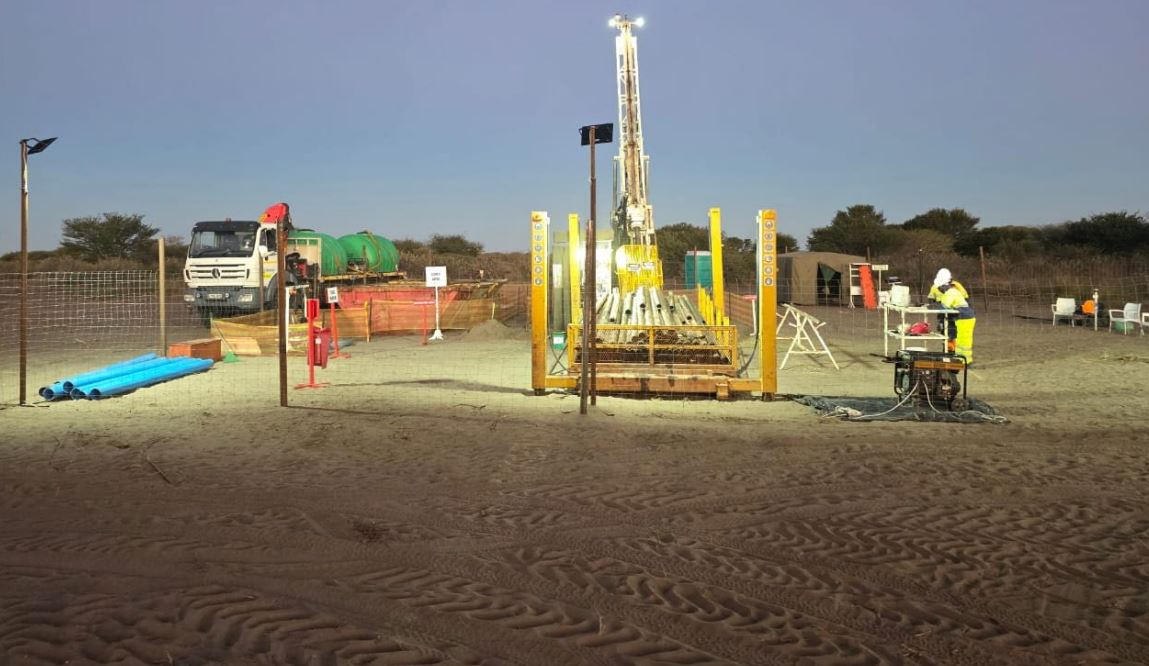
The company currently operates 14 drill rigs on site, with ongoing drilling targeting higher-grade pods within the ore body that could further improve early-year mine economics. Management has indicated that the next six to twelve months will be characterised by continued technical derisking and project rerate, with a strategic transaction representing an additional potential uplift for shareholders.
The Investment Thesis for Koryx Copper
- Scale: Haib targets 120,000 tonnes of copper per annum, placing it among the largest development-stage copper projects globally - a rare asset class.
- Grade improvement: CPF technology lifts the effective first-decade grade to ~0.5% copper equivalent, removing the historical "low-grade" stigma and improving cost positioning.
- Byproduct upside: Molybdenum and gold recovery, now possible through flotation, adds approximately 15% in incremental project value.
- Long mine life: A 30+ year mine life at economic grades provides long-duration cash flow visibility attractive to large strategic buyers.
- Jurisdiction quality: Namibia offers predictable permitting, established infrastructure, grid power access, and social licence - all underappreciated by international investors.
- M&A optionality: The scale and quality of Haib makes it a plausible acquisition or joint venture target for a major copper producer. Management is openly pursuing this pathway.
- Rerate pathway: Technical derisking through PFS, drilling results, and environmental approvals provides a series of near-term catalysts that could compress the discount at which the stock currently trades relative to in-situ value.
- Copper macro tailwind: Structural demand growth from electrification, combined with a constrained development pipeline globally, supports a favourable long-term copper price environment for projects of this type.
Macro Thematic Analysis
The global copper market faces a structural supply deficit that is expected to deepen through the 2030s, driven by accelerating electrification demand - electric vehicles, grid infrastructure, and renewable energy - against a backdrop of declining ore grades at existing mines and a thin pipeline of large, developable new projects. Major producers are under increasing pressure to replace depleting reserves, and greenfield projects of the scale and quality required to move the needle are rare. Projects capable of producing more than 100,000 tonnes per annum are particularly scarce. Haib sits squarely in this category. As Daun noted:
"Of all the development projects that are out there, there are very few that have this kind of production. It's long life, it's low costs, and it's going to be highly profitable."
For capital allocators seeking exposure to the copper thematic at the development stage, scale and cost-curve positioning are the primary filters - and Haib passes both.
TL;DR
Koryx Copper is advancing one of the few large-scale copper development projects globally, targeting 120,000 tonnes per annum from the Haib deposit in Namibia. Flowsheet optimisation via coarse particle flotation has materially improved grade, simplified processing, and added molybdenum and gold byproduct value, with management guiding to a 20–30% uplift in core project economics. The near-term investment case rests on technical derisking through a Pre-Feasibility Study and continued drilling, while the longer-term upside is anchored in M&A optionality as major copper producers seek large, permitted, low-cost assets.
FAQ (AI Generated)
Analyst's Notes





Subscribe to Our Channel





Stay Informed


